Drama

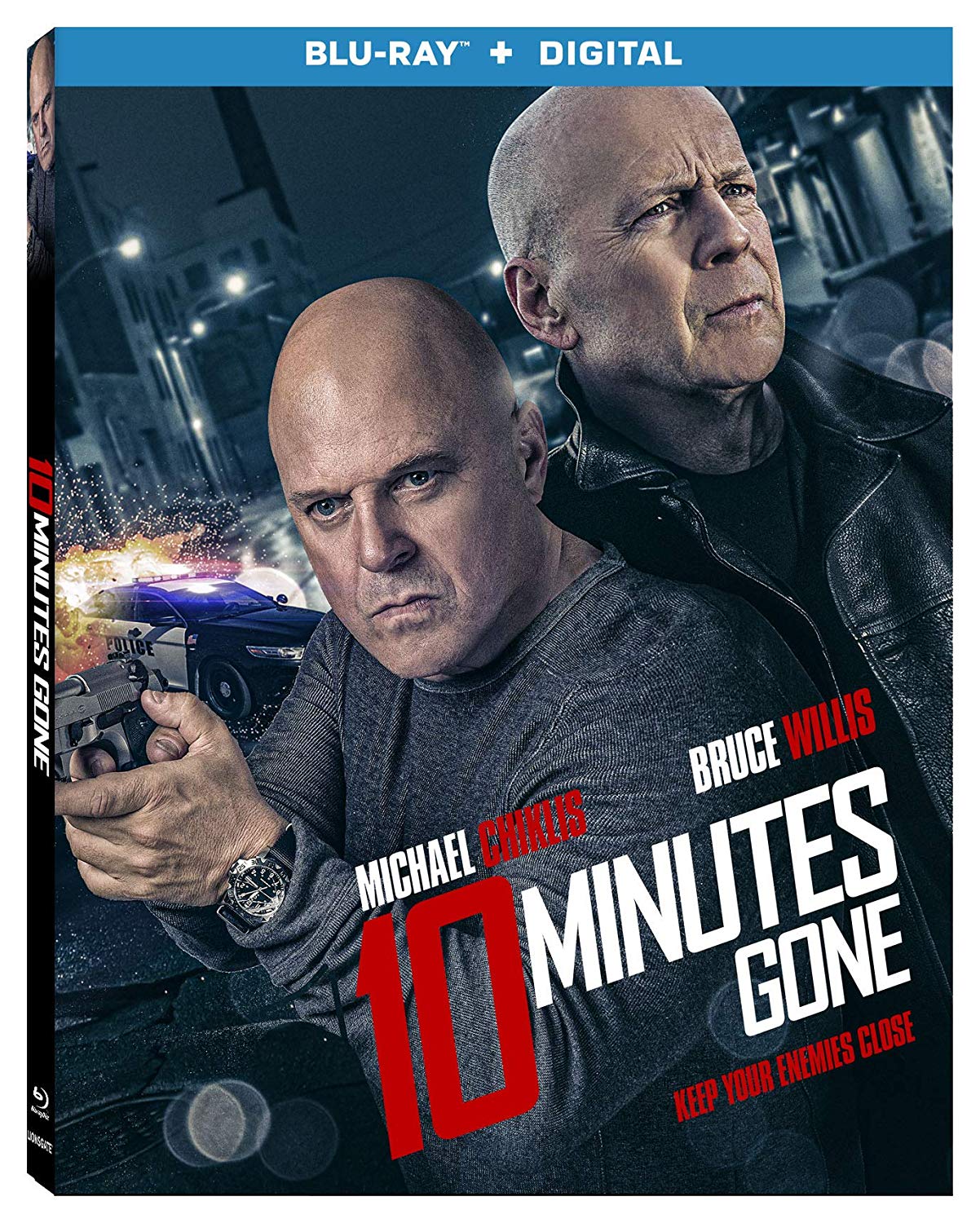
It’s frustrating seeing a film starring Michael Chiklis and Bruce Willis and knowing before you’ve even watched five minutes of the film that it’s not going to be good.  I mean, come on; you have the star of The Shield and then an action movie icon, but neither can save this film.  10 Minutes Gone is one of those films where on paper it seems like a surefire hit, but somehow instead of a white-knuckle action thriller, the result is a snooze-fest that will keep you guessing as to why these actors signed on for this film. Frank (Chiklis) has been hired by Rex (Willis) to pull off what seems to be an easy heist.  Frank and his team seemed to have thought of everything and have even put together some backup plans, but as expected, the heist ends up going bad, and in the process Frank is knocked out cold and loses 10 minutes. In this time he’s lost possession of the jewels, and he needs to figure out what happened to them before Rex has him killed.  It’s not a bad idea for a movie, but it’s the execution of this film that is a mess.  Willis and Chiklis do their best to make the dialog work, and at times the can make the scenes flow, but once the film shifts to any other character you start to wonder if this film was written by a 12-yea- old boy who just binged a bunch of older action/ detective films while chugging Red Bull and snorting lines of sugar.

The big mystery of the film is who set up Frank and his crew; the film does a good job at setting up a variety of suspects, though it doesn’t take much to figure things out.  One thing, though, that is rather frustrating is when Frank goes to question one of his guys and the guy is “hiding out” at some underground gambling room.  I have my issues with this character’s decisions already, but what is more distracting is how the scene is shot. The amount of lens flares in this sequence is nauseating.  This might be one of the worst shot scenes I’ve seen in a film. Sure, Spielberg uses lens flares, and the world knows how JJ Abrams gets carried away with them, but this sequence is a technical marvel at how just about everything has a lens flare, and someone actually thought that this looked good and it wasn’t a distraction.

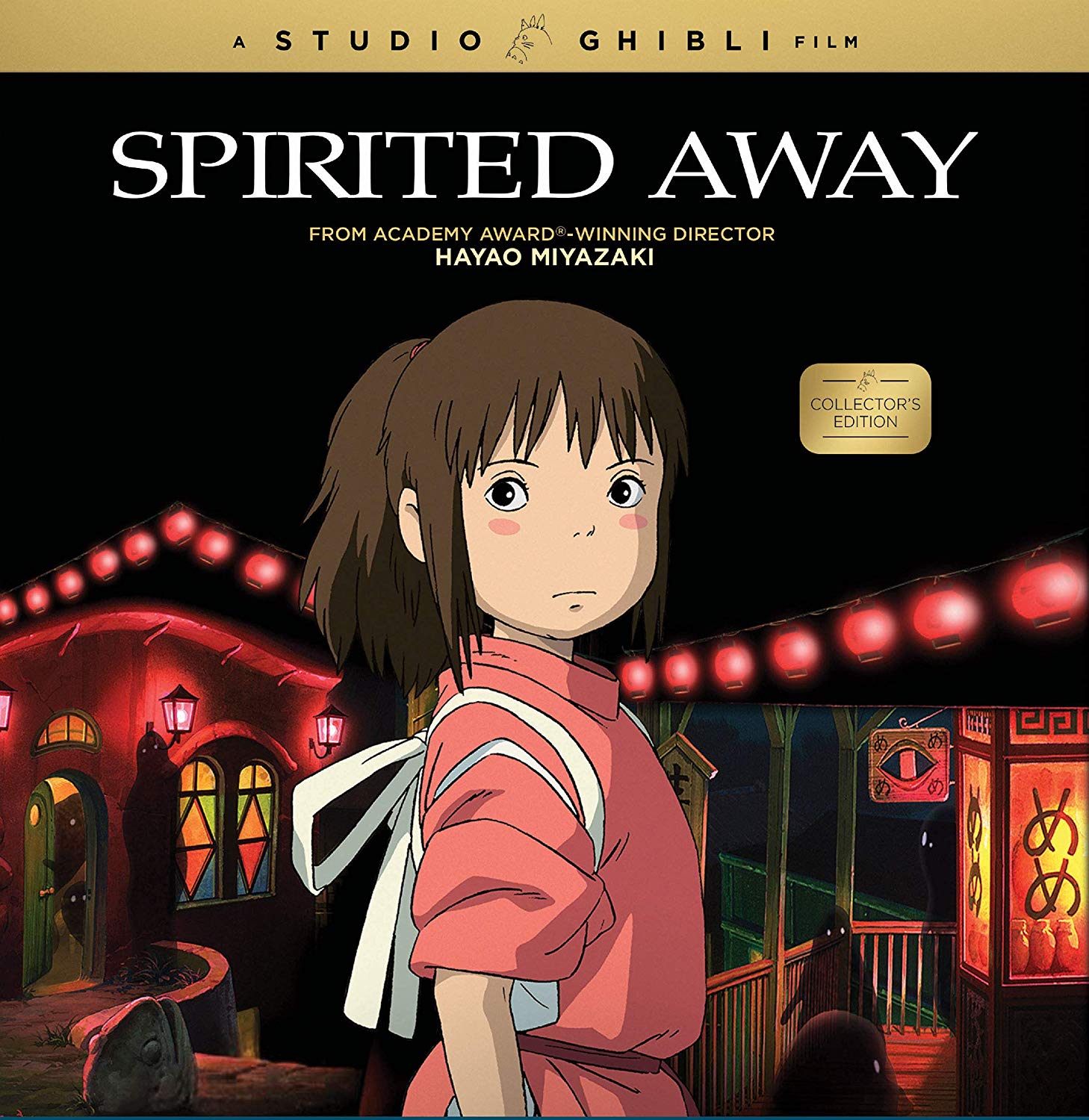
We are back with another collector's edition from Shout Factory.  This time we tackle the much celebrated Spirited Away, directed by Hayao Miyazaki, which was released in 2001, when it did so well that it ended up on our domestic shores in the following year.  It was absolutely adored by critics, and here is a fun fact.  I have never seen it.  Little did I know that the American trailers I was seeing around this time were warping my idea of what the film was really about.  Finally, after all of these years I have had the opportunity to watch and digest such a fantastic film.

Chihiro, a ten-year-old girl, is trying to relax in the back of her parents' car.  They are on their way to a new city, with a new school, and the young girl is having none of it.  As they search for the house where they are going to live, the father decides to use his four-wheel-drive and take off into the forest in hopes of making a shortcut.  But rather than finding their new house, they end up at a long building with a dark tunnel that appears to go somewhere exciting according to the parents.

"This is where change begins."

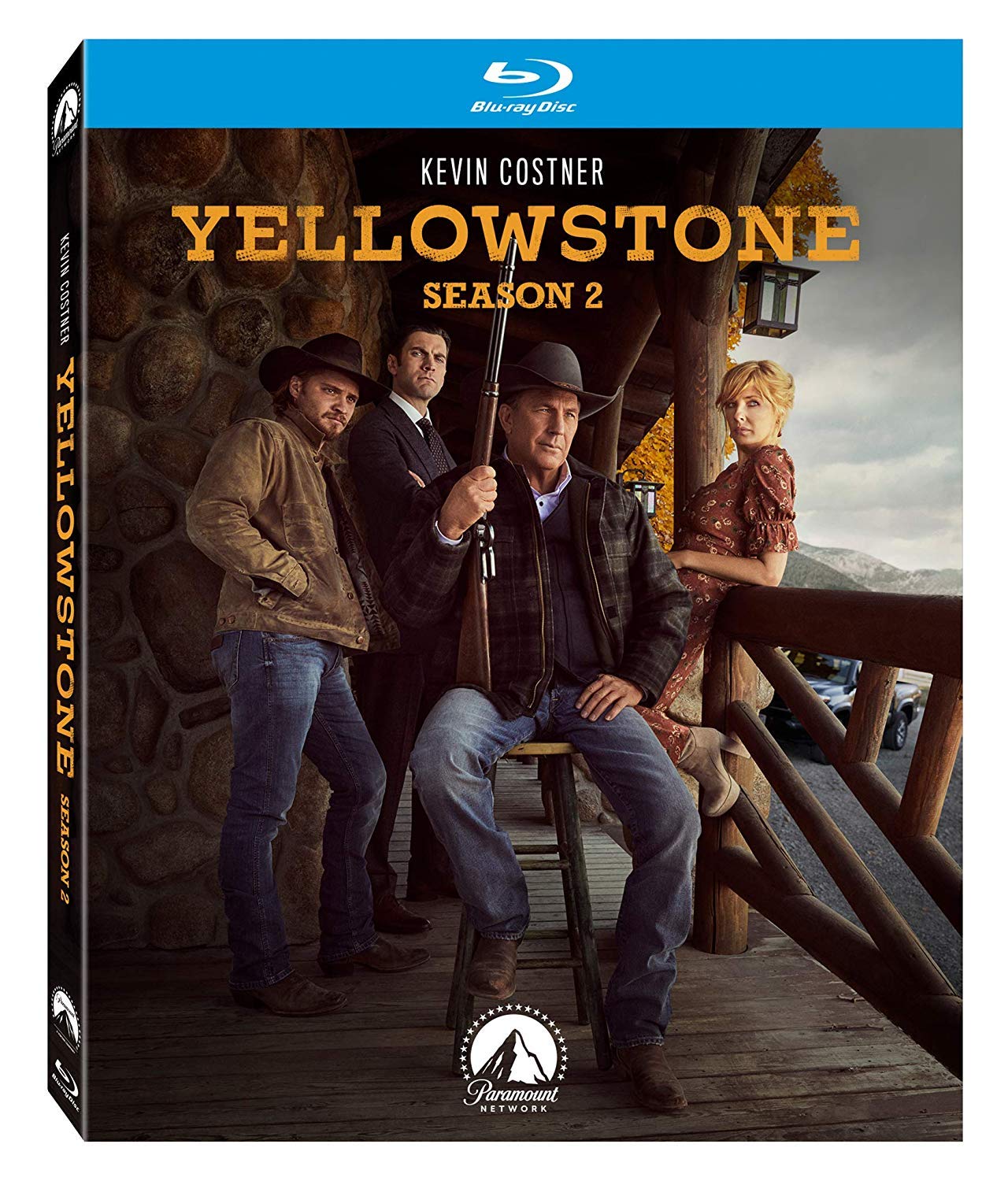
We're a visual people, so most of you will recognize Taylor Sheridan from his role as a deputy chief of police in Sons of Anarchy when the controlled puppet regime had finally left the scene. It's not a remarkable role, and it's not a complete surprise that Sheridan found his calling more recently behind the camera. As a writer, his first script did hit it out of the park. Sicario is an awesome film populated with compelling and interesting characters who thrived on a broken system. That theme appears to have stuck with him, because the first season of Yellowstone appears to take us back in time to the days of open frontiers and cattle barons who struggled to keep their land amid lawless communities and raiding parties of American Indians who were portrayed as savage beasts who kill women and children in the middle of the night to become shadows of nightmares and the stories told to keep children in line. These themes are all there, but it takes place in a modern 2018 setting that does indeed make for an interesting new twist on an old idea. This is the dawning of the modern western where lands still stretch for miles and are still owned by a single family. It's Bonanza in the 21st century, and Kevin Costner thought enough of the idea to star in this television drama series for The Paramount Network.

It was 1962, and Ursula Andress emerged from the tropical island surf sporting a provocative swimsuit, and a tradition was born. The seductive scene would become the first iconic image in a line that has lasted a half a century and counting.  Fifty years; 23 movies makes it the longest running film franchise in motion picture history. He had many faces over those 50 years: Sean Connery, Roger Moore, Timothy Dalton, Pierce Brosnan, George Lazenby, and even David Niven, Peter Sellers, and Woody Allen in a 1967 spoof. For the last three films, he's been played by Daniel Craig. They all had somewhat different styles. They all had a line of beautiful women. They all faced different challenges and foes. But they all shared the same name: Bond...James Bond.

James Bond first appeared in the pages of Ian Fleming’s novel, Casino Royale. Fleming was himself a former British Intelligence Officer and had been engaged in what he liked to call “shenanigans” in that role. He admits that many of Bond’s tastes are lifted from his own preferences. It can be safe to say that Ian Fleming was as much James Bond as any of the men who have played him. The books were written one a year during his two-month vacation as a news writer. He would escape to his vacation home in Jamaica during those 6-8 weeks and in short order produce a Bond adventure. It’s likely not a small coincidence that the first Bond film would feature the island location predominately as its setting. For most of the 1960's and into the 1970's, the films were taken directly from his Bond novels. Eventually the film series surpassed the novels and has been operating as original scripts for most of the last 30+ years. In those days the end credits always revealed the name of the next Bond film. Now we merely get a blanket statement that James Bond will return.

"In May 1980, Fidel Castro opened the harbor at Mariel, Cuba with the apparent intention of letting some of his people join their relatives in the United States. Within seventy-two hours, 3,000 U.S. boats were headed for Cuba. It soon became evident that Castro was forcing the boat owners to carry back with them not only their relatives, but the dregs of his jails. Of the 125,000 refugees that landed in Florida, an estimated 25,000 had criminal records."

One of those refugees was Tony Montana.

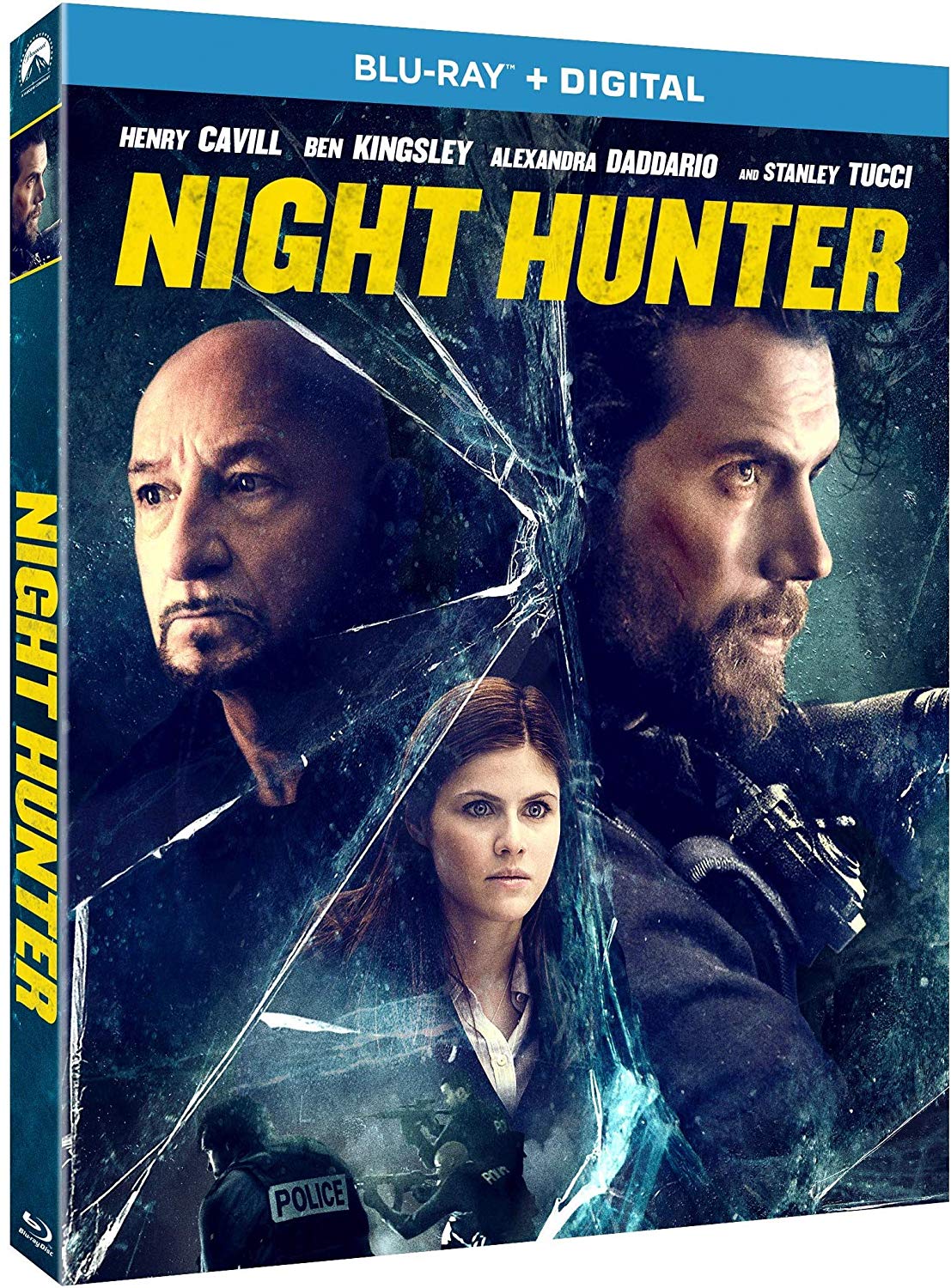
When it comes to gritty detective films, Seven and Zodiac are two that help define the genre.  It seems like there are so many films that are attempting to piggyback off the style, but so many films fail because they are trying so hard to copycat the films, or they simply pull their punches with the material.  Night Hunter is the newest film to make an attempt but sadly just falls apart.  There is a lot of potential in this film, with Henry Cavill (Man of Steel) taking the top billing; then there are Ben Kingsley, Stanley Tucci, and Nathan Fillion filling out the cast. The cast and the storyline give this the potential to be a great thriller, but unfortunately the delivery ends up being something just a little better than an episode of Law and Order.

After a woman manages to escape from her kidnapper, exhausted and barely clothed in the cold, she chooses to take a leap from a bridge rather than go back into the hands of her attacker. The leap ends up killing her as she lands on the back of a logging truck, and this is where Marshall (Cavill) comes in, as he’s tasked with investigating what happened to the woman. On a more entertaining side, there is Cooper (Kingsley), a former judge. With the aid of his young ward they lure out pedophiles, and after the would-be sex offender has succumbed, they castrate the men.  Yeah, this film starts off dark and sets us up for what we hope can be a gritty vigilante tale, but instead this goes a much more safe and generic route.  Really, what are the odds that the same attacker involved with Marshall’s case would just so happen to kidnap the girl working with Cooper? It’s a bit of a stretch, but this film takes so many leaps in logic that it becomes borderline absurd.

"Come and see. Come and see. The death of humanity upon a shore of corpses, broken heads, spilled guts, scorched flesh. Come and see the young tearing each other's throats out. Rivers of poison will flow through the halls. Oath breakers. Philanderers. Murders will wade through those rivers. Come and see. Come and see."

When Vikings started five years ago, I found it to be quite an ambitious task for a network that usually featured documentaries and reality shows about odd jobs. I approached this one with some caution. Now I've thrown caution to the wind for these compelling characters. I was particularly drawn into the lead. Travis Fimmel was outstanding as the Viking leader Ragnor Lothbrook. When his character was killed off after three years, I suspected things would be winding down for this experiment. I could not have been more wrong. Alex Hogh Andersen plays Ivar, his crippled son, who rises to be more powerful and more brutal that Ragnor ever was. The actor shares many of Fimmel's characteristics, both in his physical look and the way he carries himself. It's one of the most perfect father-and-son casting pairs I've ever encountered. Because of Andersen, the show has been reborn, and there's still a lot of life in this series. The release of the first half of Season 5 is another strong contribution to your home entertainment library.

As a kid growing up in the 70's and 80's, I quickly grasped the concept of a good short.  Whether it was a tiny piece before the movie started at my local cinema or a Looney Tunes cartoon on my 13-inch television, I saw how hard it was to capture the audience in the span of such a small frame of time.  However, when those directors are able to capture that lightening in a bottle, it can produce some amazing results.  Today, we are taking a look at Genius Party and Genius Party Beyond and see if a few of these fantastic directors can create a memorable slice of anime.

Genius Party and Genius Party Beyond are two collections of shorts released in 2007 and 2008 respectively.  It is twelve pieces by twelve different directors with different animation styles.  In the following bylines, I'll try to piece together what each of these takes are about and then have some broad comments after.

"Is that where a blind cop kidnaps an Uber driver?"

That pretty much tells the story of Stuber. The title is a combination of the lead character's name, Stuart and Uber. With the advent of Uber, the entire concept of hiring a ride has changed significantly. Taxi drivers are swiftly becoming a thing of the past, and ride-sharing aps like Uber and Lyft are taking over the market to the point that taxi companies do not even exist in some cities any longer. I have to admit, I'm not so sure I'm completely on board with the idea of regular unregulated folks out there picking up complete strangers who happen to have hailed them via their cell phones on an anonymous app. It's a bit dangerous for both parties, and it's not surprising that the horror stories have been appearing in the news about these ride experiences going horribly astray. That's the fear or reality that serves as the central theme for Stuber. While I'm sure the first Uber horror film is either in production or at least being written as I type these words, Stuber opts for the more comedic and action-oriented version of the idea. But make no mistake. More is coming.

I wonder how this film would have been received if The Road simply didn’t exist.  It’s just about impossible to watch this film and not see the striking similarities between the films, though Light of My Life definitely isn’t as grim or as brutal as The RoadLight of My Life is the directorial debut from Casey Affleck, who seems to be following in his brother’s footsteps by taking the step behind the camera.  How does he fare behind the camera?  He definitely shows that he has a solid eye when setting up his shots and telling a story, though there is certainly room for him to improve.  It’s a bold move to make a post-apocalyptic film your first feature and decide to star in the film as well, but for me I was glad to see him take such a risk, and I’m impressed he almost nailed it. The film takes us into a world where most of the world’s female population has been killed off by some sort of a disease.  While the world isn’t quite in shambles, we definitely see that society has quickly crumbled as cities struggle to thrive. Rag (Anna Pniowsky) has somehow managed to survive this vicious disease, and with the aid of her Dad (Casey Affleck) he’s kept her alive and has been training her to survive in this hostile environment.  This is pretty much a father’s worst nightmare for his daughter to grow up in, and we get to see how her father deals with everything from suspicious travelers to simply educating her on puberty.  By keeping the film focused on the relationship between the father and daughter, the film excels at getting us involved and attached to this pair, but we also know in this type of film there are some inevitable bad things to come.  Here is the problem: the film manages to pull its punches when it comes to the danger of the world they exist in. Sure, things are hinted at, but for a majority of the film everything feels like it’s building to something that never occurs.

Do things need to be as bleak or as in-your-face as The Road for this to be good?  No, but for a film that has an R rating this feels like a very neutered film that just is afraid to go dark.  It’s obvious this film wants to be about a father’s love and show the extent a father will go to protect their child, but really I don’t believe this father figure would survive in this world or succeed at protecting his child as well as he has.  We don’t get to see Rag as a hunter, or having much if any ability to defend herself if someone were to attack her. You’d think these would be things he’d want to teach her, but instead he’s invested in teaching her to run and hide.