Posted in: Disc Reviews by Brent Lorentson on January 9th, 2020
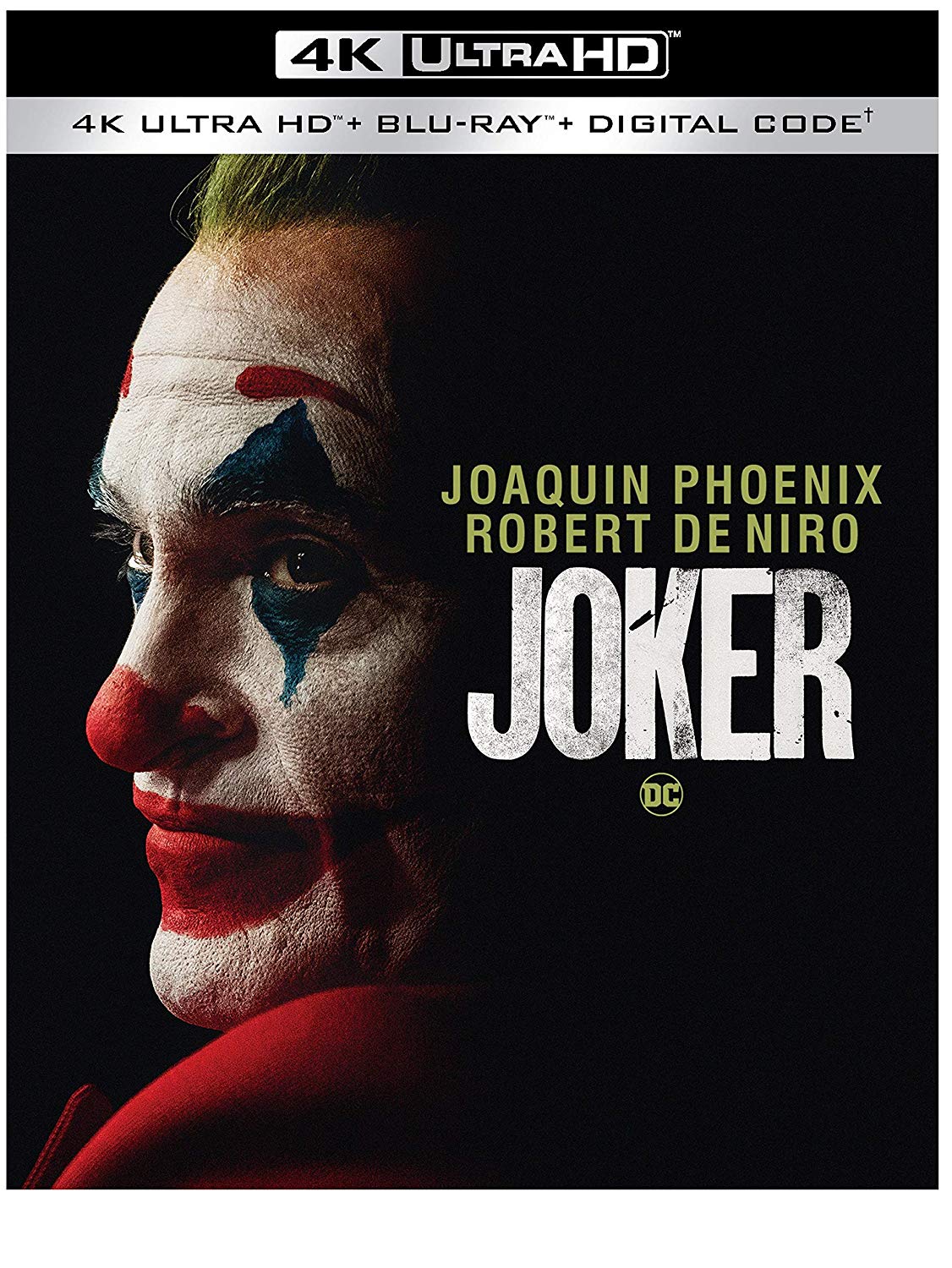
“Art is dangerous.” It’s a quote that has been passed around over the decades, and it’s something I tend to agree with. Over the weeks building up to the release of the film, there seems to be a manufactured panic about what could happen when Joker releases onto the big screen. In Aurora, Colorado they’ve elected to not show the film as a way to not trigger local residents that were involved in the 2012 shooting. This I can understand considering the shooter did indeed dress as the Joker when he committed his act of violence. As for other parts of the US, the local police and military have been placed on high alert, all because people are worried about the gun violence and how it may motivate deranged fans to go on shooting sprees. This obviously is not what the studios or filmmakers ever intended, but it is unfortunately a sign of the times that we are living in. No one should have to fear going to the movies. The theater for many is the place for audiences to escape for two hours and forget the troubles and the horrors of the real world, and my hope is audiences will be able to do so without violent incidents.
To be fair, Joker isn’t the first film to have the spotlight thrust upon it due to its violence, nor will it be the last. A part of me even wonders if the controversy was even manufactured to create more buzz for the film. After all, scaring audiences has always been a powerful tool in marketing, when you look back at the films of William Castle and Roger Corman. For some of their films audiences would have to sign waivers to ensure the studio wouldn’t be at fault if anything were to happen to audience members while watching the film, while having ambulances parked outside the movie house. Is it a stretch to believe the studios would do this? Maybe. But is it possible, considering how the box office is underperforming, that people will attempt to create buzz for the film? And then there are the political motivations, attempting to use a film in the fight for control. So many possibilities, so much controversy, and still as I write this, the film hasn’t even been released to the masses for them to judge for themselves.
Posted in: Disc Reviews by Brent Lorentson on January 8th, 2020
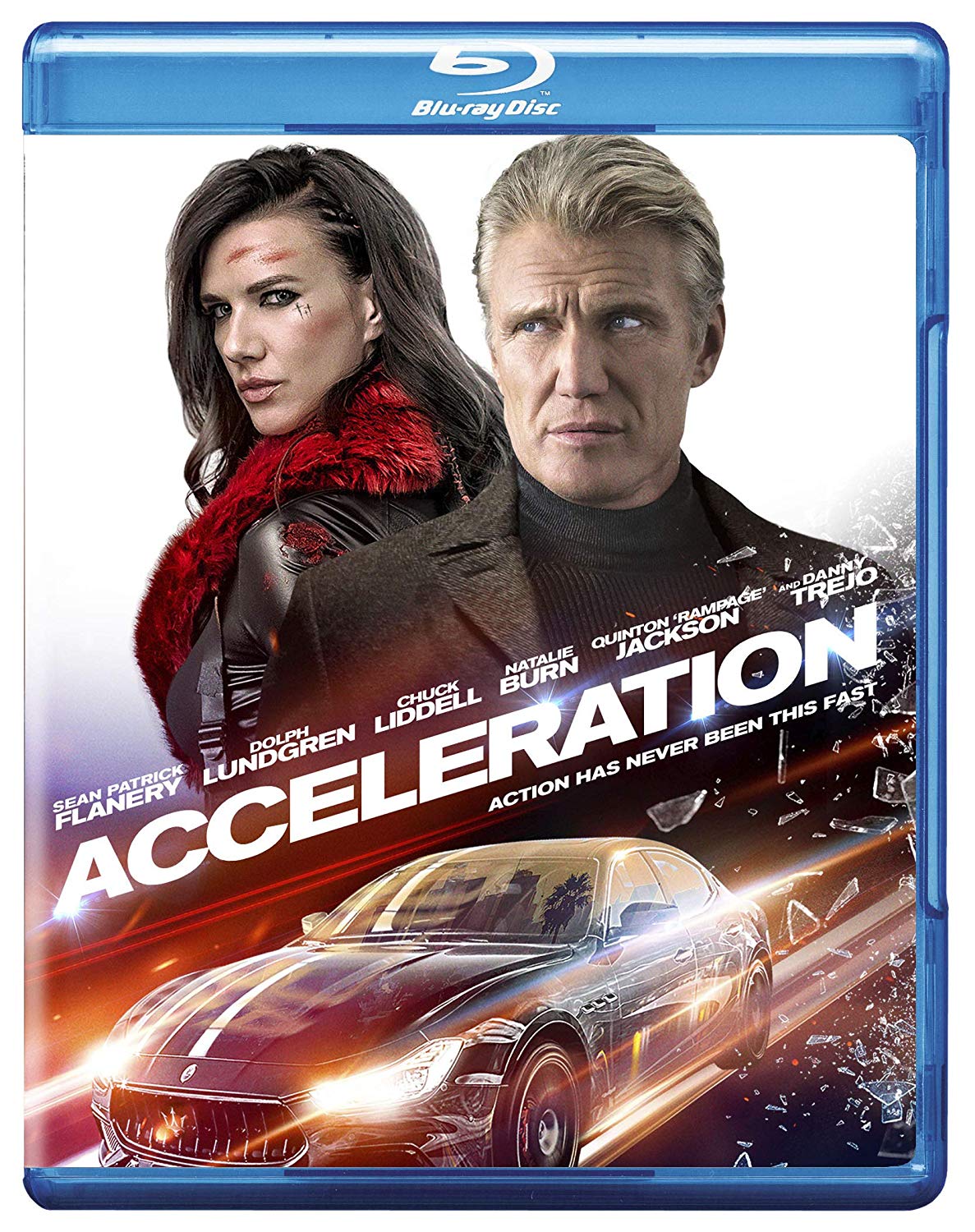
When it comes to B action films, there is a threshold for what your expectations should be for the film. In the grindhouse era there were some pretty good quality action films, but as the sub-genre stretched into the 80’s and 90’s, the quality just got worse, though they’d always find some star whose celebrity was on the verge of fading. Dolph Lundgren has managed to hang in there and continue to get roles even though it’s been more than a couple decades since he last had the top billing for a Hollywood blockbuster. Personally I’ve always liked the guy; he can still be a charming badass or also play the heavy when need be for a film. Sure, he’s aged, but I can still believe he’d have no trouble kicking some onscreen ass. The one thing that the filmmakers of Acceleration got right was to cast Lundgren in their film where we get to see him play the good guy as well as the bad guy. As for the rest of the film, well, they had a good idea and a nice lineup of B-movie action stars as well as former UFC fighters, but the result falls well short of its potential.
One of the biggest mistakes this film makes is having an opening that makes little to no sense to the viewer as we are seeing Vladik (Lundgren) and Rhona (Natalie Burn) gearing up to kick some ass. The film then backpedals eight hours to where Rhona is having to go on these five mini-missions while Vladik is watches her from the privacy of a room filled with monitors; to watch Rhona, he has a camera in her car. Basically this film has no concept of three-act structure and has decided viewers don’t need to have characters set up or plot set up; they just throw us into the action. It takes a while till we learn Rhona’s son has been kidnapped, and the only way to get him back alive is to complete these five tasks in the span of eight hours. Then there is the side plot of Kane (Sean Patrick Flanery), who is the big crime boss who is trying to figure out who has stolen from him. The threads connecting all this together are thin, and despite how hard they try to make Kane seem like a menacing threat, it’s just hard to take him seriously because of his actions. An example of his menacing actions … sexual innuendo involving pie at a café where he randomly runs into Rhona … then there is a terrible scene that seems to want to recreate the tension of the Russian roulette game in The Deer Hunter. I don’t blame Flanery for this, because his performance is one of the things that saves this character, but it’s the situations the character is put into where I could never believe he was a successful crime boss.
Posted in: Disc Reviews by Michael Durr on January 7th, 2020
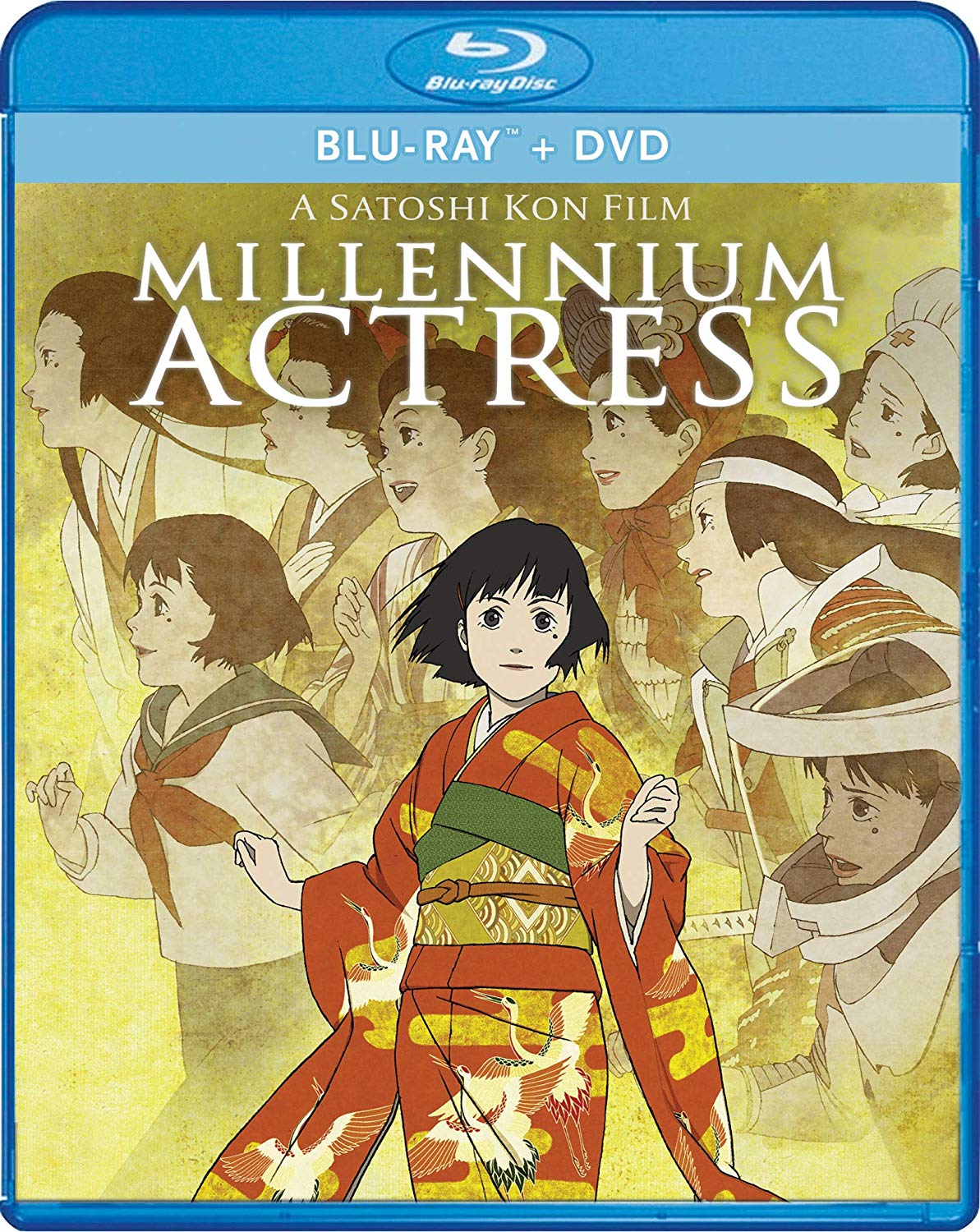
I think most people have had the fantasy of what a film of their life would look like through the camera lens. The high points, the low moments, and everything in between. Perhaps it would be boring (probably most of us), or just perhaps it would be brimming with excitement. Whatever the situation, we just hope that somebody else would find it interesting or at least star our favorite actor or actress. Today, we bring to you a review of an anime that tells the story of Chiyoko Fujiwara, an experienced actress, through one filmmaker Genya Tachibana's passion and the lens of his cameraman, Kyoji Ida.
We are in space where a female astronaut says her goodbyes as her crew pleads with her not to go. The countdown starts. The screen shifts back to Genya Tachibana, who is watching this presentation, which we now realize is a film staring the great Chiyoko Fujiwara. An earthquake shakes the film room where Genya is watching. It stops after a minute, and Kyoji Ida comes in and tells him that they need to go. The filmmaker gets up and starts to follow. He stops and then decides to rewind the tape he was watching. As he leaves, we watch the monitor display various moments of Chiyoko's film career. Cue credits and emotional music.
Posted in: Disc Reviews by Jeremy Butler on December 29th, 2019
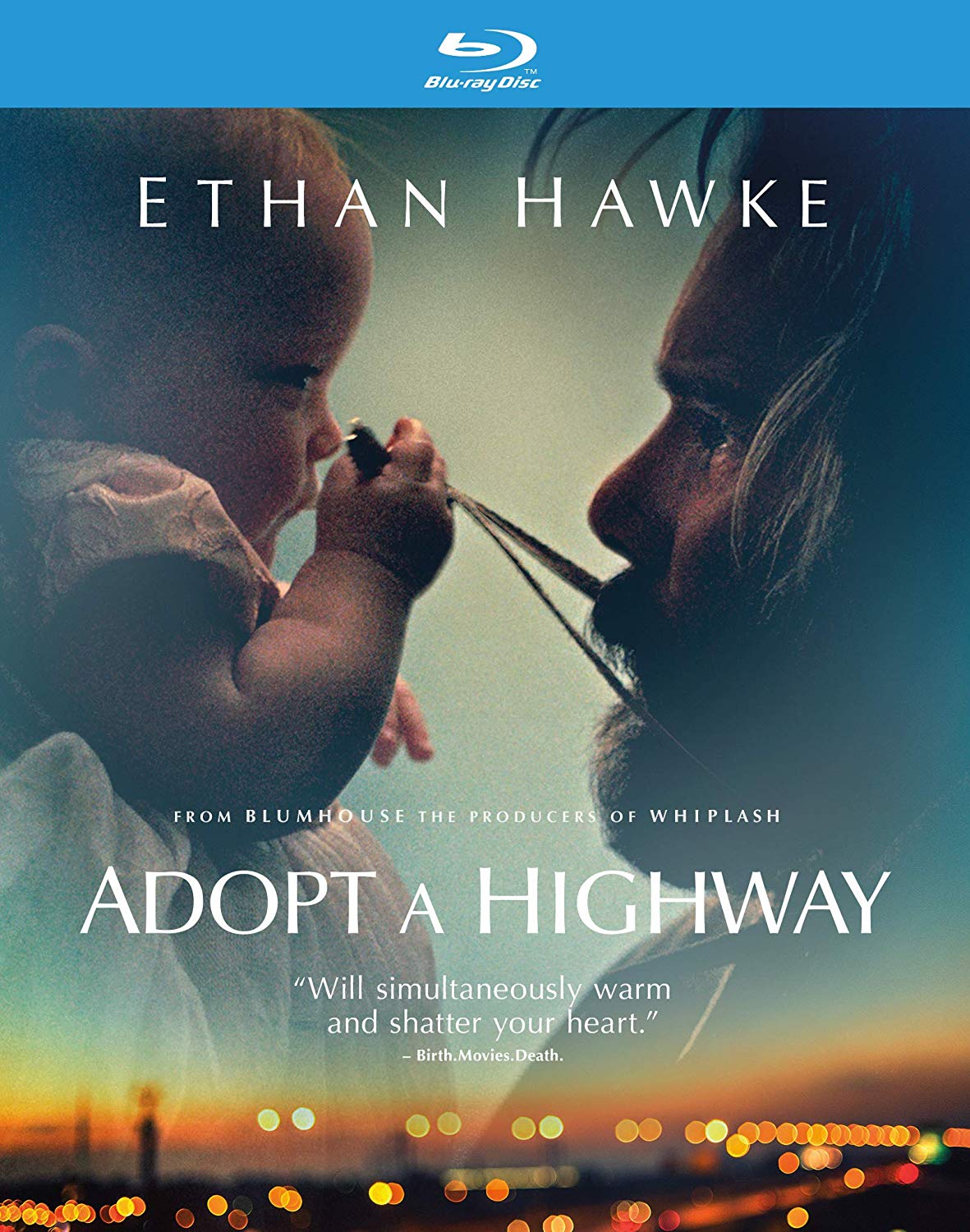
It’s been a while since a film has come along that has frustrated me as much as Adopt a Highway has. The film opens up with numerous sound bites that are discussing the “three strike law” from the Clinton era. This is pretty much used to set up a bit of a back story for Russ Millings (Ethan Hawke), a “victim” of this third-strike law that resulted in him serving 21 years for possession of an ounce of weed. With this kind of opening, I’d be expecting this to be a film that would delve into the unfairness of this law and how it affected many individuals, but instead, this film had other plans. The film takes on the journey Russ takes from his last day in prison to being thrust out into the free world again, but over the course of two decades, the world is nothing like it was before. Russ is in a unique situation where he went into prison in the late 90’s, and upon his release he’s now in the digital age. Basically he’s never had an email, nor has he had the chance to discover internet porn or YouTube. There is so much potential with this character, but at the same time, while watching this, I couldn’t get past his numerous bad decisions.
The first of his many bad decisions comes when he finds a baby in the dumpster behind the fast food restaurant where he works. With the baby there is a note that reveals the babies name is Ella. Conflicted about what to do, Russ decides to take the baby to his motel room, wanting to take care of it. If he found a dog or a cat, then I can understand him wanting to take care of it, but seriously, this guy thinks he can take care of a baby? At first it’s adorable seeing him make bad decisions with taking care of the baby, but very quickly we see how fragile this baby’s life is in his hands. Just as the film seems to have its footing and we think it’s going to be about Russ and his adventures with the baby, the film takes a sideways turn. This plot change could have worked if only the following story were just as interesting, but instead it’s a bit dull by comparison, and before you know it this film is already wrapping up, and you’re wondering, “That’s it?”
Posted in: Disc Reviews by Gino Sassani on December 20th, 2019
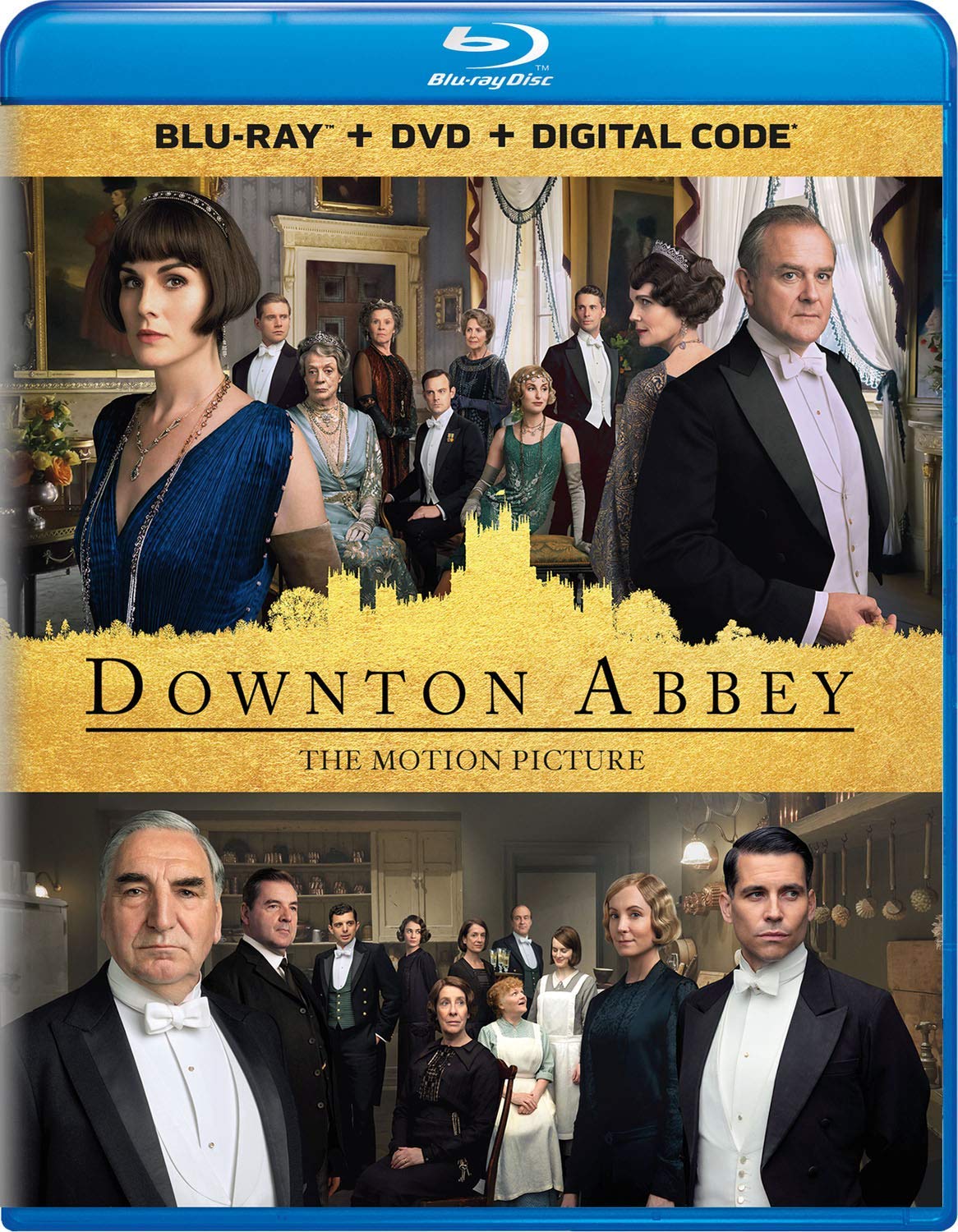
Downton Abbey spent six years on television and has amassed 52 episodes. In that relatively short run the series has also managed to collect over 200 award nominations and several Golden Globes along with other prestigious awards. Let's not forget a rather loyal fan-base that has watched each episode with anticipation of the next sharp barb or character revelation. The fans have been vocal and strong enough that a new film franchise has been anticipated to fill the void left by the series. In one of its years it was the number-one binged series in the world. That's a lot of power, and it's little wonder that all of these ingredients are expected to create a little box office gold. But film franchises from television shows rarely go on to such golden heights. There are some notable exceptions, to be sure. But even here, expectations and changing caretakers often lead to both high points and flops. The Star Trek franchise is a perfect example of those kinds of ups and downs. Mission Impossible is an example of shows that have to be completely retooled to hit the high numbers. Where will Downton Abbey fit in this equation? I rather suspect the jury is still out. One thing I can tell you with complete confidence: the film will absolutely entertain fans of the series. There's no retooling to be found here, and you can expect the same kind of drama that you've been mainlining for 52 episodes.
The original series left the Crawley family at the Christmas of 1925. A little over two years have passed, and we rejoin the family in the summer of 1927. The family appears to have come to a point where they have to face the possibility that the aristocracy in Great Britain might be finally coming to an end. There is much conversation about having the family finally give up Downton Abbey and place themselves into somewhat normal British society. The manor doesn't bring in the kind of wealth it once did, and keeping it going will require making some serious cuts and sacrifices. Amid this crises of conundrum, Robert Crawley (Bonneville) is informed that the King and Queen of England have decided to visit the Abbey and spend an evening there. The occasion brings about a flurry of preparations. One of these preparations involves the newly promoted butler. Thomas Barrow might not have the right experience or demeanor to handle such a huge job. Lady Mary (Dockery) decides to reach out to their seasoned but retired former butler, Mr. Carson (Carter). It's actually a quite clever way of giving the show some kind of major story and a great excuse to bring back the familiar character so that fans can get at least one more visit with things very much as they were at Downton Abbey.
Posted in: Disc Reviews by Brent Lorentson on December 17th, 2019
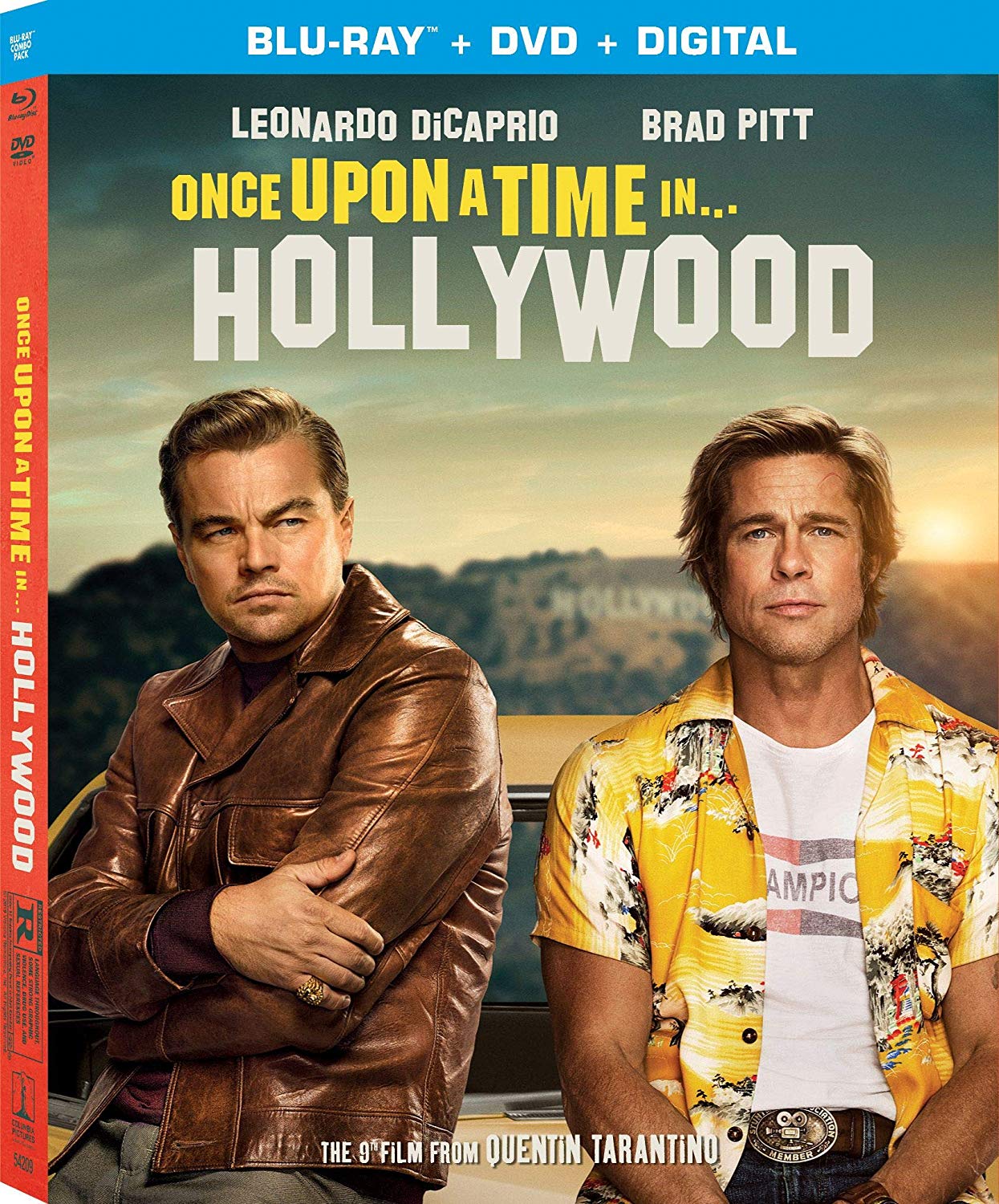
When it comes to Quentin Tarantino’s ninth feature film, Once Upon A Time in Hollywood, while it may be the most personal film that QT has put out, for some fans this may be his hardest to embrace. For many fans, when they think of a Tarantino film the go-to titles are Pulp Fiction and Kill Bill, and there is nothing wrong with that, but if you’re going into this film with expectations for it to resemble those films, well, you’re going to be disappointed. Instead what Tarantino delivers this time around is something more ambitious; while it may not be heavy on plot, what it thrives on is character and its ability to take us back in time to Hollywood in 1969 as it was closing in on the end of an era. Other fans may be coming into this film expecting this to be a story that delves into Charles Manson and his followers because of the film having Sharon Tate in it; well, again, this is something where you need to put expectations aside and allow Tarantino to let his story unfold for you, because as expected, he takes this film into an unexpected direction.
The film is about Rick Dalton (Leonardo DiCaprio), a fading TV western star, and his stuntman and best friend Cliff Booth (Brad Pitt). Rick is being offered an opportunity to make some films in Italy as a last-ditch effort to salvage his career, while Cliff is doing what he can on a day-to-day basis to stay afloat in Hollywood as a stuntman, though mostly he is Rick’s gopher and driver. The relationship between these two men is the strength of the film despite them having little screen time together, but when the two do share the screen, it’s something special that’d I’d compare to seeing Newman and Redford together. Tarantino knows what he has with these two together, but these characters are both on very different journeys in the film. Rick is doing a guest spot on the hit western TV show Lancer, while Booth is doing work at Rick’s house and meeting a charismatic hitchhiker.
Posted in: Disc Reviews by Gino Sassani on December 6th, 2019
"This is a story about control. My control. Control over what I say. Control about what I do."
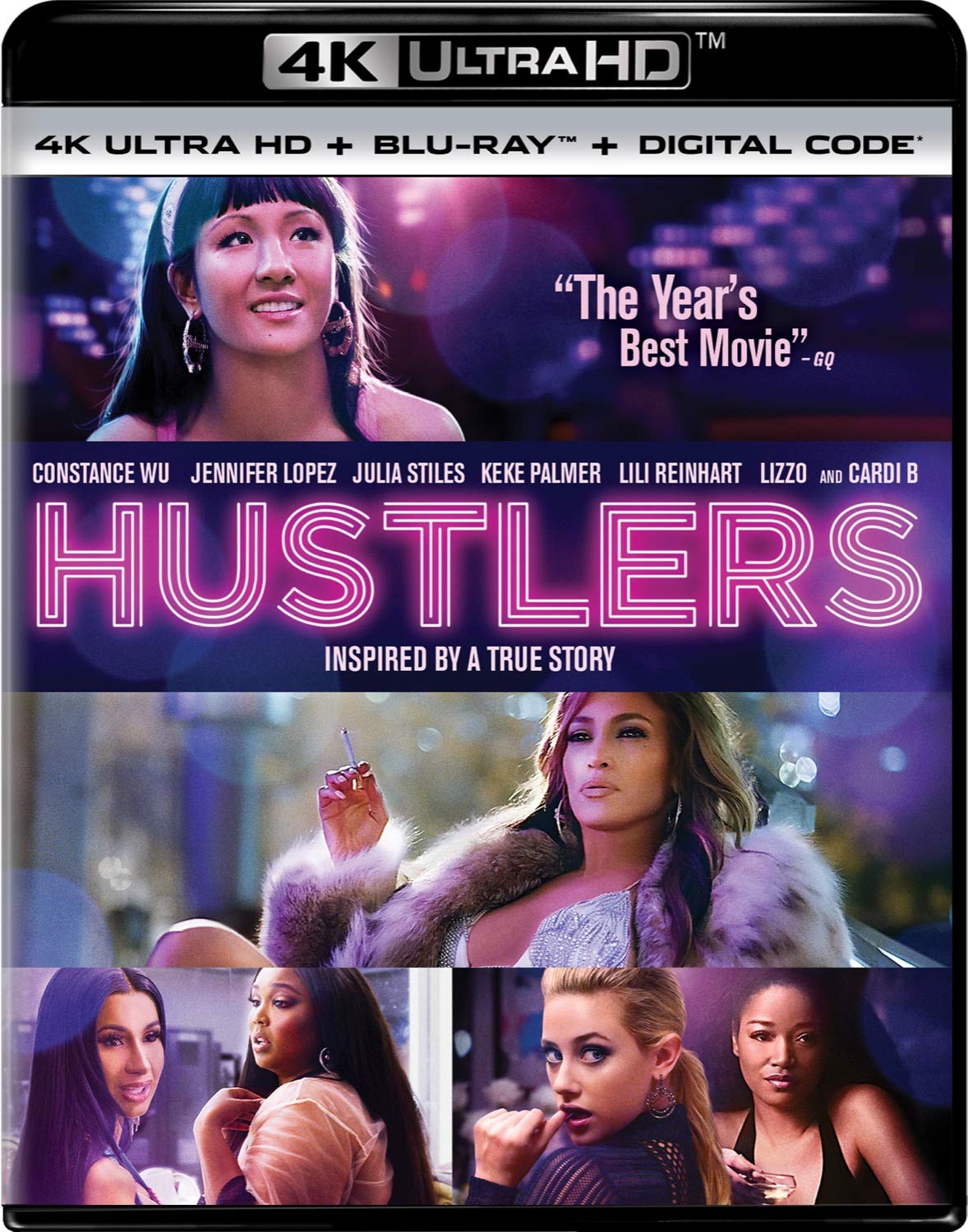
Hustlers tells the "true" story of a team of strippers who found a way to turn the tables on their Wall Street clients and is based on a New York Magazine article by Jessica Pressler. It promises a pretty good time. I mean, think about it. Wall Street is the stuff of mustache-twirling villains these days. Brokers might have dropped beneath ambulance-chasing lawyers and used car salesmen as the people we love to hate. Throw in some strippers and a clever con that happens to target these modern bad guys, and it sounds like the kind of romp that has something in it for everybody. Well ... maybe not the Wall Street guys who go to the movies, you might say. Did I mention it's got strippers? At first blush the film reminds me a little too much of Paul Verhoeven's infamous Showgirls. The problem is that the schlock value of that film has allowed it to find its place in film history, and so it has survived in all its badness. Will the same be true of Hustlers? Or will it quickly vanish into a sea of obscurity before another couple of years are over? I have to say that I suspect it's the latter. By this time next year, you'll be asking a friend what the name of that stripper film with Jennifer Lopez was last year. Let me know if anyone remembers, won't you?
Posted in: Disc Reviews by Brent Lorentson on December 4th, 2019
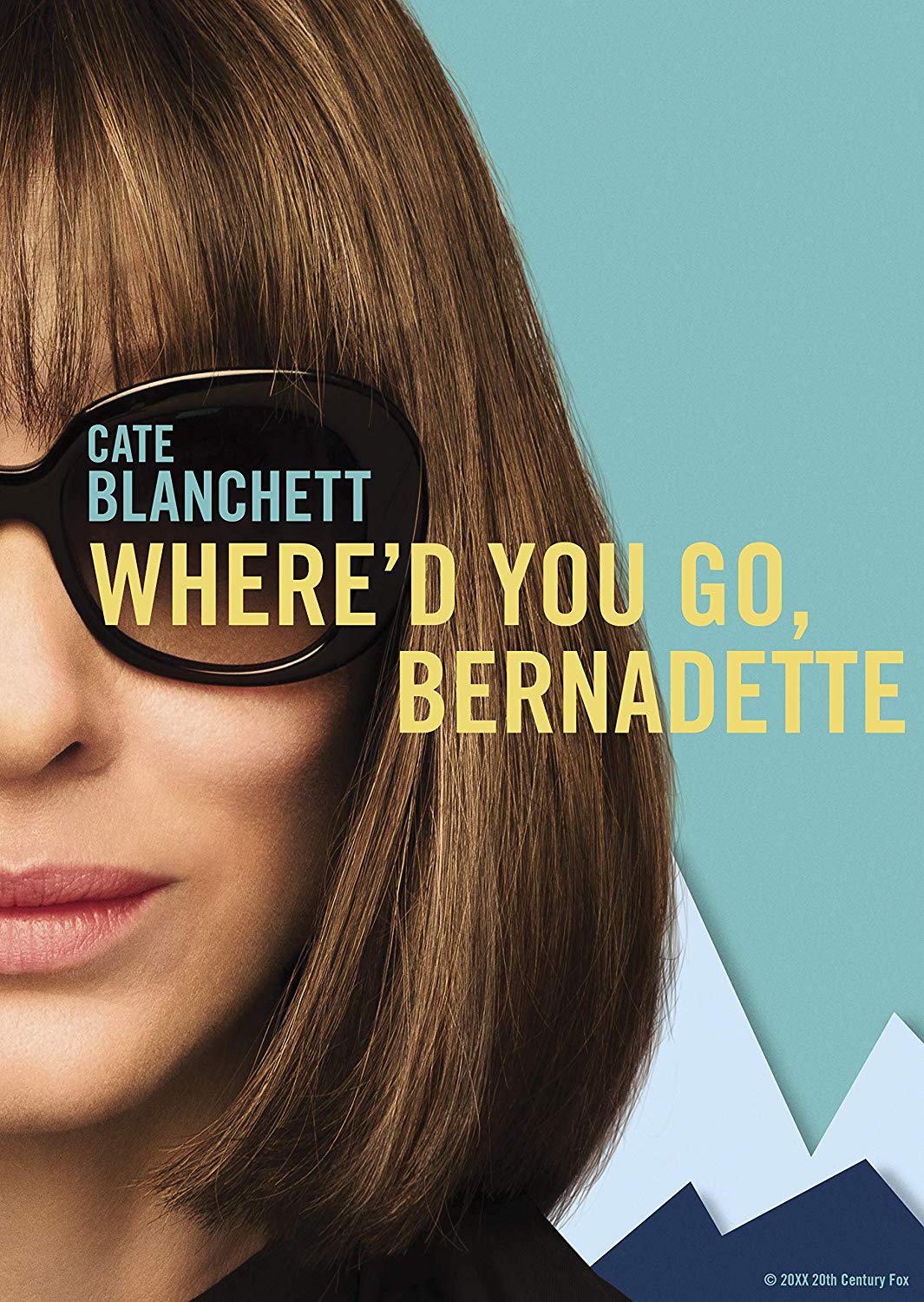
When a film comes along directed by Richard Linklater, I’m always going to have a little interest in what he’s up to. He’s one of those directors I’ve followed from the 90’s that every few years he cranks out a film that I can’t help but enjoy. Dazed and Confused, his Before Sunrise series, Boyhood, Everybody Wants Some!!, School of Rock, and several other of his films are proof enough that he has a solid filmography, but he’s never quite been the guy to make a splash at the box office. Because of his track record, I’m a bit surprised to see his new film Where’d You Go, Bernadette managed to squeeze into the tail end of the summer when the trailers would have me thinking this could be an awards-caliber film. Well, as it turns out, the film is a swing and a miss. While I still enjoyed the film, it’s a bit frustrating, because this film seems like it’s so close to being something great, but it just manages to disappoint throughout.
Bernadette Fox (Cate Blanchett) is a bit of a mess, to put it lightly. She’s more than a little difficult to get along with, she heavily self-medicates, drinks, and seems to hate most people with the exception of her family. From the start it’s a bit difficult to decide if Bernadette is simply a quirky individual or if she is genuinely just an unlikeable person. The problem is the film doesn’t seem to know either, so with each awkward situation we see Bernadette get into, she just becomes a frustrating and tiresome character. We see she doesn’t get along with her neighbors, and her relationship with her husband, brilliant computer animator Elgie Branch, played by Billy Crudup, is odd in its own way as well. It’s hard to understand why they’d be on board for a last minute trip to Antarctica.
Posted in: Disc Reviews by Archive Authors on November 27th, 2019
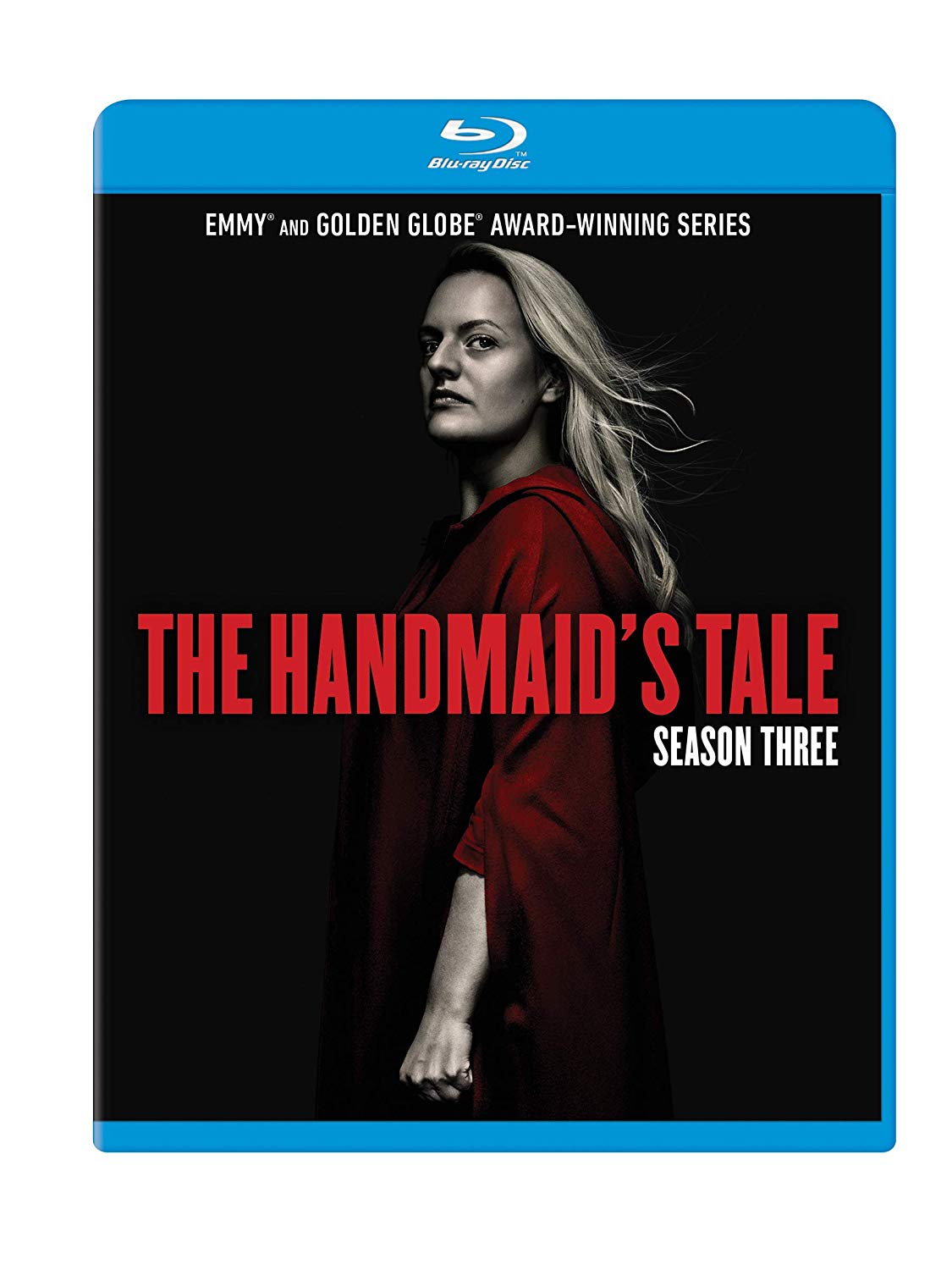
The most amazing thing about The Handmaid’s Tale — other than a powerhouse lead performance from the best actress working in television right now — is that this harrowing, suddenly timely cautionary tale about what happens when society falls asleep at the wheel is based on a story that was published more than 30 years ago. Of course, the show has a lot more going for it than impeccable timing. The Handmaid’s Tale is based on Canadian writer Margaret Atwood’s 1985 novel of the same name. Sometime in the not-so-distant future, the world is in chaos after environmental pollution and sexually transmitted diseases result in a catastrophic decline in human fertility rates. In the U.S., the result was Second Civil War, which led to the establishment of a totalitarian, Christian fundamentalist government known as Gilead. And while life isn’t exactly a picnic for anyone outside of Gilead’s elite ruling class, life is especially dire for women: they are not allowed to own property, work, handle money, or read. Much of this information is revealed in dribs and drabs over what is now three seasons.
The Handmaid’s Tale is created by Bruce Miller, a writer producer who worked on SyFy’s Eureka and The CW’s The 100. The former series offered a cracked-mirror, off-center version of reality, while the latter is a post-apocalyptic drama: both sensibilities proved extremely beneficial for Handmaid’s. A large share of the credit also goes to Reed Morano, who won a directing Emmy for her work on the pilot and established the show’s spellbinding visual tone by helming the first three episodes.
Posted in: Disc Reviews by Brent Lorentson on November 22nd, 2019
I have to be honest; when I got this title and saw that Jim Gaffigan was starring, I didn’t know what to expect, but I went into this film with some low expectations. I’m a fan of Gaffigan, and I own a few of his stand-up albums, but seeing him headlining a thriller, well, it was a tough leap for me. Now that I’ve seen the film, I got to say I’m impressed by what he pulled off with this film. That being said, as I was watching this film, I couldn’t help but see a similarity between Gaffigan and the late Philip Seymour Hoffman. I doubt this was intentional, and perhaps it’s just my subconscious attempting to make these connections, but Gaffigan’s performance in this film is on par with many of the performances we saw from Hoffman in his later years. As for the film, American Dreamer follows Cam (Gaffigan), a down-on-his-luck schlub who at one point was living the American dream: a good job, a nice home, and a wife and child. Then he lost his job, and everything else seemed to disappear around him. Now he’s a driver for a ride share company, where he struggles with paying child support and has had a bit of a mental breakdown. Early in the film we get to see him in a parking lot near an airport, watching as planes are coming and going, and its obvious Cam is dreaming of an escape from his life. He ends up getting a fare that has him driving a small-time drug dealer, Mazz (Robbie Jones) around town. The setup here seems simple, as it establishes who both of these men are, but over the course of one night we’ll see these men make some difficult decisions, and by the time the film ends, you will definitely feel differently about these characters.
After reading the blurb on the back of the Blu-ray and starting this film, I was a little worried that this would be something akin to Collateral meets Falling Down. When we see Cam come to his breaking point and he decides to kidnap Mazz’s son, sure, it’s a drastic leap for someone to make, but the way the writers and director handle this situation, it still remains in the realm of possibility. That pretty much is how the rest of the film plays out; there are a lot of worst-case scenarios that happen to both Cam and Mazz, and it’s what keeps the viewer on the hook. What I was most impressed by is how co-writer and director Derrick Borte wasn’t afraid to go dark with this film, because there are a few decisions made in this film that are pretty risky, and most filmmakers would avoid entering this territory, but personally I think it’s the risk that makes this film work. (It would be a huge spoiler if I were to say what this risk was.) But by taking that risk, the viewer knows anything can happen in this film. and it’s what literally kept me guessing at how this would all end for Cam and Mazz.