Genre

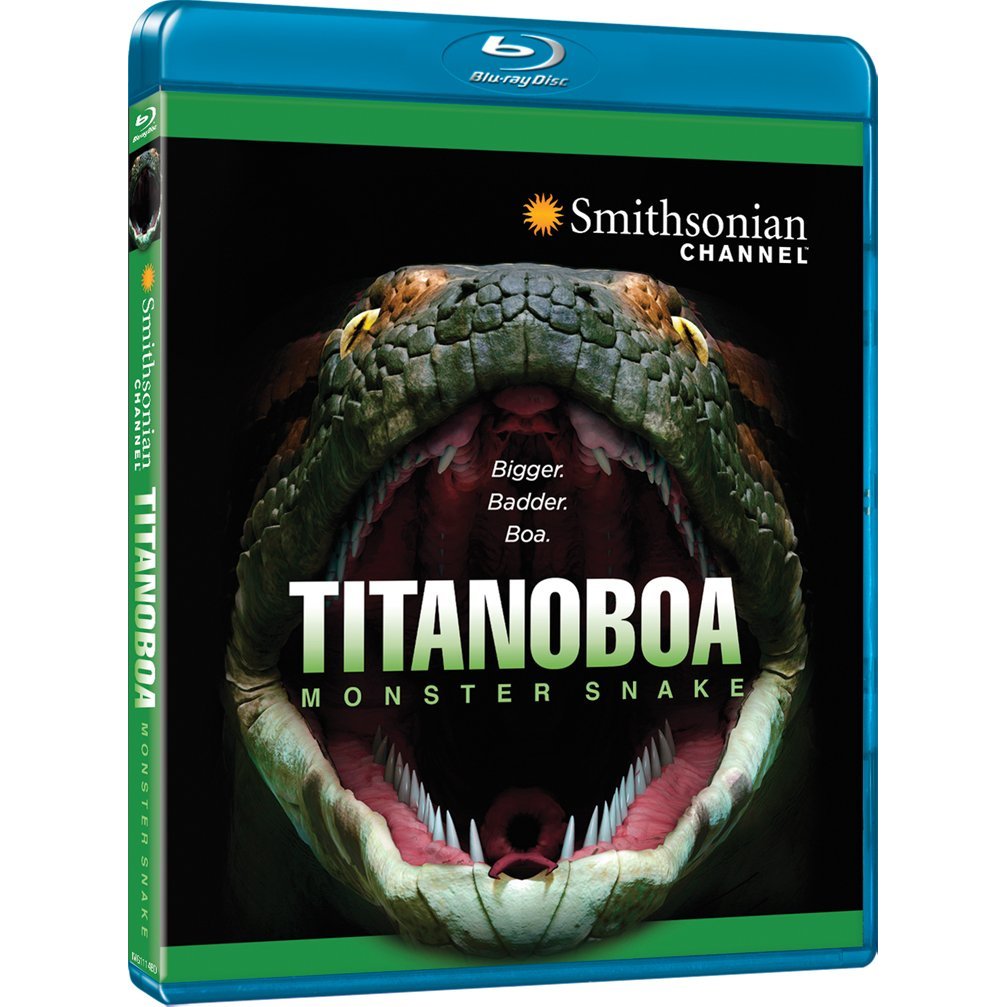
"In the pantheon of predators, it's one of the greatest discoveries since the T-Rex: a snake 48 feet long, weighing in at 2,500 pounds. Uncovered from a treasure trove of fossils in a Colombian coal mine, this serpent is revealing a lost world of giant creatures. Travel back to the period following the extinction of dinosaurs and encounter this monster predator."

With a title like Titanoboa: Monster Snake you might be expecting the latest huge monster mash-up from Roger Corman or the latest cheap CG creation from the SyFy's Original Movies series. Huge snakes have been common fodder for both of these places. But the monster snake depicted in this film comes to us from The Smithsonian Channel, and this guy really existed.

The Killing began life as a Danish television series. We are used to seeing British shows reinvented for American audiences, but it's rare to find something from Danish television that someone found so compelling they decided to work it for the competitive American television landscape. It's no surprise that such an effort would find its way on cable rather than network television, where boundaries can really be pushed and explored.

AMC is a pretty good choice to land such a show. They've committed to some pretty groundbreaking shows in the few years they have produced original programming. Anyone who has caught an episode of The Living Dead certainly knows what I'm talking about here. The once movie-exclusive network has already proven a willingness to push the boundaries of television. So with all of this boundary pushing you might expect a cutting-edge series that plays out unlike anything in the genre. You would think so, but you'd be pretty disappointed.

Review writers like regular authors often have difficult times coming up with beginnings. Personally, I like to use an event from my history or relate some curious fact that parlays into the review. I figure I will be spending eight to ten paragraphs about the actual product, why waste the time and do more. Well today, I am reviewing the Real Adventures of Johnny Quest and let us just say if it was up to me, I would deviate as much from the source as I humanly could. But onto the review I go.

Author’s Note: This is a Warner Archive Disc (or two discs rather). It is supposed to be available on Amazon in addition to the WB Shop but at the time of this writing, it is not (4/6/12). So therefore, if you really want this addition to your Johnny Quest library, go the following address (WBSHOP) to purchase it:

Roman Polanski's seminal neo-noir finally makes it to Blu-ray. Gino has already handled the previous DVD release, so I'm going to turn the reins over to him for a while, then jump back in.

"Jake Gittes is a Chandler style detective with all of the trappings. From the office to the secretary and the cop friend, Gittes is a cliché. He appears to specialize in tracking down extramarital affairs. When he’s hired to keep an eye on a rich millionaire, the subject turns up dead, and maybe it wasn’t his wife at all who hired him. Gittes now must investigate to save his own hide. His investigation leads him to a corrupt water department taking advantage of a manufactured drought. His client has a dark secret that only complicates Gittes’ efforts.

Thankfully, I have never been scammed out of any large amount of money unless you count my ex-wife. *drum roll*. I think of myself as fairly intelligent but sometimes intelligence is not enough when a large enough pyramid or ponzi scheme walks across your front lawn. Furthermore, when somebody you trust tells you it is a sure thing, it is hard to look the other way. Let us proceed with a documentary on one of the most famous ponzi schemes of them all with deception played by one Bernie Madoff.

Melodramatic music go! Blood dripping! Fire crackling! Wife snoring! Oh wait, nevermind. In the beginning, we hear a quote that Wall Street has always been about making a profit. Then we hear a bunch of news reports about Bernie Madoff pulling off a $50 billion ponzi scheme. Outrage is rampant and people want to know why the SEC did not catch this sooner. Let’s join H. David Kotz, Inspector General for a sentence or two before we get more dramatic special effects.

Nine college friends are reunited by the death of a beloved former classmate. While attending his funeral, they learn their wealthy friend has left behind a will stipulating that each of them will receive a big chunk of his fortune if they can stay at his mansion for five days without a single person leaving. So basically, this terrible movie is an unholy mash-up of The Big Chill and The House on Haunted Hill. Come to think of it, I would've liked this flick a lot more if everyone had been murdered by ghosts.

That's because pretty much every character in Dysfunctional Friends — the early frontrunner for the 2012 Just Go With It award for Laziest Movie Title — is completely unbearable. (This, despite the fact that notorious NFL malcontent Terrell Owens isn't even playing himself!) I know this group of estranged "friends" is supposed to be self-centered, but it's impossible for the audience to get invested when we simply can't stand any of them.

Wallace and Gromit is the brainchild of animator Nick Park. The British filmmaker tried for years to bring his clay creations alive, but on his own finished a mere 10 minutes in a little over two years. When he met up with Aardman Animations, he was teamed up with the creative talents he needed to make his dream come alive, and come alive these two characters did indeed. They’ve become an overnight sensation in the UK and now all over the world. I was introduced to the characters with the full length feature Wallace And Gromit In The Curse Of The Were-Rabbit.

I have to admit that I was completely won over by the magic of this creation. It’s so simple-looking that it almost appears to be child’s play. The truth could not be further from the perception. Stop-motion animation goes back to the beginning of the cinema itself. Pioneered by the genius Willis O’Brian and perfected by Ray Harryhausen, it is one of the most painstakingly tedious tasks in the film industry today. It has been all but abandoned except for a select few who still follow in the footsteps of greatness. Give Nick Park credit for keeping the art alive and making it look effortless.

If you haven't heard of South Park by now there is certainly something wrong with you. You're just not paying attention. More important, you've got a lot of catching up to do. The show is entering its 16th season on Comedy Central, and Paramount is now giving us the 15th season on high definition Blu-ray. And, if you are just hearing about South Park for the first time, what a wonderful journey you have ahead of you. You might need an airline sickness bag on occasion, but you are in for a solid treat.

After 15 years you would think any show might have to start losing steam. It's true that South Park did appear to suffer some during the middle years, and I was one of those critics asking how much longer the show could go on. But the series experienced something of a renaissance in the last couple of years and is better than it has ever been.

Much like a relief pitcher, sometimes a substitute has to fill in for a movie review. The person is usually a specialist, one who can write up a review in a snap, the blink of the eye. Well, sometimes the relief pitcher runs into a tough power hitter or a wiry runner. I find myself in a similar situation with the dreaded foreign film. It sounds clichéd and uncultured perhaps, but I did not even want to read today! Okay, anyway on to the show of Sidewalls.

The sun rises upon Buenos Aires. We get some depressing narration about the city and how overpopulation has basically made the city a shell of the splendor it once held. The narrator compares this to the humans within the city and how their lives have no direction, the same as an ill-built skyscraper. This narration concludes with a discussion of how letters and numbers in apartments represent class status.

When Peter Gabriel left the band Genesis to pursue his own solo career, it was the break of a lifetime for the band's drummer, Phil Collins. He took over the front-man duties with style, and before long Genesis was enjoying the most commercial success of their lives. Collins provided the smooth, easy-to-listen-to voice that Gabriel really never had. The tunes were instantly more recognizable and stuck with you for a long time. Of course, that meant that Collins would go out and work on that solo career as well. He didn't quite abandon Genesis and managed to keep both careers on the charts for quite a long time. If anything, the two entities became more and more the same. It's hard to distinguish the band's Invisible Touch from anything Collins released under his own name. No problem, as long as the records were selling. And sell they did.

We haven't heard a ton from Collins in recent years. He's always been there. He's toured under both names a few times in recent years. But the releases became less and less successful. Much of this can be traced to Collins' wish to become a one-man band. The last few CD's were produced in his own home studio with Phil filling in for most of the instruments. The lyrics lost much of their creativity, and it seemed that the British rocker had waded deep into stagnant waters.