Disc Reviews

Gone With The Wind is the most popular film of all time still to this day if you talk about adjusted dollars. The Birth of a Nation was the most popular film of all time for a considerable time prior to that. Both films could be said to have a benign view of slavery and white supremacy, although it would be easy to use much stronger language than that. In most circles, both films have been considerably discredited due to this myopic view. Both films almost completely ignore or disregard the incredible cruelty of using human beings as a commodity for commerce. Even that doesn't begin to address the evil. Slavery continues to subjugate and demean up to 30,000,000 people worldwide to this very day, but it was sanctioned by law in much of the United States until after the Civil War. The horror, indignity and monstrous unfairness of it all cannot be overstated. Those involved in the abolitionist movement prior to the Civil War were driven by a fanatical and fervent desire to expose the abominable hypocrisy that was prevalent. A small core of free men and women of all races risked their lives to fight the abomination.

12 Years a Slave was a book that was written as a true account of the blind evil of the time. It is now a movie by young director Steve McQueen (that's his real name; he is obviously not the dead actor). In Saratoga Springs, a young highly regarded musician has a beautiful family and home. His name is Solomon Northup, and he has a good life. He is intelligent, friendly and eager to make the most of his talents. He is persuaded to assist two entrepreneurs with a venture and travel to Washington, D.C. After much success and celebration he wakes up to find himself in chains, and so begins the 12 years. He is transported on a slave ship and changes hands among owners over those 12 years. He is, after all, property. He is now part of a “peculiar institution”.

Instead of featuring episodes from this season in consecutive order this DVD set takes episodes of a similar theme from each of its three seasons and bundles them together. As the title ever so subtly suggests, these episodes all feature animals. Along with sharing a theme, these episodes all follow the same formula that Bubble Guppies has had all along.

The pre-school level teaching of basic numbers, letters etc. and pop-styled songs are all here. This series hits the right level of repetitiveness for toddlers to enjoy it, and probably learn a little from it. The real value of this DVD comes in its run time, which clocks in at 138. This is more than double the length of some other Nickelodeon releases, and since these things are essentially short term babysitters the longer time the better.

Paul Walker built his career on playing tarnished golden boys (Varsity Blues, The Skulls) before breaking out with the Fast & Furious franchise. He wasn’t as decorated as fellow recently-departed colleagues like Philip Seymour Hoffman, Peter O’Toole, James Gandolfini and Harold Ramis, but Walker was unequivocally a Hollywood success. Hours is one of the last films the actor completed before his November death in a single-car accident. The film quickly loses its way after a promising start, but Walker is easily the best thing in it. His work here is a bittersweet glimpse at the sort of roles he might’ve taken on as he progressed through his 40’s.

Hours has a potentially-gripping premise. Walker stars as Nolan Hayes, who arrives at a hospital with his pregnant wife Abigail (Genesis Rodriguez) during a stormy morning. Abigail has gone into labor five weeks early, and we watch a weary Nolan as he sits and waits to hear the fate of his wife and unborn child. Some of Walker’s very best work in this movie comes immediately after Nolan receives tragic news and goes into a state of shock/denial. Eventually, the storm outside knocks the power out in the hospital and forces Nolan to go to extraordinary lengths to keep a loved one alive. This is a good place to mention the film takes place in New Orleans. In 2005. Late August.

Long before Clint Eastwood was making our day as Dirty Harry or even roaming the badlands without a name for Sergio Leone, he was working the cattle drive on Rawhide. Rawhide was created to take advantage of the huge Western film and television wave that Hollywood had been riding for nearly a decade. With huge ratings for Gunsmoke and Bonanza among others, Rawhide was a bit of an unlikely success. Here the show explored the West on an endless cattle drive to get a few thousand steer to market. Along the way the crew would find themselves involved in someone else’s troubles or meet trouble head on themselves. The cattle drive theme would rely on the changing landscape to distinguish the show from other more sedentary westerns. More like Wagon Train, the constant movement always gave a sense of action even when there wasn’t much. Of course, there was a large number of changing support players along on the drive. Every operation needs cooks, ropers, and red shirts.

A very young Clint Eastwood played Rowdy Yates. Unlike any cowboy you ever saw, Rowdy had slicked up hair and looked more like a biker than a cowhand. He was the greenhorn in the bunch, usually finding each experience a learning opportunity. He had an almost naïve charm that made him popular. Eric Fleming was Gil, the trail boss. The third main character was Pete Nolan, played by Sheb Wooley. Sheb formed a good relationship with Eastwood that would be rewarded years later when Eastwood created a role for him in The Outlaw Josey Wales. I didn’t really watch the show even in its limited syndication run, so knew most of it by reputation only. Of course, I knew the Frankie Laine theme that has been used for everything from selling cars to western spoofs. The tune was also a moderate radio and record hit in the day.

This is the third stab at making an animated series about these radical reptiles. This particular DVD set is the lfirst half of the show’s second season. We are privy to a wide array of toys…er, I mean, characters whose stories are firmly established at this point.

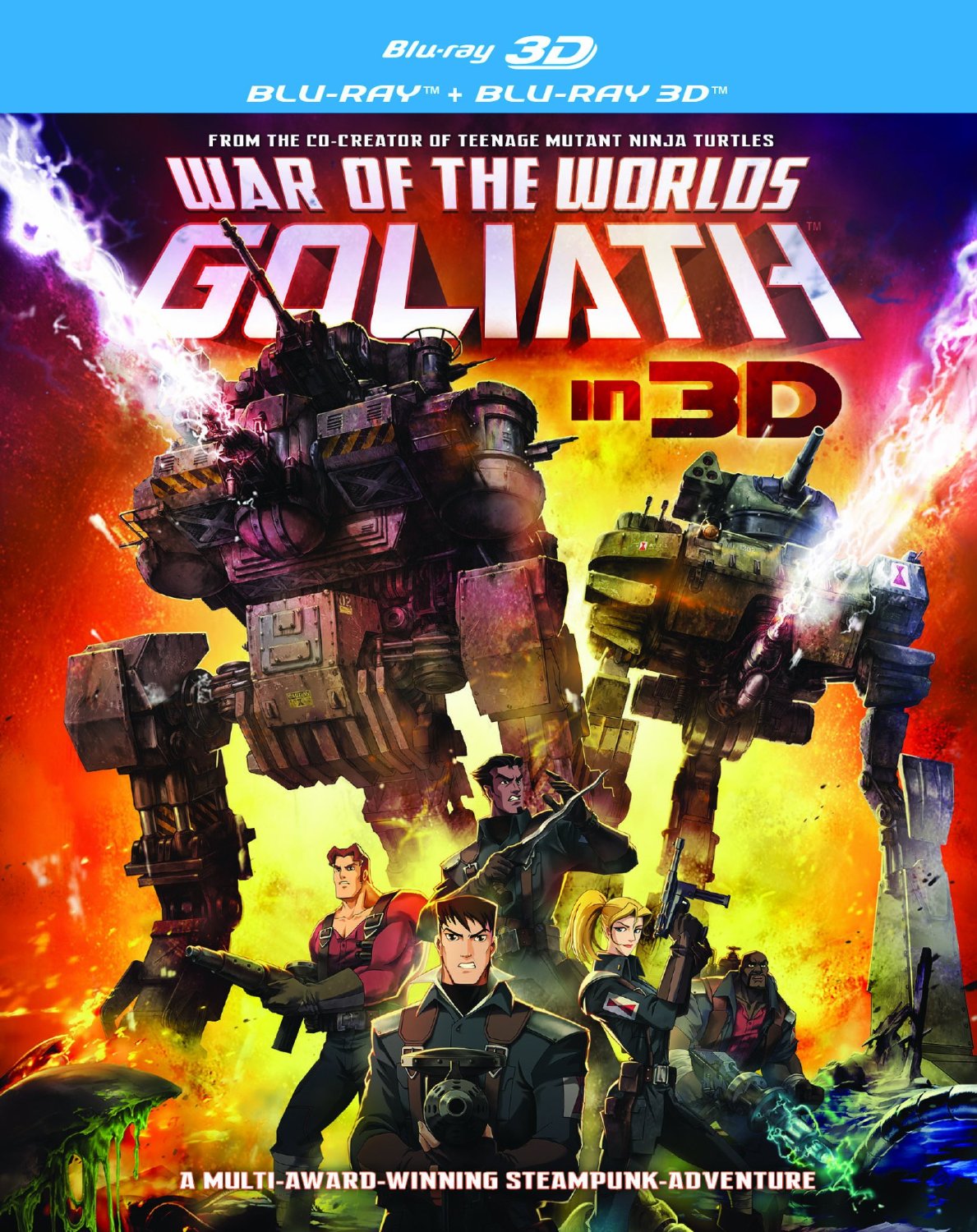
This is the first series presented as a 3D computer animation. The graphics are nicely rendered, but are sometimes hard to see since the movements, especially during fight scenes, are incredibly frantic. I certainly hope the fact that I find the pacing too fast isn’t a sign of old age arriving. The animators have clearly gone through a lot of trouble choreographing a fight that can sometimes have at least a couple dozen characters interacting (a very difficult thing to manage) and I’d appreciate it more if the speed didn’t make me feel like I need to feed the DVD Ritalin.

The key to making any good romance work is that you have to be able to root for the couple, that no matter what these characters may face, you have to be on board and believe this cinematic love affair is meant to be.  In the case of Twice Born, I have to say it does such a good job at getting me to root for this couple that I want to punch the film in the face for what it puts them through.  Yes, you read that correctly.  This film managed to get me so wrapped up in the characters that I found myself cursing at the screen simply because what Gemma (Penelope Cruz) and Diego (Emile Hirsch) endure is heart-wrenching to the extremes.  This isn’t simply a love story but a brutal example of what it is to endure tragedy for the love of a soulmate.

When we first meet Gemma, she is a caring mother of a teenager whom she wishes to take back home to Sarajevo so he can see where he was born.  This is an understandable experience she’d like to share with her son, Pietro (Pietro Castellitto).  The story then jumps into the past, when we see a younger Gemma setting off to travel, and it is in her travels she meets Diego, a charming American freelance photographer.  Though back home Gemma has a relationship, it doesn’t prevent her from her brief yet torrid romance with Diego which in turn brings about her first pregnancy, though the child never comes to full term.

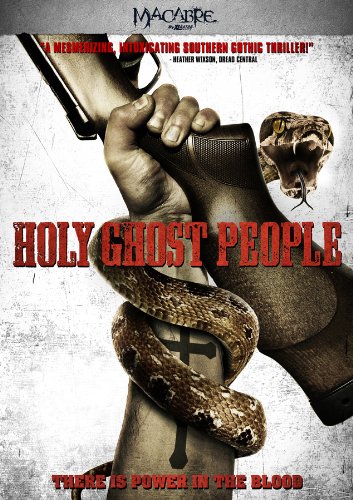
There’s a pretty good, southern gothic tale buried somewhere in Wicked Blood. Unfortunately, writer/director Mark Young isn’t quite able to extract it. Instead, we get a somewhat overqualified cast acting out Young’s down-and-dirty story of meth, chess and bikers that is exactly as messy, baffling and oddly intriguing as that description makes it sound. The film opens with a literal bang: we see the explosion of a shabby trailer. We don’t know who is inside, but we see a young girl stoically watching the flames from the outside.

Hannah (Abigail Breslin) is a teenage chess enthusiast and an orphan living with her older sister Amber (Alexa Vega) and her meth-addicted Uncle Donny (Lew Temple). The three of them live under the thumb of Uncle Frank (Sean Bean), a powerful local crime boss. (You can tell Uncle Frank is powerful because he barely gets out of his seat before the film’s final act; Bean projects menace by simply sitting behind a desk or a dining room table.) There’s also Uncle Frank’s unstable brother Bobby (Jake Busey), who seems to have an uncomfortable fondness for his niece, Amber.

"His name is Oswald, Lee Harvey Oswald."

Before November 22, 1963, that name was an obscure one, known only to a few people in the intelligence community who had him under surveillance for his communist leanings. But by a little after noon on that date in Dallas, Lee Harvey Oswald was suddenly one of the most infamous names in American history. He would share the stage with the likes of John Wilkes Booth. This last November saw the 50th anniversary of the JFK assassination, and it passed with surprisingly less hype than I expected there would be. We weren't inundated with documentaries and History Channel specials on the many conspiracy theories surrounding the event. There were some, certainly, but the date passed in the more solemn manner appropriate to the event.

“The Sistine Chapel. The masterpiece of a sculptor who did not want to paint.”

Remember when Michael Jordan quit basketball, tried his hand at baseball, and then returned to the NBA less than two years later? Well, imagine if Jordan had actually made it to the majors with the Chicago White Sox and put up a .375/50 HR/50 SB mark on his way to winning the American League Rookie of the Year/MVP awards, along with a World Series ring. The artistic equivalent of that was Michelangelo — one of the most significant figures of the Italian Renaissance, but a sculptor by trade — painting the frescoes on the ceiling of the Sistine Chapel.