Image Entertainment

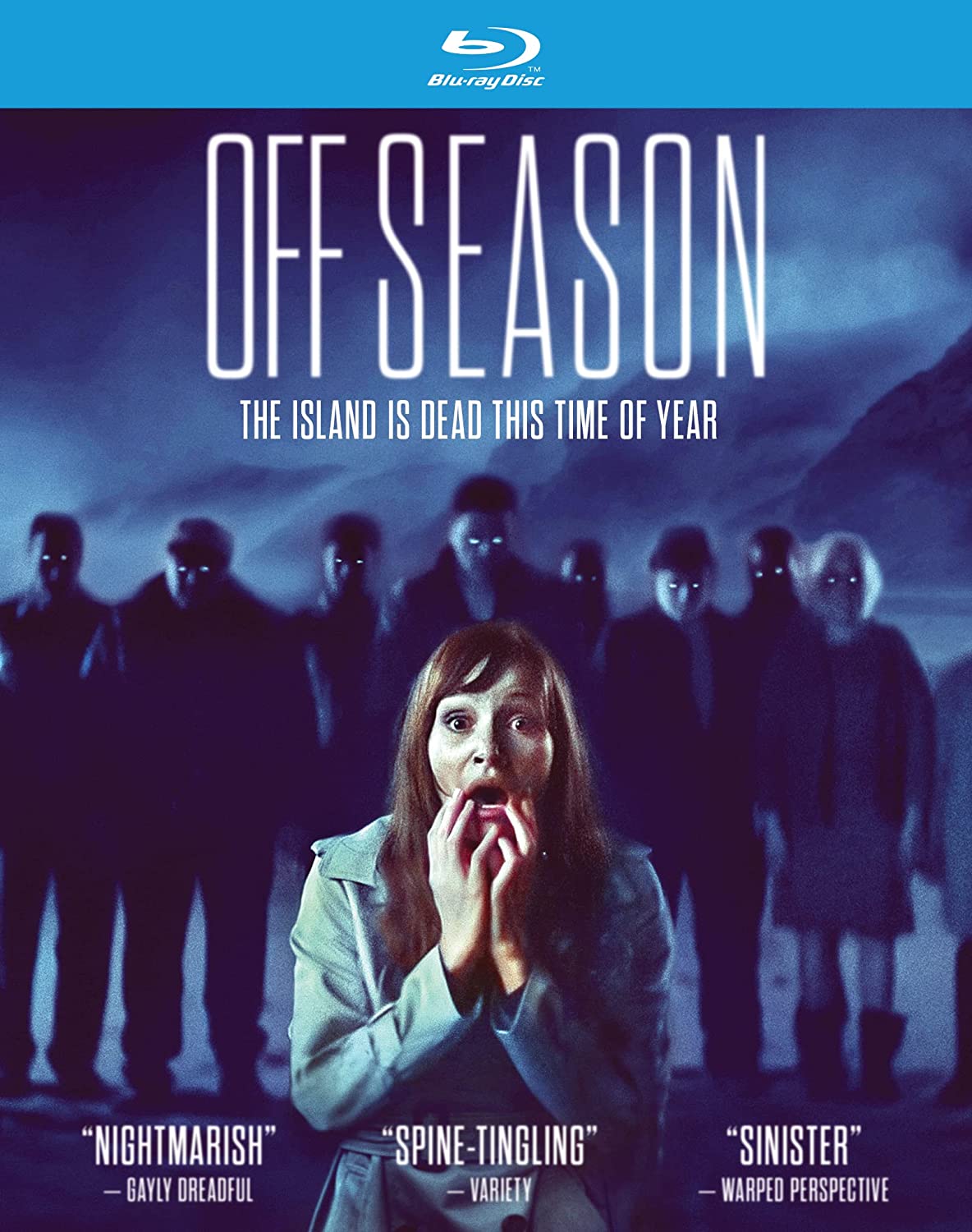
Offseason is the type of film we just don’t get a lot of anymore. It’s a film that heavily pays homage to HP Lovecraft and The Messiah of Evil and other films of the 70’s era, only there is little to no gore to show for it. There’s a strong Silent Hill vibe going on with the film, especially with the copious amounts of fog that seem to always be around.  It would seem that this film has all the makings to be a hit, especially when it seems to be going for tropes that I like in a horror film, but unfortunately this one just missed its mark by making two big mistakes. One, it was too obvious, and two, it just totally screws up the ending. I’m not expecting every movie to be the next Wicker Man, but it seems that writer and director Mickey Keating is trying so hard to be on the same level as Ti West and Robert Eggers that the film just comes off looking like a good-looking snore-fest we’ve seen before. I really wanted to like this, and it had a lot going for it, but it seems when you pull inspiration from too many sources, it can get pretty messy.

Marie Aldrich (Jocelin Donahue) gets a notice that her mother’s grave has been vandalized and that she must immediately come to the remote tourist island. We find out that her mother, Ava Aldrich (Melora Walters) never even wanted to be buried on this island, but that somehow her will was mysteriously changed, and she was still buried on the island. Marie knows little to nothing about the island, but she goes out there to see to the repairs that need to be made for her mother’s grave … trouble is that the island is being evacuated of tourists, and if Marie and her beau, George (Joe Swanberg) don’t get things sorted out in time, they run the risk of being abandoned on the island.

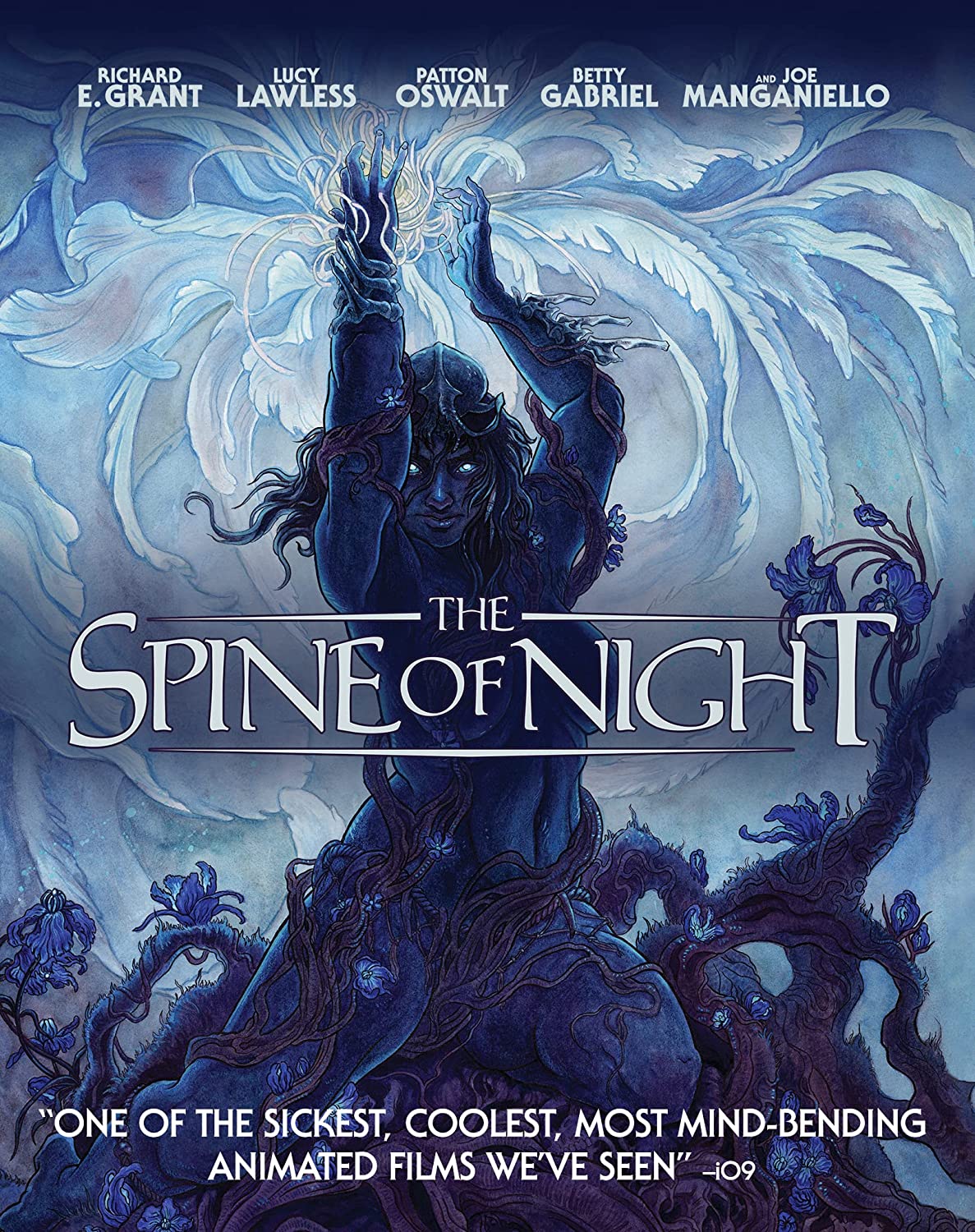
You just have to watch a few minutes of this film to get what the filmmakers were going for, and if you’re a fan of 80’s sword and sorcery films, i.e. Conan The Barbarian, Red Sonja, this will certainly whet your visual appetite. But then if you also happened to be a fan of the animated films Heavy Metal, Ralph Bakshi’s The Lord of the Rings, and Fire & Ice, then The Spine of Night is going to be cinematic catnip that will satisfy your geeky cravings. But if none of the films I mentioned above excite you, well, you might want to shuffle along, because this film just isn’t for you. Honestly, I was even on the fence with this film, but then I had to think of the teenage version of myself, and, well, back then in the glory days of VHS, if I had this title to watch, I would have been stoked to come across it. So just what is The Spine of Night?  Well, it’s a love letter to a genre that simply doesn’t exist in the mainstream anymore, but it obviously still has its fans, and who knows, maybe a cult following with this film can help revive the genre.


Tzod (Lucy Lawless) is the swamp witch/queen who gets her power from a very rare blue flower of Bastal.  She has her powers stripped from her and is left for dead while Ghal-Sur (Jordan Douglas Smith) takes the flowers and has plans to use the plant's power for more sinister means. As for Tzod, we watch most of her journey to collect the final plant that exists but is protected by The Guardian (Richard E Grant), and she tells him her story of woe before he grants her permission to take the plant. This is a very simple explanation for what goes on in this film, and there are several smaller stories that fill up the films running time.  But it’s not so much the story that I feel the viewers are looking for, but just the entire experience of the film itself.

"We're 10 years in now. I was a little kid. I can barely remember the Night The Sky Fell, let alone what the world was like before. We still live behind walls, and the dead still have this world. And I think that with everything that went away, with everything we lost, with everyone we lost, some people think it can happen again. Some people think that what we have can't last. Some people can't believe. But I'm certain of our home city and our alliance with Portland, with the Civic Republic, and I'm certain what's ahead. We are monuments to the past, but everyone here, all of you, you are the future. We are the future. I'm sure of it."

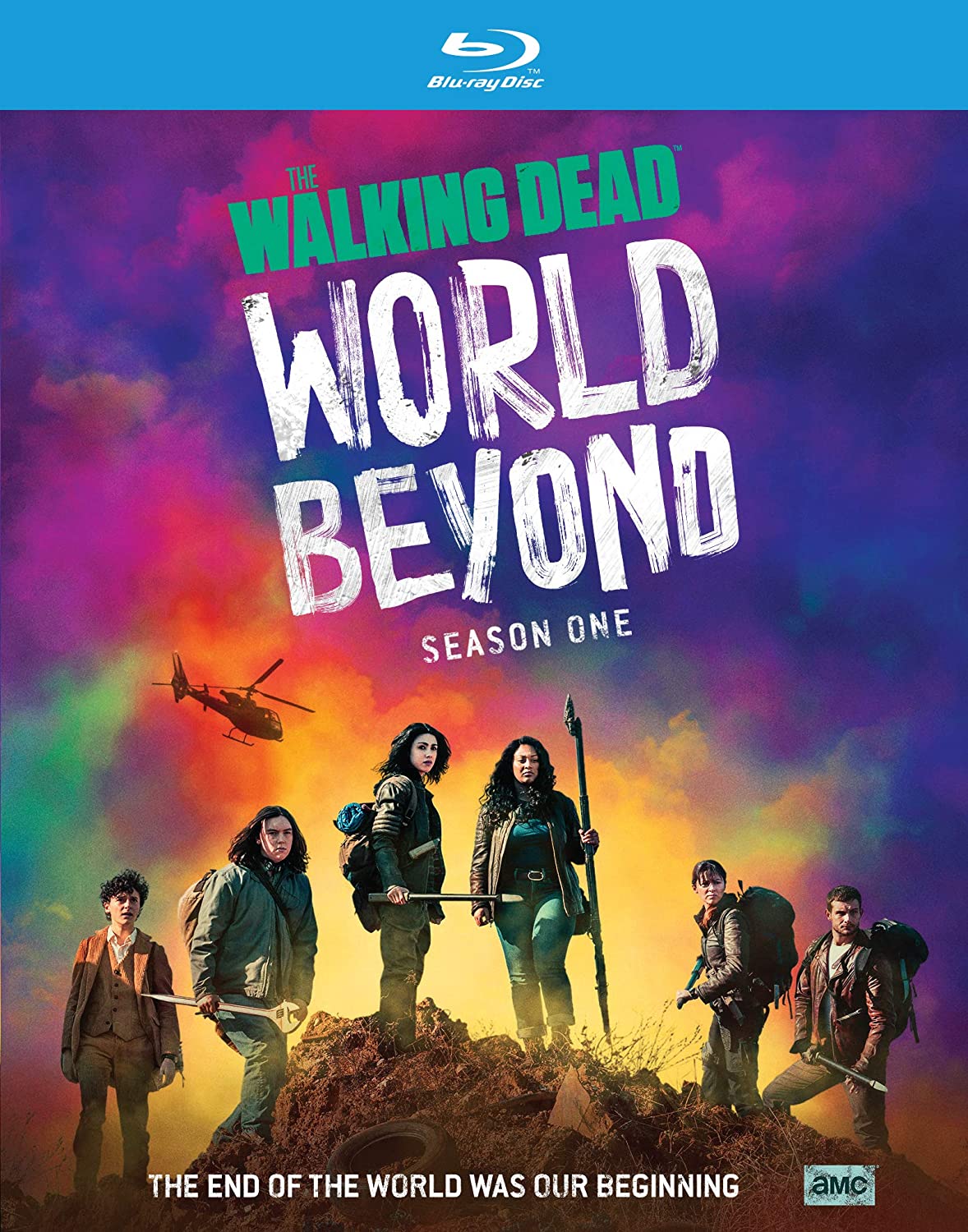
There is life after death. For The Walking Dead that life has a pretty solid run. What started with a graphic novel turned into one of the most unique television shows in years. The series has now become a franchise. The original show has 10 seasons behind it. The first spin-off was Fear The Living Dead, which took us across the country to the West Coast and has now run six seasons of its own. The franchise has just recently branched out again. This time it's The Walking Dead: World Beyond, and it covers a different aspect of this post-zombie-apocalypse world. This time it's not so much a change in location, which it is, but a change in perspective. This time it's, in the words of my old late friend Conrad Brooks, for the kids.

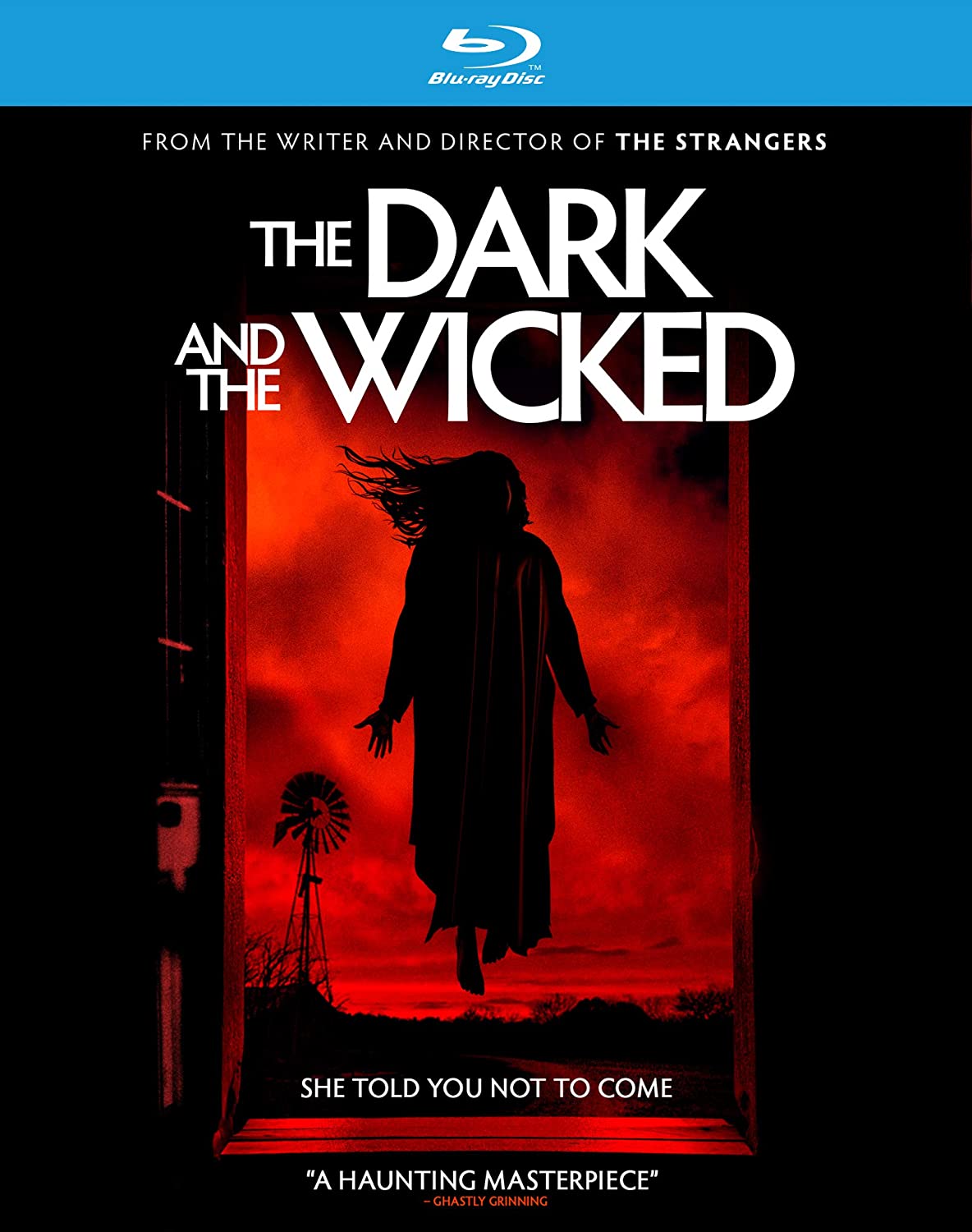
When I first saw The Strangers, I have to admit I was pleasantly surprised by how much that movie stuck with me.  Sure, there have been plenty of home invasion flicks over the years, but The Strangers is definitely right up there with the best like Funny Games and Inside.  Writer and director Bryan Bertino is one of modern horror’s underappreciated creators. He is so good at keeping things simple, utilizing small casts and single settings, and keeping the horror relatively grounded in reality.  With The Dark and The Wicked, he gives us his best work to date, and for me one of the best horror films in years. Personally, this is my favorite new horror release since 2016’s The Autopsy of Jane Doe.  I’m sure plenty of people will disagree with me, and for as much love as I have for Hereditary, what The Dark and The Wicked did that honestly very few horror films manage to do is genuinely get under my skin.  This movie actually creeped me out, and it didn’t use big gory FX or go for cheap jump scares. This literally is a master class in creating tension and delivering a story to audiences that starts off in familiar territory but takes us in new and fresh directions.

“You shouldn’t have come here.”

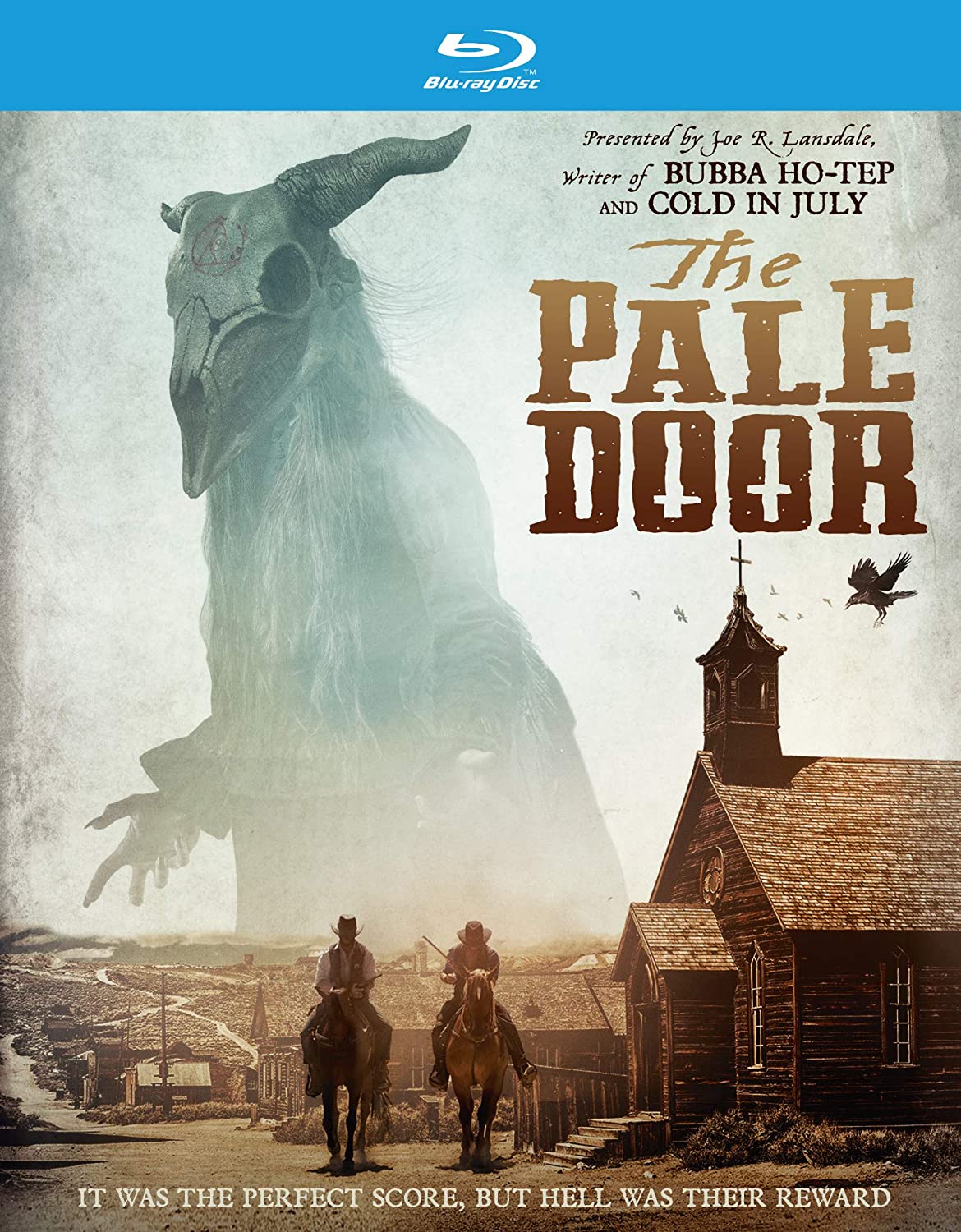
I always get a little worried when I’m handed a low-budget western. Despite it being one of my favorite genres, I’m just quickly turned off by a film when it visually doesn’t look authentic.  I like my westerns dirty and rugged, so when I see characters in costumes that look too clean as though they were just pulled from the rack, it’s a giant pet peeve.  What had me intrigued with the film was the involvement of Joe R. Lansdale, who happens to be one of my favorite writers, and he somewhat specializes in the “weird” western genre.  Bubba Ho-Tep or The Hap and Leonard series are what most would be familiar with from Lansdale. He may not have the name strength that Stephen King carries, but I’ve come to expect a good time from Lansdale.  Granted The Pale Door only has Joe  R. Lansdale attached as a producer, though his son was involved at some point with the writing of the script, so is that enough to make this film worth a watch, or is it a disappointment?

Right from the start I just want to say this film gets off to a bad start.  I know it’s setting up the relationship between the brothers in the film, but the first 15 or so minutes of this film should have been left on the cutting room floor.  In my opinion the film could start right up when the Dalton Gang is robbing the train and the film would have been stronger for it.  As for the train robbing sequence, I’m glad the filmmakers openly admit they are “ripping off” the train sequence from The Assassination of Jesse James by the Coward Robert Ford. If you are going to rip off a sequence, it’s better when you steal from the best. If you haven’t seen the film, you at least should watch it for the train sequence alone…but keep watching because it’s simply a beautifully shot and well crafted western.  Sure, the film is shot on a budget, but I appreciate the effort put into this sequence, and in the commentary the filmmakers reveal this wasn’t even what had been intended in the script, and for what they manage to get with the final product, well, good for them.

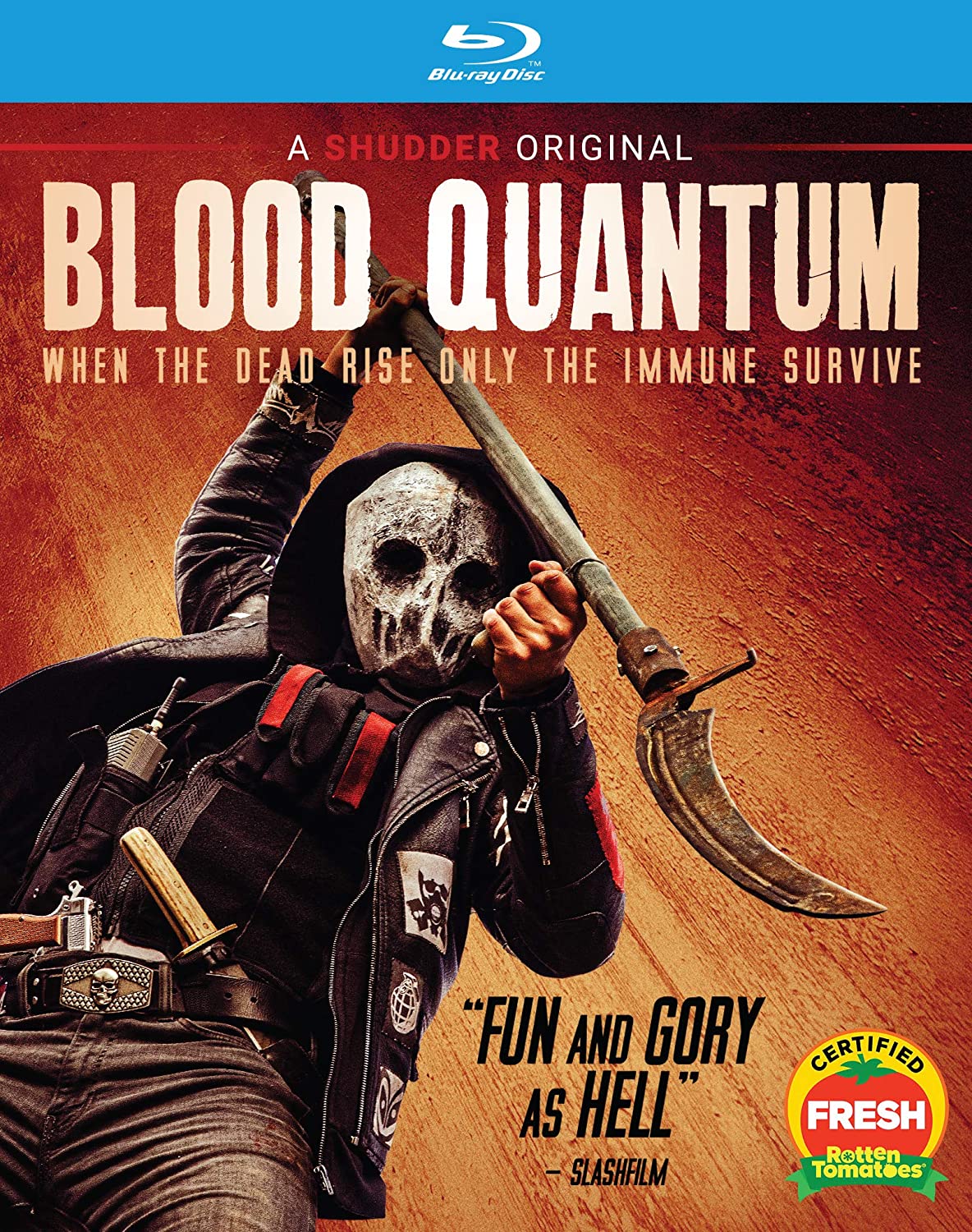
Ever since The Walking Dead first aired. it seems the zombie genre was not only revived but milked for all it was worth, and still studios continued to bleed the genre dry to the point even most diehard horror fans are sick of the sub-genre.  I’m a sucker for zombie films, and even I have tired of them, but I’ll always hold out hope for some writer or filmmaker to come along and inject some creativity into the genre.  It’s possible; I mean, look how long the vampire stories have been around, or even ghost stories, and yet there still are new takes on the subject matter that get us excited about them again.  That’s where Blood Quantum gave me some hope. Zombies on a Native American reservation. I was hopeful for some indigenous lore being injected into this, giving us a fresh perspective…but alas, we get a watered-down, unoriginal, snooze-fest with a little bit of gore  to keep viewers somewhat interested.

The film starts off promising enough as we see an old man gutting his freshly caught fish, and then suddenly they all seem to come back to life and flop around him.  We are then introduced to the main characters that reside on the Red Crow reservation; there is the Sheriff Traylor (Michael Greeneyes), his son Joseph (Forrest Goodluck) and his ex-wife Joss (Elle-Maija Tailfeathers).  To basically inject a little bit of drama, there is also Joseph’s troublemaking best friend Lysol (Kiowa Gordon) and Josephs pregnant girlfriend Charlie (Olivia Scriven). Honestly, without these two characters there wouldn’t be much in the way of character drama, but to be honest, even adding them to the dynamic, this still is a far cry from being a compelling story.  The first third of the film honestly works well as a self-contained story as we see the start of the zombie outbreak. It’s on a small and believable scale as we see dogs and eventually humans coming back from the dead, and the chaos of not knowing what is happening on the reservation is compelling enough, especially when we see certain people get bitten.  Then the film throws a curve ball and sends us six months later into the outbreak, and those who were bitten and should be goners are somehow still amongst the living.  It’s found out that for some reason that the indigenous people are immune to the bites, and this is where the film becomes really problematic for me.

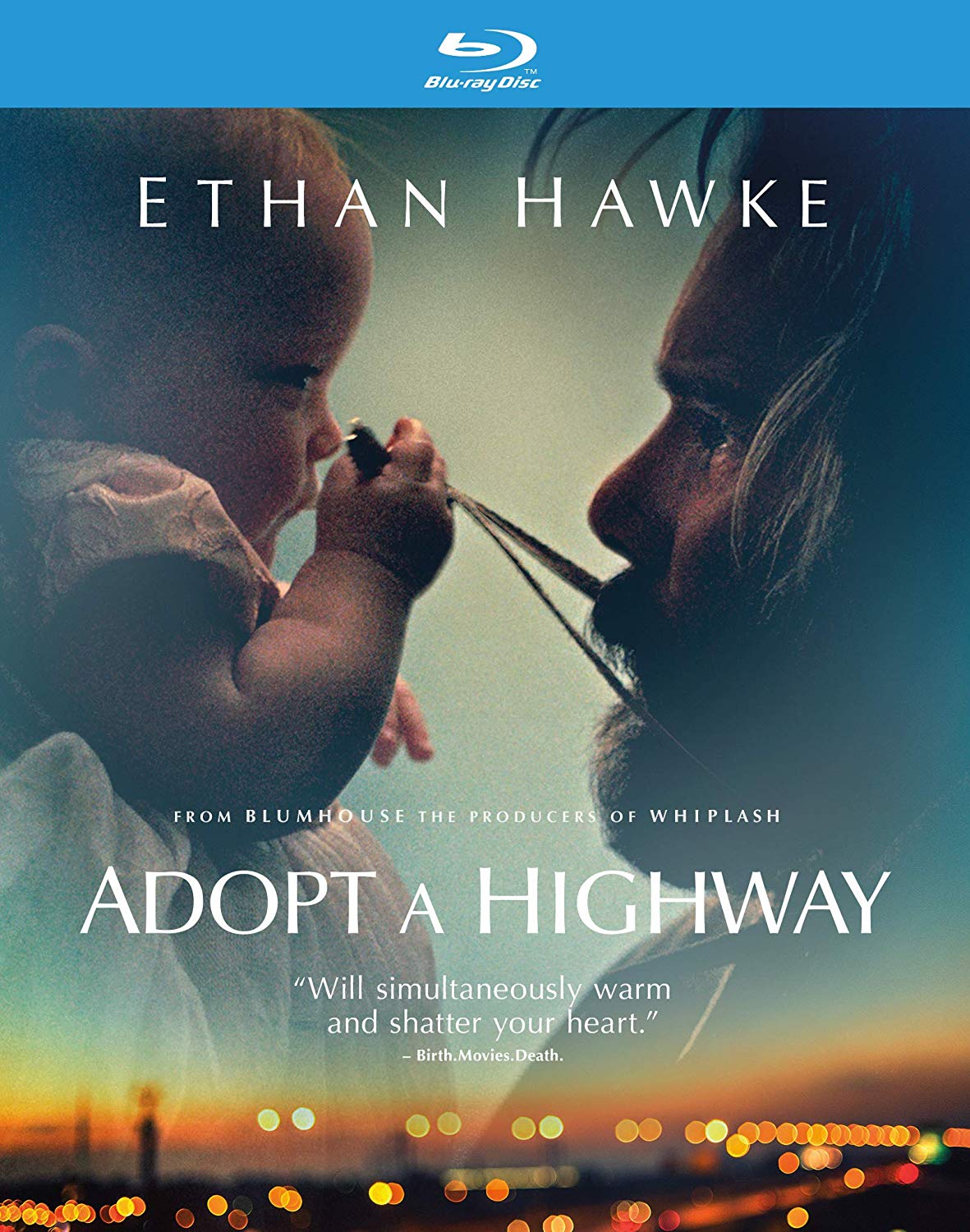
It’s been a while since a film has come along that has frustrated me as much as Adopt a Highway has.  The film opens up with numerous sound bites that are discussing the “three strike law” from the Clinton era.  This is pretty much used to set up a bit of a back story for Russ Millings (Ethan Hawke), a “victim” of this third-strike law that resulted in him serving 21 years for possession of an ounce of weed.  With this kind of opening, I’d be expecting this to be a film that would delve into the unfairness of this law and how it affected many individuals, but instead, this film had other plans.  The film takes on the journey Russ takes from his last day in prison to being thrust out into the free world again, but over the course of two decades, the world is nothing like it was before.  Russ is in a unique situation where he went into prison in the late 90’s, and upon his release he’s now in the digital age. Basically he’s never had an email, nor has he had the chance to discover internet porn or YouTube. There is so much potential with this character, but at the same time, while watching this, I couldn’t get past his numerous bad decisions.

The first of his many bad decisions comes when he finds a baby in the dumpster behind the fast food restaurant where he works.  With the baby there is a note that reveals the babies name is Ella. Conflicted about what to do, Russ decides to take the baby to his motel room, wanting to take care of it.  If he found a dog or a cat, then I can understand him wanting to take care of it, but seriously, this guy thinks he can take care of a baby?  At first it’s adorable seeing him make bad decisions with taking care of the baby, but very quickly we see how fragile this baby’s life is in his hands.  Just as the film seems to have its footing and we think it’s going to be about Russ and his adventures with the baby, the film takes a sideways turn.  This plot change could have worked if only the following story were just as interesting, but instead it’s a bit dull by comparison, and before you know it this film is already wrapping up, and you’re wondering, “That’s it?”

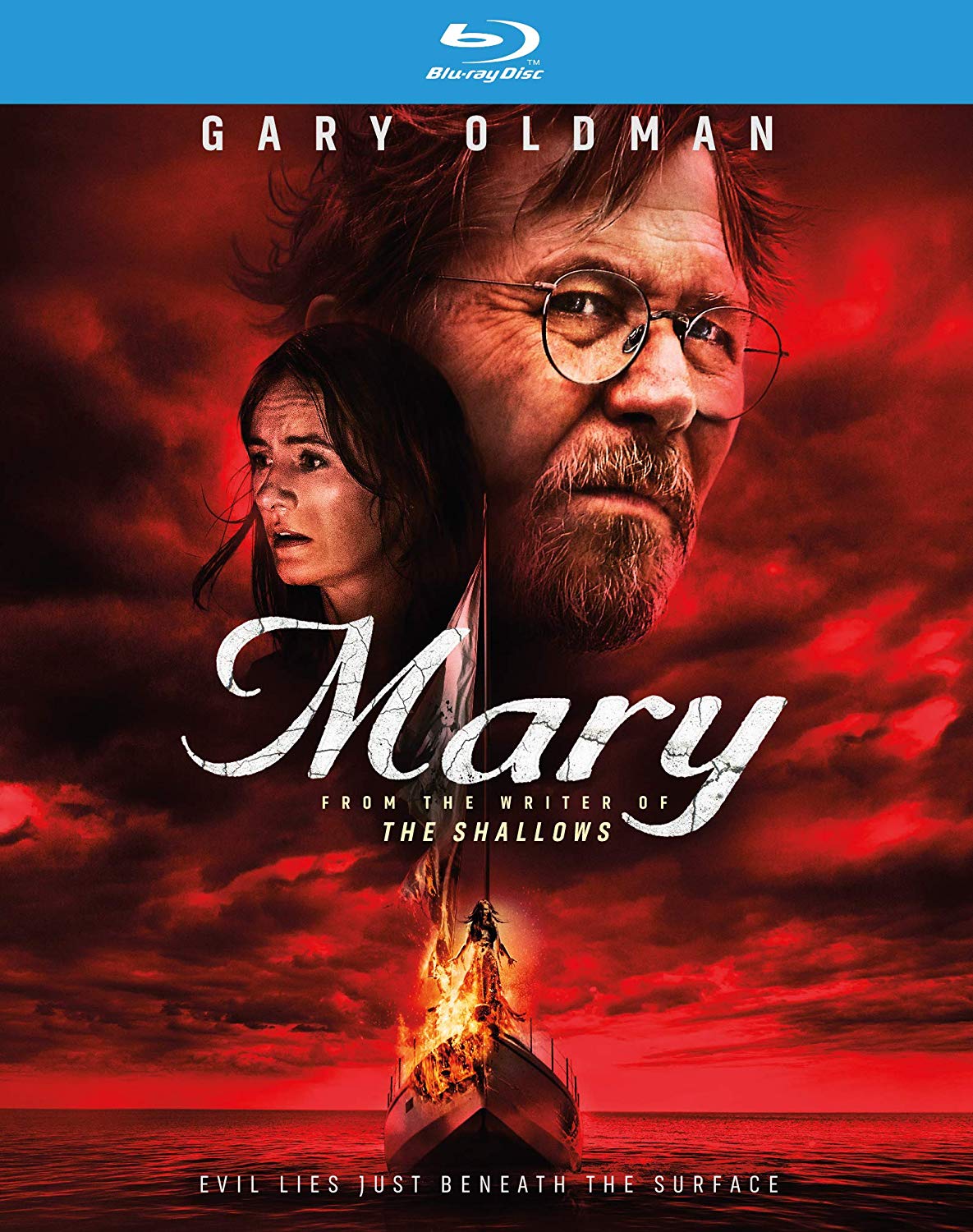
For some the ‘haunted house’ sub-genre is a bit stale. Sure, there have been some great films and TV shows that have tackled the sub-genre, but many of the films tend to be recycled trash.  Personally I’m a fan of haunted house flicks, even the bad ones I tend to find at least somewhat enjoyable.  Mary may not fall into the classic definition of the haunted house film, mostly because it takes place on a yacht and in the Atlantic Ocean, but really it plays by the same rules.  Seeing a familiar story unfold in a different location, where the characters have no place to run to, is enough to inject new life into a stale story, but is it enough to keep viewers engaged to the very end? Mary is a ship that that David (Gary Oldman) finds at a boat auction and ends up purchasing with hopes of turning it into a vacation sailboat his family can use to run a business with.  To say Mary is a “fixer-upper” would be the understatement of the decade, as it seems to be falling apart from the inside out.  We’ve seen it before, where the protagonist finds some busted-up car, bike, boat, etc., and what follows is the required montage of the protagonist fixing up the boat. Well, the film of course delivers the montage, but as montages go this one is lame … It’s as though the filmmakers never saw a film in the 80’s ( a time when every film seemed to have a montage cued by some 80’s pop or rock song).  It doesn’t take long before his family suspects that there could be something wrong with the boat.  Now here’s the fun little tidbit: David is struggling to patch things up with his wife Sarah (Emily Mortimer) after discovering she had cheated on him.  So yes, David’s need to repair the ship is indeed a metaphor for his need to repair his marriage.  Honestly, having Sarah’s affair brought into the story is simply a distraction from the plot. When you consider the film is only 84 minutes, it becomes too much drama to attempt to flesh out in such a short amount of time, and because of this wasted time, it does take away from us getting attached to these characters.

Another issue I have with the film is that it is told in flashbacks; basically Sarah is in police custody and is telling her story to Detective Clarkson (Jennifer Esposito).  Here is a huge problem: if you’ve seen The Usual Suspects, you will see through this movie.  Had this film kept it simple and just told a linear story it would have been fine, but in its attempt to be clever this film falls apart so quickly.  Everything surrounding the story on the boat works fine, but these scenes between Sarah and the detective ruin all the tension that the film has been building for itself. Most damning is that it reveals the demise of characters and the survival of others.  Even when the film delivers a fun back-story to the ship, this fun twist has already been ruined, because we know from the start Sarah is telling the story about what happened on the ship.

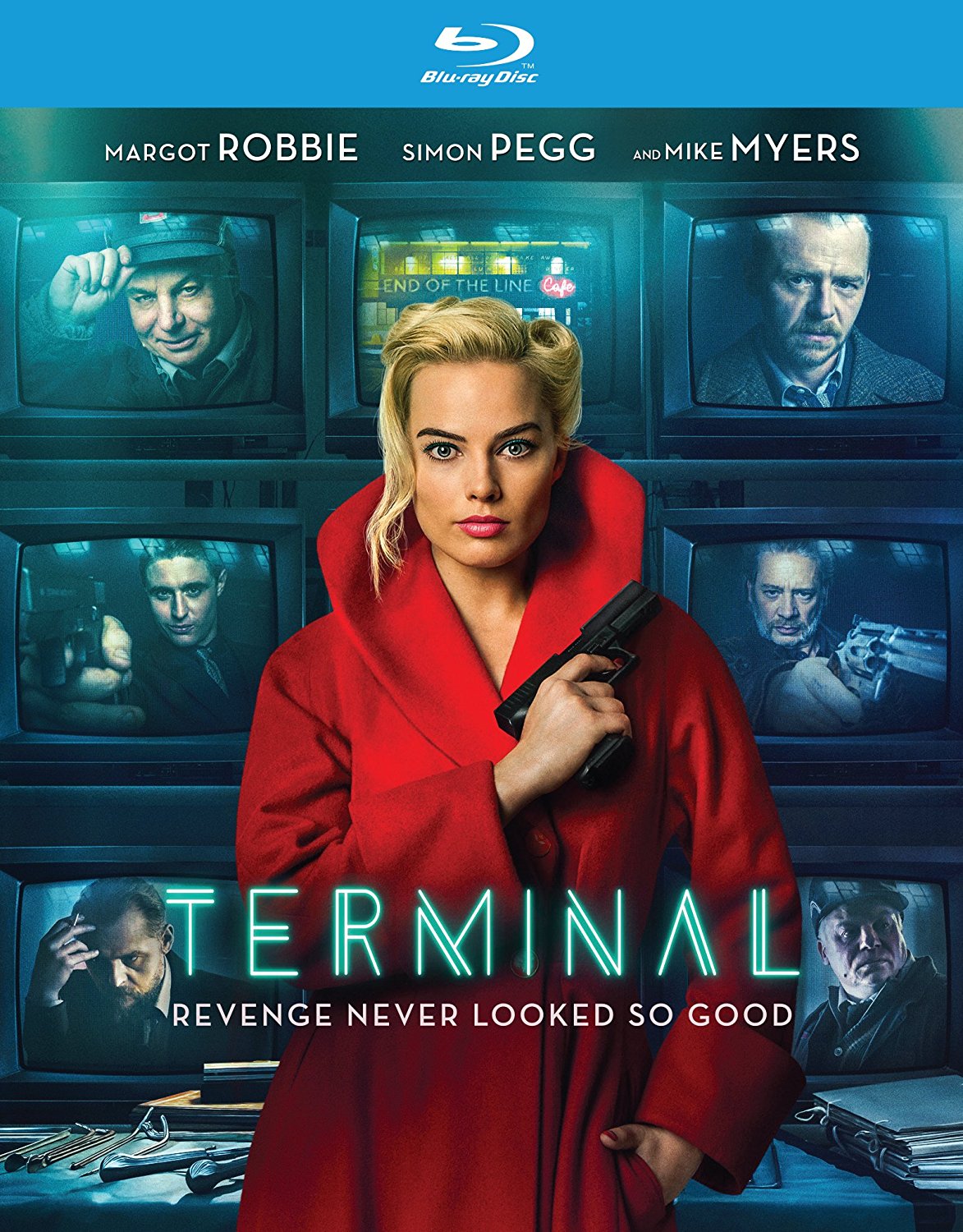
Sometimes a movie comes along that has everything going for it: a great cast, a great cinematographer, and a decent plot, but when you watch it, you just scratch your head wondering why it ended up so bad.  That in a nutshell is Terminal.  It stars Margot Robbie, Simon Pegg, and Mike Myers, and for each of them I believe this is a film they quickly want to move past. The tagline for the film is Revenge Never Looked So Good, which is a big part of the problem with the film. I absolutely love the look of the film. It’s beautiful and to a point creates its own style I’d call neon-noir, but unfortunately no matter how good something may look, it doesn’t always mean it will be good.

A good portion of the film is about Bill (Pegg), a teacher who is waiting for a subway train but is told by the night janitor, Mr. Franklyn (Myers) that one won’t be coming for hours.  Mr. Franklyn eventually recommends a diner (conveniently called The End of the Line) for Bill to wait.  It’s at the diner where Bill meets the quirky Annie (Robbie), who is his waitress but is also intrigued by his illness.  To add some more padding to the film, we have a pair of hit men who are introduced in the film’s wonky timeline who take a mysterious job that leaves them locked up in an apartment for days as they are waiting for a phone call to signal when the hit is to go down.  How Annie involves herself into the mess with the hit men strays into spoiler territory, but I’ll simply say it was a designed coincidence from sloppy storytelling.

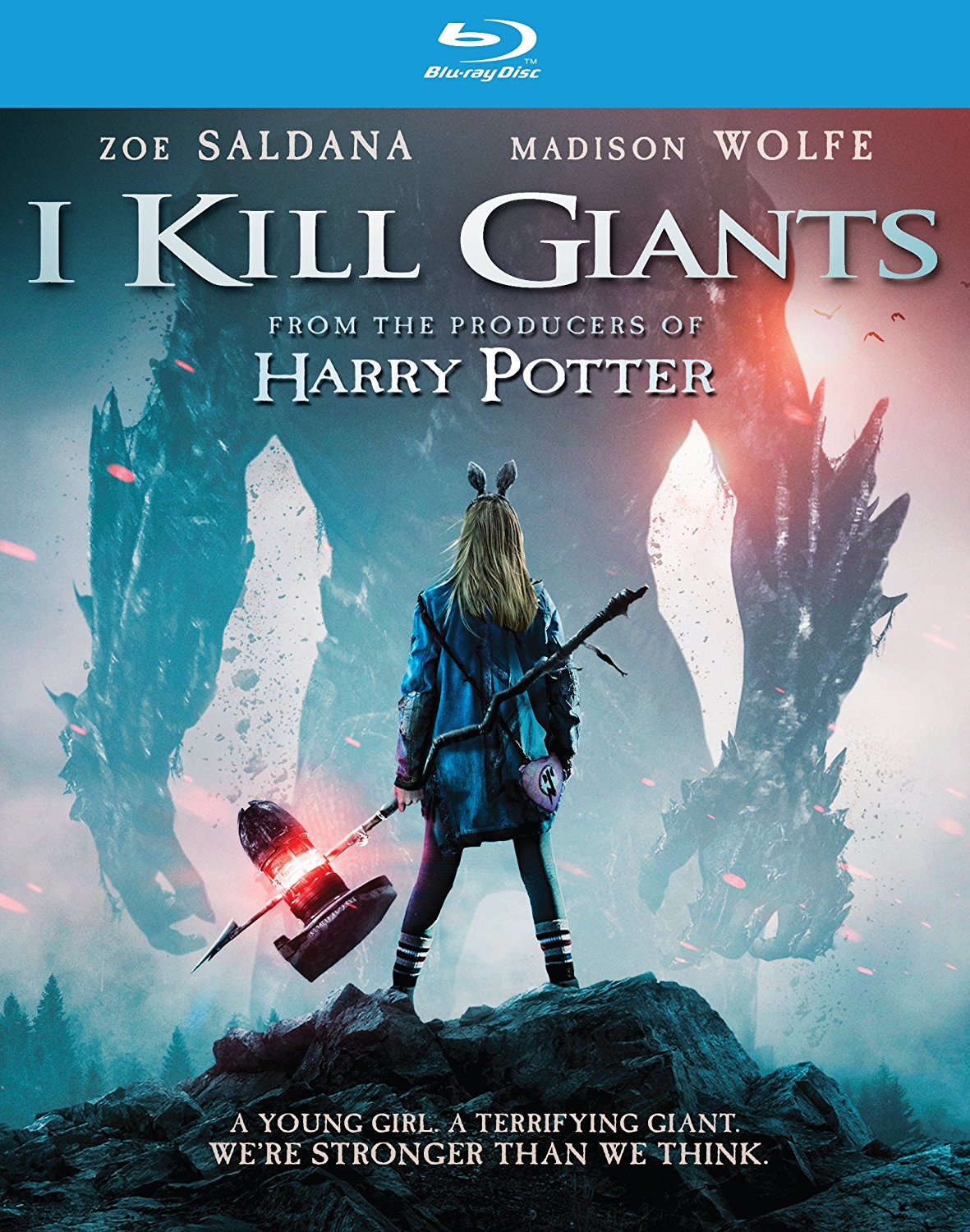
“I find giants…I hunt giants…I kill giants”

This is one of those films that for some reason didn’t find an audience during a theatrical run, but I can guarantee there are viewers who are going to connect with this film and embrace it for years to come.  I say this because only a few years ago there was a film that was similar in tone, A Monster Calls, and to be honest, that film devastated me as we went along with the main character as he and his imaginary monster helped him cope with his mother who is dying from cancer.  I Kill Giants is at face value the same film, only told through the eyes of a young girl, though despite the films being so similar, it doesn’t lessen the film’s overall impact in the least. Sometimes a good story simply works. No matter how much you may dress it up, its emotional impact can remain the same.