Studio

Laughing out loud and getting startled out of your wits are two of the most visceral reactions you can have as a moviegoer. For a director to elicit either reaction is challenging enough, which is why I was so delighted to be feeling both during the thrilling, funny finale of Housebound. It’s an even more impressive feat when you consider it was accomplished by a first-time filmmaker working on a shoestring budget.

We first meet Kylie Bucknell (Morgana O’Reilly) as she and an accomplice comically fail to steal money from an ATM. She is a professional screw-up who has battled alcohol and meth addiction. Instead of sending Kylie to her umpteenth rehab program, the judge sentences her to eight months of house arrest at her family’s rustic home. Given Kylie’s unpleasant childhood memories there and the fact that she now has to share space with batty, blabbermouth mom Miriam (Rima Te Wiata), it seems like Kylie might have preferred spending time in prison.

"If anybody gets up, they're dead. Anybody moves, they're dead. Anybody makes a sound before I leave this movie, ..."

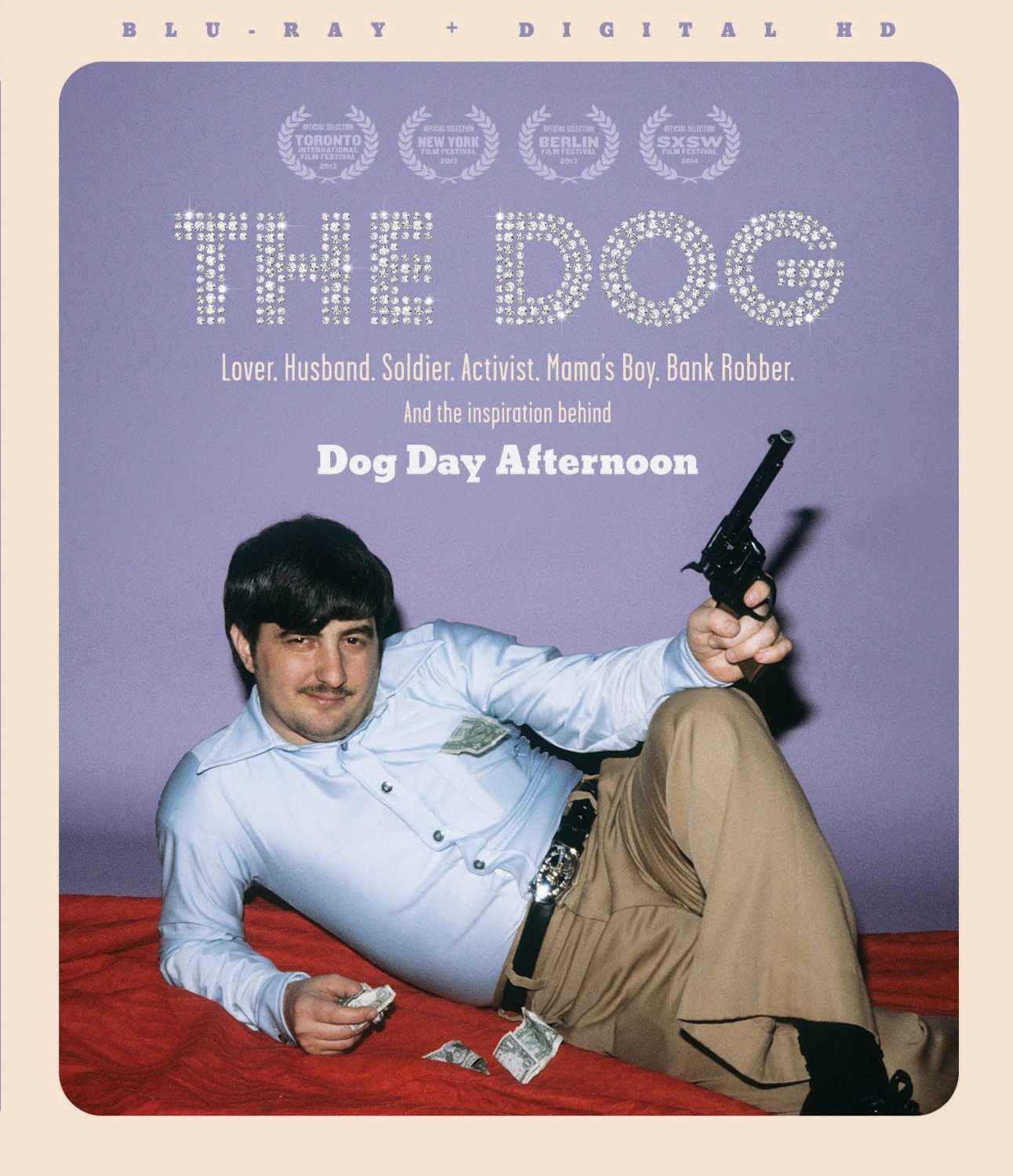
You get the idea. These are the words of one John Wojtowicz, better known as The Dog. On August 22, 1972 he attempted to rob a Chase Manhattan bank in order to finance his male lover's sex change operation so that he could become a woman. The heist was about as amateur as the come and went horribly wrong from the start. In a matter of minutes the bank was surrounded by a swarm of police units and a growing mob of bystanders. In the hours that followed, The Dog interacted with the crowd, gave a radio interview, and managed to whip the crowd into a frenzy by throwing thousands of the bank's dollars out of the front door. If this all sounds familiar to you, it should. While you may not have heard of these exploits directly, you surely saw the movie Dog Day Afternoon. Al Pacino played John Wojtowicz, and now you know where he got the nickname The Dog.

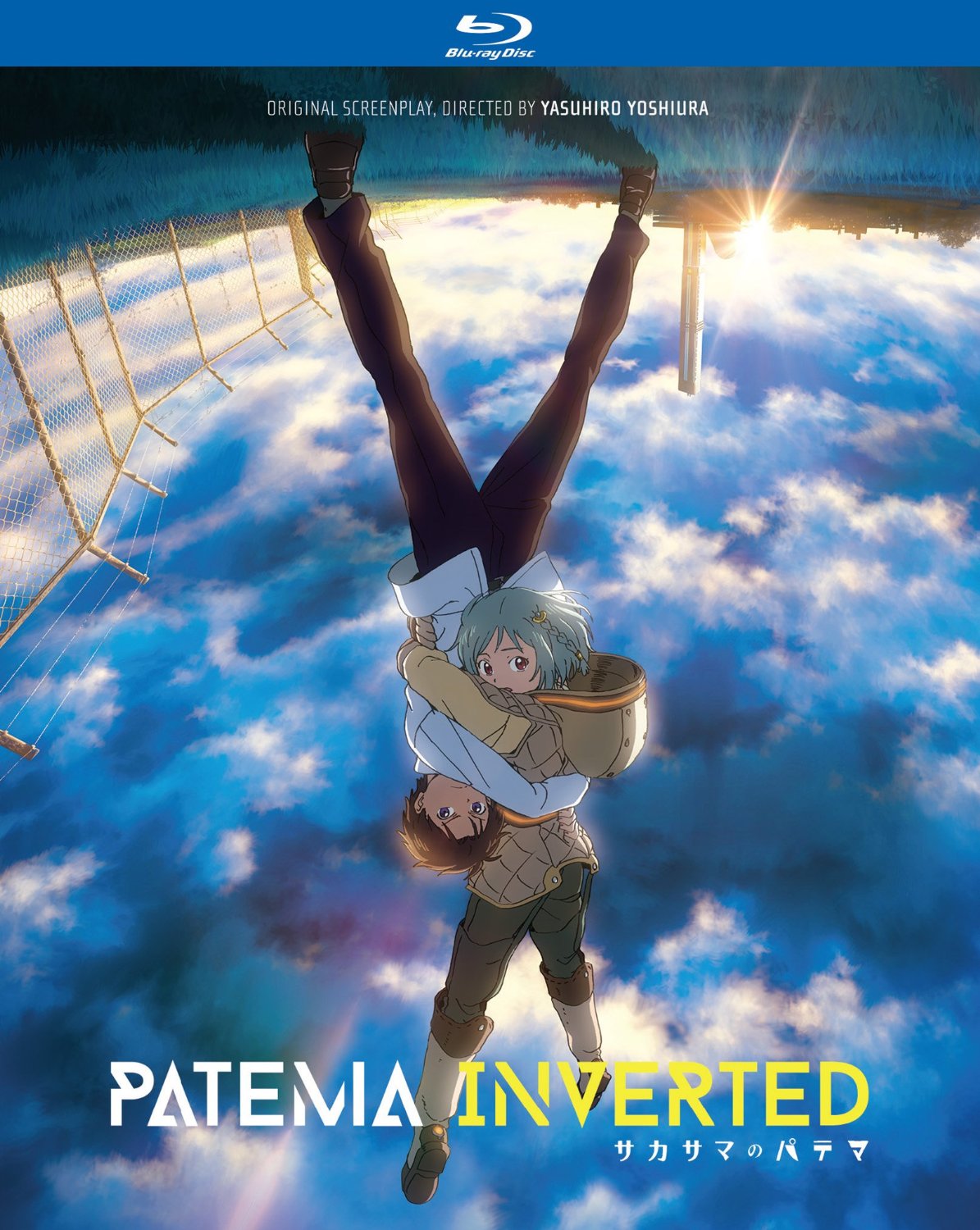
I’m not the biggest fan of Japanese animation. I don’t think it’s awful or anything, but animation is one of those things where I’m just picky about what I like.  Though I can say I am a big fan of Hayao Miyazaki (Spirited Away and Princess Mononoke) and most of his work.  I think this is worth mentioning, because though I may not be as well-versed in this genre, I’d like to feel I still go into it with an open mind, and I’m always excited to find a title that excites me that I never saw coming.  And that it precisely what Patema Inverted did.

Imagine if one day the laws of gravity were broken, and during this time friends and family all around seemed to be randomly sucked towards the sky, and you were helpless to do anything about it.  Those who would be lucky to survive and keep their feet planted firmly on ground would have to go on living in this world that had fundamentally changed overnight.  But what about those who have been floating up into the ether, what about these lost souls and their fate?  This is the fundamental springboard by which Patema Inverted takes us to a world where those who survive live in separate “realities” where some seek to live deep beneath the earth to survive, while others have created their own world in the sky that has evolved as well.

I had never seen a single episode of Hot in Cleveland before I sat down to review this season 5 DVD set. So why did it feel like I'd been watching this show my entire life? Turns out, it's entirely by design. On the surface, it doesn't seem like I'm the target audience for Hot in Cleveland: I'm under 50 years old, and I'm a man. But if you look beyond the plastic surgery jokes and geriatric humor, you'll find a show that aggressively channels — and ultimately appeals to fans of — many of the classic, multi-camera sitcoms of the past. In other words, Hot in Cleveland feels like you're watching re-runs of a show you've already seen...and still enjoy plenty.

I still can't believe that I actually live in Cleveland. But in L.A., we were feeling devalued and disposable.”

Welcome to the Space Show looks like what would happen if you combined Steven Spielberg’s E.T. — or the openly-Spielbergian Super 8 and Earth to Echo — with the boundless imagination and quirky charms of anime. The result here is intermittently dazzling, but this particular kid-friendly alien adventure is ultimately less than the sum of its parts.

The film immediately grabs your attention with a high-octane action sequence: two bumbling, strange looking creatures are being pursued through a forest by a spastic smaller blur that looks and behaves as if it’s on fire. What’s most intriguing about this opening is that director Koji Masunari makes it impossible to tell whether we should be rooting for the two creatures to get away or for the pursuer to catch them. After the action-packed prologue, Welcome to the Space Show settles into its main story. A group of elementary school kids heads to a summer camp that has a mildly alarming lack of adult supervision.

“You sell 100 million records, and see how you handle it.”

If you’ve ever seen an episode of Behind the Music — or followed popular culture at all in the previous century — then you probably know artists tend to not handle that level of success very well. However, the rise and (inevitable) fall of the original Four Seasons lineup is unique for a number reasons. Unfortunately, very few of those reasons are captured in Jersey Boys, Clint Eastwood’s oddly lifeless, workmanlike adaptation of the joyous, wildly popular Broadway musical.

Personally I’m not a fan of the Fast and Furious franchise, despite the fact that I tend to enjoy films from the genre.  For me, I’ll take the old school films like Vanishing Point, Two-Lane Blacktop, and the original Gone in 60 Seconds over these big budget productions any day.  All I can figure is that these films that I do enjoy are working with budgets that force the directors to be creative and understand most of their elaborate stunts only get one take and are not polished with CGI, but instead whatever the camera captures that is what we see on the big screen. The stunts are simply incredible, and the cars in my humblest opinion were simply cooler back then.

Drive Hard is a fun throwback to chase films that lived in an era of drive-in theaters and grindhouse cinema.  Thomas Jane plays Peter Roberts, a former race car driver who gave up what could have been a successful career to be a father.  Sure, this is a respectable decision, but it’s a decision that has haunted him, as he now has taken on a career as a driving instructor.  Despite Roberts being a parent, he still hasn’t managed to give up the dream of being something more than an instructor, only it’s hard to imagine he could have expected Simon Keller (John Cusack) would be the person who would become the motivating force.  Simon isn’t just a regular student of Peter’s; in fact, Simon has specifically found Peter to once again take a spot behind the wheel, only this time around it is in the form of being a getaway driver.

It's noble work. It is useful. You are angels of mercy...I just never thought that I would end up here.”

The geriatric care wing of a hospital — where the employees are undermanned and overworked, and many of the patients are in a near-catatonic state — is not the most obvious sitcom setting. As a result, HBO's comedy series Getting On isn't exactly what I'd call a gut buster. But even though much of the humor seems hyper-specific to this particular circle of workplace hell, anybody who has ever been underpaid to do a hard, crappy job should be able to relate.

Flying into home entertainment, the animated comedy adventure Planes: Fire & Rescue delivers a fun film for the whole family.  The film features some of the characters from the original and a whole lot of new ones.  Brightly animated, having fine direction and with a new storyline, the film has several good values including heroism and friendship. In this episode we find Dusty Crophopper returning from his around-the-world racing tour and about to participate in annual Corn Festival.  During a practice run with his flight instructor Skipper, the gearbox in Dusty’s airplane gets damaged.  Not having another gearbox because the model is out of production, Dusty finds himself having to slow down.  Following a fire he caused, Dusty volunteers as a firefighter.

The film continues showing his training and later his heroism during a huge forest fire that threatens a vacation lodge. Director Roberts Gannaway keeps his film exciting and interesting showing how the different planes and ground firefighters work together to fight fires.  Introducing many new characters including Dipper, an airplane that drops water from the air onto fires, Blade, a helicopter that guides the aircrafts to the fire, Windlifter, who carries the ground crew, and the Jumpers, a group of vehicles that clear trees to stop the fires from spreading.   The film shows the heroism of the characters, their self-sacrifice and the importance of training to do the job right in order to save lives.

“We don't have the trust of the public anymore.”

- “Get it back!”