Studio

"That's one small step for (a) man. One giant leap for mankind."

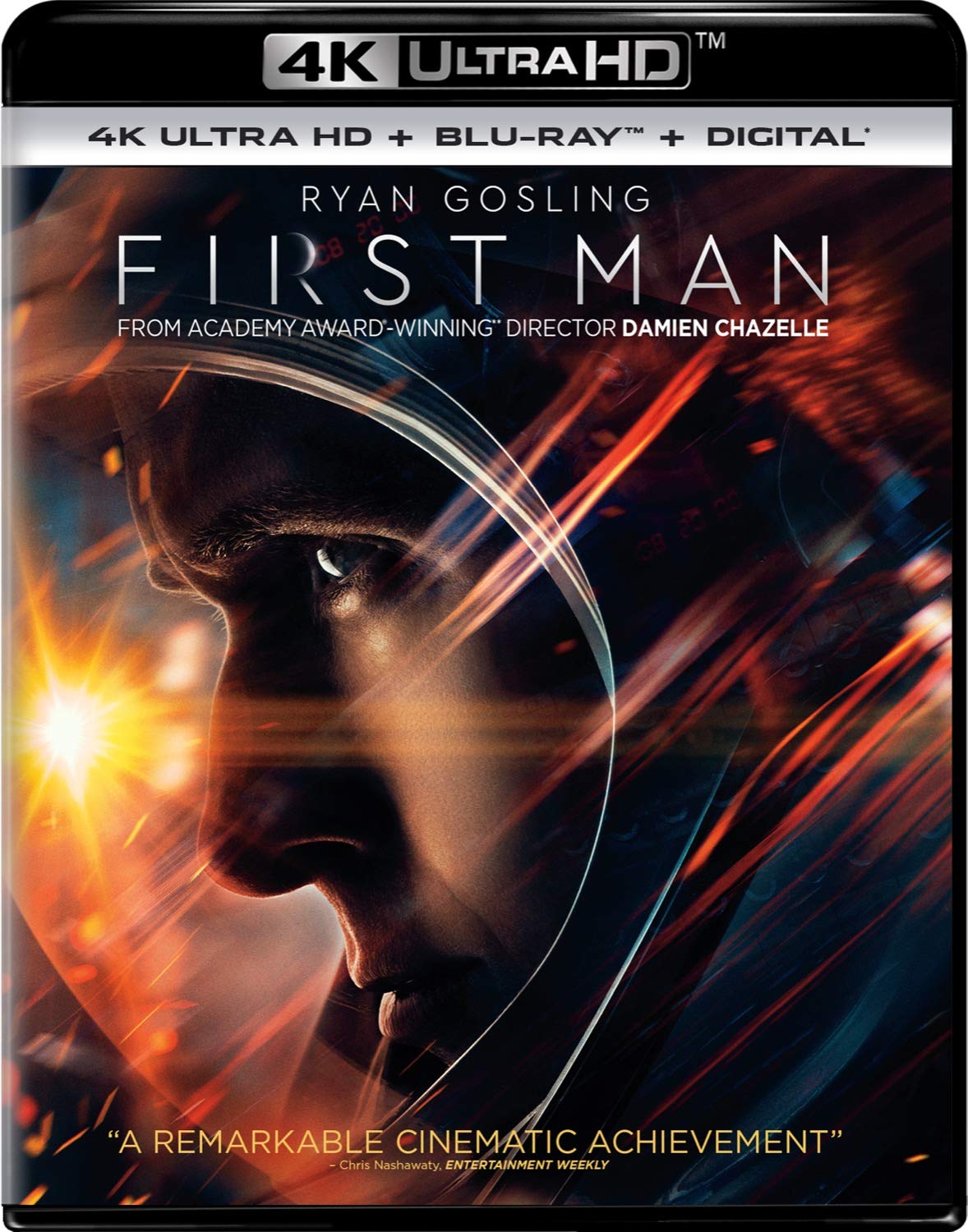
July 20th, 1969. If you were alive and even somewhat old enough to be aware of your surroundings, you likely still remember that date. There are many such dates in history; unfortunately so many of them revolve around tragic events like 9-ll or the attack on Pearl Harbor. But on that night I was eight years old, and I know exactly where I was. I was watching Walter Cronkite on television as he brought us the first landing on the surface of the moon. Today that's a bittersweet memory. For an 8-year-old boy it was a promise that has remained unfulfilled. If you had told that 8-year-old who just saw humans walking on the moon that 50 years later we would have gone no further, he would have been dumbfounded. If you told him that not only would we go no further but that we would stop going to the moon in just a few short years, he would have been devastated. I can only imagine what that first man on the moon thought about it all so many years later. The truth is that Neil Armstrong never traded on his celebrity. He kept mostly to himself for the rest of his life, and perhaps the only tragedy larger than our abandonment of the pursuit he risked his life for is that we know so little about the man whose name lives with the likes of Columbus. He's almost a forgotten hero. That's why First Man is such an important film that almost lives up to that legacy.

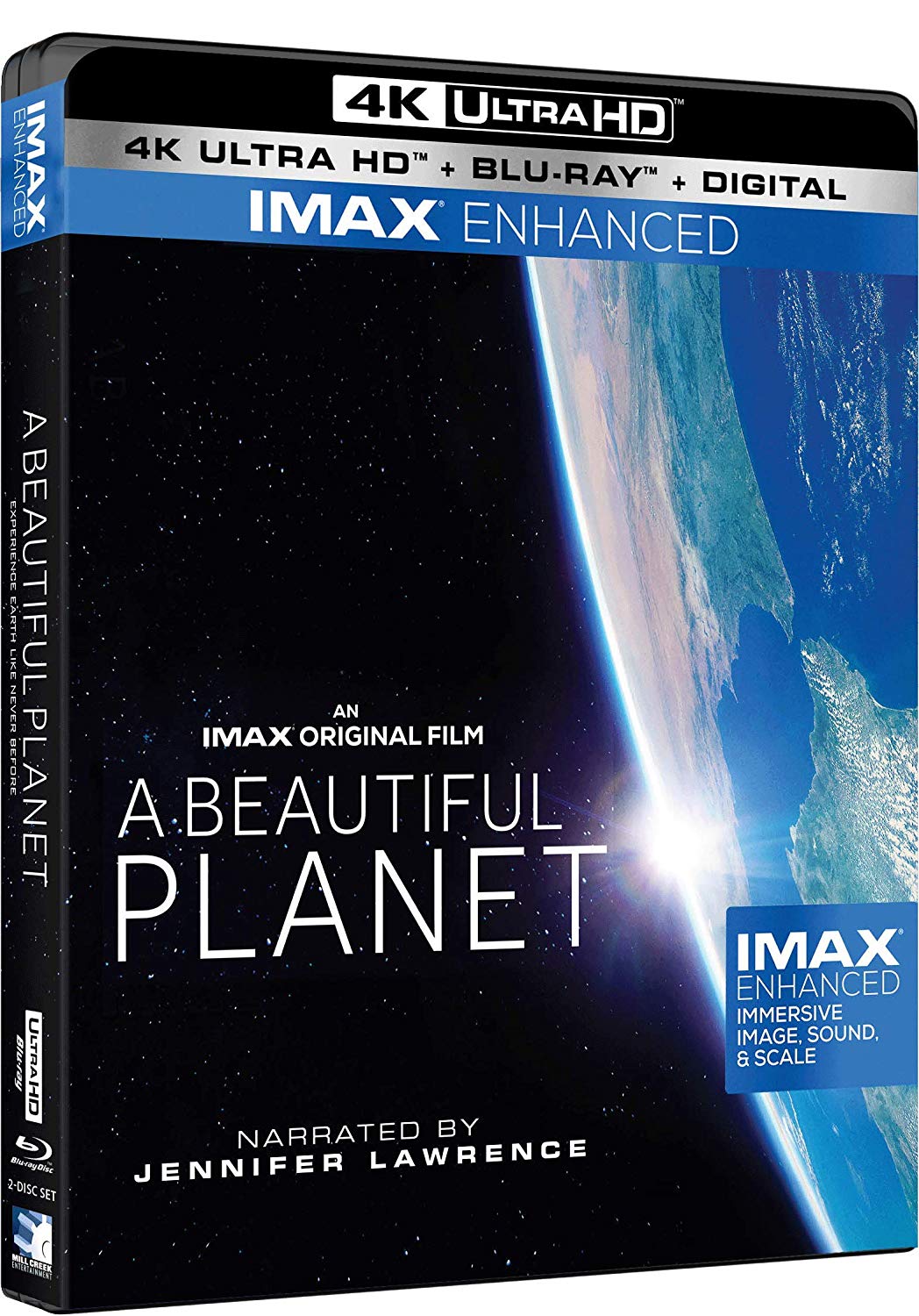
"Our Milky Way Galaxy is just one among billions of galaxies in the universe. In every way an ordinary galaxy. It's 100,000 light years across. There are hundreds of billions of stars here. Lost inside this huge swarm is one average-sized star. As stars go, it's quite unremarkable. Nevertheless, it's the most special place in all the cosmos. Orbiting this star is the only place we know in all the universe to harbor life."

Of course, that place is Earth, and while we can't say for certain, it is truly unlikely to be the only place in this vast universe or even this galaxy to contain life. We might one day have to rethink exactly what that term means one day. But for now, Earth is the only place we know that supports life.

"I always knew he'd come back. In this town, Michael Myers is a myth. He's the Boogeyman. A ghost story to scare kids. But this Boogeyman is real. An evil like his never stops; it just grows older. Darker. More determined. Forty years ago, he came to my home to kill. He killed my friends, and now he's back to finish what he started, with me. The one person who's ready to stop him."

I was 17 years old when John Carpenter released The Shape, aka Michael Myers, on the world in 1978. It was a milestone film. Of course we didn't know we were watching something that would become so culturally huge. We were the target audience. Teens who were looking for some extra thrill in our films. These so-called slasher films became great escapes of fantasy to bring a date along. For a late-teen, there's no better way to spend an evening with a date than a film that might have her jump right into your lap. Great times. But the reason Halloween stands out from the crowded genre is because John Carpenter knew something about anticipation. He knew how to build towards a scare. And he understood how to use music, shadow, and pacing to truly immerse his audience into a film. I didn't watch Halloween in 1978. I experienced Halloween in 1978.

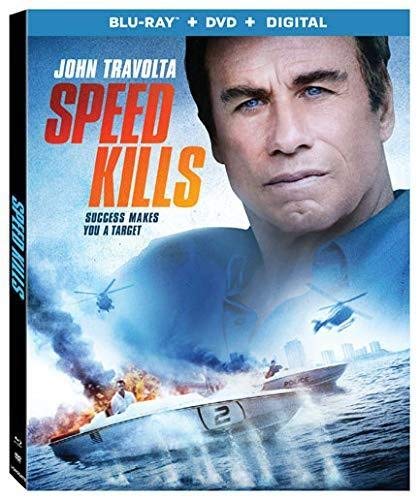
John Travolta is one of those guys I like, but it seems like it has been ages since he’s done a great film.  Sure, he was great in The People vs. OJ Simpson where he played attorney Robert Shapiro, but apart from that role, it’s been a while since we’ve seen Travolta really make a splash at the box office. Personally I love seeing the guy on screen. Blow Out, Get Shorty and Pulp Fiction are just a few of my favorite films that he has been in, and I keep hoping his career will bounce back, but unfortunately it doesn’t look like it’ll be happening any time soon. Speed Kills is a film that has a story that is oozing with so much potential that if it were put in the hands of Brian De Palma or Michael Mann you could almost guarantee this film would be destined for greatness.  Unfortunately the result is a frustrating mess that manages to make boat racing and drug smuggling in the age of the “cocaine cowboys” seem boring.

One of the film’s biggest faults is to open where the story ends, where we see Ben Aronoff (Travolta) being the target of a hit.  The film then wants to take us back in time, where we have Aronoff narrating his story of how he had his rise and fall in Miami that reeks of a bad imitation of Henry Hill from Goodfellas.  Seriously, in less than 10 minutes this film manages to sabotage itself, and it doesn’t get much better from here.  This isn’t Casino where by some miracle our narrator manages to escape an exploding car. Having this given away so early on in the film is simply a giant mistake. If you eliminate this opening sequence, instantly you have a better film, but apparently even with over 40 named producers connected to the film, no one seemed to have realized this.

These days when the studios are cutting together trailers to promote their upcoming films, I feel one of the number one complaints people have is that the trailer gives too much away, so why bother shelling out the cash to see it on the big screen?  When it comes to the trailer for Bad times at the El Royale, it gives you a glimpse at what is to come, but the result is something clever and ambitious. Unfortunately, it feels a bit too familiar.  This is the second feature film from writer and director Drew Goddard, who first made a splash onto the screen with his hit film Cabin in the Woods.  While I enjoyed his first romp that played with many of horror’s stereotypes, I still felt the film fell a bit flat.  Unfortunately, though I enjoyed this fun little noir film he’s put together, I feel it too falls a bit flat, but mostly this is due to its 140-minute runtime.

The film opens up with a great sequence, where we get to watch as a man comes into a motel room and goes through the process of burying a bag beneath the floorboards.  It’s a long static shot that nicely sets the tone for the film we’re about to watch, and with the nice little twist at the end of the scene, we’re ready to jump into this film.  Sadly, as we are introduced to visitors at the El Royale motel, things get a bit long-winded, as it seems the sequence of just having the characters checking into their rooms will never end.  It works as setting a tone and introducing us to characters, but the problem is we spent all this time with character development just to discover no one seems to be who they claim to be.  I’m all for having twists, but this sequence just goes on for too long, and unfortunately that’s pretty much how each sequence plays out, each clever one stretching on for a bit too long.  This is where I understand where people draw their comparisons to Quentin Tarantino, only Tarantino can make long talky sequences crackle with humor, dread, and cool all at once, and Goddard just can’t pull it off.

“You know, the first time we met, I really didn’t like you that much.”

I didn’t become acquainted with When Harry Met Sally… until well after the Billy Crystal/Meg Ryan flick had established itself as a bona fide romantic comedy classic. (I was 7 when the film came out in 1989.) So when I finally got around to watching it in my late teens, the “I’ll have what she’s having”  punchlines and general set-up involving an unlikely romantic pairing felt overly familiar. I enjoyed it just fine, I definitely appreciated it, but I wouldn’t quite call what we had love. Shout Select, an imprint of Shout! Factory, has released a 30th anniversary Blu-ray of When Harry Met Sally… And after revisiting this film years later, I’m asking myself the same question that Harry and Sally ponder after being friendly for years: is this love?

"The list is an absolute good. The list is life."

It had been nearly 20 years since I had seen Schindler's List. I believe this was only the second time I've watched it since seeing it in the theaters back in 1993. It's one of those films that doesn't lend itself to repeated viewings. It clocks in at over three hours, and the material is emotionally draining. That doesn't mean the film shouldn't be on everyone's shelf. It should. It should, because it tells a brutal story that civilization must never forget. It's clear that while the event remains in our collective memories, the reality of the Holocaust has been lost on too many people. Watch this film, and you will be completely amazed that anyone could throw words like Hitler or Nazi to describe anything that could be happening in American politics today. I'm convinced that the people who use those descriptions need to sit down for three hours and watch Schindler's List, maybe for the first time. It belittles this horrific moment in history to throw it about as a political hit or hate speech. There is nothing in our current American landscape that comes close to the reality of what happened to the Jews in World War II. Saying that there is shows amazing ignorance, an ignorance that this film goes a long way in dispelling.

“This is Gilda Radner…her voice and her writing.”

Since its debut in 1975, Saturday Night Live has churned out more comedy superstars than you can count. However, the first performer that SNL creator Lorne Michaels cast for the show wasn’t Chevy Chase or even John Belushi. It was Gilda Radner, the daring and vivacious comic who became a breakout star on the show…and passed away much too soon in 1989. So while Love, Gilda is certainly a love letter to the late comedy legend, the documentary is at its best when it relies on Radner’s own musings to tell her story.

“You kind of loud.”

It made all the sense in the world on paper. Pairing Tiffany Haddish (coming off her outrageously profane, scene-stealing breakout in Girls Trip) with Kevin Hart (one of the shrillest most successful comedians in the world) seemed like a match made in loudmouth heaven. Instead, it turns out that almost all the creativity that went into Night School — which actually has a pretty decent premise — was limited to envisioning its two stars on a poster.

IMAX films are the perfect source material to show off the capabilities of the UHD Blu-ray/4K format. Most of the films we watch in theaters today have been shot around 2.8 K and mastered at just 2K. A 35mm film actually shot on film has a native resolution of 4K. The IMAX film format uses 65mm and 70mm film that increases its native resolution well beyond our 4K televisions and players. They are relatively short and have a ton of bandwidth to deliver the best possible image and audio. Shout Factory discovered this as soon as the format was launched, and Upcomingdiscs was there to check them out. Now there's a new player in the IMAX UHD business, and it's Mill Creek Entertainment. They get it, and so now you can expect a few of those gems coming your way from Mill Creek. The first one that I've had a chance to see is Journey To The South Pacific, and it's sweet.

The film takes us to a local village in West Papua. We get some wonderful shots of the residents living their lives that depend so much on the sea. It's the only real resource they have left. Because of overfishing and other obstacles, the big fish the natives so rely on are disappearing, and the health of the reef has been getting critical.