2.35:1 Widescreen

Elvis Presley was easily one of the most impactful pop culture icons of the 20th century during his life, and that status has barely waned in the decades after his death. (Or “alleged death”, given the number of Elvis sightings each year.) Presley obviously made his most lasting mark in the world of rock and roll music (and fashion), but he also had a surprisingly fruitful film career. Though none of his movies turned out to be cinematic masterpieces and no one was confusing him with Marlon Brando, The King brought his charismatic presence to more than 30 movies between 1956 and 1969. He was 21 when he made his film debut in Love Me Tender.

Fox has just released the 1956 Western/Civil War drama on a nifty-looking Blu-ray. (More on that in the Video section.) The first thing that struck me about the black & white film is that Presley — arguably the most famous person in the country at the time — is not really the star.

I was not looking forward to this sequel at all. Now, to those who saw the film in theaters and loved it, before you get bent out of shape, allow me to explain why. See, I don’t react to change very well, and after seeing the first film and liking it, let’s just say that I had certain reservations after learning that much of the original cast wouldn’t be returning (not to mention news of the worst kept secret about the demise of one of the characters). Needless to say when I sat down to watch Retaliation, I wasn’t expecting to enjoy. Happy to say that after watching it, I’m eating crow.


Retaliation resumes sometime after the original movie. Duke (Channing Tatum) is now leader of his own team which includes Roadblock (Dwayne Johnson), Lady Jaye (Adrianne Palicki), Snake Eyes (Ray Park), and Flint (DJ Cotrona). After completing a successful mission, the team returns to base camp and awaits extraction. Dropping their guard, the group enjoys downtime; however, when a security patrol arrives ahead of schedule, it does not go unnoticed.  Their suspicions are proven right, as a massive assault devastates the camp. Unable to adequately defend themselves, the team suffers heavy casualties including a vital and precious member of the team. (I’m sure you’ll have no trouble figuring out who.)

“There are only two reasons why a boat would go rogue. One is to defect, and the other is to start a war, and I don’t think we’re defecting. ”

Abraham Lincoln once said, “The best way to get rid of an enemy is to make him a friend.” That’s one way; however, Phantom proposes a different tactic: the best way to get rid of an enemy is to get someone else to do it. Which do you agree with more? Ed Harris and David Duchovny square off as two pieces on the opposite sides of the chess board locked in a submarine together with control of a nuclear warhead being the checkmate.

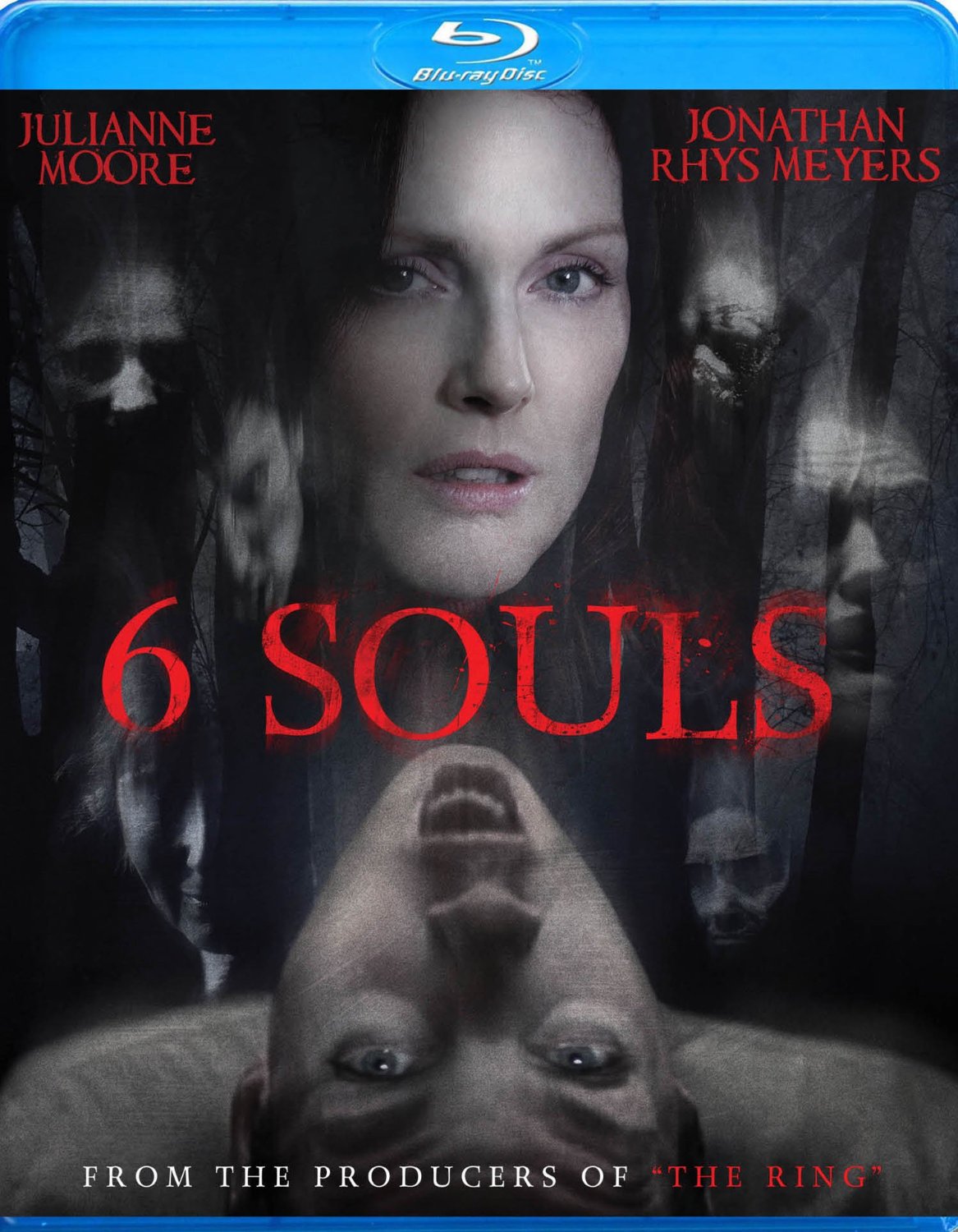
The medical community seems to be split on whether or not dissociative identity disorder — previously known as multiple personality disorder — actually exists. Well, I’m here to offer a definitive answer because I’ve just seen the dreaded disease in action after watching 6 Souls. The film can’t decide whether it wants to be trashy, watchable horror movie that regularly tries to jump-scare you out of your seat or a somewhat serious meditation on the science vs. faith debate.

Dr. Cara Jessup (Julianne Moore) would strongly disagree with my diagnosis. When we meet the widowed psychiatrist early on in 6 Souls, she’s expressing her belief that multiple personality disorder is a fad perpetuated by the media and pop culture. Cara’s father (Jeffrey DeMunn) is also a psychiatrist, and he’s playfully determined to prove his daughter wrong. He asks her to examine a seemingly timid young man named David (Jonathan Rhys Meyers) who becomes the much more aggressive Adam after a well-placed phone call. Even though Adam/David is very convincing, Cara wants to debunk the idea that he suffers from multiple personality disorder. As she investigates Adam/David’s background, she finds a common link between his personalities and realizes there might be more to come. (The movie isn’t called 2 Souls, after all.)

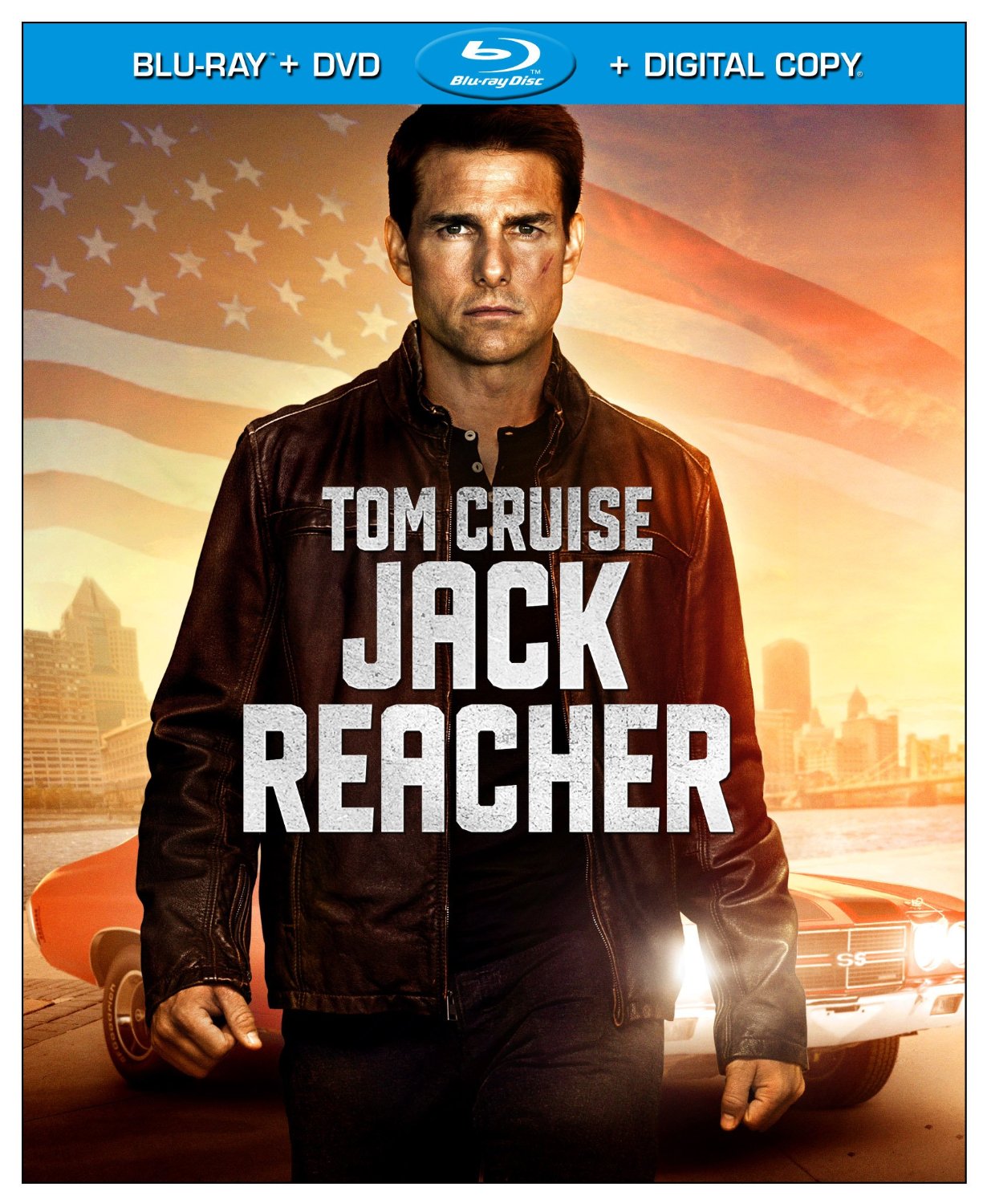
"Who is Jack Reacher? Born Jack, not John. No middle name. He's a ghost. Served in the military police. A brilliant investigator, troublemaker, too. And two years ago he disappears. You don't find this guy unless he wants to be found."

We've found him. The character of Jack Reacher comes from a series of thriller novels written by Lee Child. From the very start you know that this is going to be a different kind of Jack Reacher than fans have come to know and love from the books. He described as being 6' 5’’ and about 250 pounds. Tom Cruise doesn't really fit any of those description elements. He does, however, fit two very important descriptive elements when it comes to Hollywood. He's still a big name and a pretty reliable box office draw. He also put up some of his own cash to produce the movie. Now that's how you get cast for a part very physically different from yourself.

We all know what it feels like to nod off in the middle of a film. It starts with micro-naps that last a few seconds. They’re so short, we don’t even realize we’ve fallen asleep. But when we wake up, we feel totally lost because we’ve missed a line of dialogue or scene transition. I mention this for two reasons: 1.) the confused protagonist of Tomorrow You’re Gone floats through his life in a dream-like state and 2.) watching this incomprehensible mess of a movie constantly made me feel like I’d fallen asleep and missed something. That’s a problem because I was wide awake.

The plot of Tomorrow You’re Gone — based on the novel “Boot Tracks” by Matthew F. Jones, who also wrote the screenplay — is straightforward enough. We meet Charlie Rankin (Stephen Dorff) just as he’s about to be released from prison. He receives an encoded letter from Billy “The Buddha” Pettigrew (Willem Dafoe), Charlie’s former jail-house mentor. The hidden message orders Charlie to carry out a hit, and Charlie agrees because he feels indebted to The Buddha. On his way to do the job, Charlie meets Florence (Michelle Monaghan) a flirty oddball/former porn star, and the two form an uneasy bond. After the hit doesn’t go as planned, Charlie has to dodge an unhappy Buddha. (He also spends an inordinate amount of time dodging Florence’s sexual advances because...actually, it’s not really clear why he keeps rejecting this woman who is throwing herself at him. It flies in the face of everything we know about movie ex-cons.)

Donnie Yen continues to deliver one great martial arts film after the other, easily making him the most entertaining martial arts star for quite some time.  Sure, there are those who cling to the idea of Bruce Lee being “the best” or perhaps mentioning Jackie Chan or Jet Li for more modern viewers.  But for me it’s Yen, and I have no problem saying he may be the best martial arts star of all time.  His work with Ip Man, Seven Swords, and Flash Point are staples in a career that has been going since 1984.  With Dragon you can check off another hit for Yen; though it may not be as action-packed as some of his previous releases, what we get instead is a fun detective story that asks the question, can a man that has committed atrocious crimes be capable of change?

Dragon opens up in a small village in 1917 China.  The village is quaint; everyone has their place in keeping the village alive and running.  For money the village makes paper; it’s not enough to exactly have everyone living the high life, but that isn’t what you’d expect in this village that probably hasn’t changed much in the past hundred years.  But everything changes when two thieves come into the village and attempt to rob it.  Liu Jin-xi (Yen) reluctantly stops the robbery, and in the process a “fight” breaks out which results in the death of the two thieves.  Was it simply luck on Jin-xi’s part, or is his simpleminded act of heroism a ruse, and beneath it all could he possibly be a trained killer?  This is left to Xu Bai-jiu (Takeshi Kaneshiro Red Cliff and House of Flying Daggers), an investigator sent to the village to decide if it was all an act of self defense.

Sometimes a movie comes along that rises above simple entertainment and actually has something to say.  The Big Picture is the kind of movie that has profound ideas about love, family, and the pursuit of your dreams.  Is it possible to really have it all?  The perfect spouse, the perfect family and live out your lifelong passion and dream?  Many who have families, especially when starting young, can understand the idea of sacrifice for their families; it doesn’t mean they just cast their hopes and dreams aside, but once marriage and children are involved the direction your life may take was never the direction you had planned at all.  And it’s this life and compromise director Eric Lartigau thrusts us into.

When we first meet Paul (Romain Duris) he is a happy family man with a beautiful wife, Sarah (Marina Fois), and two children.  Though he is a successful lawyer, his passion is photography.  He continues to snap photos and develop them in his personal lab, but he understands the risk of setting out to be a freelance photographer and simply can’t give up the security of his job with the law firm.  Unfortunately, though, Sarah is not so content with her idyllic life and has dreams of her own as well as other desires she wishes to fulfill outside of the marriage.  As Paul discovers his wife’s infidelity and that it was with a close friend, he begins to crack, and with good reason.  Things only get worse when Paul confronts Greg (the man Sarah is having the affair with); their minor altercation leads to Paul accidently killing him.

When The Sandlot first came out 20 years ago, I connected to the coming-of-age baseball story as strongly as Babe Ruth connected with one of his titanic, 400-foot homers. I grew up in baseball-obsessed Puerto Rico and I happened to be the exact same age as dorky protagonist Scotty Smalls. Though I’ve kept in touch with the film over the years, Fox’s new 20th Anniversary Blu-ray re-release of The Sandlot marked my first time watching it from start to finish in a long while. It surely won’t be the last.

An adult version of Scotty Smalls recounts the story of his most memorable summer. As a fifth grader, Scotty (Tom Guiry) moved to a new town with his mom (Karen Allen) and stepdad (Denis Leary) just before the end of the school year. Scotty’s mom wants her sweet, nerdy son to actually get into a little bit of trouble during the summer, so he falls in with a group of kids who play baseball in a raggedy patch of grass called The Sandlot. The only problem is Scotty doesn’t even know how to throw a baseball. Fortunately, Scotty is taken in by Benny (Mike Vitar), the group’s leader and the best baseball player by far. During that one remarkable summer, the kids encounter a dream girl, arrogant Little Leaguers and a legendary canine menace known as The Beast, which swallows up any baseball that finds its way into his yard.

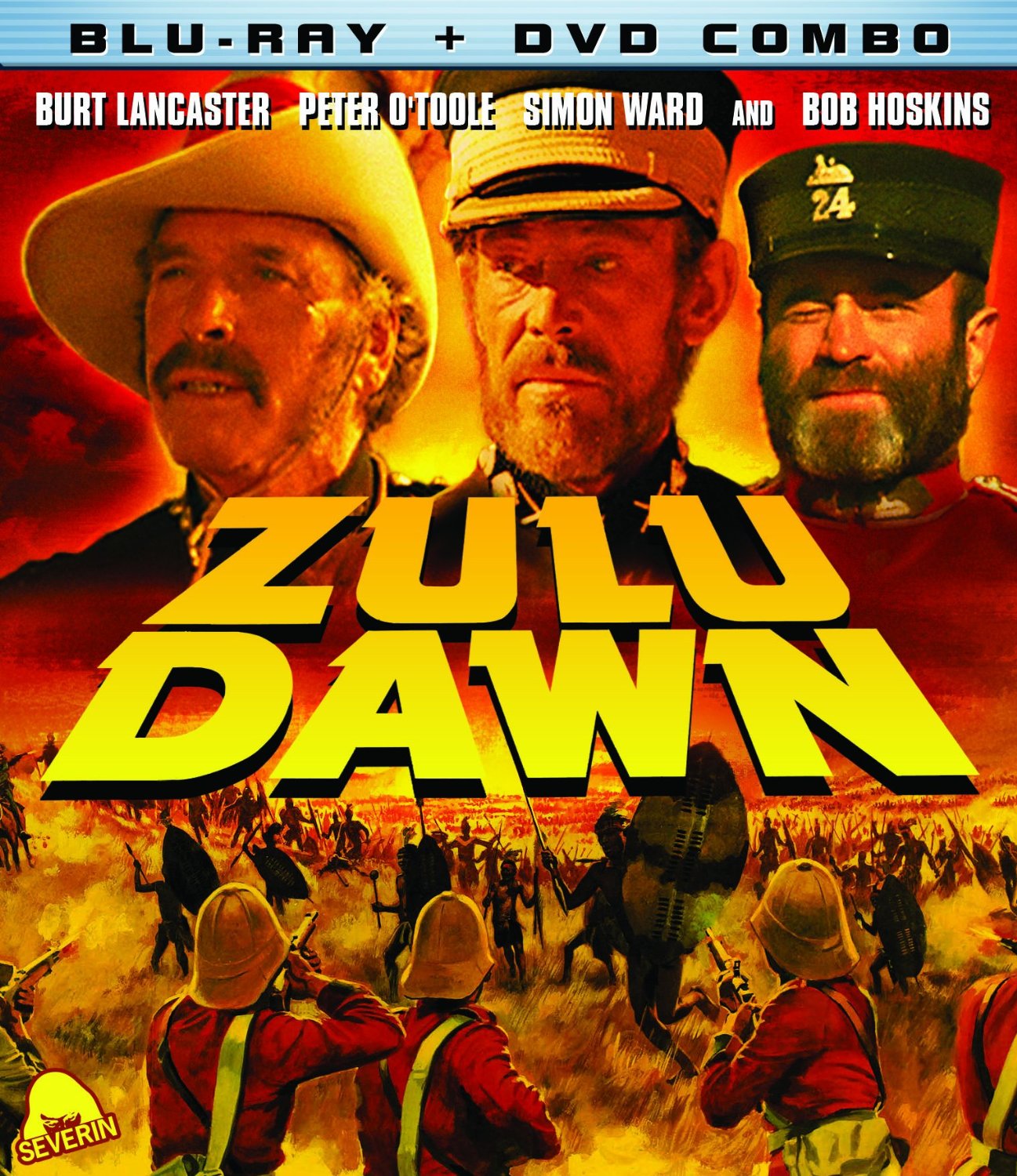
I tend to shy away from films that have come out before I was born. It’s not a rule, just a habit. The reason for that being because not being from the generation that movie was produced in, I fear that there will be a lot of cultural reference that I will be unfamiliar with and I will have to Wikipedia them all. I also feel that because I am from a different era I am not qualified to render a sound opinion of an older film, because I may judge it too harshly due to my growing up within a time of special effect advancement. Of course I am well aware that this aversion causes me to miss out on quality films like Raiders of the Lost Ark, Apocalypse Now, and as it turns out, Zulu Dawn. Thank goodness for this job for introducing me to films I wouldn’t normally see of my own volition.

Zulu Dawn is a war film covering the Battle of Isandlwana, the first major encounter in the Anglo-Zulu War between the British Empire and Zulu Kingdom in 1879. The film is told mainly from the perspective of the British soldiers and features Hollywood household names Burt Lancaster, Peter O’Toole, Simon Ward, and Bob Hoskins on that side. The film starts off with Lord Chelmsford (Burt Lancaster, Lawrence of Arabia), a commander of British forces stationed in South Africa who is eager for advancement, and Sir Henry Bartle Frere (John Mills, Ryan’s Daughter), the High Commissioner of South Africa issuing a ultimatum to King of the Zulu Empire, King Cetshwayo: dissolve his empire or face the British forces that were looking to expand the ever-growing industrial economy. The King refuses and rallies his people to prepare for war.