When it comes to dystopian-type films, it is very difficult to break ground. In the span of cinematic history, we have seemed some good ones (Mad Max, Snowpiercer), and we seen some bad ones (Chaos Walking, Battlefield Earth). Unfortunately, I would have to rate The Colony (a.k.a. Tides) in the latter group rather than the former. Simply put, there just wasn’t anything about the film that resonated with me. Many of the plot themes felt recycled and predictable. The story follows an astronaut returning to Earth to determine whether it is habitable following years of climate change, pandemics, and war that have decimated the planet. Upon arrival, she immediately finds herself captured by those left behind on the planet. So apparently the planet was not that inhabitable to begin with. Around this time the film started to give me The 100 vibes. The story does throw in a new wrinkle with the subplot that the colony living in space has become infertile due to what I assume were atmospheric conditions. To that end, this idea does present an interesting angle and serves as the overall motivation for our lead character’s return to earth. That said, it still was not enough to make the story very compelling.

On one hand, the idea does create a plot device that aids in moving the story along, as well as creating desperation for the characters, as they show the lengths that they are willing to go to in order to combat their own extinction. However, this idea in itself is not a new idea. Anyone recall a film called Children of Men? That was very similar circumstance. However, not to simply focus on this angle, I feel the need to point the film’s usage of the red herring concept. Not to give too much of the storyline away, but as things progress it becomes evident that things aren’t what they appear long before the twist reveals itself. I just remember sitting and watching, and I instantly knew that what was perceived as the lead character’s salvation would eventually reveal itself to be more of a damnation.

"There are certain rules that one must abide by in order to successfully survive a horror movie."

No one knew those rules better than Wes Craven. He helped to create them, after all. Starting in 1972 with the cult favorite The Last House On The Left, he followed that just two years later with The Hills Have Eyes, which led to a sequel. But it wasn't until a decade later that he would deliver his masterpiece and most successful franchise, Nightmare On Elm Street. Wes Craven introduced the world to Freddy Kruger, and our dreams have never been quite the same since. While others attempted to reproduce the same results with many sequels, it was Craven himself who put Freddy to bed with New Nightmare exactly 10 years after his birth. A remake never got much traction, and Wes Craven's place in horror history was assured. In 1996 he decided to take one more stab at the slasher genre and delivered one of the best films to look directly back at the audience and celebrate the genre. Scream was another hit and another franchise staple. He took a then relatively unknown cast and made them household names with future amazing careers and decided that it was time to also poke a little fun at himself and his colleagues. The result was four films and an upcoming kind of reboot/sequel after a three-year television series examined the material. More importantly, it led to an entire sub-genre of films that include the Scary Movie franchise and others. Now, just in time for the holidays and the new film, you can see Scream in 4K with this UHD Blu-ray release.

From Bride of Frankenstein to Night of the Living Dead and even Godzilla, horror has been a platform filmmakers have used for decades to handle larger societal issues. In 1992 when the first Candyman released, it was a film that tackled issues of class and race, but it did so in a manner that didn’t feel forced, and in doing so it added an extra level to what I’d consider one of the best horror films of the 90’s. I love the story of Candyman, and the performance Tony Todd gave this tragic character was an equal blend of horror, menace, and sympathy. The way the first film builds its impending doom for Helen Lyle has rarely  been matched in films since. Watching as her life crumbles around her up until the moment she finally surrenders herself to Candyman and accepts her awful fate is an impactful moment. The sequels just never lived up to the first film, and it’s a shame, because I simply loved the idea of this modern urban legend that haunted the projects of black America. Candyman and the tragedy of Daniel Robitaille deserves better. As much as I love Friday the 13th and several other franchises in the horror genre, Candyman has always been the character ripe with so much untapped potential that I’m surprised it’s taken this long to get the reboot/sequel it rightfully deserves. Though the moment I saw that Jordan Peele was involved, I started to worry.

I’m being upfront and saying I just don’t like Jordan Peele when it comes to horror. It’s like when Michael Bay started up his horror company and churned out The Texas Chainsaw Massacre. Horror just isn’t for everyone to dip their toes into, and I don’t care about what awards films may get or what box office it may gross; I’m not going to cave to the bandwagon. That being said, I’m more than willing to give a film a chance if the trailer can hook me or if I care about the property, so with Candyman this was one I was on the fence with. I was ecstatic about seeing this character back on the screen, but I was still cautious, because it was being helmed by Nia DaCosta, a director with no experience in the horror genre. As it would turn out, she’s a director who shows plenty of talent and promise, but can’t build a moment of tension even with all the tricks and tools of the industry at her disposal.

"I, Cordell Walker, do solemnly swear..."

No, this is not the next spin-off of the zombie Walking Dead franchise. There's a new ranger in town, and his name is Cordell Walker. I know what you're thinking: "Meet the new boss. Same as the old boss." That's where you'd be wrong. They might share the same name and job, but this Walker is nothing like the Chuck Norris version that lasted for over a decade when you include made-for-television movies. This Walker is much younger. He was a Marine who had joined after 9/11. He has a family. His wife was killed a year ago, and now he's trying to raise his son and daughter with the help of his parents, who were no longer living in the Norris series. The episodes are more of an ongoing story arc, which conforms to pretty much most dramas on television today. While there were certainly elements that ran through the original show, it was pretty much a bad-guy-of-the -eek setup. If you haven't caught any of the new show, now is your chance. CBS Home Entertainment has released the entire first season on DVD, and just in time for the holidays. You get all 18 episodes on five discs with a couple of brief features.

"My name is Nicky Shen, and this has been my home for three years. A Shaolin monastery in Yunnan Province, China. My mom sent me on a cultural tour of China. Turned out, it was really a matchmaking tour to land me a Chinese husband. Just one of the many ways my mom tried to control my destiny. I panicked. I ran. That was the first time anyone told me I had a choice in anything. I was only planning to spend the night. But then I saw something that I knew I wanted to be a part of. These women were warriors. And so I stayed. Pei-Ling became my Shifu, my mentor."

The new Kung Fu series at the CW is not really anything like the 1970's show that starred David Carradine. And while the credits claim to be based on that show, they really do not have anything in common. This show is not a period piece but exists in current day San Francisco. The titular character is no longer a middle-aged quiet hero or a guy. Instead we have law school drop-out Nicky Shen, a twenty-something woman who doesn't quite have a handle on who she is. She's not a wanderer, and she doesn't play a handmade flute. She lives with her family and is totally connected to the modern from cellphones to Uber. That isn't to say the show is bad. The production values are high, as are the writing and acting. The weak link for me is it's given me flashbacks to Pretty Little Liars, as this show likely shares those adolescent girl demographics. So clearly I'm not the target audience. So otherwise, Mrs. Lincoln, how was the play? Warner Brothers Home Entertainment drops this reincarnated Kung Fu on Blu-ray with all 13 episodes on three discs.

"My name is Harris K. Telemacher. I live in Los Angeles, and I've had seven heart attacks. All imagined. That is to say, I was deeply unhappy, but I didn't know it because I was so happy all of the time."

Steve Martin plays a wacky TV weatherman who develops a close friendship with an electronic freeway sign in the sleeper hit comedy L.A. Story. I found the critically acclaimed film to lack hilarity, but it does get marks for inventiveness. Martin is enjoyable in most anything he’s in, even if the material is not so great. L.A. Story is one such example of an actor rising above said material. Most of the over-the-top silliness misses the mark, and Marilu Henner has little more to do than play the cliché  of snobbish socialite. The true love of the Martin character’s life – played by Victoria Tennant – is so bland vanilla I would have much rather seen him end up with his free-spirited squeeze toy (Sarah Jessica Parker), though any such relationship would be doomed to fail. At least there would be some excitement.

"You're going on a journey. A journey through memory. Your destination? A place and time you've been before. To reach it, all you have to do is follow my voice."

So, an interesting factoid that I learned about the film’s director Lisa Joy: she is the sister-in-law of director Christopher Nolan. This doesn’t really add anything to the review, just an interesting fact that I thought I’d share. Then again, I do remember thinking when the film first opened up that it felt very shades-of-Nolan. Not to say that Nolan had any influence over the film, but just the idea of a movie based off a construct is very much in his wheelhouse. Memory is the construct that is explored in this film, and I must admit that the addictive nature with which the film portrays this construct did have some appeal; however, the film tries to bring too many different themes and elements together, and it results in not enough attention being paid to any of them. Hugh Jackman and Rebecca Ferguson are the film’s big draws, and while their electricity helps to make the film decent, it cannot make it great.

It's hard to believe that one of the most popular comedy shows of the 1950's was not really a show at all, at least not in the way that we think of a television series today. The show began its life in 1951 as a segment on the popular Cavalcade of Stars. At that time only Jackie Gleason and Art Carney starred in their familiar roles. Alice was played by Pert Kelton. The series took its more recognizable look when it became part of The Jackie Gleason Show in 1955.That's also when Joyce Randolph joined the series as Trixie Norton. The series would take up a half hour of the slot. The second half was taken up by a larger variety of pieces, usually a series called Stage Show. The show would come and go, with other cast members coming and going over time. Even Art Carney had left The Jackie Gleason Show at one time, only to return in 1957 to the role. The show's history is a complicated one to which entire books have been devoted over the years. It wasn't until syndication that the series was really a show unto itself. The original 39 episodes were joined with nearly 70 re-edited versions of the other various incarnations of the show have made up what most of us today think of as The Honeymooners. The final original versions of the show ended in 1971; both Audrey Meadows and Joyce Randolph were gone by then, replaced by Sheila MacRae and Jane Kean respectively.

But this show that wasn't really a show had legs. The syndicated versions became hugely popular, and new generations of fans were being indoctrinated with each new package. The show even survived on pay television at Showtime for a while in the 1990's when the 70 newly-formed "Lost Episodes" first aired. But the fever just never died. The show would influence a large number of series that would follow. Even the animated world of cartoons wasn't safe. The Flintstones would come along and become a prehistoric cartoon show that was basically the same down to the characters. Fred and Barney couldn't have been closer to Ralph and Norton if their names had been the same. Today, comedians constantly recall The Honeymooners and Jackie Gleason as their inspiration. To more than one generation of television viewers, Gleason really was "The Great One".

"So now that Captain Rogers and Iron Man are both gone, who do you think's gonna lead the Avengers?"

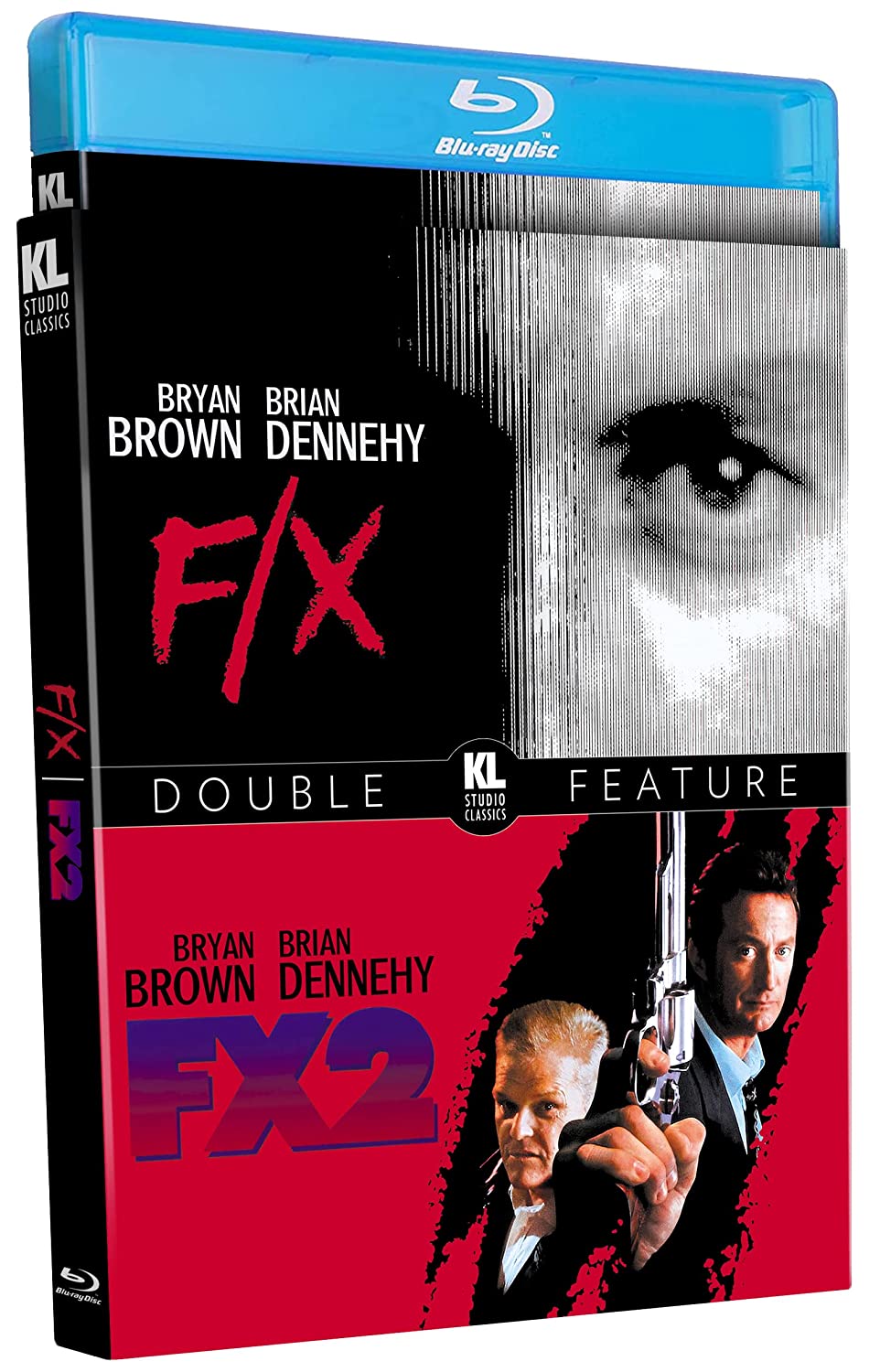
After over a decade of ruling the feature film comic book universe, I have to ask the question that no one really wants to ask or answer. A lot of things have happened in the real world since the release of the two-part Avengers coda to the last phase of films. In over 22 films, there were only a couple I would have called sub-par and less I would have called stinkers. That hasn't been the case with the start of the post-pandemic Marvel Cinematic Universe. It started with Black Widow, which I have argued doesn't belong here. It works as the third film in a trilogy that includes the last two Captain America films. It has the same feel and much of the same style. I liked it but felt it was horribly mistimed. Things being what they are, that might be expected. Then came along Shang-Chi And The Legend Of The Ten Rings, which brought an interesting new dynamic to the MCU but still fell somewhat flat with fans. If you were into their martial arts comics, it might have felt better. The f/x and world-building were incredible, but the film just never connected with me. Now Eternals brings that same feeling of disconnect, and it's a troubling sign for the Marvel stranglehold on comic book feature films.

Well, this is an interesting plot twist. From antagonist to protagonist. When we last saw Gulf War veteran Norman Nordstrom, he was recovering in the hospital from a gunshot wound, having just spent the previous night protecting his home against intruders. Before you start painting him with a hero brush, it's worth mentioning that Norman isn’t exactly squeaky clean, given that he was holding a woman hostage after artificially inseminating her to provide with a child to replace the one that said woman accidently killed. It’s also worth mentioning that he also attempted to impregnate one of the home invaders following the inadvertent death of the woman carrying his child. The first Don’t Breathe was an interesting and unique horror thriller film that premiered at South by Southwest festival back in 2016 before going on to become a theatrical commercial success.

Hence the need for a sequel. Initially, I had a great deal of reservation about continuing the story, as I figured it was like trying to get lightning to strike the same place twice. Which it did. That said, I was intrigued to see the character to take on more of an anti-hero role, as he wasn’t technically a villain in the previous film, making this transition easy to accept and believable. Don’t get me wrong, he did some depraved things, but these were clearly the acts of a man driven deranged by grief. I’m not saying that he is deserving of redemption; I mean, between this film and last one, he chalked up a body count. And without question, he is somewhat self-serving, especially since his relationship with Phoenix is all about filling a hole left in his life following the death of his daughter. However, he does manage to show great protective instincts and a willingness to put his own life on the line to save an innocent, so he isn’t exactly a monster, either, despite what the character may believe about himself.