Posts by Brent Lorentson

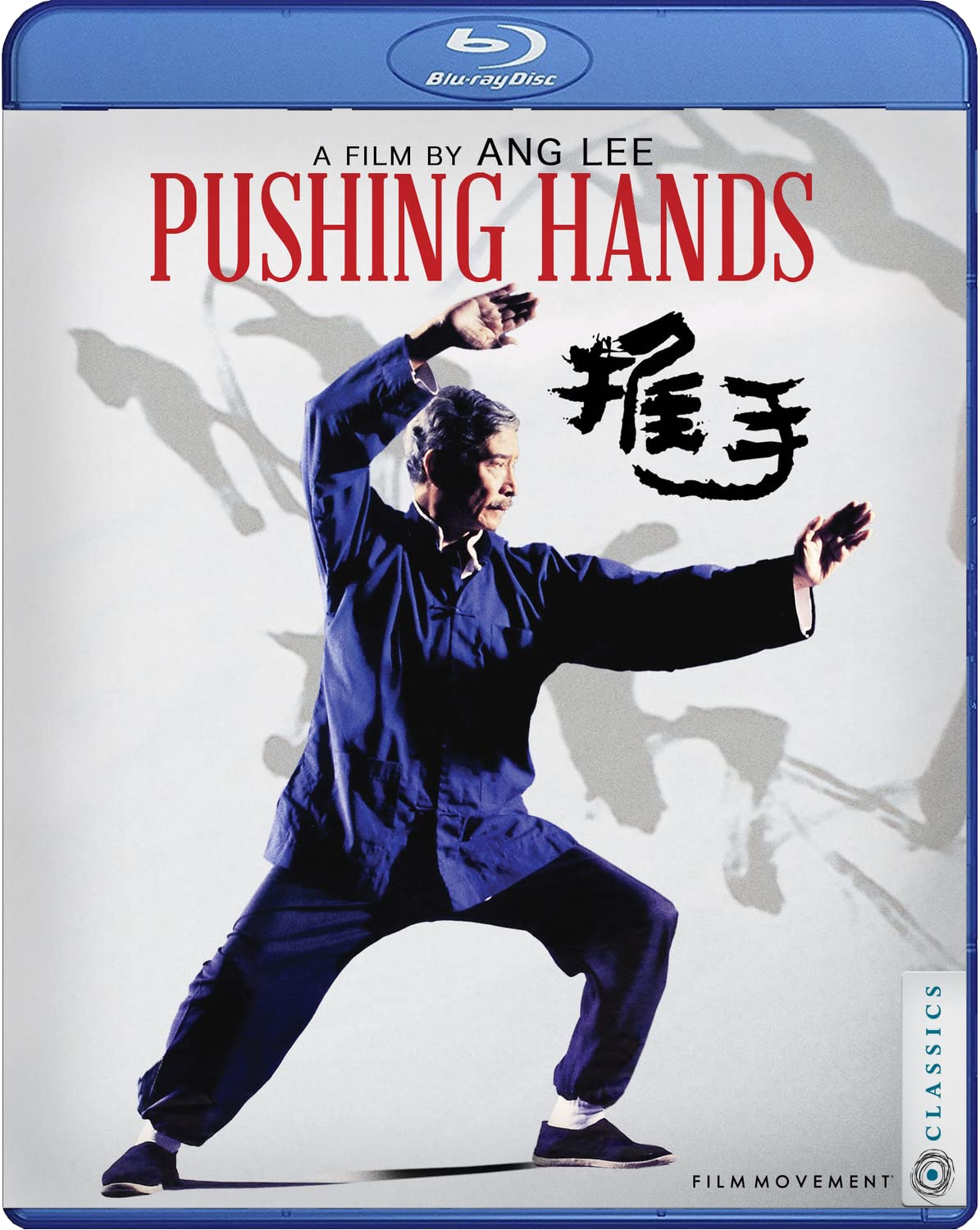
Director Ang Lee has come a long way since his 1991 debut film Pushing Hands.  When you look at Ang Lee’s impressive resume, the only film that stands out is sadly his only major misstep as a director, and that’s the 2003 film Hulk, the movie I feel audiences have been trying to forget and comic fans simply want to pretend doesn’t exist.  When you look at the rest of his resume, there are some impressive titles that have made a difference within the Hollywood cinema landscape.  Crouching Tiger, Hidden Dragon, Brokeback Mountain, and Life of Pi are just a few of his films that are standouts that were commercial successes but at the same time define his unique style and focus when it comes to character. Pushing Hands is character study that was released during the rise of independent cinema in the 90’s when film focused more on characters and finding unique voices that could tell great stories on a limited budget. What makes the film all the more unique is that it’s a martial arts film without the violence we’re used to seeing on the big screen, and instead its focus is more on the holistic methods of tai chi.

The film opens with Mr. Chu (Sihung Lung) and Martha (Deb Snyder), his American daughter in-law, at odds with one another.  The two butt heads most because of their cultural differences, and we get to see how difficult it is for them to live under the same roof. Back in China, Mr. Chu was a well respected tai chi master, but now he lives in America with no understanding of the language, living under his son’s roof, and he simply rejects the American way of living because he is stuck in his old ways. Martha is a housewife who is attempting to write her first novel but is thwarted by her father-in-law’s antics that are a constant distraction. Alex Chu (Bozhao Wang) is the dutiful son who is caught in the middle of being a loyal and loving husband while being the caretaker of his father. This dynamic and how it’s presented is very relatable for those in culturally blended families. If this was the only layer to the story the film would still be pretty good, but there is so much more going on that makes this a fun and charming viewing experience.

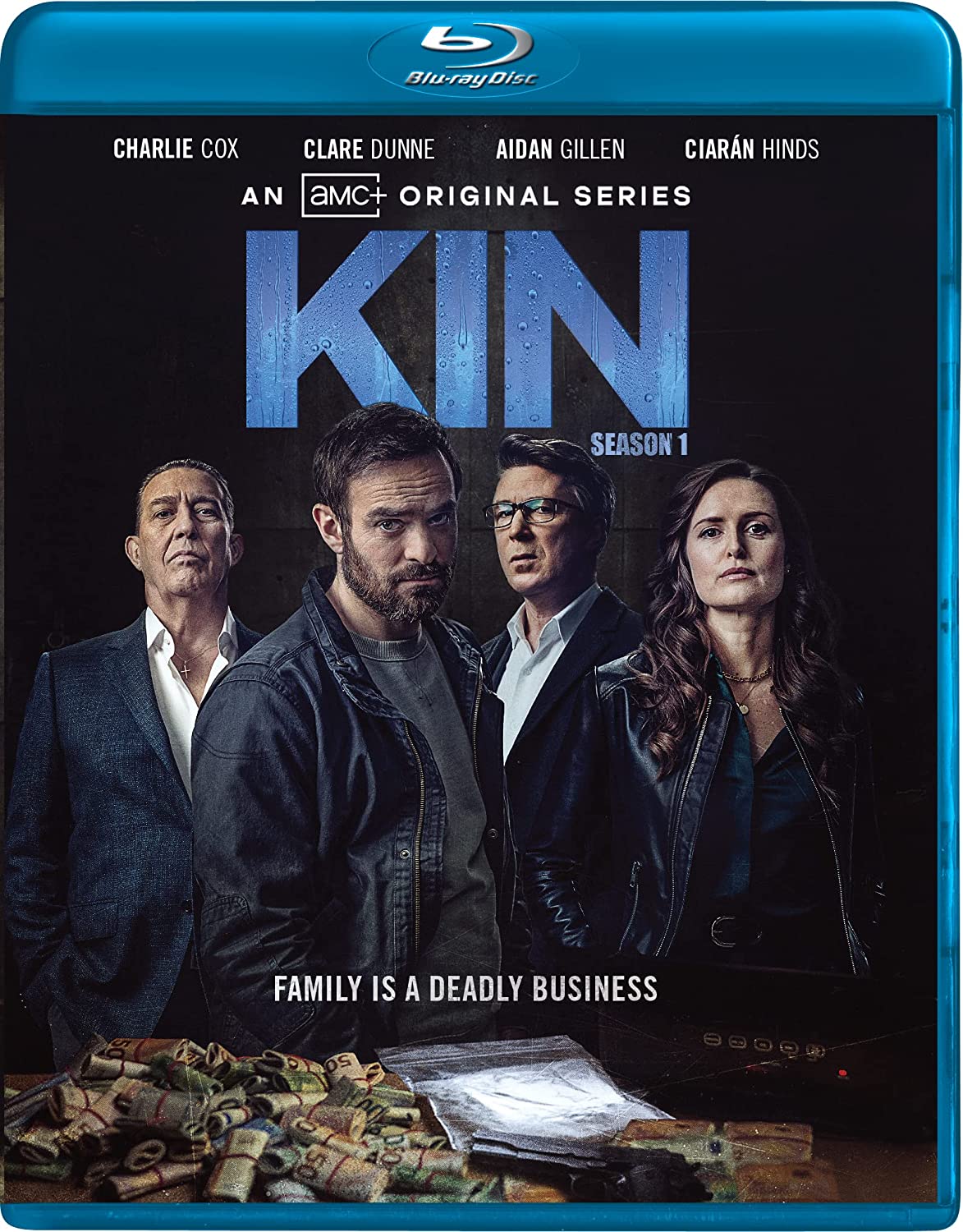
What do you get if you take The Sopranos and mix it with Animal Kingdom and place it in Ireland?  That’s pretty much the best way I’d go about describing the first season of the new AMC television show Kin. The show only runs for eight episodes, but I have to say this is the most satisfying gangster story I’ve seen in some time. No, I’m not about to say it is better than The Sopranos, but it definitely has the potential to be in the same league if the show continues with the momentum it has going for it. What’s a shame, though, is that with so many cable channels and streaming services out there, this is a show that has gotten lost in the mass of content, and it deserves to be recognized. The Kinsellas family is a small-time crime family based in Dublin. The family runs their business under Eamon Cunningham (Ciaran Hinds) who is pretty much The Godfather over all of Ireland. Mostly Cunningham deals with drugs, but literally if you are involved with any sort of crime, he’s still collecting on it. Then there is Frank Kinsella (Aidan Gillen, aka “Little Finger” from Game of Thrones) who is in charge of the Kinsella family and their small ring of criminal activity. Frank is a fun and complicated character who is a crime boss with a bad habit of using coke but also gay dating apps. Frank is also a family man who not only is trying to do what’s best for the Kinsella family, he has to also deal with his hotheaded knucklehead of a son, Erik “Viking” (Sam Keeley).  Amanda Kinsella (Clare Dunne) runs a car dealership that is used to help launder money for the family. Her husband, Jimmy (Emmet J. Scanlan) is one of the heads of the family who works beneath Frank. Frank’s brother, Michael (Charlie Cox) is recently released from prison, and he we can assume was the “heavy” for the family as we find out he’s responsible for a lot of deaths before his stint behind bars. And finally there is Bridget “Birdy” Goggins (Maria Doyle Kennedy), who is basically a family advisor. The power dynamics of this crime family are interesting, and how the show balances the “family” drama with the “crime” drama is definitely one of the show’s strengths.

Now that you’ve met the family, what is the show all about?

When you look back on the impressive 40-year career of Nicolas Cage, it’s pretty hard to pick a favorite performance. I can’t even think of another actor who has such a diverse batch of performances. Sure, the man is known for being a bit over-the-top, but that’s part of the charm of a Nicolas Cage film. People can be quick to point out that in recent years his “movie star” appeal has been fading with the amount of direct-to-video films he’s put out in the past decade. It even seems like there just isn’t a movie he’ll say no to so long as the check clears. Most likely you’d be half right in thinking that the man’s been through some financial issues, BUT at the same time he’s been in some fun and wild movies in the past decade as well. Mandy (2018) has become a bit of a cult success. Color Out of Space is another film in recent years to gain a cult following; then there is the fun Willy’s Wonderland, the bonkers Prisoners of the Ghostland, and the critically acclaimed Pig, which has a near-career-best performance from Cage. Basically, he’s stayed busy and put out some great work even if none of these films created anything close to a blip on the box office charts. When it comes to The Unbearable Weight of Massive Talent, it takes not just this past decade of Nicolas Cage’s career but the last 40 years and delves into the myth and the legend of the man off screen and creates a hilarious meta-film that comes so close to greatness that it’s hard to not feel this may be one of Nicolas Cage’s best films.

The film starts things off with a kidnapping. Just who this girl is is something we don’t find out till later in the film, but it’s a strong opening that then cuts to Nicolas Cage (obviously playing himself) taking a meeting with a director about what could be a career-defining role. In the film’s version of Nicolas Cage, we see him as a man struggling with his ex-wife Olivia (Sharon Horgan), while being an out-of-touch father to his teenage daughter, Addy (Lily Mo Sheen). It’s his relationships in his personal life that really work with connecting the audience to the character. We see he’s genuine in his own way with trying to maintain these relationships. It’s just that his passion towards his career just seems to get in the way. The heart of this film is about Cage needing to learn how to shift these priorities to be a better person. It seems simple, and we’ve seen this trope in many films before but never quite executed in this fashion.

When watching this 1980 classic, it’s impossible to not notice its influence on films that would come later, most notably American Beauty (which would also win Best Picture in 1999). I bring this up not because Hollywood has a habit of recycling ideas, but more to point out that sometimes all it takes to make a great movie is to keep it simple, focus on issues that everyone deals with, and give it one hell of a cast that is willing to pour their hearts out onto the screen. The film is about 42 years old, and you could release it today, and it would still resonate with audiences; that’s what I feel makes a film great and where it merits the term classic. Paramount is dusting this title off from its catalog to release it under its Paramount Presents umbrella, and it’s definitely one of the standout releases they’ve put out. If it’s a film you haven’t seen yet, this is one that I consider a bucket list film everyone should see before dying.


This month Kino Lorber and their Studio Classics line are releasing a pair of romantic comedies starring the late Rock Hudson. With 76 acting credits to his name, he made a name for himself by starring in westerns and comedies. What pop culture seems to remember most is that he was one of the most prolific actors playing the straight male that was always getting the girl when, in fact, the actor was gay. Now with these two titles, one I feel is a forgettable mess, while the other I had a good time with. Sometimes I’d say having two bedroom comedies could equal a fun double feature, but regarding these films, that is not the case.

 Strange Bedfellows (1965)

 “And away we go!”

In 2013 when Rick and Morty first appeared on the Adult Swim block on the Cartoon Network, I don’t think anyone was ready for just how much of a pop-culture impact the show would have. Five seasons and 52 episodes later, the animated series about Rick, a half-drunk scientist, his grandson Morty, and their over-the-top adventures have continued to entertain us. Now you can get all five seasons in one excellent little package. If that doesn’t make you go, “Wubba Lubba Dub Dub!” I don’t know what will. Over the years, I’ve been lucky enough to review the show; you can go search the site and find out my thoughts on the seasons, but here I’m going to give a quick overview of the show and why if you haven’t checked the show out before, going ahead and buying this set is one of the best things you can do for yourself. The show, for those who may be unfamiliar, is a fun concoction between Back to the Future and more than a sprinkle of Futurama. If that sounds like a fun ride, well, then this may be the animated series for you.

From the moment I saw the trailer for The Lost City, it immediately gave me vibes of Romancing the Stone and Jewel of the Nile, the adventure-romance films that starred Michael Douglas and Kathleen Turner back in the mid-eighties. The basic story for those films were simple: a romance writer who finds herself in an adventure to find a rare jewel alongside a handsome rogue with bad guys coming after them around every corner. I loved these films as a kid, and getting to see a modern twist on these stories is something I found welcome. What is even more welcome is getting to see Sandra Bullock back in a comedic role. I’ve been a fan of just about everything Bullock has done since she graced the screen in Demolition Man and then the following year in Speed. My only concern was seeing Channing Tatum as her co-star; while I like him in numerous supporting roles like Logan Lucky and Foxcatcher, he’s never really convinced me that he has what it takes for leading-man status. Well, that changed after seeing The Lost City, and my feeling about this film is that it’s the movie audiences don’t yet realize they needed, and I hope it becomes the box office success it deserves to be.

Loretta Sage (Bullock) is a successful romance novelist who is mourning the passing of her husband. She’s become a bit of a shut-in, and after struggling to finish her book “The Lost City of D” her manager Beth (Da’Vine Joy Randolph) has put together a book tour for Loretta and her cover model, Alan “Dash” (Tatum) to promote the book. Loretta seems to be content with giving up with her romance adventure series, though this could possibly mean an early retirement for Alan, who has embraced being a sex symbol for her readers wearing a ridiculous wig, acid-wash jeans, and a shirt that seems to have lost most of its buttons. Channing Tatum immediately stands out in this performance as he hams it up on stage for the adoring fans but is charming when he’s off stage trying to convince Loretta to not stop writing. It’s after the near-disastrous promo appearance where the plot escalates after Loretta is kidnapped and taken to see an eccentric billionaire, Abigail Fairfax (Daniel Radcliffe). Fairfax believes the island in Loretta’s new book is based off the island he has recently purchased and is in search of a lost city that contains a rare treasure.

If I’m being honest, it’s been decades since I saw the 1956 Invasion of the Body Snatchers, and I’m not even sure I saw the whole thing, but I do remember the ending. It’s not that I feel it’s a bad film; I just have had no need to revisit it because I enjoy the 1978 version so much. The startling ending of this film is quite infamous. For those who haven’t seen it, I won’t spoil it for you, but it is a moment that has stuck with me since I first watched back in the old VHS days. Since the 1956 film has been out, there have been several takes on the material, and numerous bad knock-offs as well, but for me, the 1978 film with Donald Sutherland and Jeff Goldblum will always be the true classic in my eyes. Getting this title to review, it’s been ages since I’ve seen the film, so I was excited about revising this classic. I wasn’t sure it would hold up, but what surprised me most was simply how relevant the film remains with its themes of not conforming to the populace to even the paranoia about becoming a pod person in current terms infected with COVID.

The film opens up in space, spores traveling a great distance till finally falling to Earth and eventually spawning into small flowers and thus spreading from there. One of the highlights off the film’s opening few minutes is the cameo appearance of Robert Duvall as a priest who may be one of the first infected by the spores. The film then introduces us to Elizabeth (Brooke Adams). When she finds a strange plant she’s having trouble identifying, we as the audience knows that she shouldn’t be sniffing the flower and can already accept that she is doomed. To deflect our attention, Elizabeth starts to grow suspicious of her boyfriend Geoffrey (Art Hindle) when he starts acting strangely and she sees him meeting with other strangers from around the neighborhood.

In 1999 when Man on the Moon was released, Jim Carrey was pretty much one of the biggest comedic stars in the industry, though at the time I don’t think audiences were prepared to see Carrey make such a departure despite it being a career best performance.  This was one of those box office failures that shouldn’t have been, but to be fair, 1999 is one of the most stacked years of great films, though how Carrey didn’t even get a nomination is baffling. So what are my thoughts after revisiting the Andy Kaufman bio-pic that was penned by Scott Alexander and Larry Karaszewski (Ed Wood and The People Vs. Larry Flynt) and directed by Milos Foreman (One Flew Over The Cuckoo’s Nest and Amadeus)? The opening scene pretty much sets the tone for the film you are about to see with Andy Kaufman (Jim Carrey) breaking the 4th wall to address the film the audience is about to see. He goes on to tell them that the movie is over, and the credits roll and eventually the screen goes to black. When I saw this in theaters, I was surprised by how many people in the audience actually walked out, but to be fair, if you’re not slightly amused by this gag, I don’t imagine you’ll enjoy the rest of the film. Andy Kaufman wasn’t simply a comedian but more of a performance artist who seemed to get pleasure out of entertaining himself first, and if other people enjoyed the gag, well, that was an added bonus. For Kauf was great, but if they got upset or walked out, even better.  When George Shapiro (Danny DeVito) catches one of Kaufman’s performances, he feels Andy is a unique talent and offers to be his manager.

The film lets us see the variety of characters that Kaufman developed, from his loveable foreign man that was made famous on Taxi when he was Latka to his obnoxious lounge singer alter-ego Tony Clifton. In some ways the character of Tony Clifton may be Kaufman’s greatest work that he created with his long time friend and comedy partner Bob Zmuda (Paul Giamatti). Seeing how Kaufman uses the character to pull one over on the studio and create drama on the set of Taxi is one of the more memorable yet cringe-worthy moments of the film.  What’s even more impressive is how the filmmakers were able to get so many people from Taxi to return and shoot segments for the film. But it’s not just the Taxi sequences where we see people pulled from real life to play themselves in the film. So many people from Kaufman’s real life are in the film, his real life manager, Zmuda, his Dad, and his granddaughter all are sprinkled in this film that attempts to capture the essence of Andy Kaufman.

Kino Lorber has put together a fun double feature pairing the films FX and FX 2 for their Studio Classics line. These films are a bit of a relic of the past considering how much Hollywood has strayed away from the days of using practical effects to the more modern approach of CGI. Sure, when using CGI you can create just about anything the brain can imagine with the aid of a computer, but there is something about latex, props, and actual sets that have always made movies come alive and feel more grounded in reality. These effects wizards are capable of pulling off almost as much as anything a computer can, but it’s the supplies and setup on set that has made CGI a more acceptable approach in the industry. Over the years special effects and makeup artists in the industry have been contacted by the government to enlist their help in special operations. The film Argo (2012) explored this nearly a decade ago, but going a little further back to 1986 with the first FX film we got to see a fictionalized account of a “what if?” scenario, and the result was a fun film that spawned a sequel and even a TV series.

In this film, Hollywood special effects genius Rollie Tyler (Bryan Brown) is contacted by the Justice Department to help them stage the assassination of a crime boss, played by Jerry Orbach.  As you would expect, things don’t go as planned, and Rollie finds himself being fingered as the trigger man, and if he has any chance of staying alive and out of prison, he has to use his unique set of skills to uncover the culprits.