AVC MPEG4

Sometimes a movie comes along that has everything going for it: a great cast, a great cinematographer, and a decent plot, but when you watch it, you just scratch your head wondering why it ended up so bad.  That in a nutshell is Terminal.  It stars Margot Robbie, Simon Pegg, and Mike Myers, and for each of them I believe this is a film they quickly want to move past. The tagline for the film is Revenge Never Looked So Good, which is a big part of the problem with the film. I absolutely love the look of the film. It’s beautiful and to a point creates its own style I’d call neon-noir, but unfortunately no matter how good something may look, it doesn’t always mean it will be good.

A good portion of the film is about Bill (Pegg), a teacher who is waiting for a subway train but is told by the night janitor, Mr. Franklyn (Myers) that one won’t be coming for hours.  Mr. Franklyn eventually recommends a diner (conveniently called The End of the Line) for Bill to wait.  It’s at the diner where Bill meets the quirky Annie (Robbie), who is his waitress but is also intrigued by his illness.  To add some more padding to the film, we have a pair of hit men who are introduced in the film’s wonky timeline who take a mysterious job that leaves them locked up in an apartment for days as they are waiting for a phone call to signal when the hit is to go down.  How Annie involves herself into the mess with the hit men strays into spoiler territory, but I’ll simply say it was a designed coincidence from sloppy storytelling.


“Please don't do the whole absent-minded professor thing.”

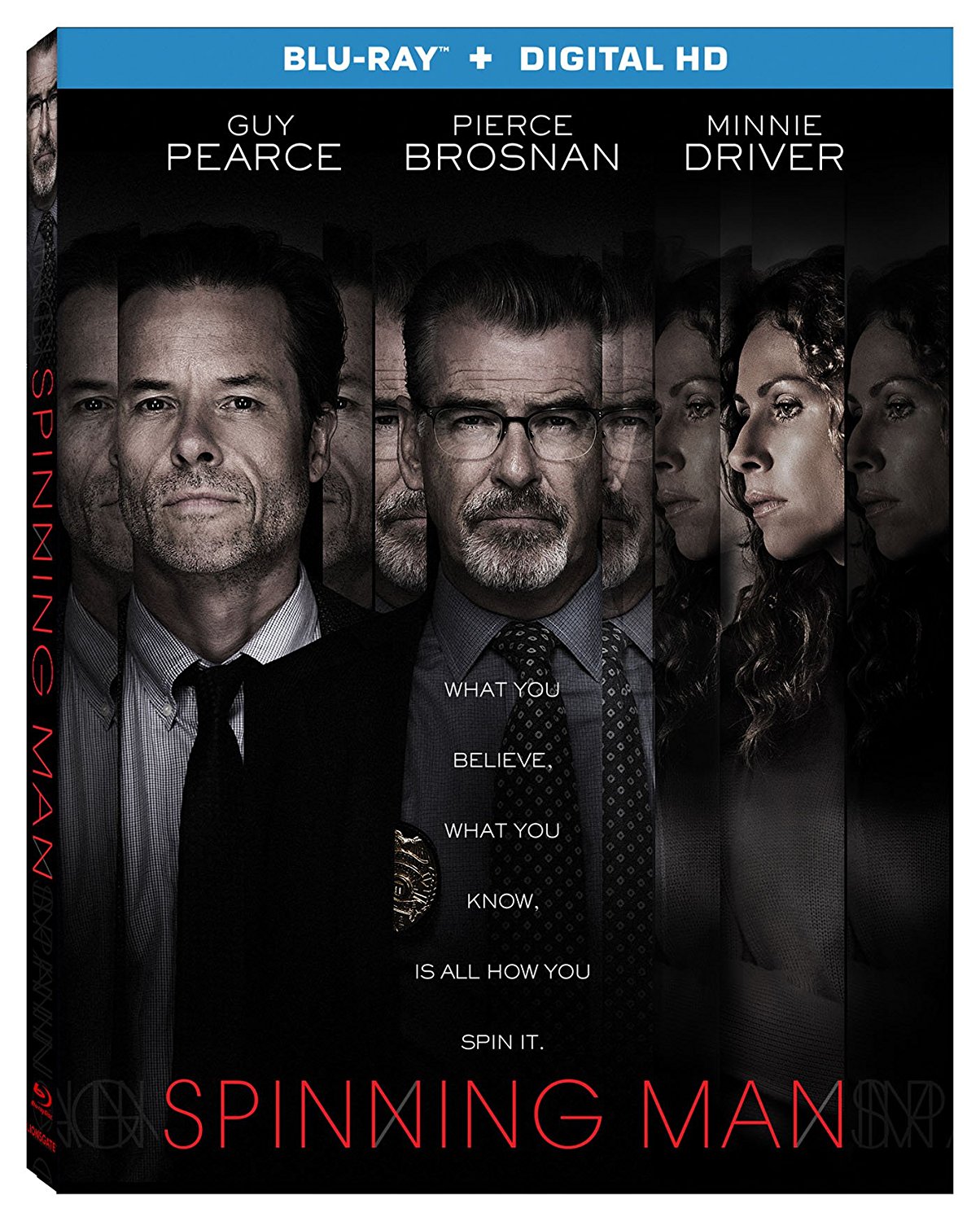
Even though he’s not anywhere close to the biggest name in Hollywood, Guy Pearce is low-key my favorite actor. The Aussie is probably best known for his starring role in Christopher Nolan’s Memento, the memory loss masterpiece in which Pearce played a man who tattooed helpful(?) clues and reminders all over his body. So when I realized he’d be playing another forgetful lead character in Spinning Man, I was hopeful. But despite some solid performances and interesting philosophical ideas, the film is too downbeat and dull to be an effective thriller.

When we first meet the Pierce family it is at the Freeland jail, where Jefferson Pierce (Cress Williams) is there to bail out his oldest daughter, Anissa (Nafessa Williams).  The show doesn’t waste time in tackling social issues as we see them have an encounter with the Freeland police force as they are pulled over for a traffic stop.  The reason for the stop turns out to be they are looking for a suspect who just robbed a liquor store, and because Jefferson is black, he of course is a potential suspect.  Having this scene early on, not just in the season but in the pilot episode, is a bold and important move by the writers.  This shows us that despite being a superhero show, Black Lightning is going to show us a superhero tale unlike anything we’ve seen before on the CW.

Family takes the center stage in this show, and while there is some superhero crimefighting that does get done over the course of the season, watching the Pierce family tackle social issues is just as important.  Jefferson Pierce is a high school principal in a neighborhood that is surrounded by gang violence and drugs.  It’s been nine years since he was fighting crime as the costumed hero Black Lightning. He’s had his costume stashed away in order to raise his family and help the kids at his school, which has made him a valuable figure in the community.  He even mentions early on how he’s saved more kids by being a mentor at his school than he ever did as the masked vigilante.  Seeing Pierce confronting gang members and helping his students is an engaging story already, though it’s something audiences have already seen before (Dangerous Minds, Lean on Me, etc).

“If you believe in a goal or dream before it happens, is that real?”

There aren’t a lot of inspirational tales out there for young women who aspire to be athletes. At least not that I have seen. That is why I am sure that Alex and Me is bound to make an impact. This is tale for every girl who aspires for greatness. As a father to an amazing little girl, this really hit home for me. Unfortunately, not so much with my daughter, who is a bit too young to grasp the importance of the message this film is conveying, but I fully intend to keep this movie on hand for when she is old enough to understand.

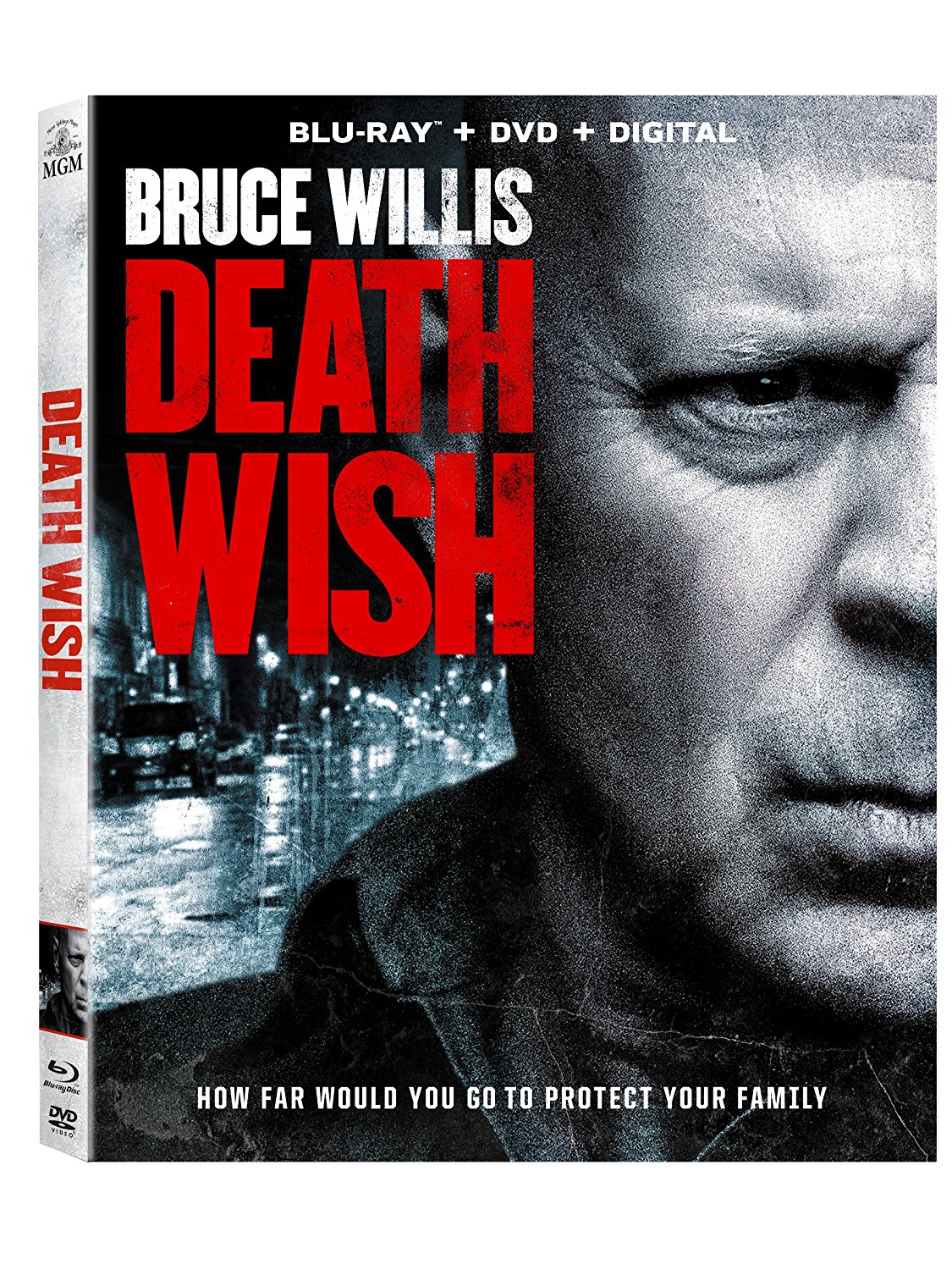
Cinematically speaking, the name Eli Roth has been synonymous with murder and mayhem. The director is best known for his work in the horror genre, bursting on the scene with 2002’s Cabin Fever and upping the ante with Hostel and Hostel: Part II a few years later. So it was a bit surprising to hear he’d be taking on a remake of Death Wish — the iconic 1974 Charles Bronson revenge flick — until I started thinking about the bloody possibilities. If the Hostel films gained notoriety as prime examples of “torture porn,” then it seems like Roth has graduated to “revenge porn” with this slick and (intentionally) silly re-imagining.

“People rely on the police to keep them safe. That’s the problem.”

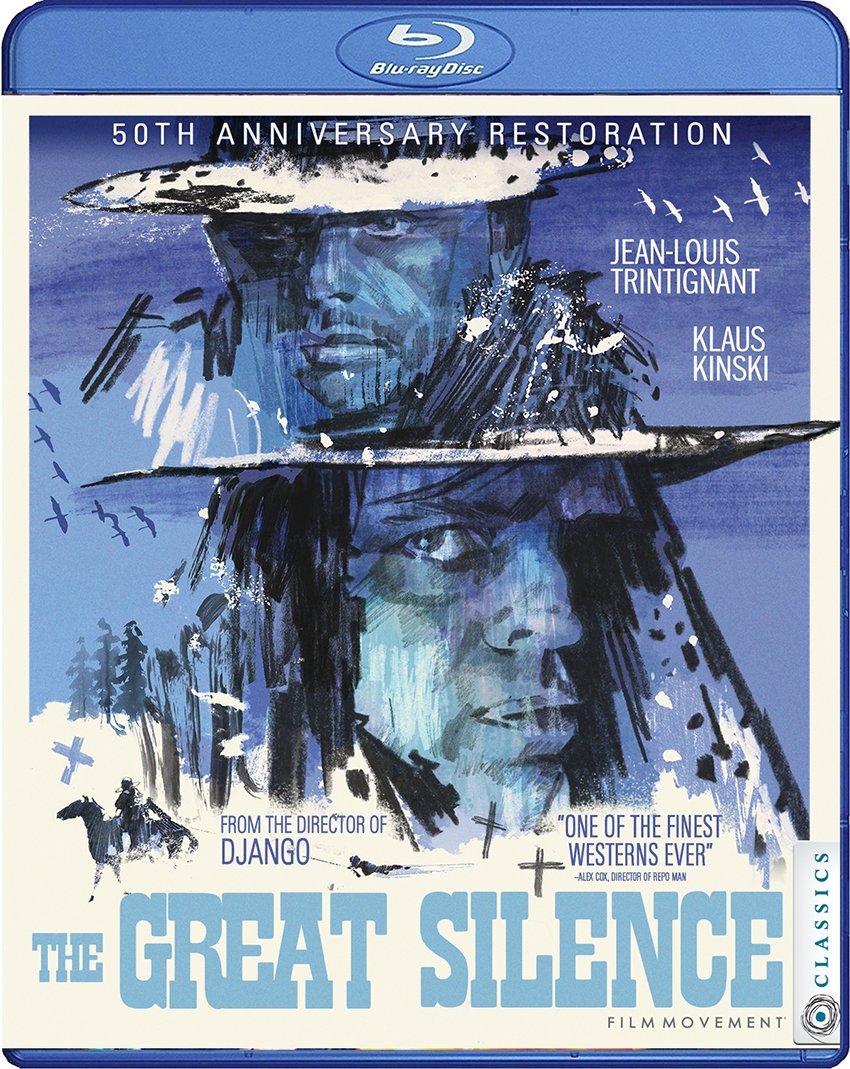
When it comes to the Italian western aka the spaghetti western, the first director who comes to mind is Sergio Leone (The Good The Bad And The Ugly); and then there is Sergio Corbucci.  While Leone was blazing a successful career, Corbucci first came onto the scene with his film Django. The film was dirty, violent, and mean.  For those who are only familiar with the Quentin Tarantino version of Django, well, you’ll definitely see the films are drastically different aside from them both being revenge films. Much later on Corbucci got the chance to follow up his first big hit with another western, The Great Silence. I had gotten to see this dark western before, though it was in the form of a bootleg copy. There was a lot of grain, and the ending attached to the film was radically different from the one Corbucci had intended.  Film Movement Classics has done an amazing job at cleaning this title up and giving it a new 2K restoration. As for the film itself, saddle up, because this is like something many have not seen before.

One of the first striking things you will notice about this western is that it is mostly filmed in the cold and in the snow. We meet Silence (Jean-Louis Trintignant) as he is jumped by a group of bounty hunters whom he quickly dispatches, and when one surrenders himself, Silence manages to shoot off the man’s thumbs.  That’s the thing about Silence that’s pretty cool. He kills in self-defense but seems to enjoy crippling bounty hunters so they won’t be able to kill again.  We later get to find out just why Silence has it out for bounty hunters, but also the grisly reason why he’s been given the name Silence.

Americans are loud, aren't they?”

Oh Lucy! earns the exclamation point in its title within the first two minutes. The movie opens with a shocking leap that is meant to jolt the audience, but barely causes our disaffected heroine to raise an eyebrow. It's played off as a throwaway moment, but it establishes the fact that this quirky Japanese/American dramedy with oodles of personality probably isn't going to go where you expect.

Why are they doing this to us?”

Back in 2008, The Strangers stalked its way into theaters. The movie was an especially nasty bit of home invasion horror; its stunningly simple premise (three masked psychos terrorize doomed couple) and the random nature of its killings was both what the movie's fans admired about it and what left its detractors wanting more. Ten years later, The Strangers: Prey at Night hits a lot of the same notes while incorporating a self-aware tone about horror movies and some '80s-inspired flair. Call it The Strangers Things.

I am someone who wakes up in a different body every day.”

Every Day manages to be both clumsily straightforward and frustratingly vague about its fantastical premise. The movie centers on a mysterious traveling spirit known as “A,” which — as you can read above — inhabits a different body every day. Unfortunately, there's little-to-no exploration as to why or how A (conveniently) only inhabits the bodies of camera-friendly teens. The best thing about this premise is that it injects the otherwise tired and homogeneous teen romance genre with a new look. (Actually, it ends up being closer to 15 new looks.)

Eddie Murphy has a ton of films under his belt. If you’re like most folks, his antics have long ago become tired and worn out. Come with me now to a time when Murphy was young and full of energy. Trading Places was really only Murphy’s second film after 48 hours. In Trading Places, we get vintage Eddie Murphy. You can tell he was still hungry. Today he simply calls too many performances in. Dan Aykroyd was also at a turning point in his own career. It hadn’t been too long since he lost his longtime partner Jim Belushi to a drug overdose. He was just learning to stand on his own. Put these two guys together today, and there’s not much chance you’d get the solid gold that was possible in 1983. Fortunately for us, there is this HD release of Trading Places, when both actors still felt they had something to prove. The cast was brilliant all the way around. Jamie Lee Curtis displayed her obvious assets for the first time in a film. Known mostly as a scream queen at that time, Curtis was a choice the studio was not at all happy with. The Wolf Man’s own Ralph Bellamy, along with fellow veteran actor Don Amechi, played the Duke brothers to perfection. Finally, Denholm Eliott added his own understated brilliance as Coleman, the butler.

Trading Places was originally written as a vehicle for Gene Wilder and Richard Pryor. That team had had great success with a few films already, and it was felt they were the only ones capable of pulling off this kind of a film. I’m not sure how that might have worked. Certainly it still might have been a funny outing, but somehow I think everything worked out for the best. Trading Places broke many conventions of the time. The black and white stereotypes were a concern, as were other elements. Having a hooker play such a pivotal role was questioned. The studio even expressed some problems with the fate of Mr. Beaks. A little gorilla love went a long way toward the poetic justice these kinds of villians often require. John Landis stood his ground the entire time, refusing to budge. Remove any of these elements, and who knows what we might have ended up with.