AVC MPEG4

There is a sense of dread that unintentionally comes along with an independent science fiction film. Despite how far technology has come, it seems that for a science fiction film to really be impressive they need a reasonably decent VFX budget or suffer with a look that often times appears cartoonish by comparison of the larger-budget films. The Osiris Child somehow manages to not just create a grounded realistic futuristic world, but even manages to use practical effects to create some nasty-looking monsters and not pull its punches with the scope of its story. In a film that seems to be parts Elysium and parts Pitch Black; this might be the most ambitious effort I’ve seen in the genre that manages to succeed in many ways.

Kane (Daniel MacPherson) is an officer who works in a space station over a planet and discovers that the planet is about to be wiped out.  Unfortunately his daughter is visiting him from Earth, has travelled through space to visit him, and is staying at the planet her father is looking over. Kane goes against orders to rescue his daughter and get her to a bunker to protect her, but in the process his ship is shot down and he crash-lands miles away from where he needs to be. As luck would have it, Kane is rescued by a mysterious figure, Sy (Kellan Lutz) who happens to be an escaped prisoner who reluctantly helps Kane get him to the city where his daughter is supposed to be.

Sounds like you don't have a lot of faith in faith.”

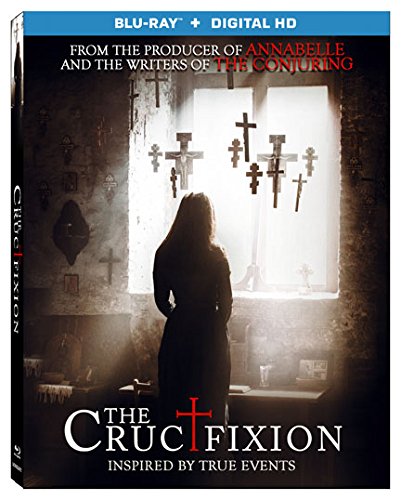
You know how sports teams retire the jerseys of their most beloved, outstanding players so that no one can ever wear their number again? Well, we are well past the point where movies about exorcisms need to be hanging from Hollywood's rafters. Simply put, no one has ever come close to doing it as well as William Friedkin did almost 45(!) years ago with his adaptation of The Exorcist. If anything, The Crucifixion is an even more egregious misfire than other head-spinning stabs at the genre because this movie is actually based on an intriguing, horific real-life case.

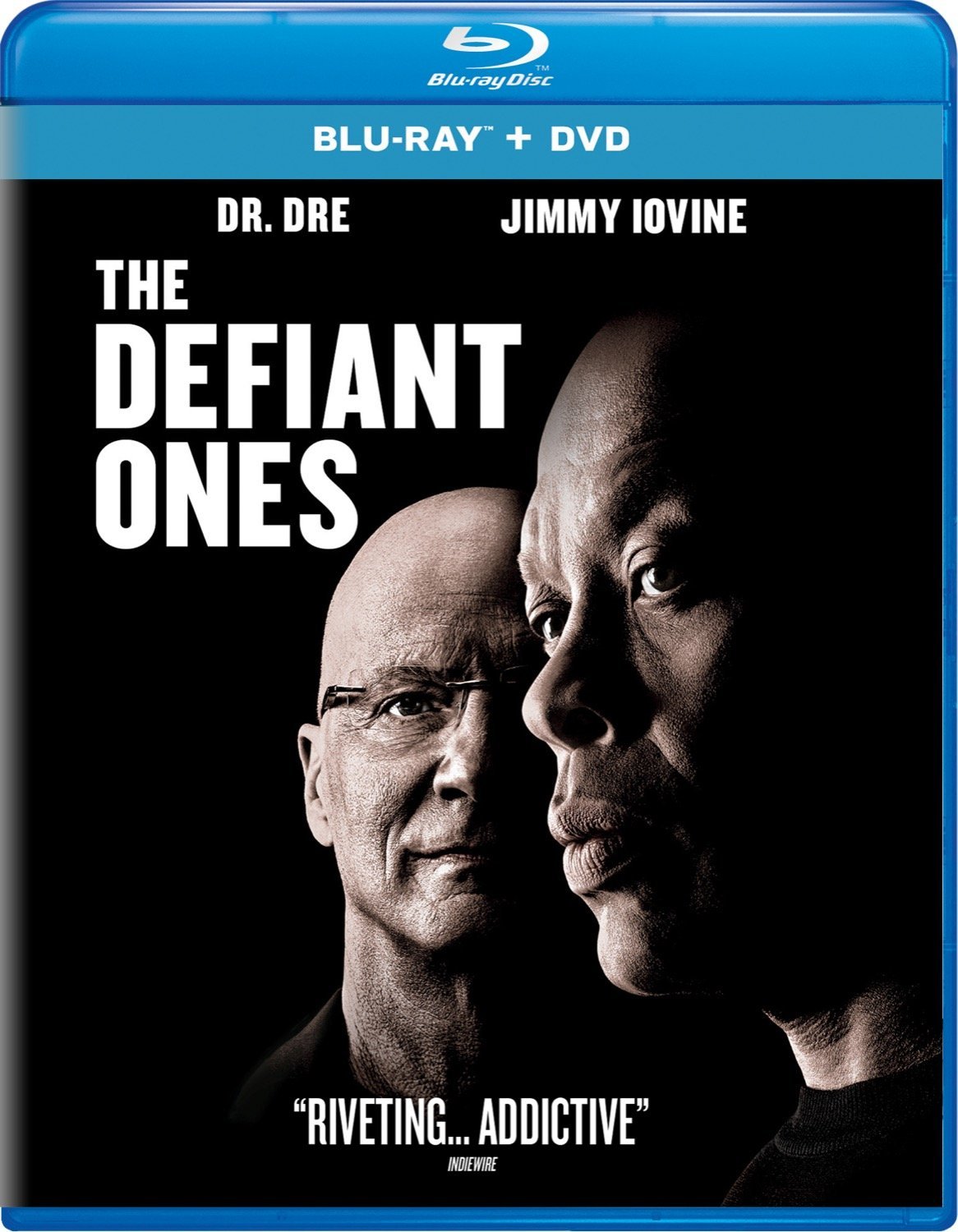
Coming along the heels of Straight Outta Compton, the new HBO documentary series The Defiant Ones takes a more in depth at the life and career of Dr. Dre as well as famed musical producer Jimmy Iovine.  The 4-part series comes out to over four hours of interviews and stock footage that spans over the course of both of their careers, and as a result we get a comprehensive look at the music industry like we’ve never seen before. Whether you are a fan of hip-hop or rock, there is something here for everyone, but for those who seem to have zero tolerance for rap, it’s the story about these two and where they came from to their joint venture in a 3.2 billion-dollar deal with Apple that transcends all taste in music. This is a rags-to-riches story about a Brooklyn boy and a kid straight out of Compton who had a passion to create music, and in the process they changed the industry forever.

Part 1 is our introduction to Jimmy Iovine and Dr. Dre, where we get their birth stories and how they were as kids. What stands out the most here is seeing how much this pulls back the curtain to the myth about gangster rappers, and we see how Dre was simply a kid with a passion for music and how he had a unique ear to create something different. As for Iovine, we see how he did all he could to not have to work the boat docks and went from creating a failed band to eventually getting a job working at a recording studio.  Personally, the highlights of this part were seeing old studio footage of Jimmy being an engineer for the Bruce Springsteen album “Born to Run” and how he got a song Springsteen decided not to use and Jimmy ends up giving it to Patti Smith to create the son “Because the Night”. Follow this by seeing old footage of Dr. Dre working with Easy E for the song “Boys N the Hood”, well, it is incredible that someone thought to bring a VHS camcorder to document these moments that would become part of music history.

Of the many films based on books by prolific writer Stephen King, Misery ranks near the top. Falling somewhere between the horror and thriller genres, this film about a twisted obsession is frightening because the premise seems very real. Directed by Rob Reiner (A Few Good Men), who first visited King territory with his 1986 film Stand By Me, Misery tells the story of romance writer Paul Sheldon (James Caan, Elf) and the fan who rescues him after a car accident.

Paul wakes to find himself in the care of Annie Wilkes (Kathy Bates, About Schmidt), who’s obsessed with his “Misery” romance series. At first she seems caring, nursing him while he recovers from the accident, which left him with two broken legs and a dislocated shoulder. Soon, though, it becomes apparent that Annie is quite disturbed, and Paul realizes he’s in captivity. When his latest book in the Misery series comes out, Annie is outraged to discover that Paul, who wants to do more serious work, has ended the romance series and killed off the protagonist. She forces Paul to begin writing a new Misery book to fix things, and in his crippled state he has little choice – he’s at Annie’s mercy, until he can escape or be rescued. But is anyone out looking for him?

“We did it again!”

I can still remember sitting in a movie theater in Puerto Rico watching Home Alone 2: Lost in New York for the very first time. (With Spanish subtitles, of course.) I was basically the same age as Kevin McCallister — the precocious, pint-sized pre-teen played by Macaulay Culkin — and I’d pretty much worn out my VHS copy of Home Alone by the time the second movie was released. So it’s wild to think that this film is now old enough to rent a car! Fox has released a 25th anniversary Blu-ray of the blockbuster comedy sequel, and it’s a fun, fascinating re-watch for a variety of reasons.

“My verses full of curses cuz I'm stuck in dirty Jersey.”

Between 8 Mile and Hustle & Flow, we’ve seen —and heard — our share of hip-hop underdogs. But we’ve never seen one quite like Killa P, aka Patricia Dombrowski…aka “Piggy Azalea” to the haters who want to take shots at her appearance. Either way, she is the white, overweight, wannabe female rapper at the center of Patti Cake$, a Jersey-set indie that became a sensation at the Sundance Film Festival earlier this year.

Hans Zimmer has composed the music for some of the most iconic films of the last 20 years. That list includes Gladiator, The Dark Knight Trilogy, Crimson Tide, Pirates Of The Caribbean, Dunkirk, and even some of The Lion King. He's the go-to composer for directors like Ridley Scott and Christopher Nolan. His music is on par with household names like John Williams. I own a few scores that I've felt compelled enough to pick up over the years, and one of my favorites has been Gladiator for some time. When I heard that Eagle Rock Entertainment was going to release a Blu-ray containing a tour stop of this incredible music live, I was quick to sign up to review. Still, I had little idea what to expect. A veteran of many rock concerts since the 1970's, I've never really watched or attended a concert dedicated to film scores before. Would it be more like going to the symphony to hear the likes of Bach or Mozart, or would it be something more akin to a progressive rock band with orchestral elements like ELO? The answer came down somewhere in between, and it turned out to be the most unique concert experience I've had the pleasure to review.

The concert begins more like a rock concert. Zimmer comes out, not to direct, but to play along with the other musicians. He ends up on piano, guitar, and a few other instruments before the show concludes. In the start the music is rather fast and furious. The stage is lined with an eclectic array of instruments played by a decidedly international collection of musicians. There are a couple of violins and an electric cello. But there are also several drum sets, electric bass, and a couple of electric guitars to round out the sound. And for the first few tracks taken from Driving Miss Daisy, Sherlock Holmes and Madagascar, the concert resembles a Jeff Lynne-assembled rock concert more than anything else. The band goes from one piece to another with nary a pause or introduction. In fact many tracks throughout the concert run together, and you might want to keep the track list (provided on a nice insert) handy to follow along. After this first high-energy performance, Zimmer finally stops to chat a moment with the audience. That's when the back curtain is lifted, and we discover that there is a full orchestra tucked away behind the "band" along with an extensive choir. That's when the concert moves into the more classical feel for such films as Thin Red Line, Angels And Demons, and, of course, selections from Gladiator. But there remains a bit of an edge to the music, provided by that front line of spotlighted musicians.

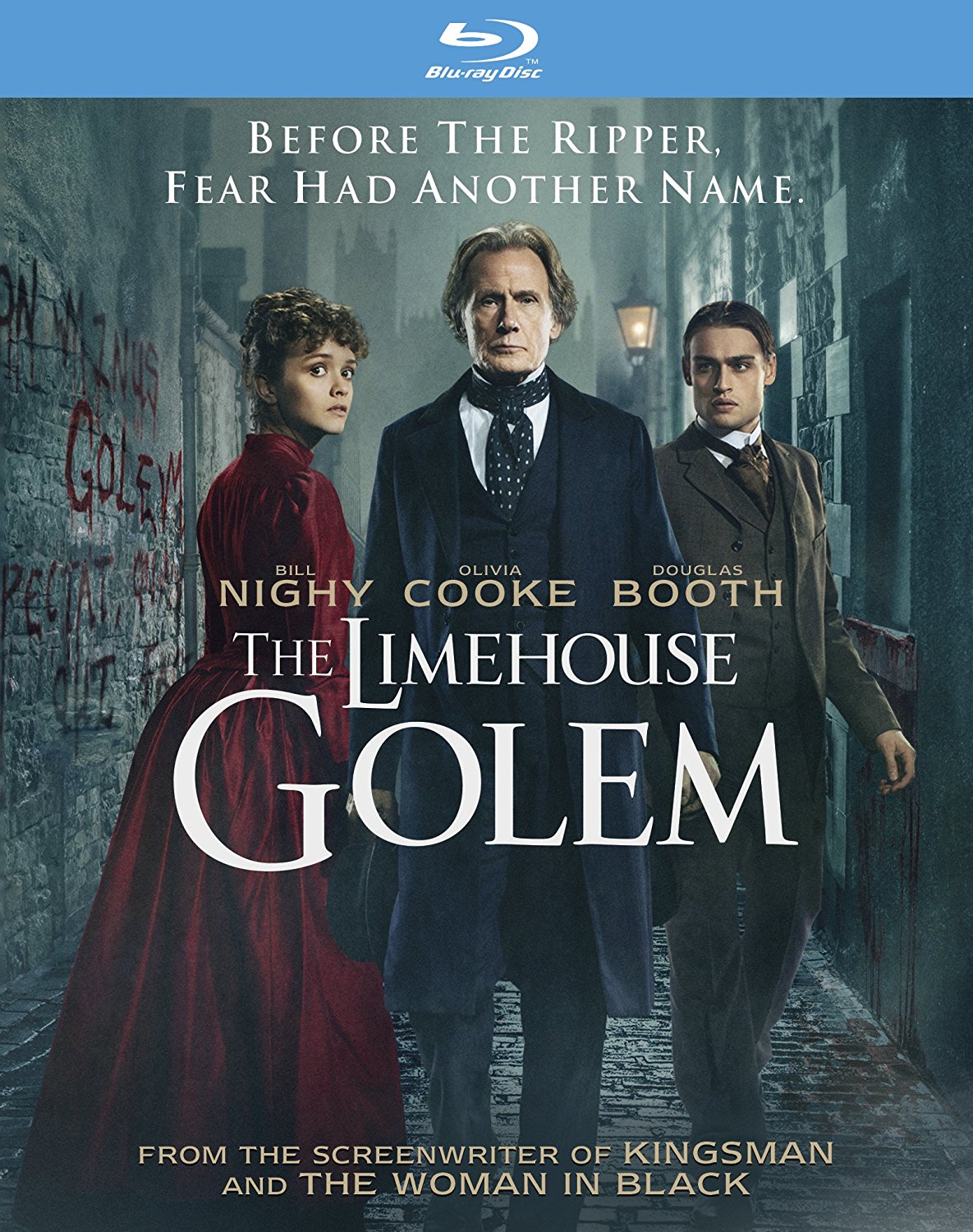
When it comes to Victorian era serial killers, Jack the Ripper is pretty much a household name. Whether you know much about the terror he caused in White Chapel, all these years later you still know the name and what he did. With The Limehouse Golem, the filmmakers create a more sinister serial killer and deliver a Hammer-esque murder mystery.  I’m all for a dark murder mystery, and when a film is channeling other successful films like Seven and From Hell, you’d imagine that you’d be witnessing a terrifying gory spectacle. The result, however, left me frustrated, as the film seems to pull from other films but never quite presents an engaging story to go along with the quirky mix of characters.


When we meet Lizzie (Olivia Cooke), she is being accused of murdering her husband. As the film progresses, we get to see how her story unfolds and her aspirations to be a theatrical star.  Her tale intertwines with the rise of a brutal serial killer who has been terrifying the city of London who has been dubbed The Golem. To attempt to squash rising fears and solve the murders, Inspector Kildare (Bill Nighy) is assigned the case. Kildare is paired with a young detective George Flood (Daniel Mays), who attempts to update Kildare with all the evidence of the case. It seems Flood and his fellow officers were inept in gathering evidence, as Kildare seems to uncover some fairly obvious clues of his own. What ties Lizzie to Kildare is the possibility that she is being charged with murdering Kildare’s prime suspect. All the evidence seems to point to Lizzie’s dead husband, so he goes to her to hear her story. Of course things are more complicated than they originally seem.

Have you ever questioned the nature of your reality.”

As things in our world become exponentially more chaotic and inexplicable by the day, the theory that we're all living in a computer simulation becomes a little harder to completely dismiss. The idea that our reality is an illusion dates back to the 17th century but most recently gained traction thanks to a 2003 paper published by Oxford philosopher Nick Bostrom. It's also been a popular theme in classic sci-fi works like Blade Runner, Total Recall, and The Matrix. To that list, we can now add HBO's Westworld, a slick and star-studded sci-fi/Western mash-up that features the requisite shoot-em-ups and pay cable sexcapades, but is actually most interested in exploring the nature of humanity.

This is quite a step up for the History Channel folks. They've certainly produced a great number of historical dramatizations and documentaries, but nothing they've ever done before compares with this series. We used to review a ton of their stuff here for years, so you know I've liked a lot of the things they've done. But Vikings puts them in a totally new stratosphere. This is historical drama that you've only seen before in the likes of Rome or The Tudors. Of course, there's a very good reason for that. Michael Hirst created the series and is the creative force behind it. He served the same positions on The Tudors. That puts expectations here very high, and the show has met or exceeded them all.
The final moments of the first half of Season 4 takes a many-years jump forward in time. Ragnor (Fimmel) has abdicated his power and has been missing since the failed siege of Paris. Bjorn (Ludwig) has pretty much taken over as leader of the group. His younger sons have now grown into men and of course are now played by different actors. The most significant of these new castings is Alex Hogh as the grown Iver. The actor bears a rather striking resemblance to Travis Fimmel, and Hogh also does a remarkable job of pulling many of Fimmel's nuances into his character. He may not be able to walk, but it's clear that it is Iver who has inhiereted his father's strengths and personality. This is brought out even more when Ragnor suddenly returns. He has plans to return to England and avenge the slaughtered settlement he left there years ago. Bjorn wishes to follow his own path and explore the fabled Mediterranean Sea. Iver is the lone son who wishes to join his absent father. It becomes the end of Ragnor's story and really the beginning of Iver's to some extent.

The series does a pretty good job of bringing the culture and lifestyle of the Viking people to life for us. There is a great effort toward authenticity. That isn't to say that the show claims to be historically accurate. The Vikings were not a literate people. They did not keep a written record of their lives. What is known has been pieced together through artifacts and stories that were handed down orally from generation to generation. It's not even possible to depict the culture with any precision or accuracy. When you watch a film or a series like this, you need to be mindful of the difference between authenticity and accuracy. They are not the same things and shouldn't be confused here. Authenticity means that there's an attempt to portray the world in a faithful way. We're talking costumes, weapons, beliefs, lifestyles and environment. That's not to say that the film is attempting to tell a "true" story. Only one that feels true. Accuracy is intended to educate. This kind of a show is intended to entertain, and the authentic presentation is there to immerse us realistically in the world in order for us to care about the characters and events. The Vikings does this with a sweeping eye toward detail. The world comes alive for us, and we can be swept up in the events.