With The Choice, there have now been 11 movies based on the work of mega-selling author Nicholas Sparks. (Eat your heart out, John Grisham.) However, I'm pretty sure that even the most ardent Sparks fan/apologist caught on to the author's formula about 8 or 9 tearjerkers ago, and practically every one of those clichés is in full force here. But while The Choice calls back to the most successful Sparks adaptation, the movie also explores a less glamorous side of romance that we're not used to seeing on screen.

Now pay attention...because I'm about to tell you the secret of life.”

Should you pursue your dreams at any cost? If your life seems bleak and hopeless, should you go for broke and bet everything on what you believe? These questions are even more relevant to people who are creative artists, because they will often be told that their dreams are hopeless and unattainable. The rewards can be great, but the odds of succeeding are easily a million to one. Sing Street takes place in 1985 and is about young kids writing songs and making music videos. The parents, Robert (Aiden Gillian, Petyr “Littlefinger” Baelish from Game of Thrones) and Penny (Maria Doyle Kennedy, Siobhan Sadler from Orphan Black) are struggling like almost everyone in Dublin in those days. They have to send their younger son, Cosmo (Ferdia Walsh-Peelo) to the free Catholic school run by the priests called Synge Street instead of the expensive fee-based school he had been going to. The older stoner brother, Brendan (Jack Reynor, Transformers: Age of Extinction) has already quit college, so that helps out with expenses as well. Before I go any further, I must say that this film strikes a brilliant balance early on between hard reality and dreams and fantasy. It is a funny, touching, and exhilarating entertainment above all else. It harkens back to all those movies over the years like Footloose and Fame that just want kids to have fun.

The 1980’s were when music videos and mainstream rock music really picked up steam. Hall and Oates, Duran Duran, and The Cure are all musical reference points in this movie. Cosmo is struggling to cope with problems at home and problems at the new school. His one bright spot is the beautiful teenage girl who lives across the street from the school. Raphina (Lucy Boynton) is sophisticated and stylish and says she’s leaving soon to be a model in London, but she lives in a home for orphaned girls. Cosmo gets her to believe that he’s in a band and that he’d like her to be in a video. It’s all a lie, but Cosmo soon gets to making it a reality. That’s why most kids want to become musicians, isn’t it? To get the girl.

Shout Factory digs into the archives for this one. It was back in 1988 that French director Jean-Jacques Annaud went into the wilds to bring us The Bear. Of course he's best known for his take on primitive humans in the more successful Quest for Fire. Like that film, The Bear uses almost no dialog. While it appears to be a nature story akin to Disney's recent Bears, these animals are trained and following a carefully-crafted script based on a novel written by fellow Frenchman Gerard Brach. There is also a small use of stop-action bears that were created by Jim Henson out of his Creature Shop. These exist in only small scenes that do stand out as quite fake. It was intended to use the stand-ins more frequently, but if you watch the film you'll understand why that decision was eventually abandoned for the trained performing bears.

The story takes place in 1885 in British Columbia. A bear cub has just lost his mother to an avalanche trying to dig up honey from a nest. He's scared and not likely to survive on his own. His survival is made that much less likely with the presence of a pair of hunters in the area. They already have an impressive collection of bearskins and are on the trail of a huge bear who has, so far, managed to elude them. Once shot, the giant bear goes a bit crazy and rips into the hunters' belongings and their horses. It's time to bring in the hunting dogs as this hunt starts to get personal.

"Suit Up!"

When I was a kid we had something called a toy box. Do kids even have such things anymore? Inside we were supposed to keep our toys when we weren't playing with them. Inside mine there were dinosaurs, cars with track, army men, spaceships ... and yes, superheroes. To open the toy box meant to prepare yourself for imagination and fun. Sure, the box got crowded after a while, but I was always filled with some kind of anticipation when I looked inside. Today going to see a Marvel movie is very much like lifting the lid on a toy box. There are so many cool things inside that it kind of staggers the imagination these days. It's a delicate clockwork with an ever-growing number of moving parts. So many, in fact, that it appears impossible that any of them can be given enough attention so that they can develop and grow. That's usually what kills most comic book film franchises in the end. Filmmakers try so hard to outdo the one before that the only way they believe it can be done is to add more pieces until it all topples from its own weight. Captain America: Civil War has more moving parts than ever before, but just when you think it can't possibly get any better...it does.

Whatever happened to the days of telling a story without having some kind of gimmick or need to have to have a twist in the plot to show the viewer just how clever you are?  I blame The Sixth Sense for this, because ever since the film came out it seems a requirement to be considered a thriller is you have to have some kind of twist, whether it’s at the midpoint or towards the end, somehow you have to find a way to jam that twist in there.  I’m not saying let’s just throw the ban hammer down on all twists, but they should be used to only further the plot, because at this point it’s just gotten silly, and when you start piecing things together after the film you realize how little sense it all makes.  When it comes to Backtrack, you’ll need to do more than just retrace your steps on this one, and it’s sad, because beneath all the twists there is a good story here; unfortunately it’s managed to lose its way.

Peter Bower (Adrien Brody) and his wife are mourning the loss of their daughter who was killed in an accident.  Peter carries the guilt around with him, and it has begun to have an effect on how he is able to treat his patients.  Very early on we are given clues to there being something not right with his patients up to the point it is discovered that all of them are dead.  While this may seem like a spoiler, instead it’s key to driving the story forward for Peter to understand why the dead seem to want to make time for him on his couch.  While I’m fine with this idea of him treating ghosts or simply Peter being insane, there is a practical question that bothers me.  How does no one else notice how odd it is that he is treating, to the outsider, no one?  How were they going about paying for visits or even scheduling visits, since it seems he doesn’t have a receptionist?  It seems like I’m being nitpicky, but really, I was having a hard time accepting the reality of the story that was being presented.

"I'm gonna let 'em know that Dolemite is back on the scene!" 

Rudy Ray Moore can't act to save his eternal soul. In fact, everything about Dolemite makes an Ed Wood film look like a Cecil DeMille epic masterpiece. So what is it about this cheap blaxsploitation film that gives it legs over 40 years after it was first released? If I could truly answer that, I would have the answer to Life, The Universe And Everything. What I can tell you is that when I found out that Dolemite was coming here to be reviewed, I couldn't hide that big wide grin on my face for hours. I was just a kid the first time I saw the film. One friend asked me what kind of parents I had that would let me watch a movie like that as a kid. My answer is usually, "Who said they knew I was watching it?" The real truth is that my Pop was probably sitting right next to me when I did. He was a sucker for schlock... the badder the better, and it don't get no badder than Dolemite.

Oh crap...I'm going back to Cleveland.”

I had never seen a single episode of Hot in Cleveland before I sat down to review season 5. So why did it feel like I’d been watching this show my entire life? Turns out, it’s entirely by design. On the surface, it doesn’t seem like I’m the target audience for Hot in Cleveland: I’m under 50 years old, and I’m a man. But if you look beyond the plastic surgery jokes and geriatric humor, you’ll find a show that aggressively channels (and ultimately appeals to fans of) many of the classic, multi-camera sitcoms of the past. In other words, Hot in Cleveland — which wrapped up last year after six seasons and 128 episodes — feels like you’re watching re-runs of a show you’ve already seen…and still enjoy plenty.

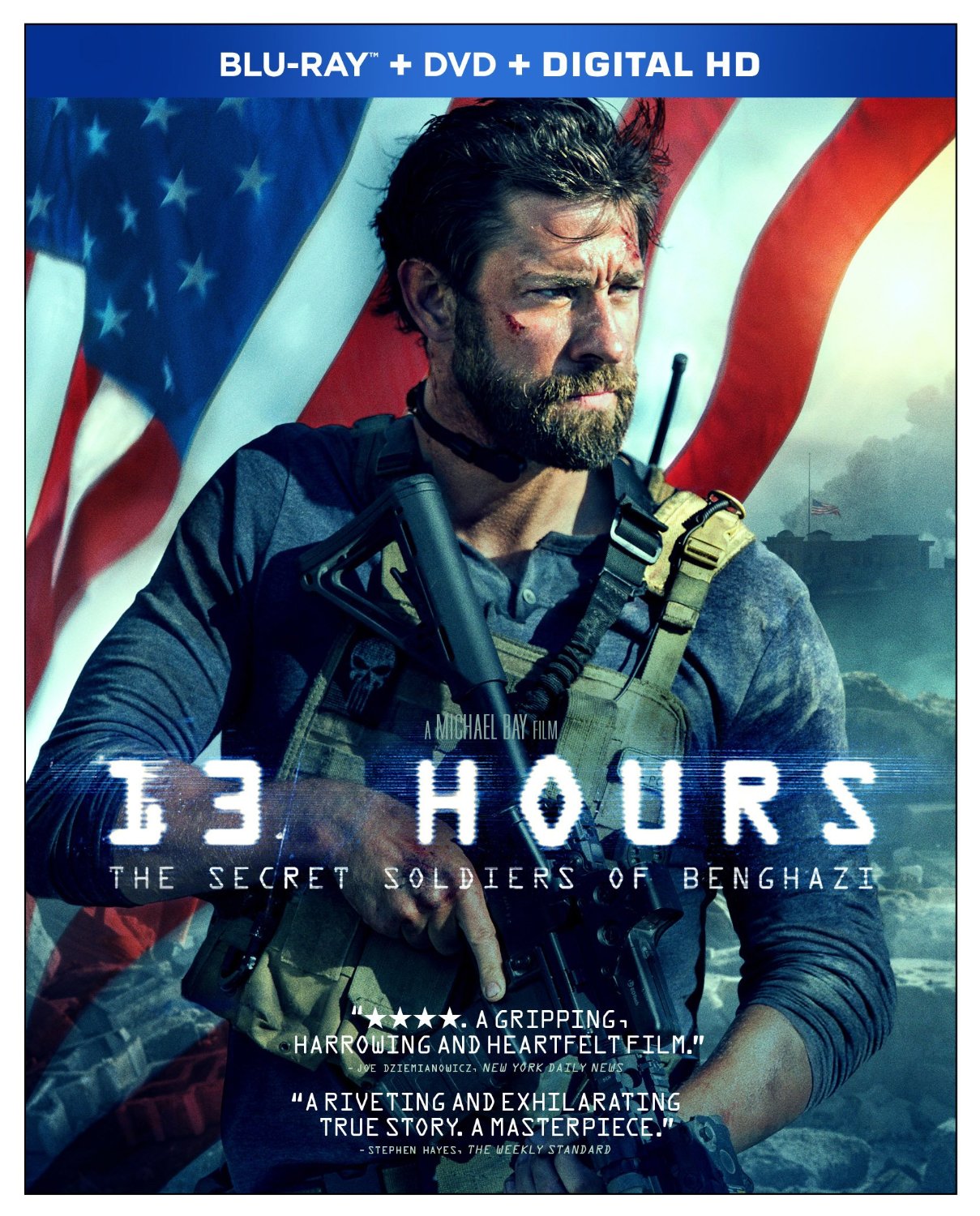
Decisions, decisions. Life’s full of tough choices, isn’t it? Star Trek or Star Wars? The Beatles or The Stones? Cake or Death? Best-selling author Nicholas Sparks has made a pretty lucrative career out of romantic push and pulls. Thanks to Lionsgate, the latest big-screen adaptation of Sparks’ work — The Choice — arrives this week. (I’ll be sure to have an extra hankie handy when I review it...just in case.) Liongate was also kind enough to Remember Christopher Plummer’s latest drama. Finally, the studio also scopes out Sniper: Special Ops.

One last thing before we wrap up this Round Up: if you’re shopping for anything on Amazon and you *choose* to do it through one of our links, it’ll help keep the lights on here at UpcomingDiscs. See ya next week!

I feel I should start this off with a little disclaimer; if you are the least bit squeamish and can’t handle the sight of blood and gore, click out of this review as fast as you can, because things are about to get a little bit messy as I delve into the American Guinea Pig series.  For those of you who hung around, I’m guessing you’re either a gore hound or simply have a morbid curiosity as to what this film is all about.  Some of you may already know about the Guinea Pig series, but for those who don’t, here is a little crash course for you.

The Guinea Pig series isn’t just a part of horror cinema, but instead it fits into a more obscure niche of extreme-horror.  It belongs in the section of reserved for some of the most over-the-top gore cinema has to offer and simply just isn’t for everyone.  The original series came out in Japan and had its run through the 80s-90s that depicted some horrific acts of violence and was graphic enough to not only get banned in numerous countries but was even investigated for possibly being a real snuff film after a copy came into Charlie Sheen’s possession.

Anthony Perkins is arguably most well known as Norman Bates, the hotel owner with mommy issues from Psycho. While Hitchcock’s film was groundbreaking for the horror genre (and Hollywood in general), I find it strange that Perkins’s career did not improve with such a commercial hit. He had certainly acted in other projects prior to Psycho, but his name is not one that I see very often. In other words, I have never “happened upon” an Anthony Perkins film, I seek out films in which he has acted. As a matter of fact, I can count those films on one hand: The Trial, and the three schlocky sequels to Psycho. This Blu ray double feature contains two films produced in the late 80s between Psycho III and Psycho IV, towards the end of his career.

I must admit that the first film in the pack, Destroyer, was a little disappointing. It started with an amazing concept: A famous director rents the space of an abandoned prison to film his “women in prison” sexploitation film. The film’s writer (Clayton Rohner) and stuntwoman girlfriend occupy the lead roles, and as the night full of production continues the crew is murdered by an ominous presence kept secret by the ex-prisoners living in the town. The film was competently crafted and well written, but the cover of the disc made promises that it could not keep. For example, when I see a picture of a gigantic, muscular man with a skull-like visage on the cover, I kind of want to see that in the film as well. To be fair, I most certainly got a muscular antagonist: Lyle Alzado, Former NFL defensive linesman of the Cleveland Browns, has a very large and intimidating presence. Now, the film did provide pretty creative ways to dispose of expendable characters, but after watching the “final showdown” between protagonist and antagonist, I felt let down because there was no amazing 80s special effects makeup grafted to the football star’s face.