DTS HD 5.1 MA (English)

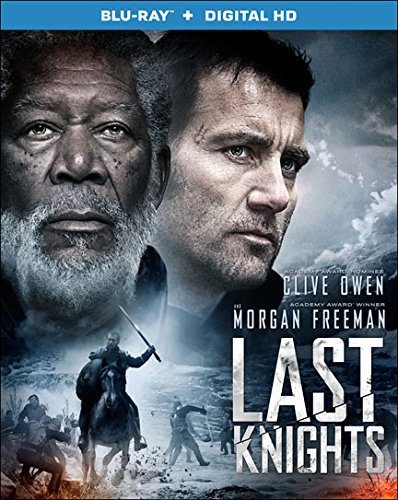
"During the long, dark period of the Great Wars, an elite class of soldier rose from battle. Their unbreakable code was simple: possess a noble heart of courage, right conduct, and absolute devotion to one's master. From out of those years of bloodshed an empire would emerge. Its power would assimilate persons of every color, creed, and faith. This uncontested rule eroded the traditions of the great knights... but not for all."

Last Knights is an ambitious direct-to-video production. It sports a rather elite class of actors headed by Morgan Freeman, who adds a ton of gravitas to any role he plays. The sets and computer-generated extensions provide the film a rather stirring environment in which to tell an epic tale that owes more than a little to the classic Ronin 47 story. The snow-driven locations in the Czech Republic provide that final sweet element that takes this film far above the usual kinds of films we find in the direct-to-video market.

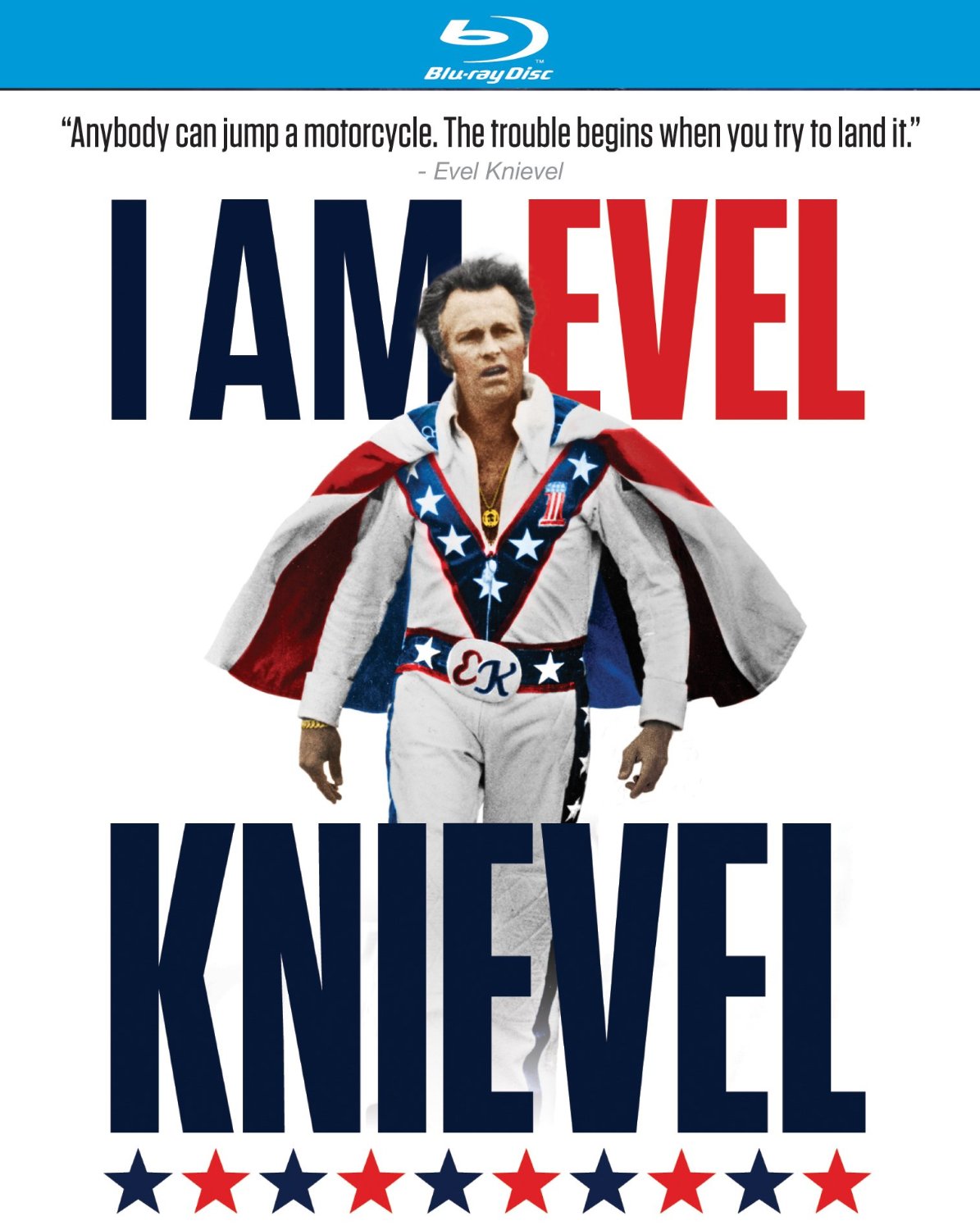
Anybody can jump a motorcycle. The trouble begins when you try to land it.”

There's a segment in I Am Evel Knievel that features some of Knievel's contemporaries — along with a few of the younger extreme sports athletes he inspired — breaking down just how difficult it is to jump a motorcycle across vast distances. (Especially when you're using relatively primitive equipment the way Knievel was.) Long story short, the crucial components are guts and a mental makeup that doesn't allow you to overthink or dwell on the insanity of what you're about to do. This entertaining documentary succeeds in illustrating how Knievel had both of those qualities in spades.

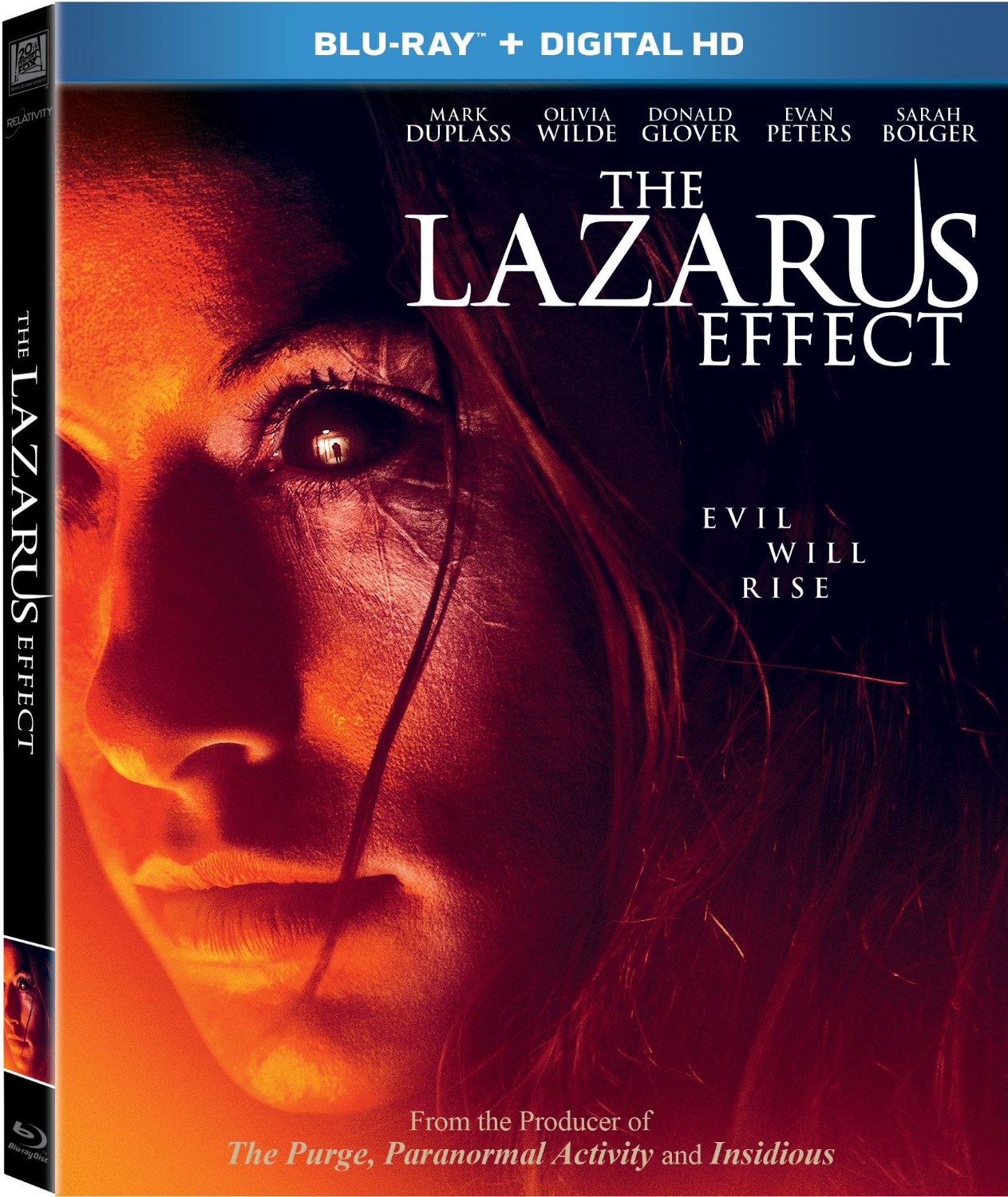
"There's always a consequence for breaking the rules."

Maybe that's why the crew from The Lazarus Effect decided to use all of the rules and conventions in the book without daring to really break any new ground of its own. By the time I was finished with the film, I felt like I had watched several horror movies at the same time. It's most intentionally Frankenstein meets Flatliners meets insert-your-favorite-ghost/possession-movie meets every-Stephen-King-film-ever-made. With all of that at its fingertips and a pretty bright cast, all The Lazarus Effect could do was raise itself to mediocrity.

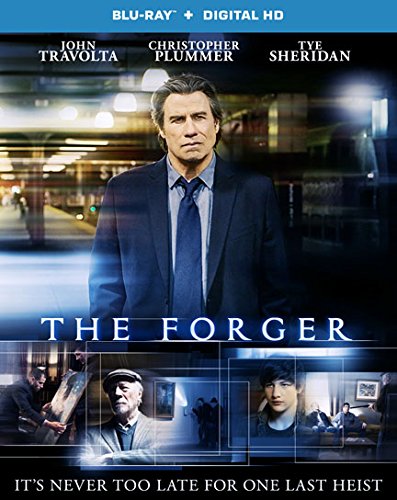
It honestly took me a while to get over the opening shot of The Forger. The shot itself is rather unremarkable: it's a simple close-up of star John Travolta sitting in a small room by himself and staring straight ahead. But between his ridiculously obvious wig and the waxy texture of his face — the actor now looks like he's wearing a Michael Myers-style “John Travolta” mask — I knew it was going to be pretty difficult to take him seriously, no matter who or what was playing. It's a shame because there's actually a pretty decent family drama to be found within The Forger.

Turns out Travolta is playing Ray Cutter, a Boston-based, world-class art forger who has 10 months remaining on a five-year prison sentence. With the light at the end of the tunnel in sight, Ray suddenly decides 10 months is too long to wait, so he makes a deal with local crime boss Keegan (Anson Mount) to pay off a judge and get out of prison early. In exchange, Keegan forces Ray to forge Claude Monet's “Woman with a Parasol”, steal the real thing from a local museum, and replace it with the forgery. So why would Ray indebt himself to a volatile mobster instead of merely serving out the rest of his sentence?

"In these mountains roams one of the rarest species on our planet. A shy, elusive, and gentle creature: the giant panda."

If you are old enough you will remember President Richard Nixon's famous trip the China. He was the first President to make the voyage, and it was heralded as a foreign policy breakthrough for the nation. Long after, the hoopla had died down and the only time it seemed Nixon was in the news was for Watergate. But even amid the scandal, one bright legacy of that trip remained for years to come. That was, of course, the Chinese gift to the United States to celebrate the event. We received two pandas named Ling-Ling and Hsing-Hsing that would capture the hearts of a nation even as Nixon was losing them. We all paid close attention as various attempts were made to mate the animals. Unfortunately, there were only five successful matings, and the pups only lived a few days at most. It was a disappointing end to a marvelous story. The pandas did live into the 1990's, breaking records to panda lifespans outside of China. Today there are new pandas at the National Zoo, and they have given birth to pups that have been returned to China based on the deal we brokered to get them. You can still see those guys today.

“Jihadists are people too!” That’s probably the big, blinking takeaway from Timbuktu, director Abderrahmane Sissako’s Oscar-nominated drama about the occupation of the titular city by extreme Islamists. But it’s also the most reductive possible interpretation of a film that doesn’t shy away from portraying some of the beauty in thoroughly ugly circumstances. More importantly, Timbuktu tells a volatile story with tremendous grace.

“Here, in Timbuktu, he who dedicates himself to religion uses his head and not his weapons.”

What do Elvis Presley, Frank Sinatra, The Beach Boys, Sonny & Cher, The Monkees, and Nat King Cole have in common? (Besides, of course, their undisputed status as musical icons and the adoration of millions of fans.) Well at various points in their illustrious careers, they were each backed by The Wrecking Crew, a tight-knit group of session musicians responsible for cranking out some of the most familiar hits of all time. This documentary is a lively love letter to that incredibly charismatic and cohesive group, whose contributions remained largely anonymous for decades.

Early on in The Wrecking Crew, we are presented with some snippets from the group's work as if we were scanning stations on car radio; it doubles as a tour through the history of pop music in the 20th century. The film is directed by Denny Tedesco and we quickly learn his very personal motivation for making this movie. His father, Tommy Tedesco, was a master session guitarist whose work can be heard on everything from Sinatra's “Strangers in the Night” to the Bonanza and Batman themes. But the general public's lack of awareness regarding Tedesco's contributions was magnified after his 1997 death. (The film points at a few televised obituaries, which misspelled his last name or called him “Tony Tedesco.”)

“We’re not in the middle of the third act. We just got to the end of the first.”

Aaron Sorkin almost definitely knew The Newsroom had been simultaneously renewed for a third season and canceled when he wrote those words, which come at the end of the season 3 premiere. It’s a winking and bittersweet bit of writing for a show that seemingly infuriated as many more people than it delighted over the course of 25 episodes. (Which apparently amounts to a single season of Pretty Little Liars.) So how else would you expect The Newsroom to go out than with moments of singular brilliance mixed in with a few controversial bangs?

I’m hard pressed to think of a movie star who is better at playing rich a-holes than Michael Douglas. He’s played a Murderous Rich A-Hole, a Rich A-Hole Who Gets Put In His Place, and a Self-Destructive Rich A-Hole, to name just a few. And that’s not even counting his Oscar-winning turn as Gordon “Greed is Good” Gekko, the Definitive Rich A-Hole. It’s tempting to tidily sum up Beyond the Reach as “Gekko’s Got a Gun.” Unfortunately, what starts out as a picturesque two-hander becomes more preposterous as it goes along before completely flying off the rails in the final act.

The larger-than-life corporate shark Douglas plays this time around is named John Madec. He hires a young, talented, brokenhearted guide named Ben (Jeremy Irvine) for a hunting expedition in the Mojave Desert. Director Jean-Baptiste Leonetti and screenwriter Stephen Susco let us know Madec is a jackass before we even lay eyes on him; as Ben walks into the local sheriff’s office to meet Madec, we see his monstrous Mercedes truck taking up three parking spaces outside.

“That’s your job as The DUFF…Designated Ugly Fat Friend.”

Let’s just get this out of the way right at the top. The idea that Mae Whitman — or any other actress cast as the lead in a mainstream Hollywood movie — is “Ugly” and “Fat” is absurd. (Not to mention entirely subjective.) So it’s tempting to dismiss The DUFF as the latest bit of evidence that there’s no truth in advertising. But then you’d be missing out on a charming teen comedy that grabs the snarky underdog baton previously held by the likes of Mean Girls and Easy A.