Drama

"I'm a consulting detective of some repute. Perhaps you've heard of me? My name is Sherlock Holmes."

In 1887, readers of the popular periodical Beeton’s Christmas Annual were to receive quite a special treat. There wasn’t much fanfare or hype to the event. Inside the pages of the magazine was a story called A Study In Scarlet. It was a detective story, perhaps like many published before, except for the detective himself, a certain Mr. Sherlock Holmes. Together with his faithful companion and chronicler Dr. Watson, Holmes would win the hearts of those holiday readers. It might have been an ordinary day, but the world was about to change. Sherlock Holmes would become the most famous detective in the world. His stories would remain in print nearly 130 years later. Over 100 films would be made featuring the character. There would be television shows and cartoon spoofs. No other character has appeared in more productions. When his creator dared to kill the beloved detective in order to move on to newer stories, his very life was threatened. It would seem that Doyle was on the verge of becoming a victim much like those in his stories. There was only one man who could save him from such a grim fate, and he did just that. It was Sherlock Holmes himself.

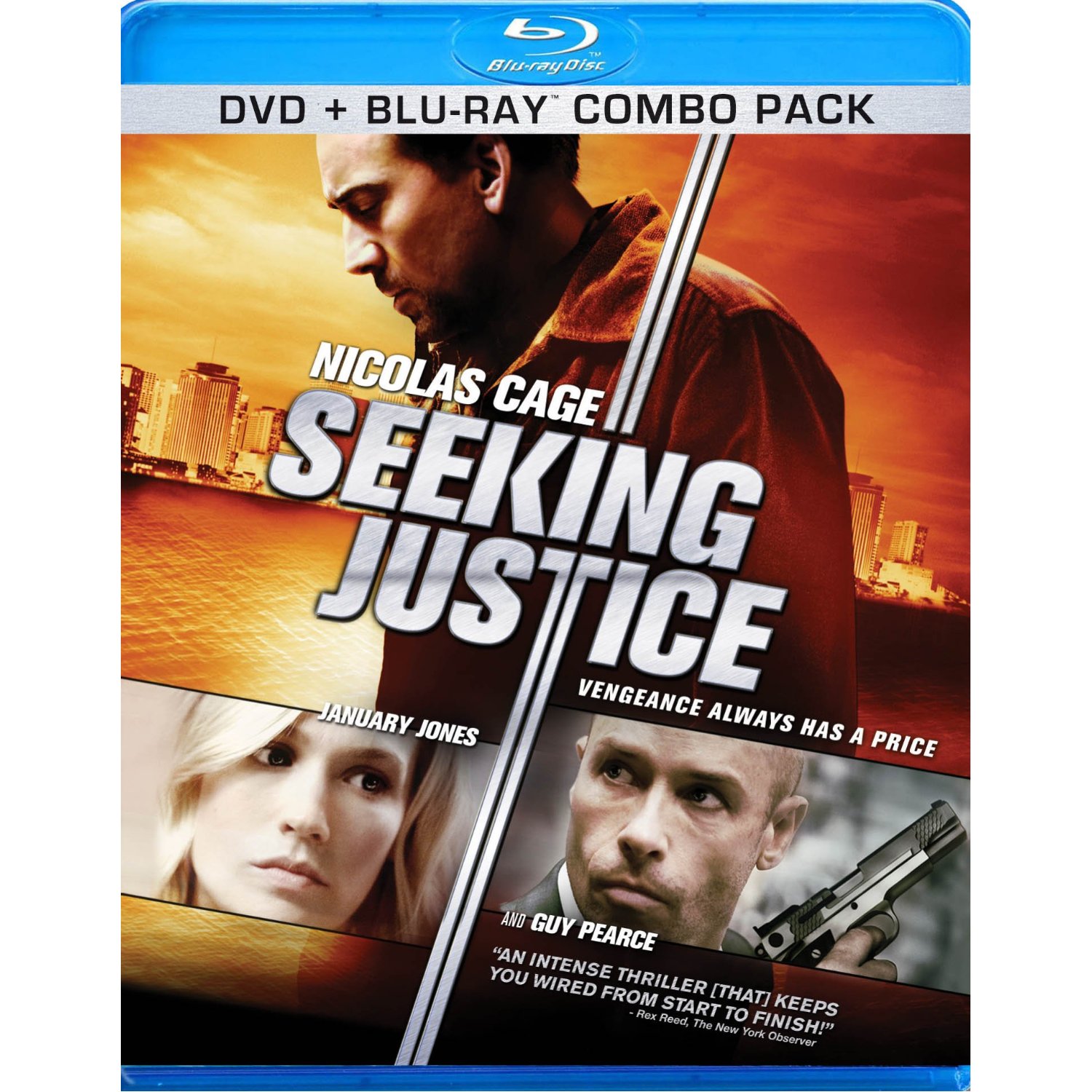
When I saw that Nicolas Cage and January Jones were headlining a little-seen/straight-to-DVD-caliber title, part of me was perversely excited. This had the potential to be a historic summit of bad acting! To be fair,  I generally enjoy the — shall we say — avant garde stylings of Cage's performances, but I'm much less impressed by the relentless joylessness Jones bring to her work (even on the excellent Mad Men). In short, I was prepared to laugh and I was prepared to wince. However, I was not prepared to enjoy this entertaining, preposterous thriller as much as I did.

Cage and Jones star as Will and Laura Gerard, a happily married New Orleans couple. You know they're the perfect little cultured pair because she's an orchestra cellist, and he's a high school English teacher who plays hyper-competitive chess games with a co-worker (Harold Perrineau). Their world is shattered one night when Laura is brutally attacked after leaving work. While an emotionally distraught Will is in the hospital, he is approached by a stranger named Simon (Guy Pearce). Simon claims to represent an organization that is fed up with the shortcomings of the criminal justice system. He offers to exact vengeance on Laura's attacker in exchange for a favor from Will somewhere down the line.

-"And what do I say when they ask me why it wasn't regulated?"
-"No one wanted to. We were making too much money."

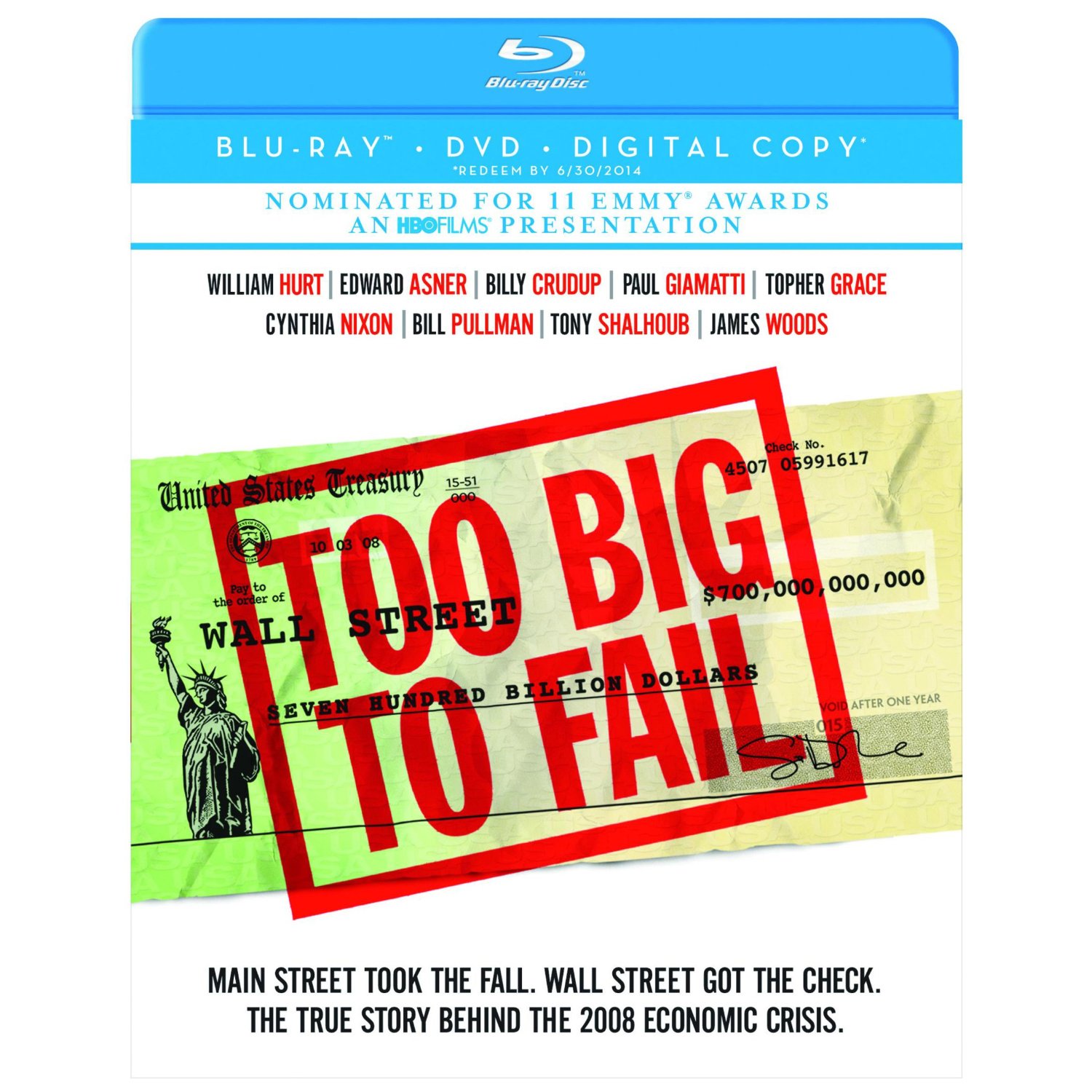
At first glance, sitting down to watch a film about the financial meltdown of 2008 seems only slightly more fun than going through the actual meltdown again. Fortunately, director Curtis Hanson (L.A. Confidential) and a towering ensemble cast — I felt like I'd died and gone to Character Actor Heaven — mostly keep Too Big to Fail away from CNBC territory and deliver a brisk, entertaining film.

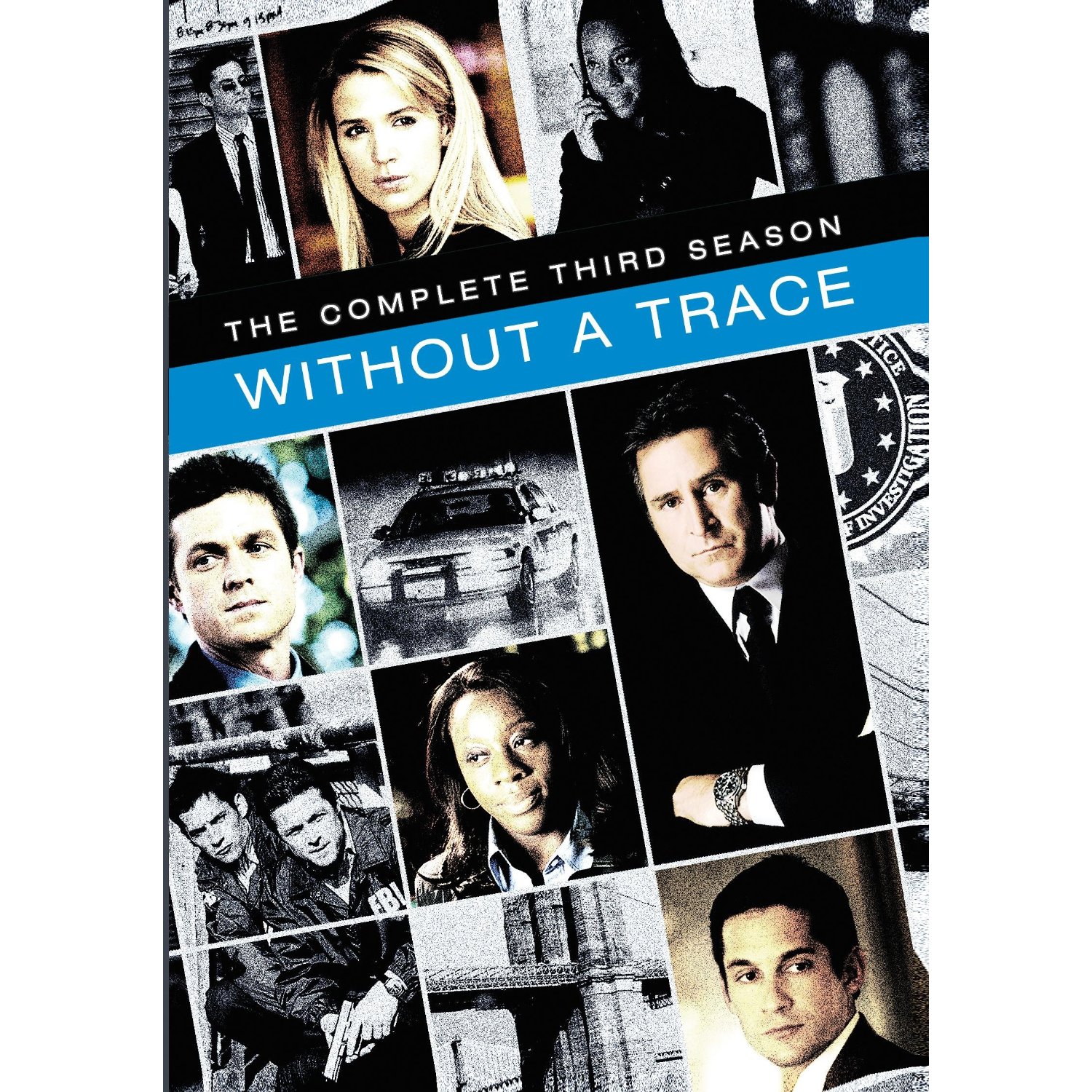
For most of the last decade or more CBS has dominated the primetime drama market on network television. One of the reasons, of course, has been the prevalence of top-flight crime dramas like the NCIS and CSI franchises. From 2003 until 2009 the Thursday line-up on the eye network included the blockbuster pairing of the original CSI and Without A Trace. Both were products of filmmaker Jerry Bruckheimer's television stable. While CSI focused on the science behind a criminal investigation, Without A Trace took the more traditional route of the human element to the FBI's Missing Persons Unit.

Jack Malone (LaPaglia) was the tough-as-nails head of the unit. He had a degree in psychology and acted very much like a profiler at times. It was his job to direct the investigation unit. The team consisted of Vivian Johnson (Jean-Baptiste). She was a veteran officer and Jack's right hand. Danny Taylor (Muciano) had changed his last name to escape his family roots which included a habitual criminal brother and an abusive father. The unit was his way of starting a new life. Martin Fitzgerald (Close) was the son of a powerful senator and was always fighting to prove himself on his own merits. Samantha Spade (Montgomery) was the young attractive young woman on the team who had already had an affair with the married Jack but also had romantic ties to Martin. Unfortunately, she didn't do much to break the vulnerable female role.

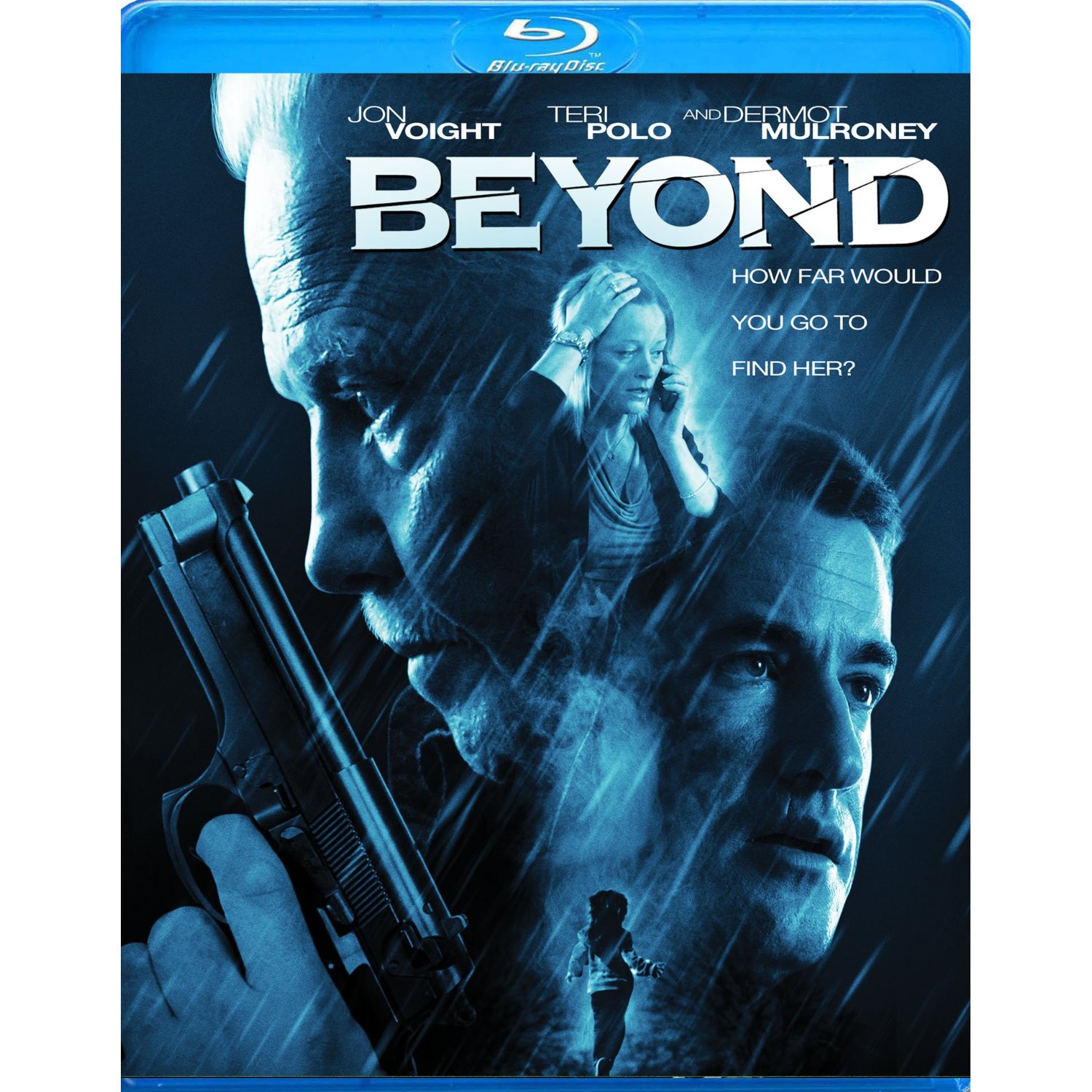
At first glance it would be very easy to say that Beyond doesn't really offer us anything terribly new in the crime drama genre. For the most part I would tend to agree with that criticism. I would counter with the argument that a very good film doesn't need to be very original to be good. Sometimes the value in a movie lies in the fact that it does what it does do extremely well. That's how I would describe the sleeper direct-to-video release Beyond.

Jon Voight stars as Detective John Koski. He's a detective in Anchorage, Alaska who specializes in missing children. He's not exactly by the book, and more of his perps end up dead than in the courtroom, but the children usually end up found and alive. Sounds like a win/win to me. Still, he's haunted by that first case where he wasn't able to save a little girl. It turns out he's more haunted by that incident than even he suspects. When 7-year-old Amy (Lesslie) disappears from her bedroom one cold wintry night, Koski, just months from retirement, gets the case. The girl's mother Sarah (Polo) is the sister of the Chief off Police (Mulroney).

"This Martius is grown from man to dragon. He has wings. He's more than a creeping thing. There is no more mercy in him than there is milk in a male tiger."

There's a certain hierarchy when it comes to the amount of cinematic interpretations of William Shakespeare's plays. At the top tier, we have the endlessly adapted Romeo and Juliet, Hamlet, Othello and Macbeth the Scottish Play. A step below that, you've probably got your King Lear, As You Like It, A Midsummer Night's Dream and a few more. And about a dozen tiers below that, we finally come across Coriolanus.


"It's Memorial Day. What am I supposed to remember?"

Happy Memorial Day, everyone! When I saw that I would be reviewing a movie called Memorial Day, I was afraid Garry Marshall had made another one of his awful ensemble romantic comedies — ala Valentine's Day and New Year's Eve — that stars everyone in Hollywood...and Hector Elizondo. Thankfully, this film is simply an (overly) earnest dedication to the men and women who have served in the Armed Forces, as well as their families.

By 1978 the television detective model had been nearly complete and possibly already a cliché. Dan Tanna might have well been the complete model as far as the formula goes. It was almost as if you could go down a checklist and, like Dr. Frankenstein creating a monster, check off the necessary elements. The scripts could then almost write themselves, and you let the show fly on autopilot for three seasons or so until someone decides to look behind the curtain.

So let’s go down that checklist, shall we?

"...So when I walked into the hair cutting place, I was taking a leap. But I wasn't doing it for a guy — I was doing it for me."

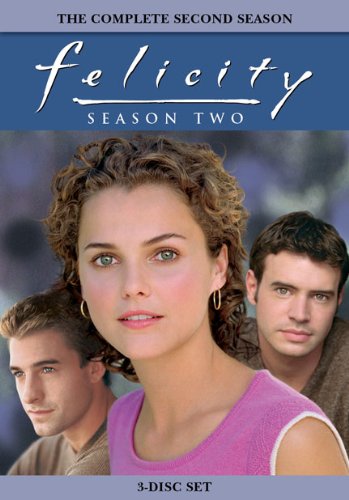
Season 2 of Felicity features Keri Russell getting one of the most infamous haircuts in TV history. When people think of super-producer J.J. Abrams and his television projects, images from Alias, Fringe and a little show called Lost probably spring to mind. On the other hand, a significantly smaller portion of weirdos the TV-watching population may think of the relationship dramedies Abrams has produced, such as What About Brian, Six Degrees and Felicity, by far the best of this latter group. (Then again, Felicity — co-created by Abrams and Matt Reeves — resorted to time travel towards the end of its run, so it probably has more in common with the producer's genre shows than you think.)

"My name is Charles Carmichael, and I have one final question for you. Have you ever had to subdue a Basque terrorist on a Swiss train? Or fight your way through the jungles of Southeast Asia? Or, take out an arms dealer with a penchant for murder and ice cream? Well... we have."

And, if you've been a fan of Chuck for the last five years, you know exactly what we're talking about here. And, for now, the ride has come to a close. Fear not, fans. This is quite a satisfying ending. And when you consider that by rights the show should have gone away after the second season, if you trust those guys at the Nielsen's, we've been given quite a lot of bonus time with Chuck.