Genre

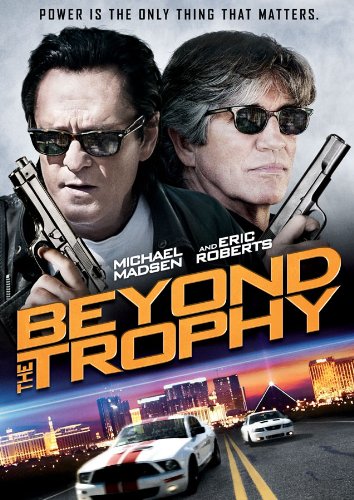
The tagline for Beyond the Trophy definitively states that “Power is the only thing that matters.” Well, having watched this low-budget cops and kingpins crime drama, I humbly disagree. The film strives to tell a story about the violent perils of all-consuming power. Unfortunately, Beyond the Trophy forgot to include some of the stuff that matters to movie-watchers: things like “focused storytelling”, “coherent action sequences”, and “fresh characters.”

The film opens “somewhere in the Caribbean” where a hitman catches up to lounging, unsuspecting Danny (Michael Masini). The action then flashes back seven months to show us how Danny ended up with a gun pointed at him on a tropical beach.

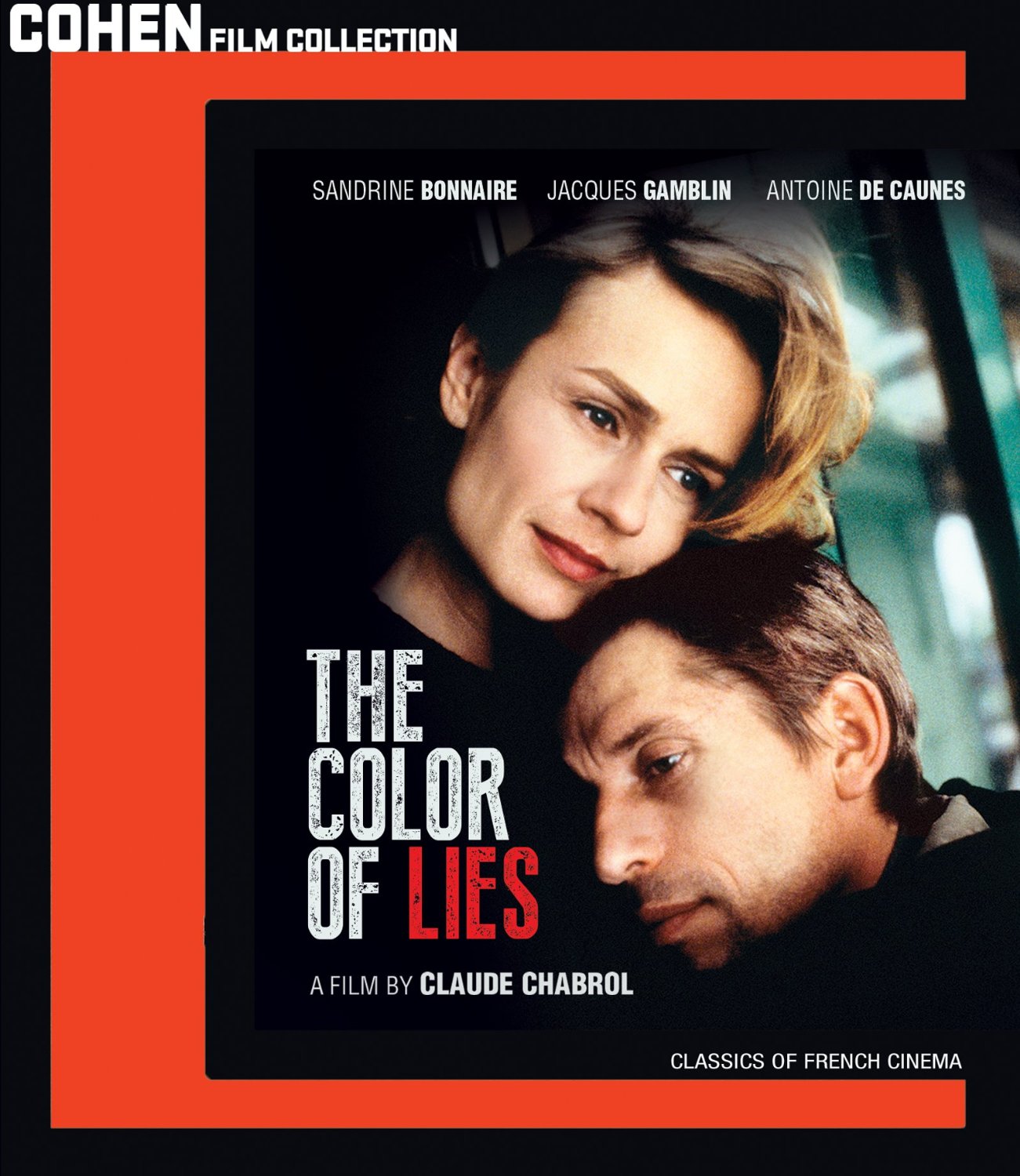
On the surface, The Color of Lies resembles many other murder mysteries set in a close-knit community. The 1999 film, however, is a late-career effort from Claude Chabrol, the French New Wave director who first gained acclaim alongside contemporaries like Jean-Luc Godard and Francois Truffaut in the late 1950s. So it’s not surprising to learn The Color of Lies is really a subtle, stylish exploration of the various ways people deceive each other.

The body of a 10-year-old girl is found near the home of struggling artist Rene Sterne (Jacques Gamblin) and his wife Vivianne (Sandrine Bonnaire). Rene was the girl’s art teacher and quickly becomes the prime suspect in an investigation conducted by Inspector Lesage (Valeria Bruni Tedeschi), the town’s new police chief. Despite the fact that Inspector Lesage has zero hard evidence connecting Rene to the crime, he becomes a pariah in his small Breton village and gradually loses the rest of his art students. And if things weren’t bad enough for Rene, he also has to contend with vain local celebrity Germain-Roland Desmot (Antoine de Caunes), who is aggressively pursuing Rene’s wife. (It doesn’t help that Vivianne isn’t exactly rebuffing Desmot’s advances.)

by Eric Mitchell

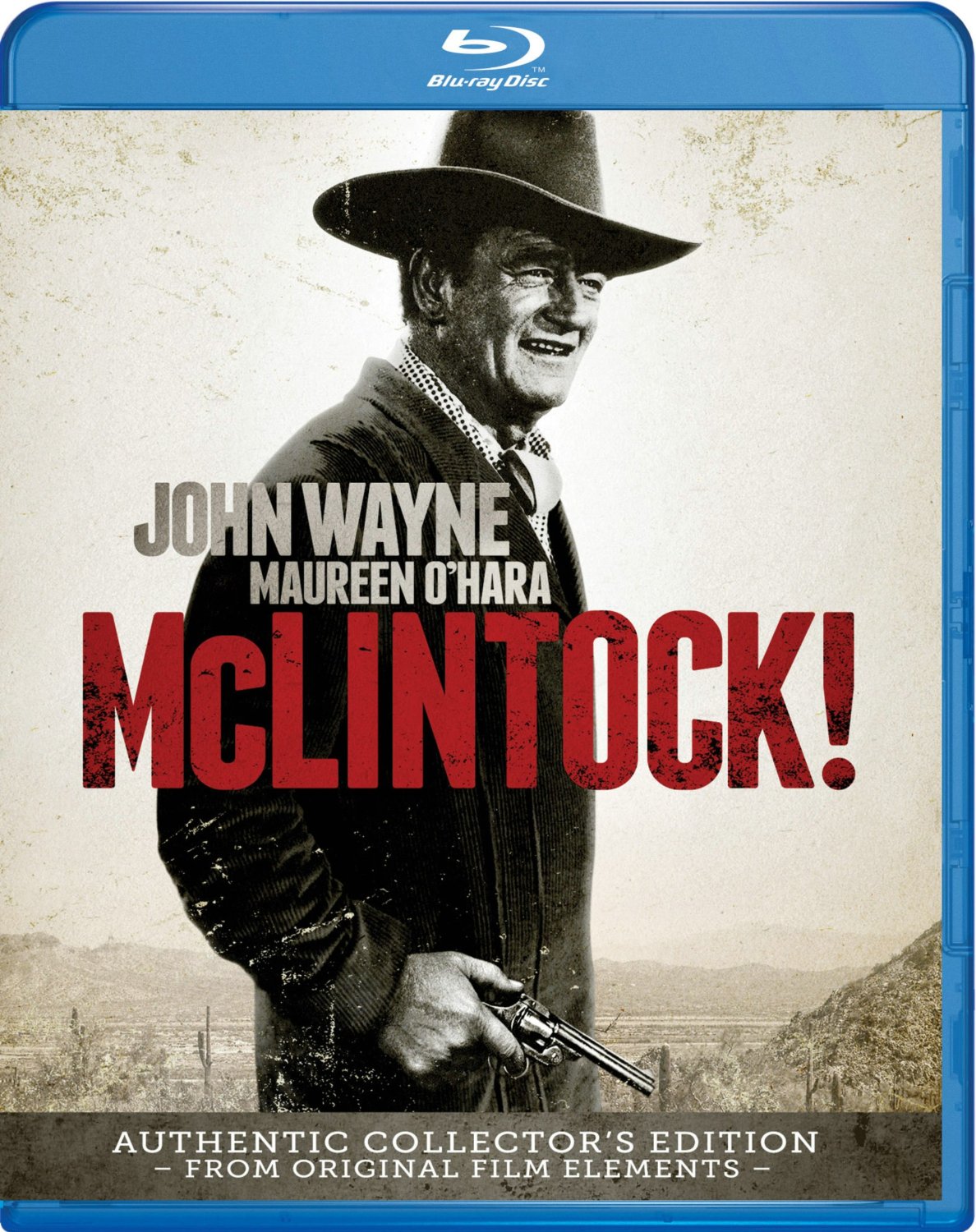
G.W. McLintock (John Wayne, True Grit, Rooster Cogburn) made most of his money by being a cattle baron. He made so much money, in fact, that the film’s fictional town was named after him. How cool is that? But all is not milk and honey in McLintock’s life. He has an estranged wife who does not live with him (Quiet Man co star Maureen O’Hara), and now wants a divorce.

Christian Slater has managed to make a decent career lately by simply appearing in numerous direct-to-DVD productions for several years now.  It seems as though every month the former 80s-90s heartthrob is slumming his way through productions as though he never once looked at the script and instead was just adding another lackluster credit to his IMDB profile.  As a longtime fan of the actor from the days of Heathers, True Romance, and Pump Up the Volume, I can’t help but hope the guy will make a resurgence (though appearing in Lars Von Triers Nymphomaniac is a good start to that career revival).

As for Slater’s new release Way of the Wicked, he somewhat takes the back seat on this film despite appearing on the Blu-ray box art.  Henry (Slater) is a priest who seems to have an obsession with a young boy who is held responsible for the murder of a classmate even though there was no physical evidence to show for it.  Several years later Robbie (Jake Croker) returns to the small town, and as he returns to school he immediately seems to embrace the role of outcast.

I'm as excited as you are to (finally!) have a three-day weekend. But between scarfing down hot dogs or hopping from one pool party to the next, it can't hurt to take a few moments to acknowledge why we observe Memorial Day in the first place. You probably know the annual holiday pays tribute to the men and women who have died while serving in the U.S Armed Forces. What you may not know is that Memorial Day originated shortly after the U.S. Civil War. This three-part documentary miniseries strives to examine “America's Bloodiest War” from every angle.

The legacy of the war survives in the objects left behind.”

Jackie Mabley, the trailblazing subject of this HBO Films documentary, earned plenty of superlatives during a comedy career that spanned more than 50 years. She was touted as “the funniest woman in the world.” The DVD cover art crowns her as “the Original Queen of Comedy”, and one of the film's interview subjects calls her “the original cougar” thanks to her on-stage predilection toward younger men. Of course, Mabley would probably prefer it if you just called her “Moms.”

Whoopi Goldberg Presents Moms Mabley examines how the comic shattered gender and racial boundaries. The list of comedians she influenced — and who lined up to offer their thoughts for this movie — includes Bill Cosby, Eddie Murphy, Arsenio Hall, Joan Rivers, Kathy Griffin, Jerry Stiller and Anne Meara. (Murphy admits Granny Klump from The Nutty Professor was a direct nod to Mabley’s stage persona.)  Sidney Poitier turns up to praise her material as “familiar and honest.” Leading the charge is actress/comedian/talk show host Whoopi Goldberg, who used to recreate Mabley routines on stage early in her own career.

Ever since Elijah Wood completed filming Lord of the Rings, it would seem that he has done everything in his power to not be locked down with the label of simply being Frodo.  From playing a mute psychopath in Sin City, to voice work in Happy Feet, a suicidal pot-head that is best friends with a talking dog in Wilfred, and even the killer role in Maniac, it’s clear that he’s an actor that likes to challenge himself.  With Grand Piano Wood delivers his most dynamic performance as the brilliant concert pianist Tom Selznick who suffers from stage fright.  It’s a film that didn’t see much of a theatrical release but shone in the film festivals it did play at, most notably Fantastic Fest in Austin, Texas.  But it’s not just the performance that sells me on this film; instead, it’s the beautifully shot and constructed thriller that seizes its grip from the opening moments of the film and doesn’t release until the end of its 90-minute-plus running time.

It’s been five years since Tom has performed for the public, ever since his meltdown while trying to perform a piece written by his mentor Patrick Godureaux.  The piece titled, “La Cinquette” is believed to be an unplayable piece and is considered to be Godureaux’s master work.  But it’s on this one night, an event organized by Tom’s wife Emma (Kerry Bishe), a Hollywood socialite who has bloomed into superstardom during Toms retirement; the event has been put together to help Tom recover from his disastrous performance.

Most action pictures have an aura of super-seriousness, or they are filmed as comedies and everything is meant to be ridiculous. It definitely is a difficult task to mix the two effectively. On some level most action pictures are ridiculous, since most of us will never experience the close proximity to death and danger that is depicted on the screen. Also, life and death are often cheapened with high body counts but little consequence for our hero. In 3 Days To Kill, all sorts of elements are brought to bear in order to reinforce the average everyday family experience and not the lone killer. Early on, a different sort of danger affects our hero. It's not bullets and bombs but a rare disease that is likely to kill him in the very near future. As a spy, he has always neglected family to the extent that his teenage daughter barely knows him. Ethan Renner (Kevin Costner) is intent on changing that.

The film is directed by McG and written by Luc Besson, both filmmakers with impressive credentials, but I'll get back to that later. The real focus is Kevin Costner as an aging and battle-weary veteran CIA agent who is always counted on to take out whatever targets are assigned him. During a particularly explosive encounter in a Serbian hotel, he begins to get dizzy after chasing one surviving member of a gang. He is subsequently hospitalized and told he has maybe six months to live, and thanks for his service. He leaves the hospital determined to reconnect to his wife, Christine (Connie Neilsen), and daughter Zoey (Hailee Steinfeld).

“You just never know who’s gonna be at the door.”

A virginal babysitter with bad cell phone reception is terrorized by a masked killer in Mischief Night. You don’t have to be a gorehound to know this is basically the plot of every slasher movie ever made. So it’s natural for viewers to expect some sort of swerve to differentiate this horror flick from all those that came before it. With the flawed, micro-budgeted Mischief Night, that swerve comes courtesy of the film’s intriguing assertion that a “boogeyman” can come from anywhere.

The line between romance and stalking is much blurrier at the movies. Behavior that routinely leads to restraining orders or arrests in real life tends to elicit “awws” from moviegoers and earns the romantic hero a kiss in the end. The Right Kind of Wrong is one of the more egregious examples I can remember, which is a shame because the Canadian romantic comedy has a likable lead and dares to give its characters multiple dimensions.

“Writing and the pursuit of a woman — like any impossible dream — are not about immediate results. They’re about telling the truth.”