Genre

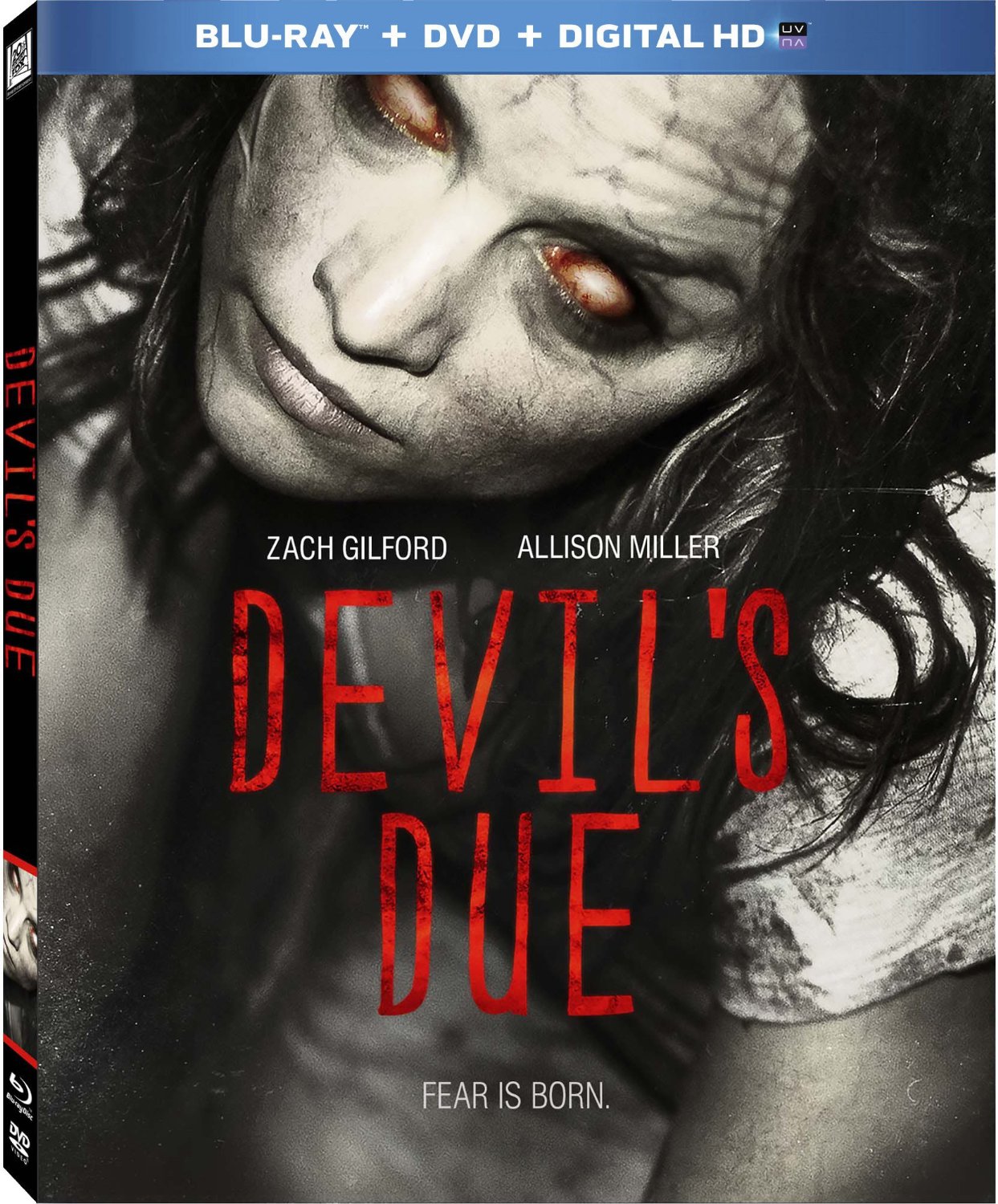
It’s easy to envision the elevator pitch for Devil’s Due. You only need five words: “Rosemary’s Baby meets Paranormal Activity.” The upside is obvious. The idea of a demonic pregnancy has terrified and unsettled expectant mothers since Ira Levin published Rosemary’s Baby in 1967 and Roman Polanski adapted it for the big screen the following year. Meanwhile, the Paranormal Activity films made low-budget/found-footage domestic horror hugely profitable. The downside? You’re probably not topping Rosemary’s Baby, and horror audiences seem to be suffering from an acute case of found-footage fatigue.

“Children, it is the last hour. And as you have heard that the antichrist is coming, so now many antichrists will come. Therefore we know is the last hour.”

There have been complaints that there are not enough films that have decent lead roles for women. There are those that say that Hollywood does not make enough movies for women. Then when they do, critics tend to dismiss them as “Lifetime” movies (a term that is dismissive because of the cable channel that churns out generic movies for women). It seems far easier to accept excessive violence or male-oriented films with sexual content. If a movie tries to legitimately capture real situations from a woman's point of view, it can be patronizingly categorized as pap and schmaltz.

I see an awful lot of movies, and what disappoints me most about many of them is the insincerity of the experience. We get to see a lot of violent movies and a lot of funny movies, and if they seem halfhearted, I shrug it off as the norm. If I see romantic comedies that seem like weak rip-offs of movies made years ago, I assume they just don't know how to make them anymore, but an even rarer commodity is a serious romantic movie that works. Today that usually means it has to be laced with cynicism and anger.

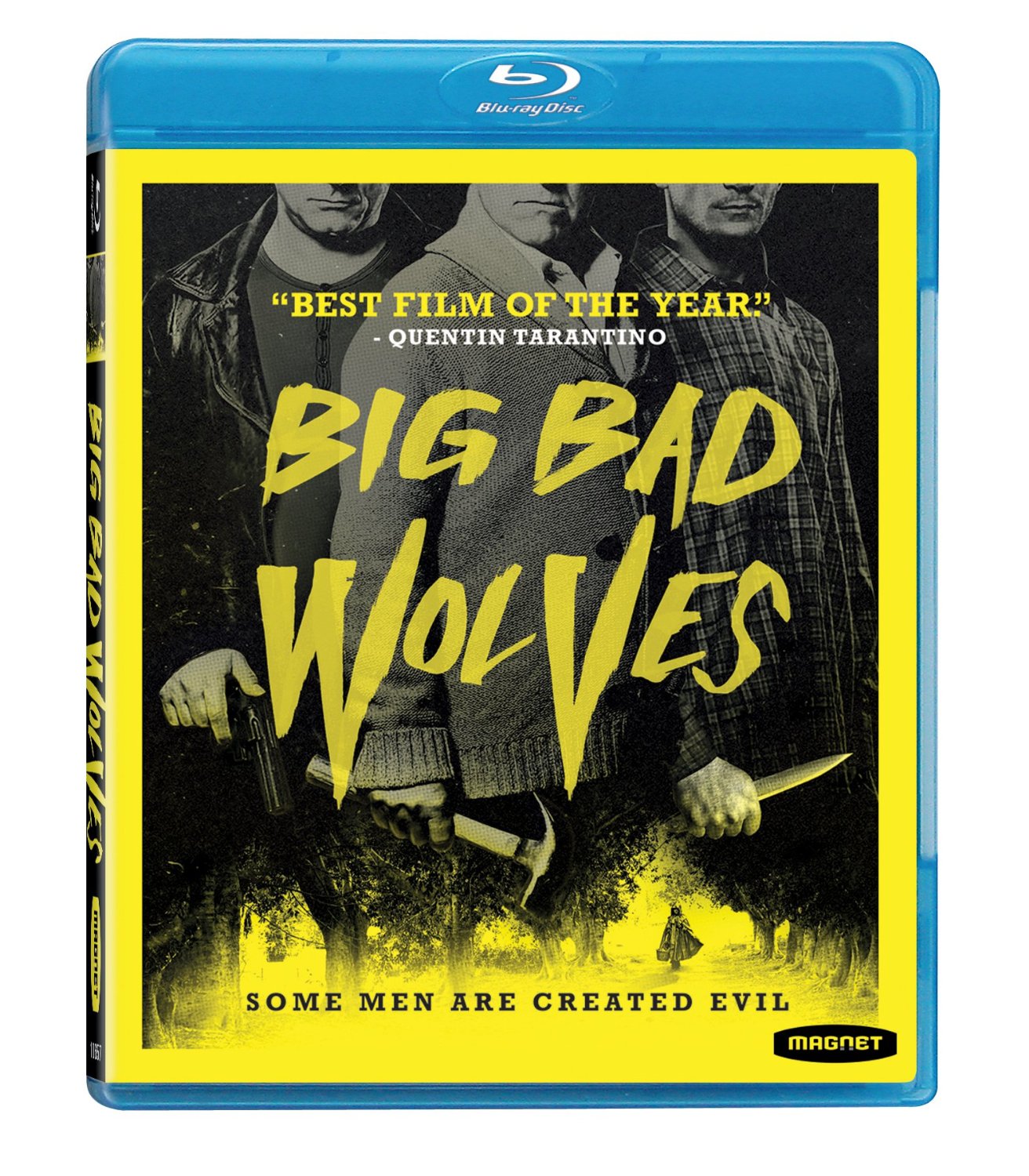
It’s movies like Big Bad Wolves that keep me excited about cinema.  After all, who would guess that Israel would produce this savagely dark fairy tale revenge film that is also one of the darkest comedies I’ve seen in some time with a visual aesthetic you’d expect from a Coen brothers film, but the violence and humor you’d expect from a film by Tarantino.  My first time viewing this film was via On Demand a few months ago; more and more I feel the cable companies are onto something by acquiring these little films and releasing them pay-per-view so that those not in New York and Los Angeles can experience these films before having to wait months longer for their DVD or Blu-ray release.  Now I get the chance to revisit a film that upon my first viewing was a punch to the gut; does it hold its own on its second viewing?  You bet it does.

The film starts up with a group of kids playing a game in the middle of the woods.  While the kids search the property for one of their friends, all they discover is one lone shoe.  Jumping ahead, we meet Micki (Lior Ashkenazi) with a group of fellow vigilantes dragging Dror (Rotem Keinan) into an abandoned building to beat a confession out of him.  Little does anyone know, someone is in the building with them and is filming the brutal interrogation.  Is Dror responsible for the missing girl?  At this point who knows, and anyone could be a suspect.  But when the video hits the internet, opinions are formed, and Dror becomes the focus of scrutiny by his students as well as their families.  After all, this is the time of social media, and we all know it spreads faster than the time it takes for an investigation to be completed.

“I used to be thin when I was 6.”

Jim Gaffigan has long been fixated on food. Need proof? The comedian’s 2013 memoir is called “Dad Is Fat”, and his most famous routine is about Hot Pockets. So it wasn’t exactly a shocker to find that Gaffigan spends most of Obsessed — his fourth Comedy Central stand-up special — talking about his dietary likes and dislikes. (Hint: kale is not on his list of favorites.) This is astoundingly straightforward and inoffensive material that nonetheless had me consistently laughing out loud.

“Have you done anything noteworthy or mentionable?”

It’s the sort of question that can easily apply to either your workday or your life as a whole. It’s also the question actor/producer/director Ben Stiller chose as the basis of his inspirational adaptation of The Secret Life of Walter Mitty. The original short story by James Thurber is less than five pages long, so a filmmaker has the option of going to any number of fascinating places in bringing Thurber’s tale to the big screen. Stiller, in essence, decided to take the scenic route.

“Bad things happen in the woods, especially to pretty girls like you.”

Stop me if you’ve heard this one before: a smallish group of friends head to a remote location for what they think will be a sex-and-booze-fueled romp. Instead, they find themselves getting picked off by a mysterious killer. If you’ve ever seen a slasher movie, you’re painfully familiar with this scenario. Thankfully, it seems like the people who made the low-budget Death Do Us Part are also well-acquainted with the way this sort of movie is supposed to work. And they’ve decided to have some fun with it.

“I’d have loved to be a spy, but it’s a dangerous game and it pays s---.”

For a lot of moviegoers, the word “spy” evokes tuxedos, gadgets, and exotic accents. Möbius — a French/Russian production from French filmmaker Eric Rochant — only employs the last of those tropes while falling in line with more low-key espionage adventures like Three Days of the Condor and Tinker Tailor Soldier Spy. So I shouldn’t have been surprised that this film gets up to some subterfuge of its own; Möbius is a love story posing as a spy thriller.

“You show up late reeking of booze, handcuffed to a stripper, and you expect me to trust your judgment?”

Even though we’re more than three years removed from his tiger blood heyday, it’s still impossible to separate Charlie Sheen’s bad off-screen behavior from the sitcom work he (somehow) cranks out every week. The latest example comes courtesy of Anger Management: Volume Three, which includes the departure of co-star Selma Blair after she reportedly complained that Sheen was a “menace” to work with. Not surprisingly, this batch of episodes also sees the “fictional” version of Charlie embrace his dark side.

When it comes to the very worst movies I’ve ever seen, I admit that I grade on a curve. Filmmakers working with extremely limited resources get more of a pass from me. This certainly appears to be the case with Sheriff of Contention, a low-budget Western/serial killer mystery. Unfortunately, there’s only so much amateurish acting and technical mishaps I can overlook. Everyone knows that if you can’t say something nice, you’re not supposed to say anything at all. In a related story, this might end up being one of my shorter reviews.

Tom Peavy (Angelo Ortega) is the sheriff of Contention City, a real-life historical mining town in Arizona. The only thing I liked about this movie was its cool title, but the filmmakers squandered the story’s potentially-interesting backdrop. Instead, Sheriff Peavy and the trigger-happy Deputy Conley (Miguel Corona) try to catch an unknown killer who is targeting the women of Contention City. That includes Melissa (Wendy Wiltsey), the local gal who is very obviously sweet on Sheriff Peavy. There’s also the matter of the city’s shifty mayor (Nick Bonacker) encouraging the more aggressive Deputy Conley to assume the role of sheriff, despite the fact that the position is currently occupied.

Today, Miami is considered one of the most glamorous cities in the world. But long before it became the place where some of the biggest stars in sports and entertainment took their talents, Miami was dubbed the drug, murder, and cash capital of the United States. (Resulting in a drastically different “Big 3” than what locals are accustomed to these days.) Cocaine Cowboys already chronicled this shockingly violent stretch of the city’s history and featured recollections from some of the people who helped Miami achieve its dubious status. Now an extended version of Billy Corben’s 2006 documentary arrives on Blu-ray.

The core of the film remains the same. Both versions of Cocaine Cowboys recount the period in the 1970s and ‘80s when cocaine flooded Miami’s geographically-convenient shores, leading to a major economic boost and (eventually) an outrageous breakout of violence. The film gets its title after one interviewee likens that version of Miami to the Wild West, since killers felt free to commit shootings and murders out in the open. The biggest offenders, according to the film, were associated with the Medellin Cartel from Colombia. It all culminated with a 1981 Time Magazine cover story that proclaimed South Florida as “Paradise Lost.”