Suspense / Thriller

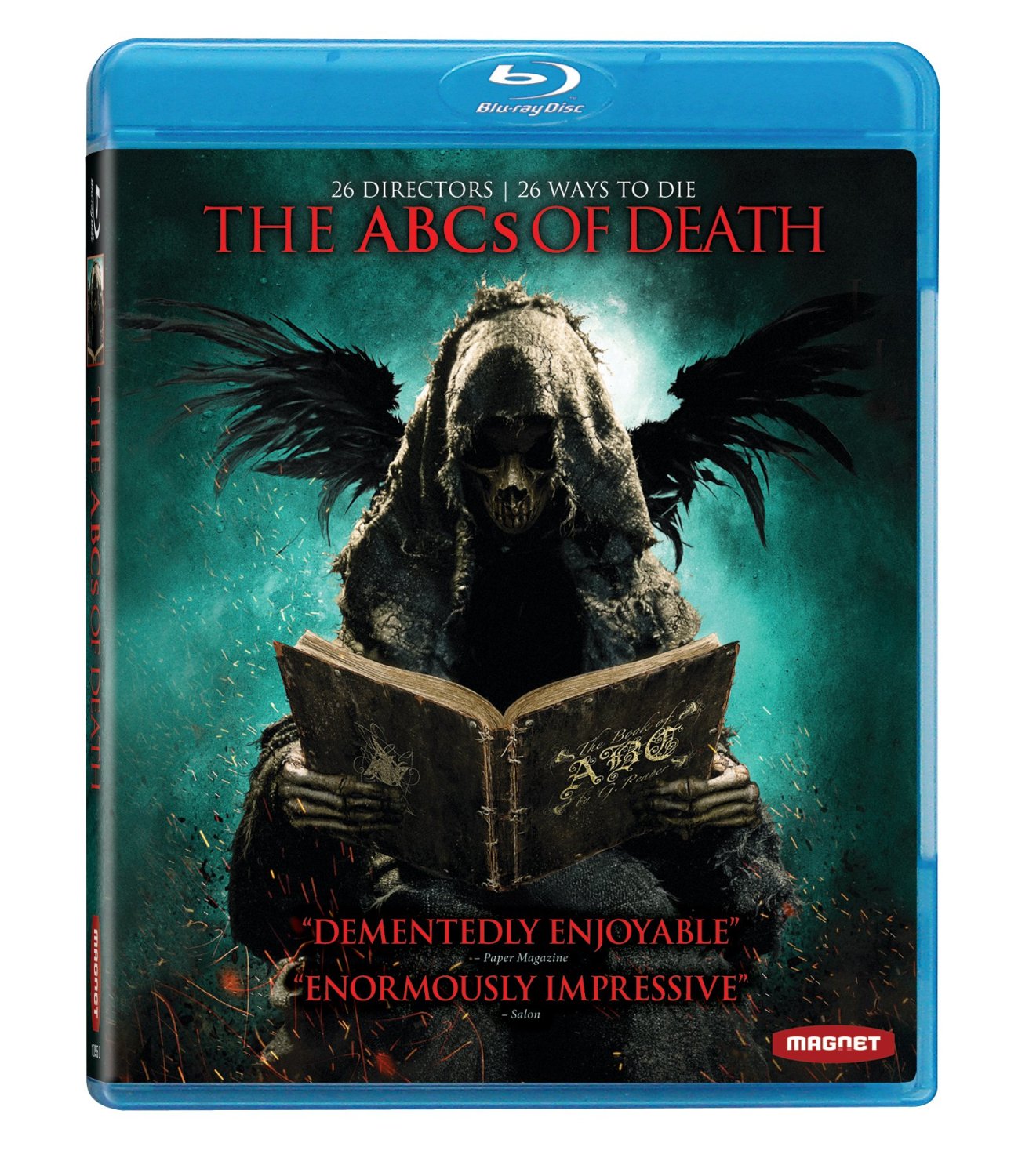
“Each director was given a letter of the alphabet and asked to choose a word. They then created a short tale of death that related to their chosen word. They had complete artistic freedom regarding the content of their segments.”

It’s easy to see why 26 talented filmmakers from across the world leapt at the chance to show audiences 26 different ways to die. Obviously, you can’t exactly be squeamish when you sit down to watch an anthology called The ABCs of Death. But I still wish fewer directors had interpreted “complete artistic freedom” as “make the most ridiculous and disgusting movie you possibly can.” 

When someone tries to break in and take something from the building you’re in, what do you do? Well, according to “The Official Good Guy Handbook”, you must immediately lock down the building, retreat to a secure room, and try to get help from the outside. Of course, you must do all this while repelling the bad guys, ignoring their threats and bribes, and (of course) watching out for the double cross.

This is the problem CIA agent Emerson Kent (John Cusack, 2012) faces in The Numbers Station. After a botched black-ops mission, Kent is given one last chance. His new assignment: guarding Katherine (Malin Akerman, Watchmen), a code operator at a classified “numbers station” in England. It’s her job to receive coded messages and broadcast them to agents in the field. While bored with his assignment, Kent is always on the lookout for danger. This hyper-awareness is what saves their lives when they are attacked as they show up for their shift one day. Barely making it inside, they find the other team has been killed and a heavily-armed squad is waiting outside to take them out as well. Together, Emerson and Katherine must figure out what their enemies want and how to get out alive.

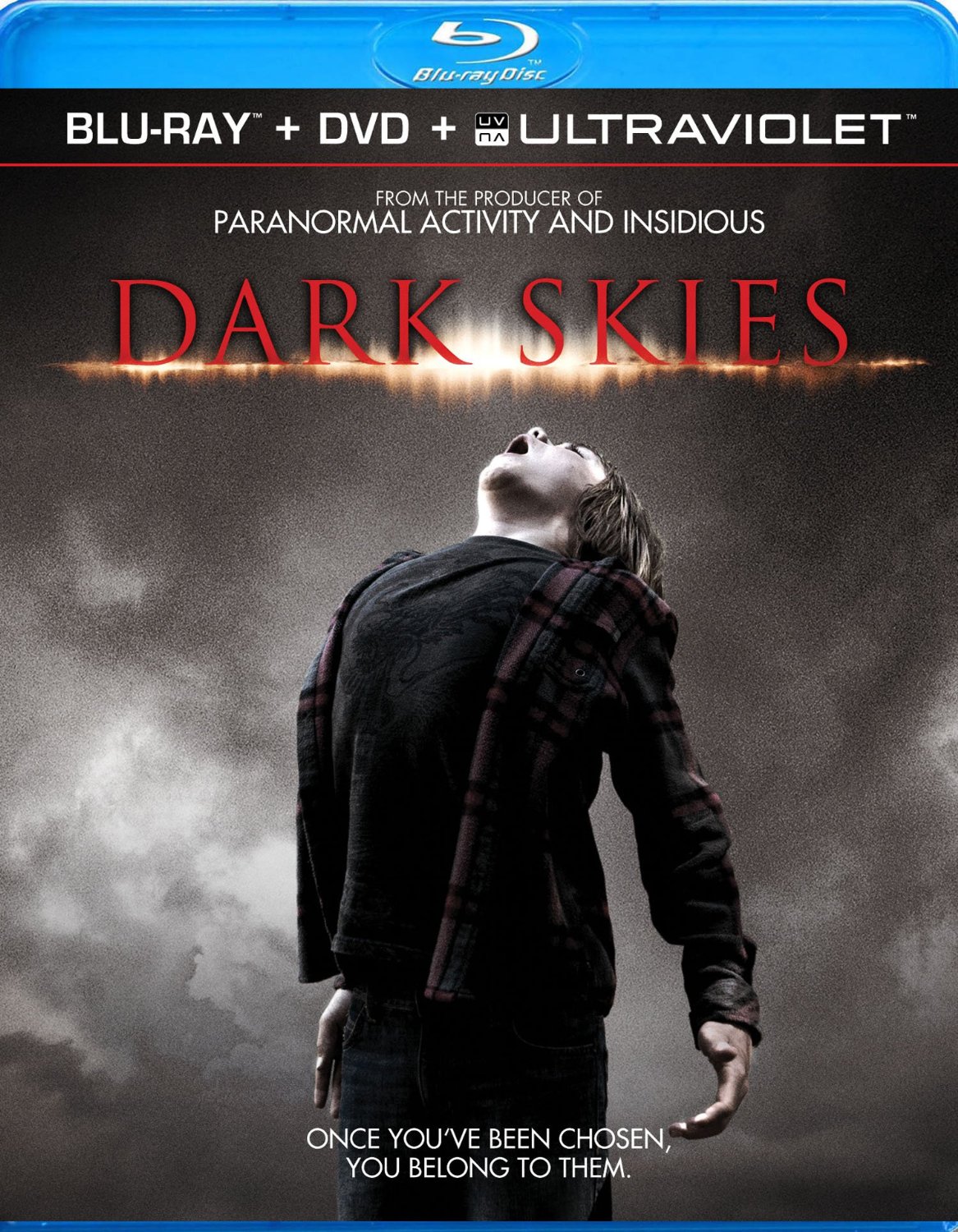
“Two possibilities exist: either we are alone in the universe or we are not. Both are equally terrifying.”

Just in case the film’s title wasn’t a big enough clue, this opening quote from famed science fiction writer Arthur C. Clarke makes it abundantly clear the domestic disturbance in Dark Skies won’t be caused by grumpy ghosts or a dastardly demon. This effective little sci-fi/horror movie follows the low-budget template established by recent hits like Insidious, Sinister and the Paranormal Activity franchise, but looks to the not-so-friendly skies for its source of terror.

Well, it is that time of the year when we must see what the blood suckers, shape shifters, wolves and the faeries are up to. No, I am not talking about the State of the Union address; I’m talking about the latest season of True Blood. Season Five to be exact. In these twelve episodes, we again travel to the land of Bon Temps, Louisiana and see exactly what delicious trouble and dastardly deeds our characters can get themselves tied up in.

We join Bill Compton (played by Stephen Moyer) and Eric Northman (played by Alexander Skarsgard) cleaning up their little mess (actually Eric is doing the majority of the cleaning while Bill talks on the phone) after they gave Nan Flanagan the true death at the end of Season Four. However, once they leave the mansion, they are immediately captured by Authority security.

The problem with casting Ben Kingsley in this film’s title role is that the Oscar-winning actor is anything but common. He’s been a commanding screen presence for four solid decades, starting with his award-winning work in 1982’s Gandhi and continuing through his surprising performance in Iron Man 3. When Kingsley first appears in A Common Man, he immediately stands out in the crowded streets of Colombo, Sri Lanka thanks to a sharp goatee and his signature shorn dome. Turns out Kingsley’s inherent star power is the least of this movie’s problems.

A Common Man is a remake of the 2008 Bollywood hit A Wednesday. The film opens with news reports of recent terrorist attacks in Sri Lanka followed by an effective, nearly dialogue-free sequence of a man (Kingsley) leaving packages at different points — a bus, a shopping mall trash can, etc. — throughout the city of Colombo. The man, who calls himself Vincent, makes his way to his makeshift headquarters on a rooftop and calls overmatched Deputy Inspector General of Police Morris Da Silva (Ben Cross) to inform him he has planted five bombs across the city. He demands the release of four deadly international terrorists and threatens to detonate the bombs if his conditions aren’t met.

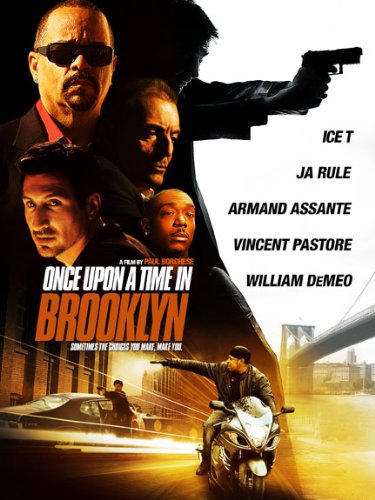
“We are your Family. We come before anything, even your own family.”

Everything about Once Upon a Time in Brooklyn — the setting, the storyline, the cast, the title — brings to mind vastly superior crime dramas. To be fair, it’s incredibly difficult to say something in this genre that hasn’t already been said brilliantly by the likes of Francis Ford Coppola, Martin Scorsese or David Chase. So instead of trying to carve out its own turf, this low-budget effort seems to almost revel in how derivative it is. At the very least, the people who made this movie seem to love gangster flicks as much as we do.

In 1363, the Black Plague had done its damage, leaving most infected areas uninhabitable. Escape — known in Norway as Flukt — is the story of a family that sets out into the countryside to get away from the plague and hopefully find a new place to rebuild their lives. But just as I’m thinking this is going to be a movie about sticking together and fighting to survive the elements, it shifts gears to something far darker but not all that original.

The small family is attacked and most are brutally slain; only Signe (Isabel Christine Andeasen), the daughter, manages to survive. Instead of simply killing the girl, the attackers decide to keep her around. When this decision was made by the attackers my mind instantly went to thinking they were going to torture and rape the girl. It seems extreme, but after seeing these attackers shoot down a young boy with a crossbow, well it should be safe to assume these killers are ruthless. Insert twist; back at their camp they have a little girl named Frigg. It seems all they want is for Frigg to have a sister.

We all know what it feels like to nod off in the middle of a film. It starts with micro-naps that last a few seconds. They’re so short, we don’t even realize we’ve fallen asleep. But when we wake up, we feel totally lost because we’ve missed a line of dialogue or scene transition. I mention this for two reasons: 1.) the confused protagonist of Tomorrow You’re Gone floats through his life in a dream-like state and 2.) watching this incomprehensible mess of a movie constantly made me feel like I’d fallen asleep and missed something. That’s a problem because I was wide awake.

The plot of Tomorrow You’re Gone — based on the novel “Boot Tracks” by Matthew F. Jones, who also wrote the screenplay — is straightforward enough. We meet Charlie Rankin (Stephen Dorff) just as he’s about to be released from prison. He receives an encoded letter from Billy “The Buddha” Pettigrew (Willem Dafoe), Charlie’s former jail-house mentor. The hidden message orders Charlie to carry out a hit, and Charlie agrees because he feels indebted to The Buddha. On his way to do the job, Charlie meets Florence (Michelle Monaghan) a flirty oddball/former porn star, and the two form an uneasy bond. After the hit doesn’t go as planned, Charlie has to dodge an unhappy Buddha. (He also spends an inordinate amount of time dodging Florence’s sexual advances because...actually, it’s not really clear why he keeps rejecting this woman who is throwing herself at him. It flies in the face of everything we know about movie ex-cons.)

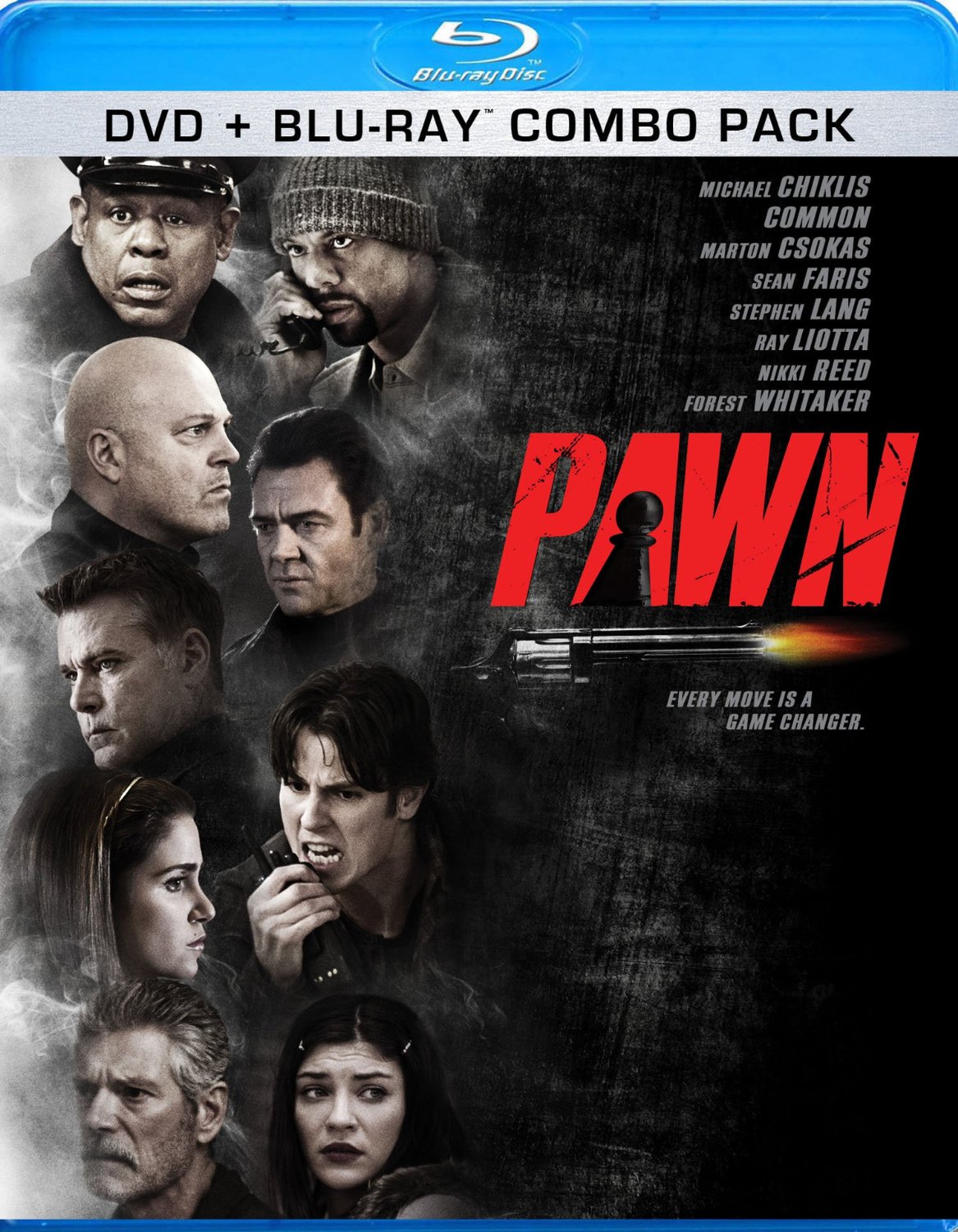
“Whose move is it?”

To be honest, I’m not much of a chess player. I know how all the pieces move and I enjoy the mental challenge, but I never really committed to becoming proficient at the game. (Now, if we’re talking Connect Four, you don’t want to run into me in a dark alley.) Pawn establishes its intriguing chess motif early on, before almost completely abandoning it in favor of becoming more of a generically twisty thriller.

“When I get a crush, it’s really bad.”

Everyone has experienced it before: you meet that special someone, and a crush sidelines you. They fill your head when you’re not with them. When they’re near, you act like an idiot. The downside comes when your crush is not reciprocated; or worse, they don’t even know you exist. Most people can move past the disappointment and heartbreak to get over a crush. But for an unlucky few, their crush can turn into a dangerous obsession.