Studio

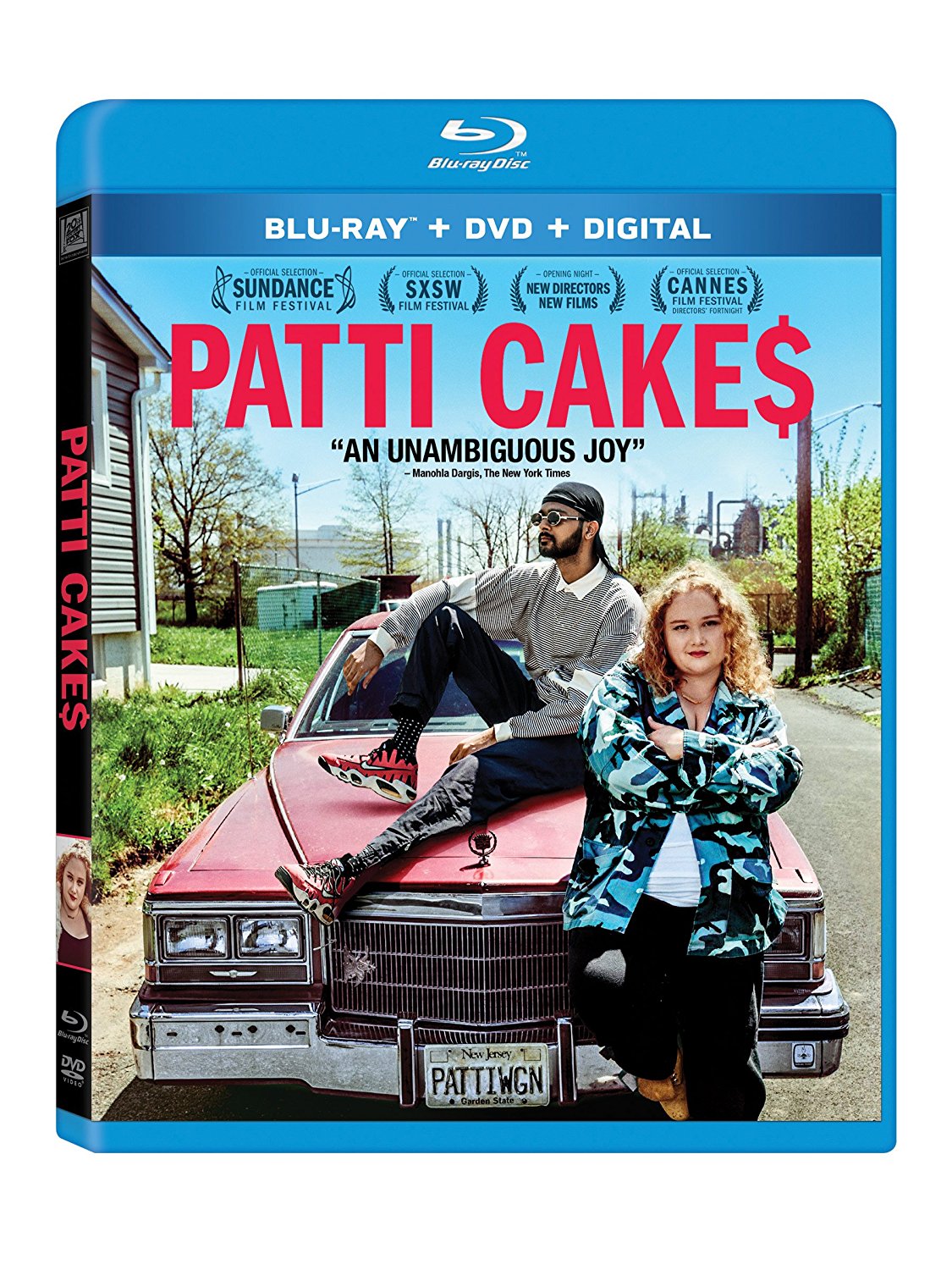
“My verses full of curses cuz I'm stuck in dirty Jersey.”

Between 8 Mile and Hustle & Flow, we’ve seen —and heard — our share of hip-hop underdogs. But we’ve never seen one quite like Killa P, aka Patricia Dombrowski…aka “Piggy Azalea” to the haters who want to take shots at her appearance. Either way, she is the white, overweight, wannabe female rapper at the center of Patti Cake$, a Jersey-set indie that became a sensation at the Sundance Film Festival earlier this year.

Hans Zimmer has composed the music for some of the most iconic films of the last 20 years. That list includes Gladiator, The Dark Knight Trilogy, Crimson Tide, Pirates Of The Caribbean, Dunkirk, and even some of The Lion King. He's the go-to composer for directors like Ridley Scott and Christopher Nolan. His music is on par with household names like John Williams. I own a few scores that I've felt compelled enough to pick up over the years, and one of my favorites has been Gladiator for some time. When I heard that Eagle Rock Entertainment was going to release a Blu-ray containing a tour stop of this incredible music live, I was quick to sign up to review. Still, I had little idea what to expect. A veteran of many rock concerts since the 1970's, I've never really watched or attended a concert dedicated to film scores before. Would it be more like going to the symphony to hear the likes of Bach or Mozart, or would it be something more akin to a progressive rock band with orchestral elements like ELO? The answer came down somewhere in between, and it turned out to be the most unique concert experience I've had the pleasure to review.

The concert begins more like a rock concert. Zimmer comes out, not to direct, but to play along with the other musicians. He ends up on piano, guitar, and a few other instruments before the show concludes. In the start the music is rather fast and furious. The stage is lined with an eclectic array of instruments played by a decidedly international collection of musicians. There are a couple of violins and an electric cello. But there are also several drum sets, electric bass, and a couple of electric guitars to round out the sound. And for the first few tracks taken from Driving Miss Daisy, Sherlock Holmes and Madagascar, the concert resembles a Jeff Lynne-assembled rock concert more than anything else. The band goes from one piece to another with nary a pause or introduction. In fact many tracks throughout the concert run together, and you might want to keep the track list (provided on a nice insert) handy to follow along. After this first high-energy performance, Zimmer finally stops to chat a moment with the audience. That's when the back curtain is lifted, and we discover that there is a full orchestra tucked away behind the "band" along with an extensive choir. That's when the concert moves into the more classical feel for such films as Thin Red Line, Angels And Demons, and, of course, selections from Gladiator. But there remains a bit of an edge to the music, provided by that front line of spotlighted musicians.

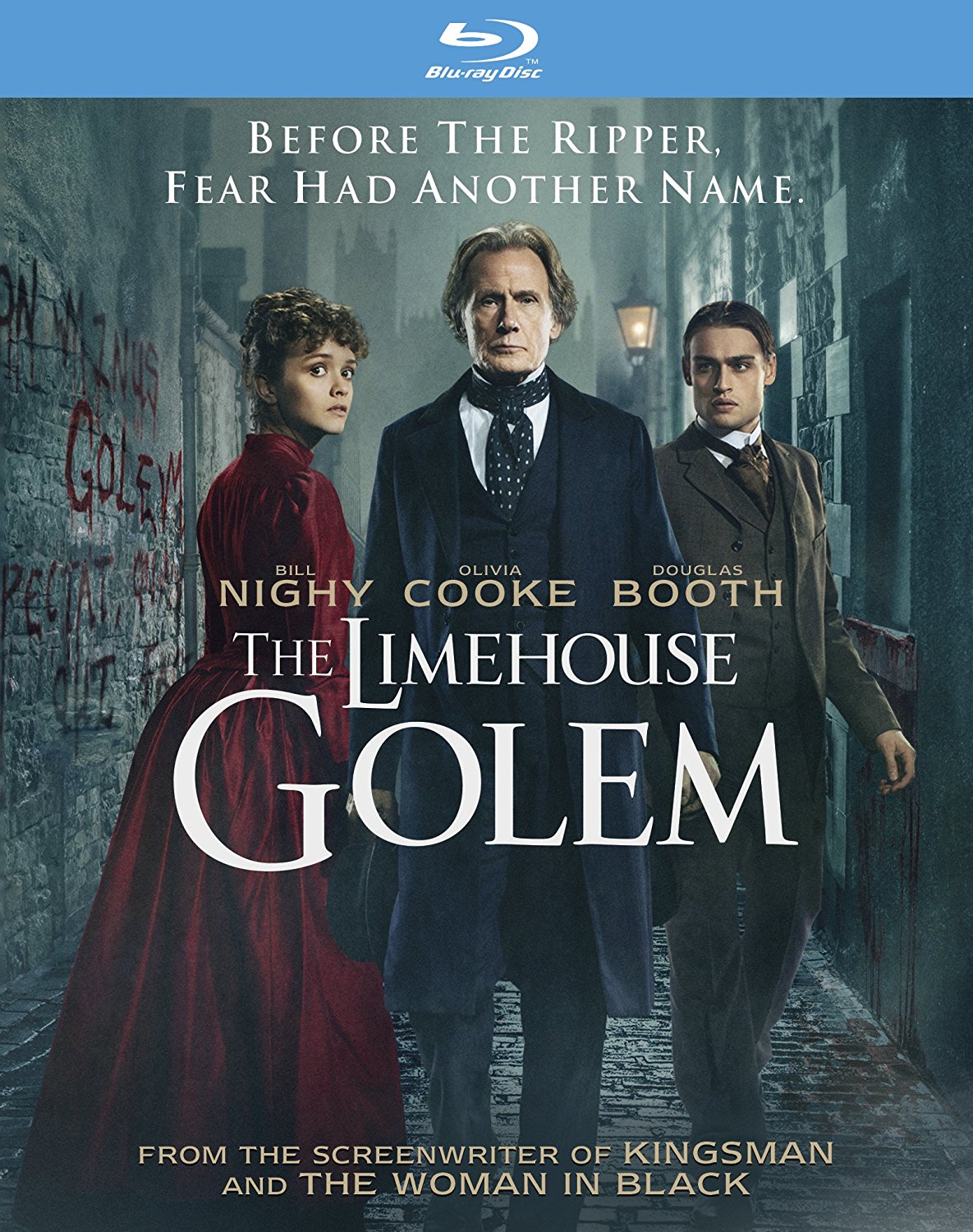
When it comes to Victorian era serial killers, Jack the Ripper is pretty much a household name. Whether you know much about the terror he caused in White Chapel, all these years later you still know the name and what he did. With The Limehouse Golem, the filmmakers create a more sinister serial killer and deliver a Hammer-esque murder mystery.  I’m all for a dark murder mystery, and when a film is channeling other successful films like Seven and From Hell, you’d imagine that you’d be witnessing a terrifying gory spectacle. The result, however, left me frustrated, as the film seems to pull from other films but never quite presents an engaging story to go along with the quirky mix of characters.


When we meet Lizzie (Olivia Cooke), she is being accused of murdering her husband. As the film progresses, we get to see how her story unfolds and her aspirations to be a theatrical star.  Her tale intertwines with the rise of a brutal serial killer who has been terrifying the city of London who has been dubbed The Golem. To attempt to squash rising fears and solve the murders, Inspector Kildare (Bill Nighy) is assigned the case. Kildare is paired with a young detective George Flood (Daniel Mays), who attempts to update Kildare with all the evidence of the case. It seems Flood and his fellow officers were inept in gathering evidence, as Kildare seems to uncover some fairly obvious clues of his own. What ties Lizzie to Kildare is the possibility that she is being charged with murdering Kildare’s prime suspect. All the evidence seems to point to Lizzie’s dead husband, so he goes to her to hear her story. Of course things are more complicated than they originally seem.

"I'm about to commit a moving violation."

When I go to a Pixar film, I always find myself in a situation where I'm predisposed to love the movie. There have been so many greats like Toy Story and Monsters Inc and so few horrible examples like Ratatouille. So I never really expect a Pixar film to be bad, and Cars 3 certainly wasn't bad. There are more than a few things to love about the latest collaboration between Disney and their Pixar division. The animation company also continues to push the boundaries of digital animation technology. You can expect some very nice emotional moments. It's also nice to revisit old friends from previous movies. Cars 3 has all of that, but it still falls a bit short when you compare it to the impressive library of movies Pixar has brought to the Magic Kingdom table. It will certainly be the Cars film that adults will be able to relate to the most. The best that could be said for the effort is that it neatly caps that particular franchise in the stable and will allow the talent led by John Lassiter to turn their attentions elsewhere. I'm really looking forward to The Incredibles sequel. I'm even looking forward to Toy Story 4. But was anyone really anticipating Cars 3?

Have you ever questioned the nature of your reality.”

As things in our world become exponentially more chaotic and inexplicable by the day, the theory that we're all living in a computer simulation becomes a little harder to completely dismiss. The idea that our reality is an illusion dates back to the 17th century but most recently gained traction thanks to a 2003 paper published by Oxford philosopher Nick Bostrom. It's also been a popular theme in classic sci-fi works like Blade Runner, Total Recall, and The Matrix. To that list, we can now add HBO's Westworld, a slick and star-studded sci-fi/Western mash-up that features the requisite shoot-em-ups and pay cable sexcapades, but is actually most interested in exploring the nature of humanity.

This is quite a step up for the History Channel folks. They've certainly produced a great number of historical dramatizations and documentaries, but nothing they've ever done before compares with this series. We used to review a ton of their stuff here for years, so you know I've liked a lot of the things they've done. But Vikings puts them in a totally new stratosphere. This is historical drama that you've only seen before in the likes of Rome or The Tudors. Of course, there's a very good reason for that. Michael Hirst created the series and is the creative force behind it. He served the same positions on The Tudors. That puts expectations here very high, and the show has met or exceeded them all.
The final moments of the first half of Season 4 takes a many-years jump forward in time. Ragnor (Fimmel) has abdicated his power and has been missing since the failed siege of Paris. Bjorn (Ludwig) has pretty much taken over as leader of the group. His younger sons have now grown into men and of course are now played by different actors. The most significant of these new castings is Alex Hogh as the grown Iver. The actor bears a rather striking resemblance to Travis Fimmel, and Hogh also does a remarkable job of pulling many of Fimmel's nuances into his character. He may not be able to walk, but it's clear that it is Iver who has inhiereted his father's strengths and personality. This is brought out even more when Ragnor suddenly returns. He has plans to return to England and avenge the slaughtered settlement he left there years ago. Bjorn wishes to follow his own path and explore the fabled Mediterranean Sea. Iver is the lone son who wishes to join his absent father. It becomes the end of Ragnor's story and really the beginning of Iver's to some extent.

The series does a pretty good job of bringing the culture and lifestyle of the Viking people to life for us. There is a great effort toward authenticity. That isn't to say that the show claims to be historically accurate. The Vikings were not a literate people. They did not keep a written record of their lives. What is known has been pieced together through artifacts and stories that were handed down orally from generation to generation. It's not even possible to depict the culture with any precision or accuracy. When you watch a film or a series like this, you need to be mindful of the difference between authenticity and accuracy. They are not the same things and shouldn't be confused here. Authenticity means that there's an attempt to portray the world in a faithful way. We're talking costumes, weapons, beliefs, lifestyles and environment. That's not to say that the film is attempting to tell a "true" story. Only one that feels true. Accuracy is intended to educate. This kind of a show is intended to entertain, and the authentic presentation is there to immerse us realistically in the world in order for us to care about the characters and events. The Vikings does this with a sweeping eye toward detail. The world comes alive for us, and we can be swept up in the events.

One thing that you can probably surmise about me fairly quickly is that I am a product of the 80's. I still wear Converse shoes when I'm not working. I watch a regular dose of Transformers (first generation, 1984) and my favorite movie is Escape from New York (1981). My wife was even born in the eighties. Probably not the same thing, huh? Anyway, I usually jump at the chance to review an 80's movie and today is no different. The movie is called Into the Night with Jeff Goldblum and Michelle Pfeiffer from 1985. Never heard of it? Surprisingly, me neither. Let's take a look.

A plane touches down on a dark night at LAX, the Los Angeles Airport. A little bluesy up-tempo number by B.B. King fills the speakers. We take a look at a Shell gas station and the local doughnut shop. It's just another night, cars are being towed and Ed Okin (played by Jeff Goldblum) is wide awake laying in bed.

“Here’s how it is: the Earth got used up, so we moved out and terraformed a whole new galaxy of Earths, some rich and flush with the new technologies…some not so much. The Central Planets, thems formed the Alliance…waged war to bring everyone under their rule. A few idiots tried to fight it, among them myself.”

Sound familiar? A crew of scrappy underdogs skirting the edge of the galaxy to avoid an oppressive interplanetary alliance. Exactly 40 years ago, Star Wars used that formula to capture moviegoers’ imaginations, and it is currently being replicated by the uber-popular Guardians of the Galaxy series. But in between those two behemoths there was a little show called Firefly.

Ever since Birdman was released, it seems many filmmakers have been attempting to pull off the continuous take and outdo all the others.  It was impressive when we all saw it the first time, but since then everything just seems like a bad knockoff.  The newest film to follow this trend is Bushwick.  While the camera work in the film does allow for an immersive experience, honestly it felt like I was in a first-person shooter video game, which was cool, but it seemed like the camera work was a distraction from the story.  This is a frustrating film. On the technical side there is a lot to appreciate, but the moment you start looking at the story, the film seems to simply fall apart.

The film opens up with Lucy (Brittany Snow) coming home from college to visit her family.  What she comes home to is a city at war.  Immediately my question is this: in a time of people being so connected through their cell phones and various social media outlets, how is it Lucy seems to be unaware of what is going on?  We’re supposed to believe this battle just broke out, but so many of the people battling on the streets seem to be all too organized for this to have just occurred.  Why are the streets not packed with cars full of people trying to leave the city? For a while all we see are people shooting at anyone and everyone as Lucy does her best to avoid gunfire and try to reach her grandmother’s house.

"All of human history has led to this moment. The irony is we created you. And nature has been punishing us ever since. This is our last stand. And if we lose... it will be a Planet of Apes."

I was always a fan of the original Planet Of The Apes series of films. While they often flirted with a camp style, I was impressed with John Chambers' makeup effects and the performances of Roddy McDowall as both Cornelius and Caesar. Then came the television show, and I was just as enchanted, and that was helped along by McDowall's appearance as a third ape, Galen. The show didn't last a season, and before long the Apes franchise was left in some kind of limbo. Then along came Tim Burton, and I was excited to see what he could do with the material. Could this be the beginning of a new series of films? No, it was horrible, and the franchise suffered another lingering death. I had now given up hope that the Apes would ever return. Then came Rise Of The Planet Of The Apes, and I was suddenly enchanted once again. Little did I know that combined with Dawn Of The Planet Of The Apes and now War For The Planet Of The Apes, science fiction's greatest trilogy would emerge. Where will they go from here?