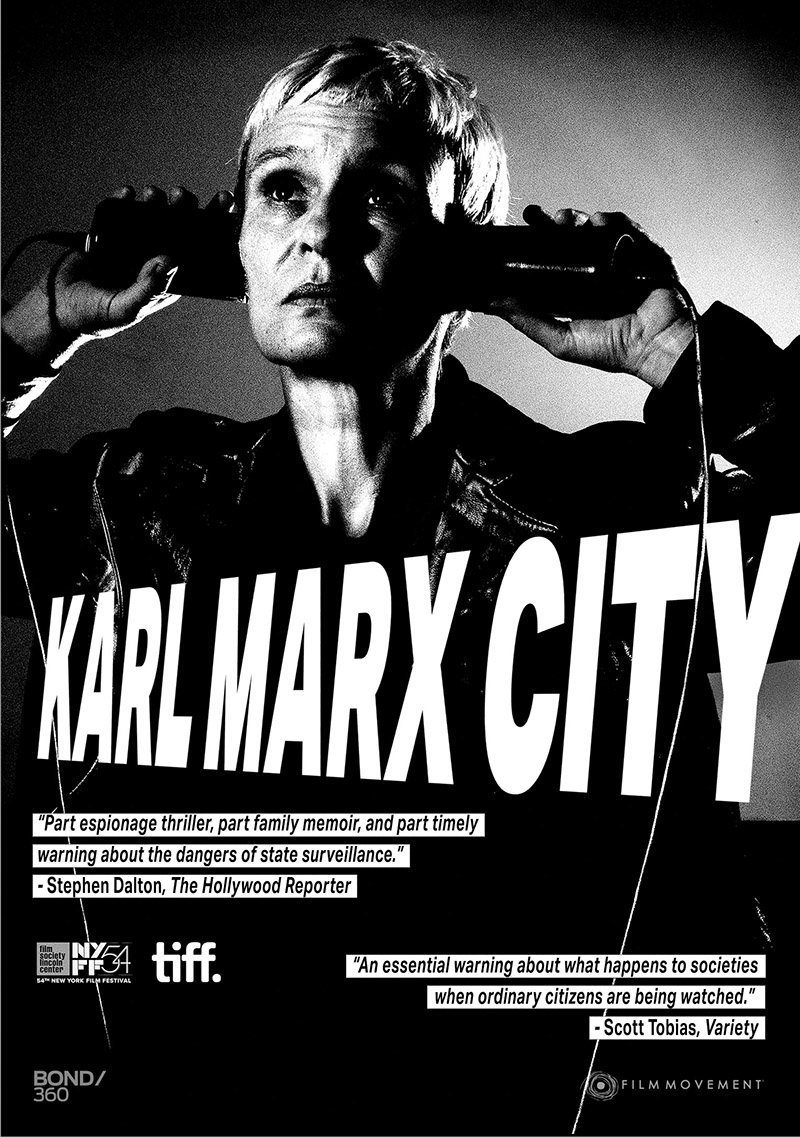
Afterimage is the final film of Andrzej Wajda, prior to his death in late 2016. Though I am not familiar with the cinematic stylings of Wajda, I researched enough to know that he typically helms projects that are historical and biographical, and cover very controversial topics taking place in Poland. Specifically, the ways in which occupation affected Poland during WWII. If this film has done anything for me, it has given me a curiosity to seek out more films from Wajda’s oeuvre. Afterimage is very methodic in its narrative and its set designs. Which is necessary given the film’s source material.

The film studies the twilight years of internationally renowned abstract painter, Wladyslaw Strzeminski (Boguslaw Linda), as Stalin’s socialistic ideologies permeate Poland, leaking into the world of fine arts. Not only is Strzeminski a gifted visionary, he teaches Art History and Analysis at the Academy of Fine Arts in Lodz, Poland. His charisma and teaching style causes his students to develop into an almost cult-like group of followers. However, these followers are interested in keeping the tradition of abstract art alive through the difficult times of Stalin’s call for socially uniform realism among all of the fine arts, including painting. As the film progresses, Strzeminski faces many bouts of artistic discrimination and he continuously rebels, no matter the cost.

I think I see your problem. You have this list. It’s a list of people you need/want to buy a Christmas gift for. The trouble is that they’re into home theatre, and you don’t know Star Trek from Star Wars. You couldn’t tell a Wolf Man from a Wolverine. And you always thought that Paranormal Activity was something too kinky to talk about. Fortunately, Upcomingdiscs has come to the rescue every Christmas with our Gift Guide Spotlights. These gift guides ARE NOT paid advertisements. We take no money to publish them. The kinds of things we recommend here are things I would be delighted to find under the tree.

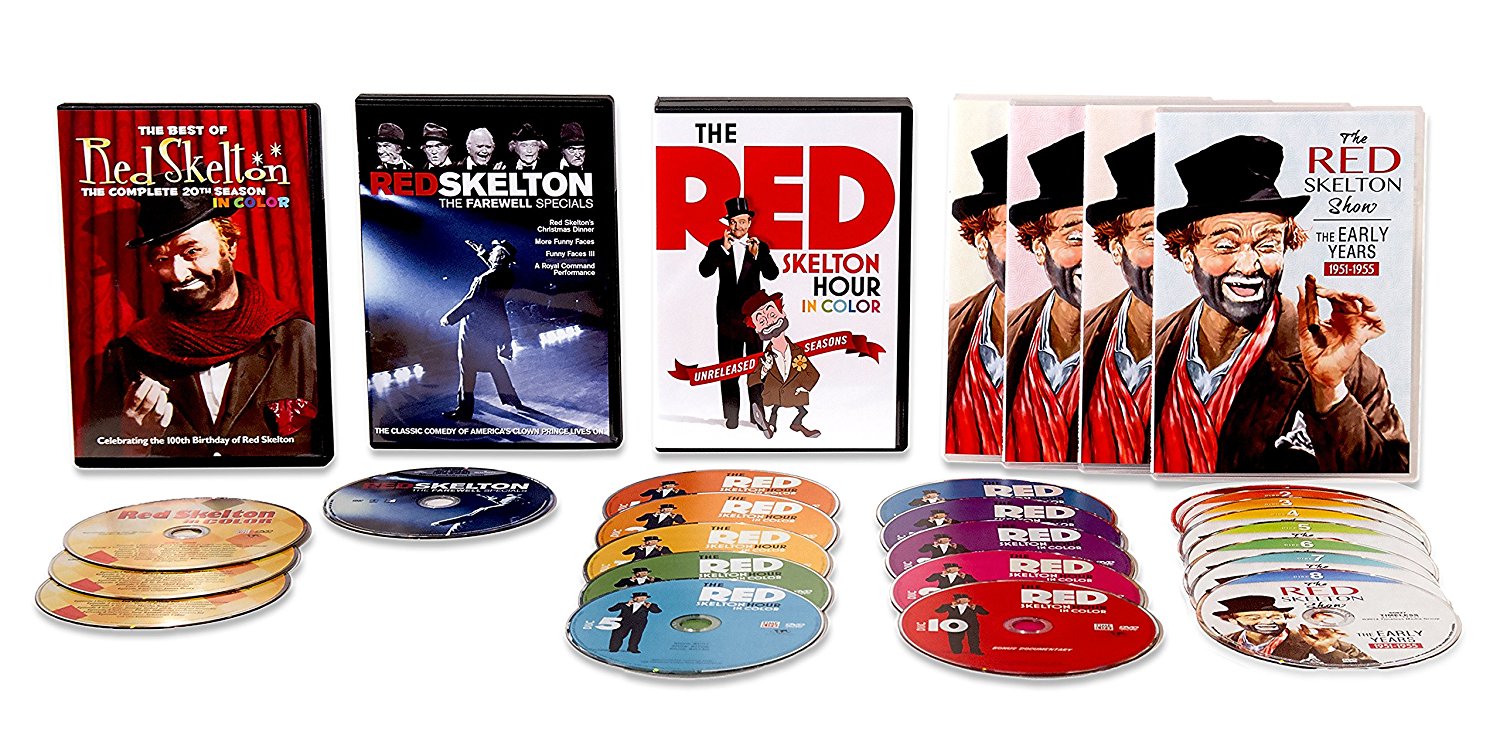
We turn our first spotlight on the folks at Time-Life. They put the wow into gift sets and have assembled some mighty big collection sets particularly for that person on your list who loves all things vintage. Here's what they have this Christmas:

A great assembling of actors, excellent control by director Martin McDonagh and a vicious script make Three Billboards Outside Ebbing, Missouri a winner. The crime drama, laced with cynical comedy, puts the film up there with the movie Fargo and even TV’s Fargo.  While I may like the film, it does have some racist tones that may offend. That said, McDonagh has a penchant for turning the tables on the offensive comments and actions, and here he does it big time.

In the small town of Ebbing, Missouri, Mildred Hayes (Frances McDormand) has a bright idea to light a fire under Sheriff William Willoughby’s (Woody Harrelson) inability to find the murderer of her daughter Angela (Kathryn Newton). On a lonely stretch about a mile from her house, she rents three billboards that contain a sharp accusation.

Sometimes I think I'm cursed.”

Up until recently, Pixar Animation Studios had a pretty spotless reputation. (At least when it came to the quality of their films.) But while the studio's last three efforts (Cars 3, Finding Dory, The Good Dinosaur) have been financially successful, Disney's own in-house animation studio (Moana, Zootopia, Big Hero 6) has been out Pixar-ing Pixar in terms of delivering creative, crowd-pleasing blockbusters for all ages. (I didn't even mention a little movie called Frozen.) That's why I'm pleased to report that Coco — Pixar's moving, colorful and exhilarating take on Mexico's Day of the Dead holiday — is a thrilling return to form.

It is very likely that no story has been retold in films and television more than A Christmas Carol. It has been made as animated specials and computer-generated features. There have been comedy versions. Most television shows, if they're around long enough, get around to spoofing at least the themes. If by now you’re wondering what the dickens I'm going on about, well... you're correct. It's all about classic author Charles Dickens, who literally invented many of the modern trappings of our Christmas celebrations with that one little holiday ghost story. You know the story. But do you know how it came to be? Dickens' writing process is legend to those of us who know his work intimately. Now everyone can get the inside scoop with the charming The Man Who Invented Christmas.

Dickens (Stevens) has just come off of three relatively big flops in his last three books. He's spending money faster than it's coming in, and he has a young wife (Clark) and children depending upon his efforts. There's also desperation going on for him that he's reluctant to let anyone else see. He's haunted by the memories of his childhood. His father (Pryce) was sent to debtor's prison, and he was forced to work as a young lad in a blackening factory under harsh conditions and cruel people. It drives him to success, but it also holds him back with an almost paralytic fear that he is still that poor lad and he and his family are destined to the same harsh realities. But after three disappointing books, his publishers are a little reluctant to put much out for whatever comes next. They are even more put off that he intends to champion the poor and needy. So he decides to write a Christmas book and publish it himself. There are huge hurdles to conquer. He has only three months until Christmas, and the cost of publication could put him in the dire finances he's running from. Still he sets out to make this book nothing but the best. He hires an artist of renown for the illustrations and puts out for gold leaf and the finest materials. Now all he needs is the story.

Last Flag Flying was adapted from a book by Darryl Ponicscan which is a sequel to his The Last Detail. That book was adapted for the screen in 1973 and starred Jack Nicholson, Otis Young, and Randy Quaid and was directed by Hal Ashby for Columbia Pictures. In The Last Detail we find two characters taking Randy Quaid's character to the Navy prison for stealing $40 from the CO's wife's favorite charity drive. Along the way they all bonded a bit, and the film played out as a statement, of sorts, to the Vietnam era we were just finally about to put behind us in a year. Last Flag Flying is based on the written sequel but is not exactly a true sequel to the earlier film. Once again Darryl Ponicscan has adapted the screenplay from his own novel. But there were some complicated rights issues to deal with here. Columbia owned the rights to the characters for film purposes but not the sequel novel. So the characters’ names are changed, as are the circumstances that played out in The Last Detail. The result is a film that's as much a remake or reboot of the original as it is a quasi-sequel.

It's 2003 and 30 years after the "events" of the first film. Bryan Cranston plays Sam Nealon, who is the representative of the Nicholson character. Sam now owns a bar that's not doing all that well. On a particularly slow night a man walks in and engages Sam in some small talk before he finally asks Sam if you recognizes him. It takes a minute, but he finally greets Larry "Doc" Shepherd (Carell), the young sailor he once had to escort to prison. Doc settled in the area of the prison and eventually had a family. His son followed in his footsteps and joined the service only to be killed in action. Doc asks Sam to accompany him to retrieve the third member of the original gang. They find Reverend Richard Mueller, played by Laurence Fishburne, heading a congregation of his own. He's a long way from the whoring and cussing man they knew 30 years ago. Now Doc wants them to travel with him to pick up his son's remains and attend the Arlington Cemetery funeral. Mueller is most reluctant to go but is shamed by his wife into making the trip.

"I wish I could live through something."

Actress Greta Gerwig finds herself in the director's seat for her first feature film, Lady Bird. No, it's not a film about the First Lady during the Johnson administration. It's an easy mistake to make. It's not one of the most common monikers out there, and when I first heard of the project, that's where my mind went. This is actually a warm coming-of-age story that feels very much like an autobiographic effort by Gerwig. There are certainly some common elements in the story and Gerwig's own past, even if it's just the Sacramento, California locations that give the film a nice anchor and rather immersive environment for the story. The city is obviously a big part of the narrative, and I suspect that there is far more in common with Lady Bird, the character and Gerwig than merely a setting. If not, she's done a wonderful job of making the film extremely personal and intimate for the audience. Either way, you're in for a bit of a treat with Lady Bird. 

Touching and inspirational, the movie Wonder opens the eyes of its audience to the medical anomaly of Treacher Collins Syndrome.  It’s a gene glitch that causes a facial difference that happens in one of 50,000 people*.  Based on a book by R. J. Palacio, the film handles the material in the novel in such a way that one cannot help but fall in love with a boy with TCS named Auggie Pullman.  The movie becomes an inspiration to all children and a force behind anti-bullying.

Auggie (Jacob Tremblay) was born with a facial deformity and has had limited mainstream contact of everyday outside life.  In fact, upon going out for activities he uses a toy astronaut helmet complete with a dark solar visor to hide his face. Since it has been difficult for him to take comments regarding his looks, Auggie has been homeschooled all of his life up until now.  He has finally reached fifth grade level, “middle school”, and his mother, Isabel (Julia Roberts)  has decided that he attend a public school.

"We have to be ready. You, me, the others... there's an attack coming from far away."

The DC and Marvel rivalry can be quite fierce at times. I never completely understood the polarized fan base, however. Some of us are just fans of the genre and will welcome a good comic book movie from either and preferably both studios. When it comes to a cinematic universe, however DC has had some real issues with trying to bring together a combined hero world. Most of the films leading up to Justice League have been dark and filled with brooding heroes. With Batman that kind of thing is appropriate and works. With Superman it has been a severe letdown. When the two came together in Batman vs. Superman, the disappointment started to lead to a resigned conviction that DC was doomed to repeat the same mistakes over and over again. Then came Wonder Woman, and it was no surprise that she was the single standout of the caped-hero duel. Wonder Woman, both the character and the film, appear to have changed something in the DC landscape, and she is, once again, the single most hopeful character in Justice League. And while Justice League isn't quite the movie that Wonder Woman was, there are signs that things are changing. Justice League is not a great movie. But it's not a bad film, either. Superman actually smiles and has begun to return to the "golly" innocent of his best comic years. This film may not be everything we fans of both brands were hoping for, but it's actually a good start.

“We did it again!”

I can still remember sitting in a movie theater in Puerto Rico watching Home Alone 2: Lost in New York for the very first time. (With Spanish subtitles, of course.) I was basically the same age as Kevin McCallister — the precocious, pint-sized pre-teen played by Macaulay Culkin — and I’d pretty much worn out my VHS copy of Home Alone by the time the second movie was released. So it’s wild to think that this film is now old enough to rent a car! Fox has released a 25th anniversary Blu-ray of the blockbuster comedy sequel, and it’s a fun, fascinating re-watch for a variety of reasons.