Posted in: No Huddle Reviews by Dan Holland on February 8th, 2016
Any person who has attended Sunday school for a length of time is most likely familiar with the story of Noah’s Ark. This tale was recently brought to the mainstream with Darren Aronofsky’s Noah, which took quite a few creative liberties in retelling the story (including strange rock monsters). Given my recollection of the actual Bible story, I want to say that there really isn’t enough content to create a feature film. God warns Noah that there will be a catastrophic flood and asks him to build an ark. Noah builds the ark and suffers ridicule from the people he tries to save, and in the end, the flood takes the world and Noah and the few people who believed him are spared.
Kenneth Glennaan’s made-for-TV production of Noah’s Ark maintains the basic structure I described above, but extends the events that occur in the rising action of the story tenfold. Noah (David Threlfall) lives with his wife Emmie (Joanne Whalley) and their sons. A good majority of the film expands the drama within the family and the resistance of the family to the building of the ark. There is also an additional story arch involving Noah’s youngest son, Kenan (Nico Mirallegro), who becomes obsessed with pursuing his own selfish desires in the city. Only after an hour and twenty minutes into the film do we get to see the flood begin, which really makes the film that much better.
Posted in: No Huddle Reviews by Dan Holland on February 3rd, 2016
I’ve never been too big a fan of romantic comedies. They are often too quirky for their own good, and they follow a typically cliché story arch. I do not even enjoy rom-coms from famed comedic directors such as David Wain. Although certain directors do attempt to break the mold, it’s as if the genre is nothing more than a memory foam mattress: you will always fall into place, because it is the most comfortable. That being said, when watching a made-for-TV rom-com such as For Better or for Worse, one can assume there will not be much breaking of the genre conventions.
For Better or for Worse tells the story of esteemed wedding planner Wendy (Lisa Whelchel), whose life is turned upside down when her son returns home after quitting law school, and a divorce attorney (Antonio Cupo) moves into the office next to hers on the same day. To make matters worse, her son has brought home a new vegan fiancée who has “changed his ways,” and surprise, her dad is the hot new divorce attorney on the block. When her business partner (Kim Fields) can only offer so much advice, she makes an unlikely team with the divorce attorney in order to collectively ruin their children’s plan for marriage.
Posted in: No Huddle Reviews by Dan Holland on January 28th, 2016
My first exposure to Bo Derek was Michael Anderson’s horror film Orca. While she may have had a minor part in the film, she had a rather unique beauty about her that was hard to ignore. After Orca, she dropped off my radar for the better part of five years, until her familiar face came to me in Shout Factory’s Bolero/Ghosts Can’t Do It combo pack. Once again I was graced with her unique beauty, but with a new understanding of her acting career: mainly how it was influenced by her relationship with her late husband John Derek. The two films in this Blu-ray set are towards the end of the pair’s collaborative projects, but I believe it is an accurate portrayal of their contribution (or lack thereof) to cinema as a whole.
For those who don’t know, the Dereks’ relationship was not something you would call conventional. She was seventeen and in high school, and he was married and in his forties. In order to maintain their relationship legally, John divorced his wife and eloped with his young lover to Germany, where they remained for three years before returning to the States to marry. While this fact might be quite disturbing to some, it is necessary to mention, because the Dereks produced their first collaborative film project while abroad for those three years. The independent production, Fantasies, was shot in Greece in 1973, with unknown Greek actors and actresses and Bo Derek (then unknown) as the lead. The film was not released until 1981 due to the controversy surrounding the film: a seventeen-year-old girl exploring her sexual fantasies involving an older man, complete with nudity. Following Fantasies, John Derek wrote and directed three more films exploiting Bo’s beauty before ending his career as a director: Tarzan, The Ape Man, Bolero, and Ghosts Can’t Do It.
Posted in: No Huddle Reviews by Dan Holland on January 20th, 2016
1969 was a very eventful year for the United States of America. While I will not name all of the events that transpired over that year, I will remind you of two of the most recognized: In July, Apollo 11 lands on the moon, and in August, Woodstock takes place in upstate New York. However, the events that take place in Stonewall are not as publicized as the space race or the culminating concert of the hippie movement. In fact, I had never heard of the Stonewall riots until my final year of college. To those who are not familiar with the riots, allow me to set the scene: During the early hours of a Saturday morning in late June, an unexpected police raid befalls Stonewall Inn. The club is a popular nightspot for homosexuals in New York’s Greenwich Village, but due to the lack of homosexual rights during this time, is constantly under close watch from the police due to its patrons’ illicit activities. The aforementioned night in June was the final straw for many young men, who began to vandalize the property upon being kicked out.

Like many other dramatizations, Stonewall maintains important characters while building entertaining drama around them. The narrative brings focus to Danny (Jeremy Irvine), a boy from Kansas who has moved to New York in an effort escape the strict upbringing of his parents. Once in the city, he begins to associate with two people who have taken different approaches to fighting for gay rights in New York City. The first is Ray (Johnny Beauchamp), a flamboyant young man who takes to working the streets to support himself. The other is Trevor (Jonathan Rhys Meyers), a refined young man who believes the best way to eliminate the issue is through politics. As Danny builds relationships within the homosexual community of Greenwich Village, he quickly becomes acquainted with the shady owner of Stonewall, Ed Murphy (Ron Perlman) and his tumultuous relationship with the police, lead by Deputy Seymour Pine (Matt Craven).
Posted in: No Huddle Reviews by Dan Holland on January 13th, 2016
The tale of Little Red Riding Hood, like many other children’s stories, is so well known and influential that it has been reimagined time and time again. In fact, one of my favorite short stories, The Company of Wolves, is a loose adaptation of the aforementioned tale. While I can’t call Little Dead Rotting Hood a favorite, I really appreciate how they were able to create a unique story while implicitly maintaining key elements of the original tale. More often than not the important visuals and motifs are present. Unfortunately, the pacing of the events is a little slow and really makes the film feel empty.
Little Dead Rotting Hood focuses on a small town that recently sees a surge in wolf attacks on its residents. The most recent attack on Samantha (Bianca A. Santos) transforms the young girl into a werewolf-like creature. Concerned for the residents being attacked under his watch, Sheriff Adam (Eric Balfour) enlists the help of Officer Victoria (Heather Tom), the town’s wildlife expert. Soon the two begin to suspect Becky (Amy Argyle), a local animal activist with a record of violent protests, to be linked to the recent attacks. As the story progresses, Sheriff Adam begins to learn of the town’s folklore involving a bigger threat than wolves.
Posted in: No Huddle Reviews by Dan Holland on January 6th, 2016
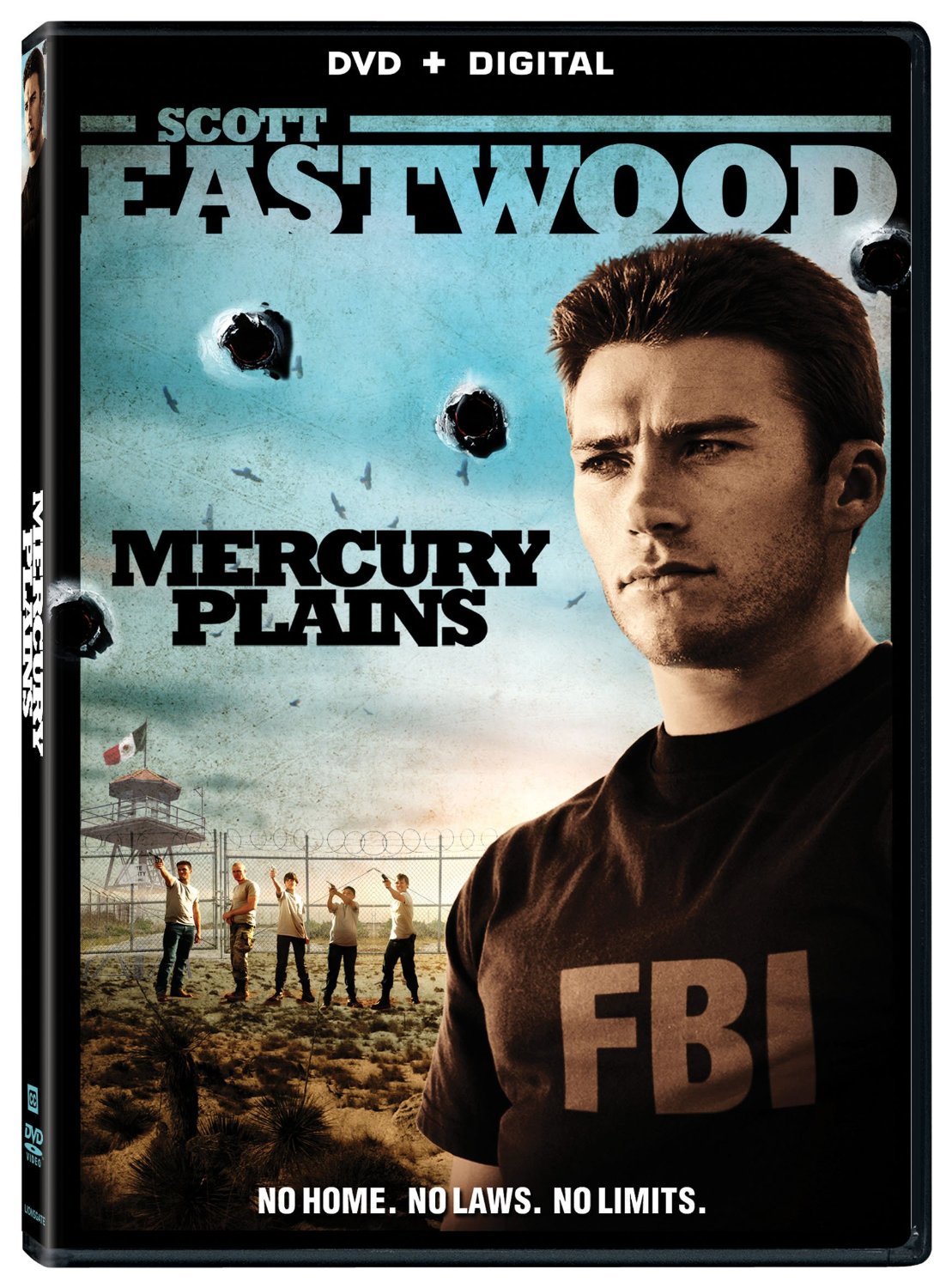
There is so much to enjoy when it comes to Mercury Plains. It is the first time I have seen Scott Eastwood in a starring role, Nick Chinlund provides a brilliant performance as the philosophical Captain, and each of the characters are engaging. To be clear, Scott Eastwood is the main character of the film, but his comrades have very interesting character arcs that make them unique. In fact, I think that is what I enjoyed the most from this film: the details that are not spoken directly to the audience. There are so many instances where the details in the character arcs (even Eastwood’s) are so minute, you could very well miss them.
Mercury Plains tells the story of Mitch (Eastwood), a young man who has just been released from a prison in southern Texas. Rather than begin working for his family, he finds himself confronted with a lucrative “opportunity” after a night spent drinking across the border in Mexico. A man known as the Captain (Chinlund) is prepared to offer Mitch five thousand dollars to join his crew of mercenaries, taking out the drug cartels before police have a chance to. Soon, Mitch realizes this crew is comprised of troubled teenagers, housed in a military-like camp. As the Captain begins to send the young men on new missions, Mitch realizes his objectives are becoming more dangerous, and more criminal.
Posted in: No Huddle Reviews by Dan Holland on January 3rd, 2016
It is not very often that I am able to say that a film revolving around an extramarital affair keeps me engaged. While the writing in Adulterers became rather unfavorable towards the end, the strength of the conflict and the pacing of the editing and cinematography combine to make a significant force. That being said, I was pleasantly surprised by the intensity of the drama that unfolds among the disturbed trio, but there were many moments that distracted me from that pleasure. Through this review, I aim to be as fair and as spoiler-free as possible. I believe this film is definitely worth the watch, regardless of what does not “work” for me.
Adulterers tells the story of Samuel Deuprey (Sean Ferris), a hardworking man, who comes home to find his wife (Danielle Savre) in bed with her lover (Mehcad Brooks). The events and scenes that follow are rooted in humiliation, depravity, and violence, as Samuel decides to resolve the situation in his own way. The way in which Adulterers heightens the tension is through adding details such as: the events transpire on the couple’s anniversary, Samuel works long hours to provide for his wife, money may or may not be involved, etc. While each of the details introduced into the film’s story may be cliché for dramatic films about affairs, they are absolutely necessary in order to understand Samuel’s rage and mania.
Posted in: No Huddle Reviews by Dan Holland on December 23rd, 2015
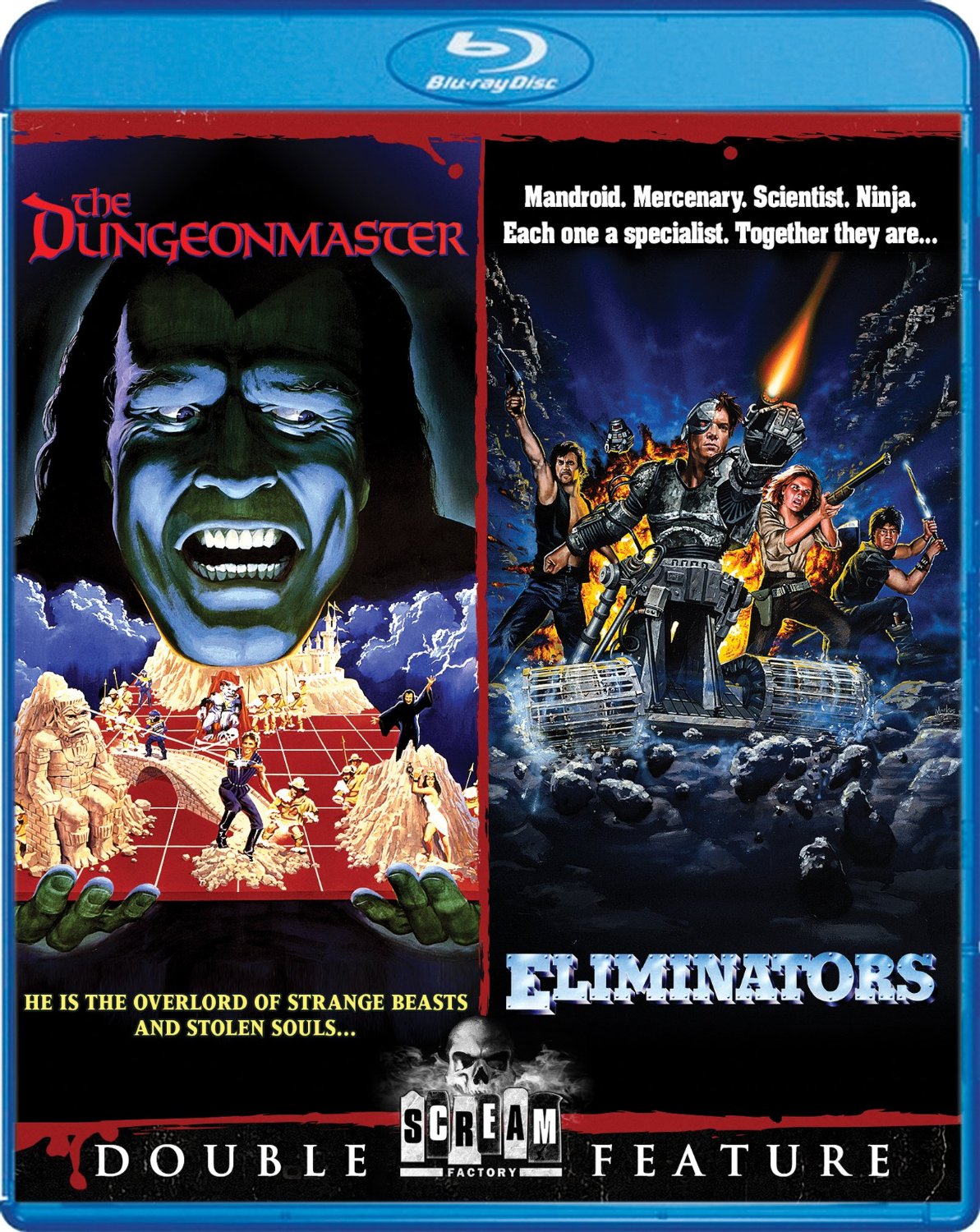
Once again I have the pleasure of reviewing a Blu-ray double feature distributed by Shout Factory. This time out, I have been graced with two sci-fi adventure films from the mid 1980’s: The Dungeonmaster and Eliminators. Although the two films play well as a double feature, the cheesy (yet oh, so beautiful) aesthetics and special effects are not these films’ only connection. Peter Manoogian sits in the director’s chair for Eliminators and also one of the segments of The Dungeonmaster. Manoogian came onto my radar with his 1992 video feature Demonic Toys, so I was really excited to experience his earlier (and arguably better) work.
Starting with The Dungeonmaster: this film is absolutely crazy. If you do not have a clear grasp of the film’s concept, it may be a tough pill of 80’s sci-fi to swallow. The film follows Paul Bradford (Jeffrey Byron) as he journeys into his own computer system to save his girlfriend from the evil wizard Mestema (Richard Moll). While that story seems simple enough, the film is broken into several segments. Each segment is a different challenge set forth by Mestema that Paul must overcome. However, what makes this concept unique is that each segment has a different director. That being said, although each segment is directly tied to the story; with each new challenge, the film changes tone right before your eyes. If you are not aware of that fact going in, I will admit the film might be a little overbearing.
Posted in: No Huddle Reviews by Dan Holland on December 1st, 2015
I absolutely love it when I go into a film blind, save for my expectations after looking at the cover, and leave with a surprisingly pleasant experience. A Christmas Horror Story provided me with that exact experience. The cover depicts Krampus, the evil Christmas beast of German folklore, battling Santa in a snowy, mountainous area. This particular battle does not surface until the final moments of the film: instead, we are treated to three separate horror tales that are connected by the various characters that occupy them. Each one of the tales does a good job of maintaining the Christmas theme in creative ways.
Each tale takes place in the city known as Bailey Downs, with the exception of one tale taking place at the North Pole. First, there is a ghost story featuring a murder that took place at a school the year prior on Christmas Eve. Three teenagers decide to break into the school and film a documentary about it. They are able to break into the school with a set of stolen keys, provided by a friend who is forced to visit family rather than participate in the documentary. This family trip is interrupted by a visit from Krampus. The next tale involves the recovering police officer who worked the original Christmas Eve murder case: Still on leave, he is spending time with his son, who gets lost in the woods and is replaced with a changeling. Finally, carnage ensues at the North Pole, where Santa must battle his own elves who have been stricken with an odd form of vampirism.
Posted in: No Huddle Reviews by Dan Holland on December 1st, 2015
Swim Little Fish Swim is, above all else, a very charming film. In fact, it may have been a little too charming for me. I appreciate character-driven dramas, but it is the drama in the film that keeps me engaged throughout. Swim Little Fish Swim introduces some really interesting conflicts into the story, and each conflict has a good variance of high and low stakes. However, the conflicts are either never quite resolved or resolved in a rather unsatisfying way. I did really enjoy the film, but it left me wanting more.
Co-directed and written by Ruben Amar and Lola Bessis (who also plays the starring role), the film explores the lives of artists Leeward (Dustin Guy Defa) and Lilas (Bessis) as their paths cross in New York’s Chinatown. Leeward is a starving artist who refuses to sell out to a commercial in order to support his wife Mary (Brooke Bloom) and his daughter Maggie/Rainbow (Olivia Durling Costello). Meanwhile, Mary works tirelessly as a nurse in order to make up for Leeward’s irresponsible tendencies. To complicate matters, Leeward is introduced to a French artist Lilas, who needs a place to stay until she is able to apply for her Visa. Lilas’s artistic spirit invigorates Leeward into making poor familial decisions in an effort to pursue his dream as an artist.