Posted in: No Huddle Reviews by Dan Holland on October 28th, 2016
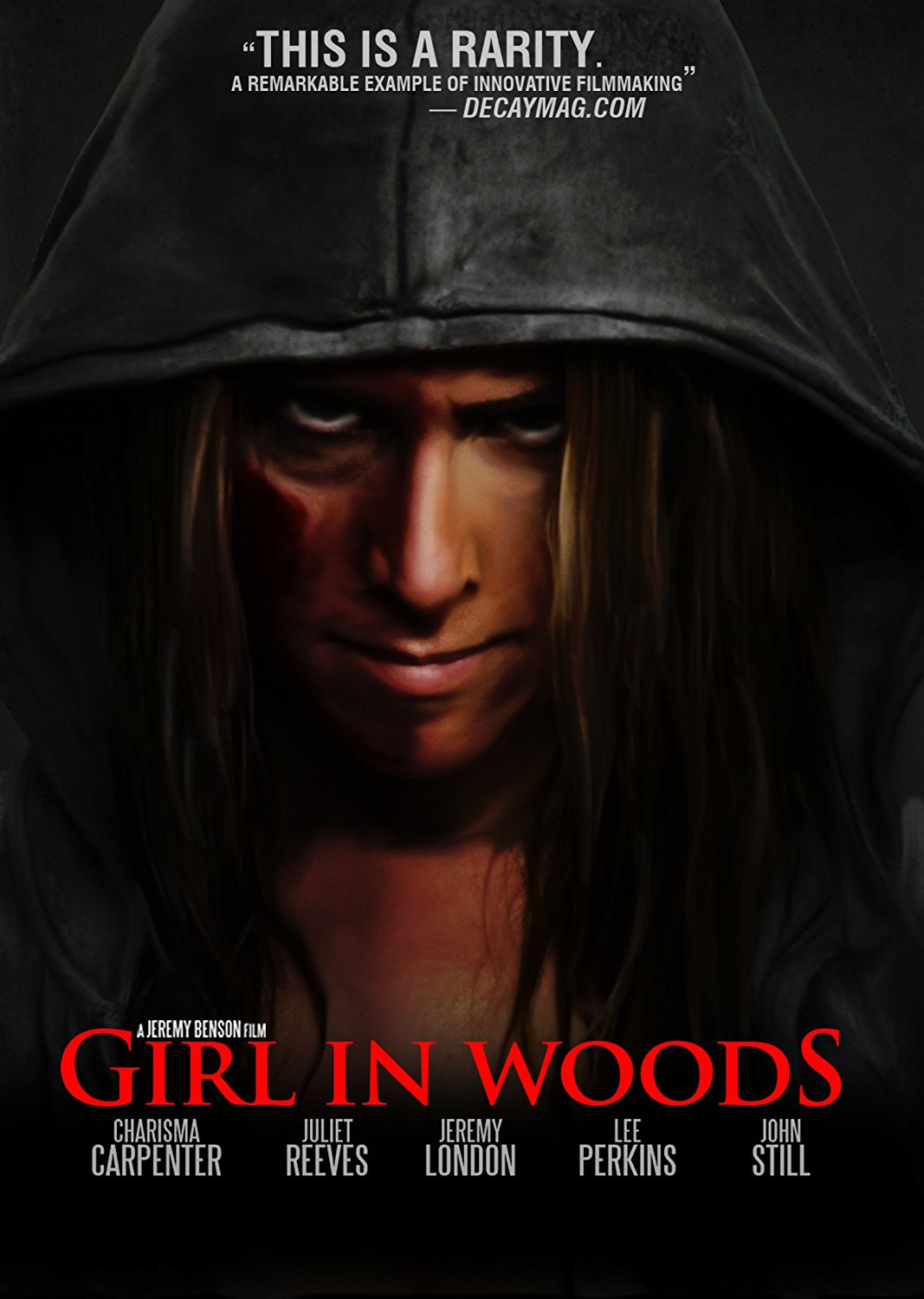
Girl in Woods is a very conflicting film. The writing and direction were wonderful, as well as the setting: I have previously written about my fondness of independent horror films set in the woods (see my review of The Interior). However, the film’s post-production and the acting were not up to par with the maturity set forth by the intricate story and overall tone of the film. The film succeeds in establishing an atmosphere of fear and mania through cleverly fragmenting the narrative through cryptic flashbacks, but it fails to impress with visuals, simply because of poor quality.
Grace and her boyfriend, Jim, enjoy a weekend alone in the woods, wherein Jim proposes to his loving partner. After a few scenes of flirtatious banter from the couple, a terrible accident leaves Grace stranded in the woods alone. The “terrible accident” in question is coincidently linked to a traumatic event from Grace’s past, one that she never entirely recovered from. As the “indoors-y” woman navigates the vast woods by herself, she must overcome both memory and temptation as she tries to survive the wilderness and her own mind.
Posted in: No Huddle Reviews by Dan Holland on October 24th, 2016
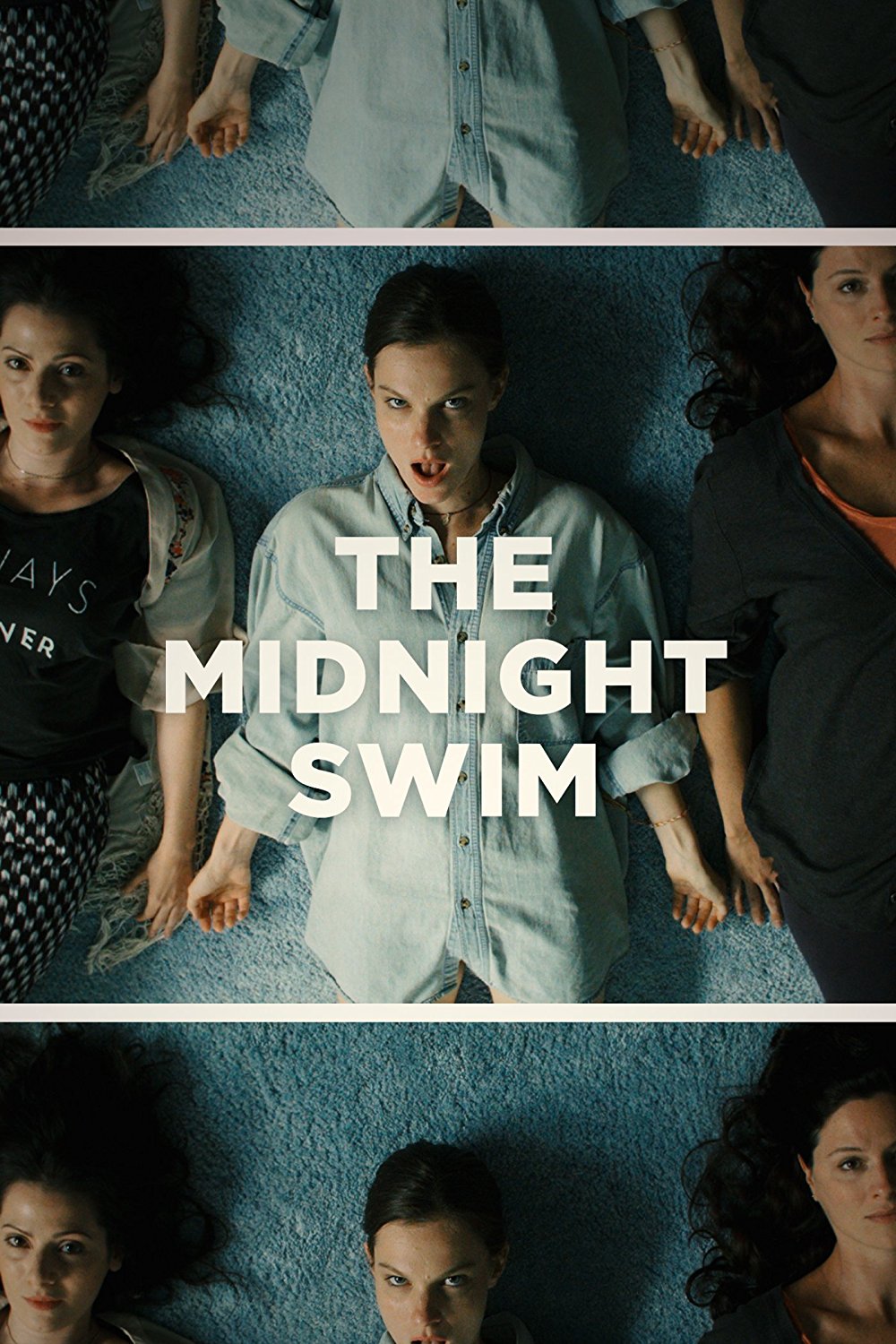
Yet another indie horror flick has come through the Upcoming Discs hub. Although, I wouldn’t necessarily categorize The Midnight Swim into the horror genre: it’s more of a dramatic mystery. That is not to say that the film did not have any unnerving moments, but the priority of the storytelling was to study the three main characters. In an effort to capture three very different personalities while simultaneously providing a lingering suspense, The Midnight Swim created a tension that resolved to my satisfaction. Ultimately, the film favored its character study more than it did its mystery, which hurt my enjoyment as a result.
Presented as a documentary-style “family archiving” activity, the film follows three sisters as they journey back to their childhood home after their mom has died in a diving accident. Annie (Jennifer Lafleur), the oldest, is portrayed as the most levelheaded sister, with hints of estrangement from her mother. Isa (Aleksa Palladino), the middle child, provides the film with an emotional free spirit and the most positivity through their trip. Finally, June (Lindsay Burdge), the “family archivist,” operates the camera and is the youngest and shyest of the three. As June films this vacation, the daughters begin to discover the mysteries of the lake that took their mother’s life.
Posted in: No Huddle Reviews by Dan Holland on October 23rd, 2016
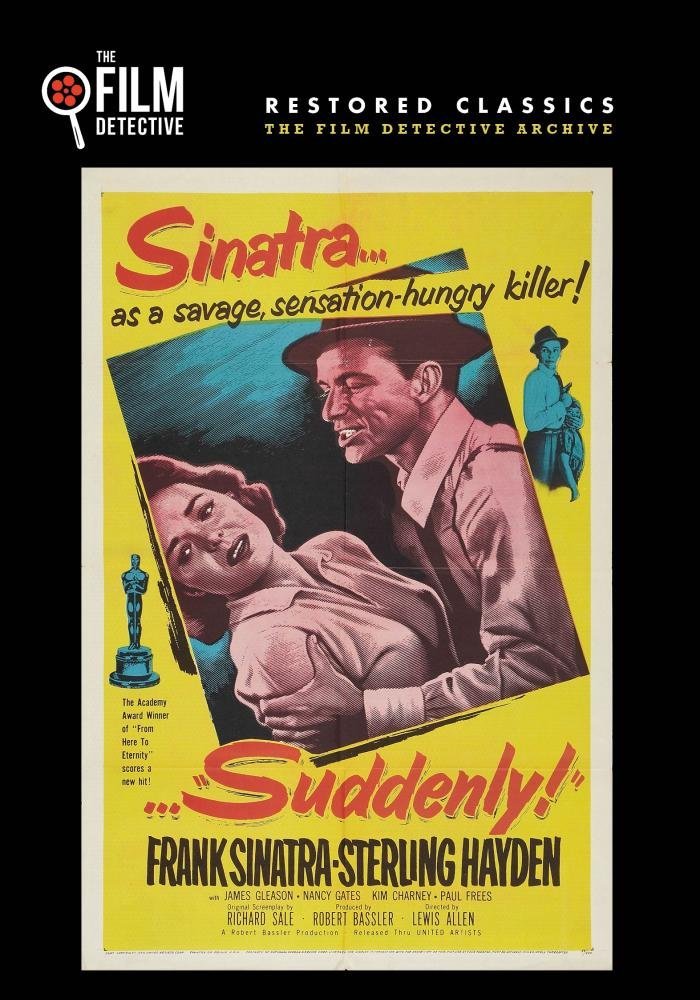
Frank Sinatra is a man of many talents, although I had never really paid much attention to his acting, as I had never actually seen him outside a musical. Anchors Aweigh and On the Town are among my favorite musicals. That being said, I have never watched a film where I have been fully attentive to Sinatra’s talents as an actor. While Suddenly has other big names like James Gleason and Sterling Hayden, I was surprised that the entire film had an incredibly rocky start without Sinatra’s presence in the first twenty minutes.
In the small town of Suddenly, the sheriff (Hayden) is contacted by the secret service, alerting him that the President of the United States will be making a brief stop in town, as a way to bypass the crowds of a larger city. The President is arriving by train, so the Sheriff is instructed to clear all the shop owners and home owners within the proximity of the train station. One home owner (Gleason) used to be a high-ranking secret service agent, so he is permitted to stay with his daughter and grandson. Eventually, a group of gangsters posing as FBI agents (led by Sinatra), show up to use the house’s location to assassinate the president.
Posted in: No Huddle Reviews by Dan Holland on October 7th, 2016
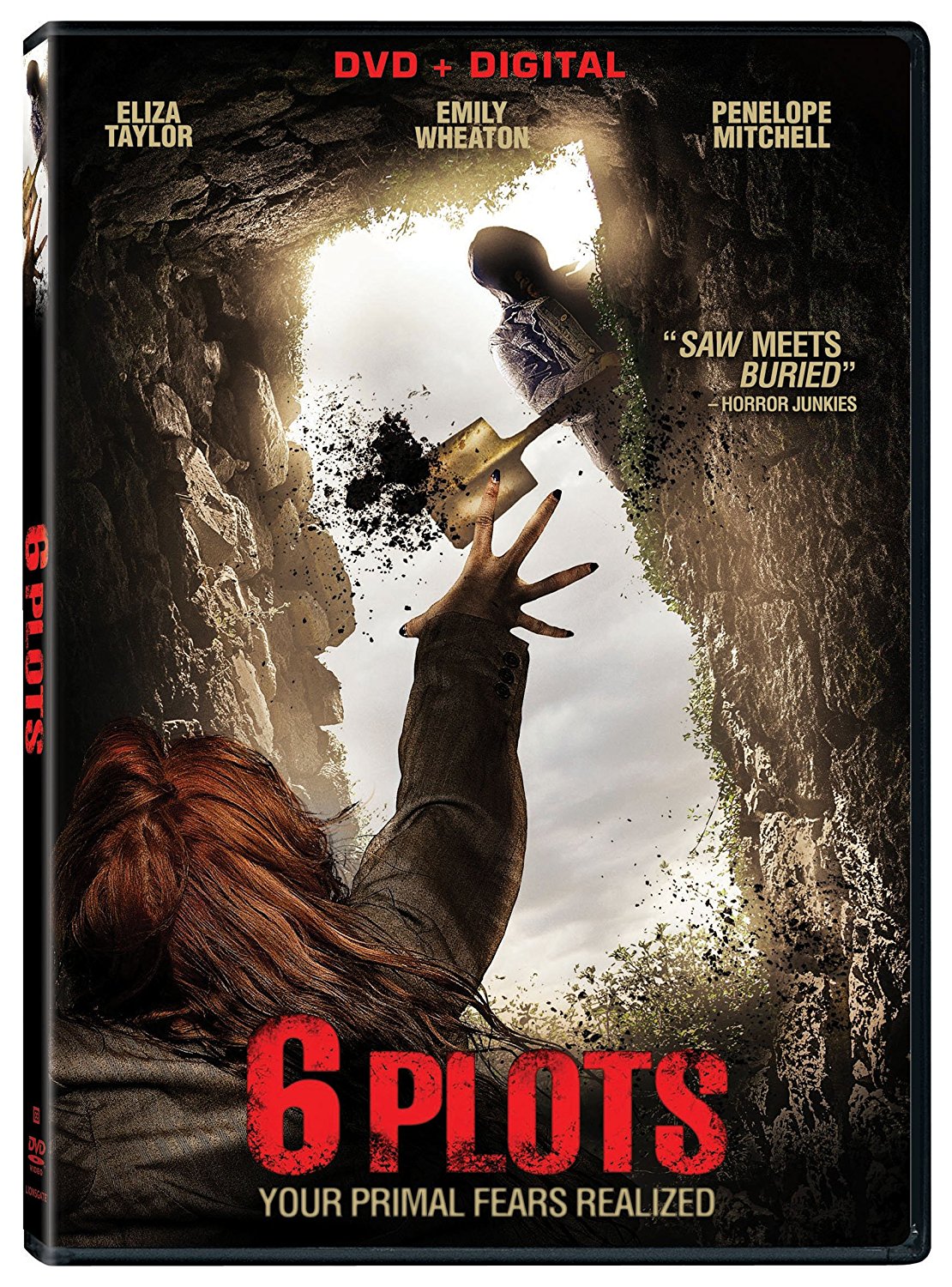
The continent of Australia has seen a small renaissance of horror films over the last fifteen years. Considering the continent’s rich history with suspenseful cinema, the frequency of these films is indeed exciting. Picnic at Hanging Rock and The Chant of Jimmy Blacksmith are two movies that have stuck with me over the years, considering I only watched each title once. I remember the suspense and terror created in the atmosphere of Picnic, through a combination of a simple plot of a missing child and an ominous score. Jimmy Blacksmith’s climax is one of the most psychologically tormenting experiences I have had watching a film. That was the 70’s. In recent years, Australia has released some great horror genre gems that really do a great job of tracing their roots back to the aforementioned films. Wolf Creek, Feed, and The Horseman are some of the Australian horror titles that really have gotten my attention since the early 2000’s. Unfortunately, for every gem in Australian horror, there are over a dozen rocks you must sift through, and 6 Plots is one of those rocks.
The plot description sounds promising: After passing out at a party, the least popular girl in the “popular clique” wakes up to find she and her friends have been kidnapped. As the night progresses, she is able to contact her friends via their cell phones, and she learns that each of her friends have been placed inside boxes located across the small town. The killer allows the cell phones for communication amongst the group, but warns them not to involve parents or authorities. Rules are broken, some horrifying images follow, and realistically, nothing happens that I have not seen before.
Posted in: No Huddle Reviews by Dan Holland on October 1st, 2016
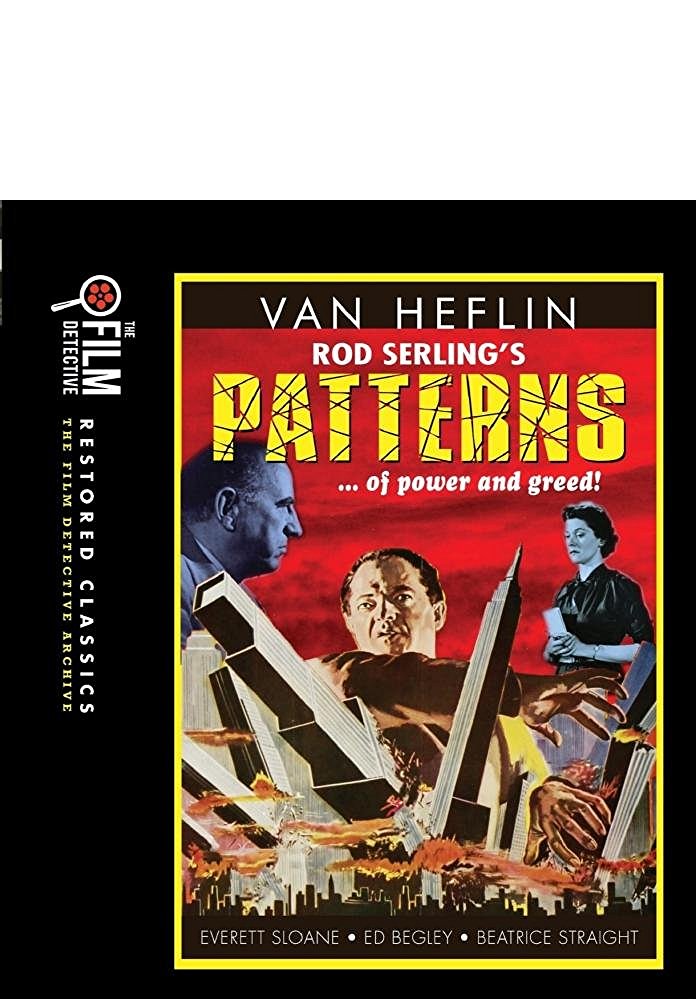
Before The Twilight Zone, Rod Serling had a fruitful career writing teleplays in the early 1950’s. One of his earliest successes, Patterns (1955), was aired on a program named Kraft Television Theatre. The popularity of the play was so enormous that a second encore performance was aired the same week of its release, and it was written as a feature film the following year. Given its impressive history and my love of Serling’s writing, I was really looking forward to watching the the film. However, I was surprised that I did not enjoy myself as much as I was expecting. While the film demonstrates a lot of great dramatic moments that Serling is known for, the simplicity of the editing and camerawork really made the piece underwhelming. Certain images had so much potential to be utilized to service the actual plot, but it ultimately felt as if director Fielder Cook relied too heavily on the story’s earlier success as a teleplay.
Patterns tells the story of Fred Staples, an engineer brought into a large industrial company Ramsey & Co. in order to bring about new ideas and policies. He immediately produces a friendship with Bill Briggs, the company’s vice president. As Staples becomes acclimated to the company, he discovers that Walter Ramsey, the company’s president, has brought him on as competition to Briggs. From here, Ramsey begins to play multiple mind games with Staples and Briggs in an effort to force Briggs into a resignation. The film’s conflict becomes a battle between corporate practices and simple human decency.
Posted in: Disc Reviews by Dan Holland on September 26th, 2016
When it comes to titles from Blizzard Entertainment, I was always more into the Starcraft and Diablo franchises. I played World of Warcraft (WoW) for a small period of time when it became a popular MMORPG (Massive Multiplayer Online Role Playing Game), but my interest in the game quickly died. The aesthetics were a little too cartoony for my liking, plus, you paid for a subscription. Regardless, I am just one fan of Blizzard: WoW caught on like wildfire. I still know people who are playing the game to this day. The question, however, is whether or not this franchise would make a great cinematic adaptation. I will admit that I am not an expert on the Warcraft lore, by any means, but I know enough about popular culture and its many fandoms to look at this film objectively.
Sitting in a theater, you are always treated to interesting pre-screening conversations. More often than not, they are being led by fans of the source material. Here are samples of some of the conversations I overheard:
Posted in: No Huddle Reviews by Dan Holland on September 3rd, 2016
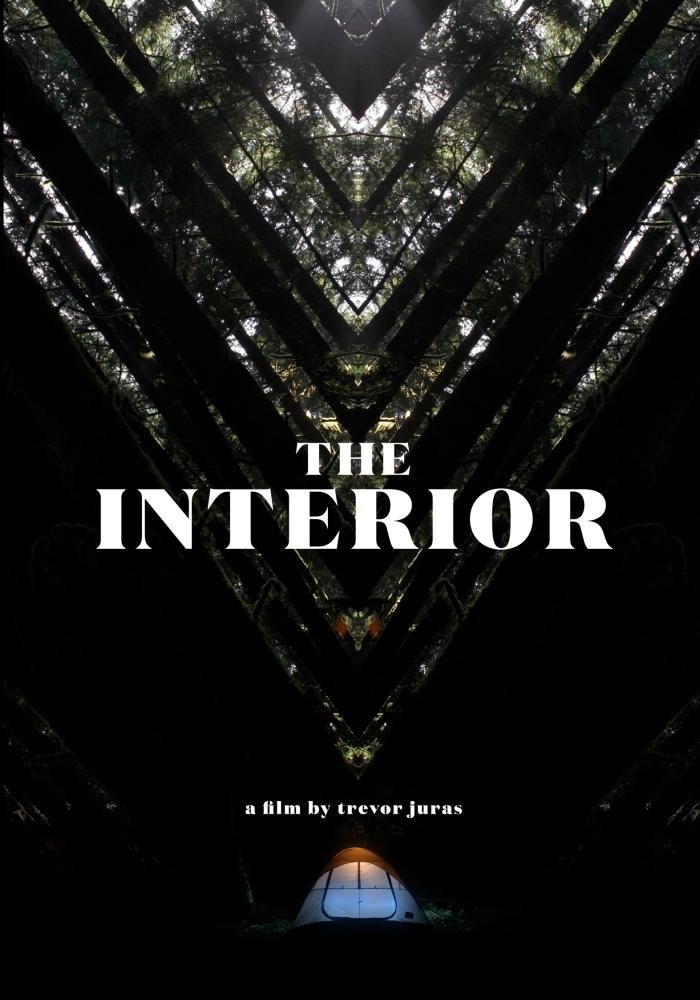
I have seen an incredible number of independent horror films that are either shot in or around the woods. The setting makes sense for budget purposes: you are able to create a mysterious, brooding atmosphere for absolutely no cost. These films were produced even before The Blair Witch Project made the aesthetic popular in 1999. Even I hear the call of the woods as an amateur filmmaker, but I’m careful not to give into temptation and create a guaranteed flop just so that I can have a film set “in the woods.” I may seem pessimistic, but I have been disappointed by too many of these films to understand that it is not just being “in the woods” that makes the film. For these films to succeed, you need excellent writing and an unsettling/uncanny presence of which to be afraid. As is the case with The Interior.
The film tells the story of James, a young man who recently learns he has an undisclosed, and assumed fatal, illness. In an effort to cope with this news, James shifts careers from office to manual labor, but to no avail. He finally decides to journey into the interior of British Columbia, where he begins living off of minimal supplies in a true outdoorsman fashion. However, it is not long before James begins to feel the anxieties of being alone trickle into terror, as he is soon tormented by a sickly-looking man wearing a red jacket.
Posted in: No Huddle Reviews by Dan Holland on August 12th, 2016
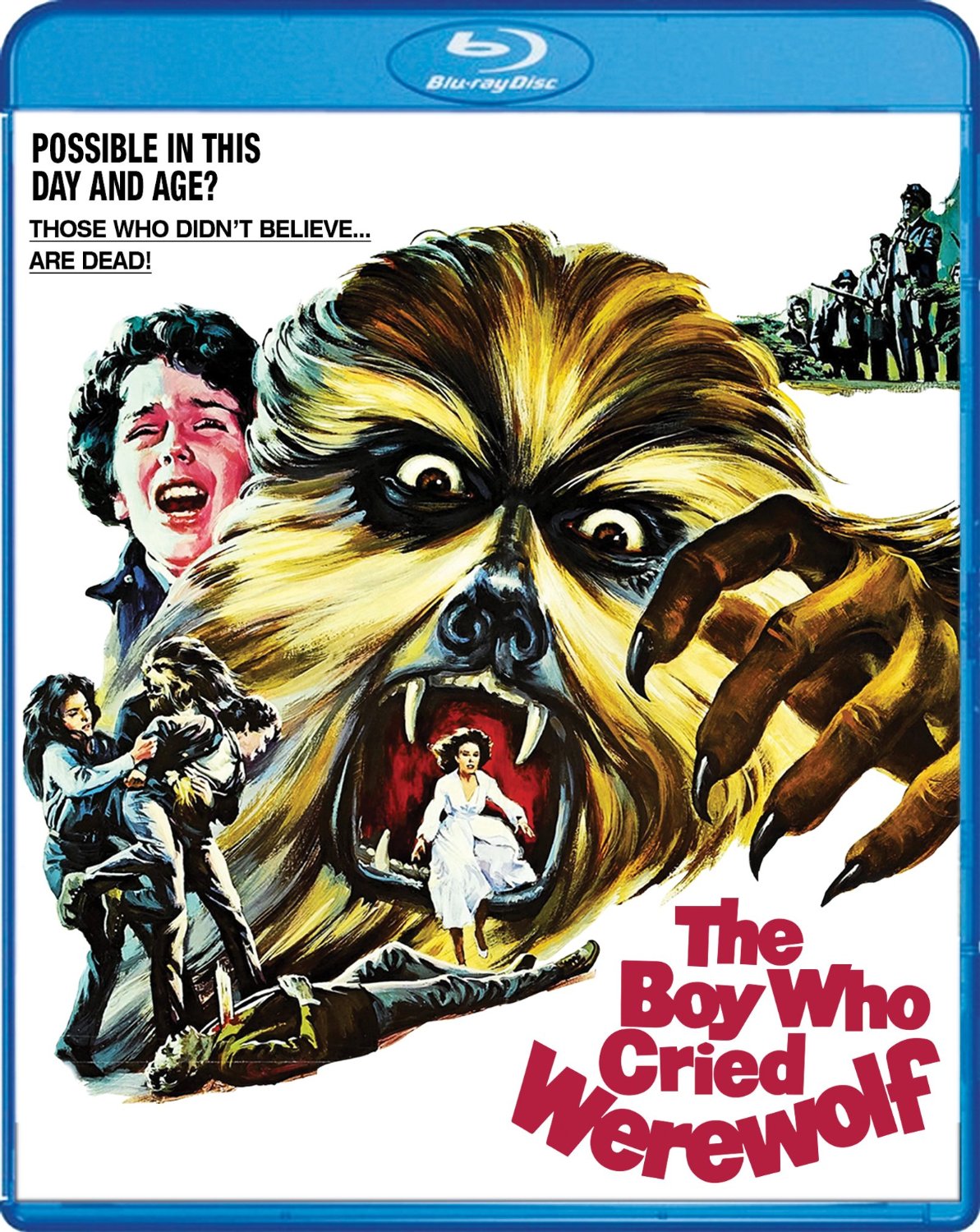
The Boy Who Cried Werewolf (1973) is an interesting collection piece for fans of horror film. It marks the end of Universal’s long-standing tradition of double-billing B-horror films from the 1930’s onward. That being said, The Boy Who Cried Werewolf and its companion film Sssssss (1973) are the physical evidence of the end of an era. This particular release drops the double- billing tradition, which is rather confusing to me, simply because the Universal Studios distributing system’s historical relevance is worth more to me than the actual film. Outside of the context that I have provided, this film doesn’t have many interesting qualities.
Recently divorced father Robert Bridgestone takes his son, Richie, to his secluded summer cabin. While walking through the woods one night, the two are attacked by a werewolf. After a struggle, Robert is able to throw the creature off the cliff, but not before he was bitten. Now Robert must cope with this ailment in addition to the responsibilities of being a single father. The film also outlines Richie’s complex position during the ordeal. Richie tries to tell his dad about the ailment, but his dad thinks Richie has an overactive imagination. Richie doesn’t want to tell the police, for fear they may harm his caretaker.
Posted in: No Huddle Reviews by Dan Holland on July 28th, 2016
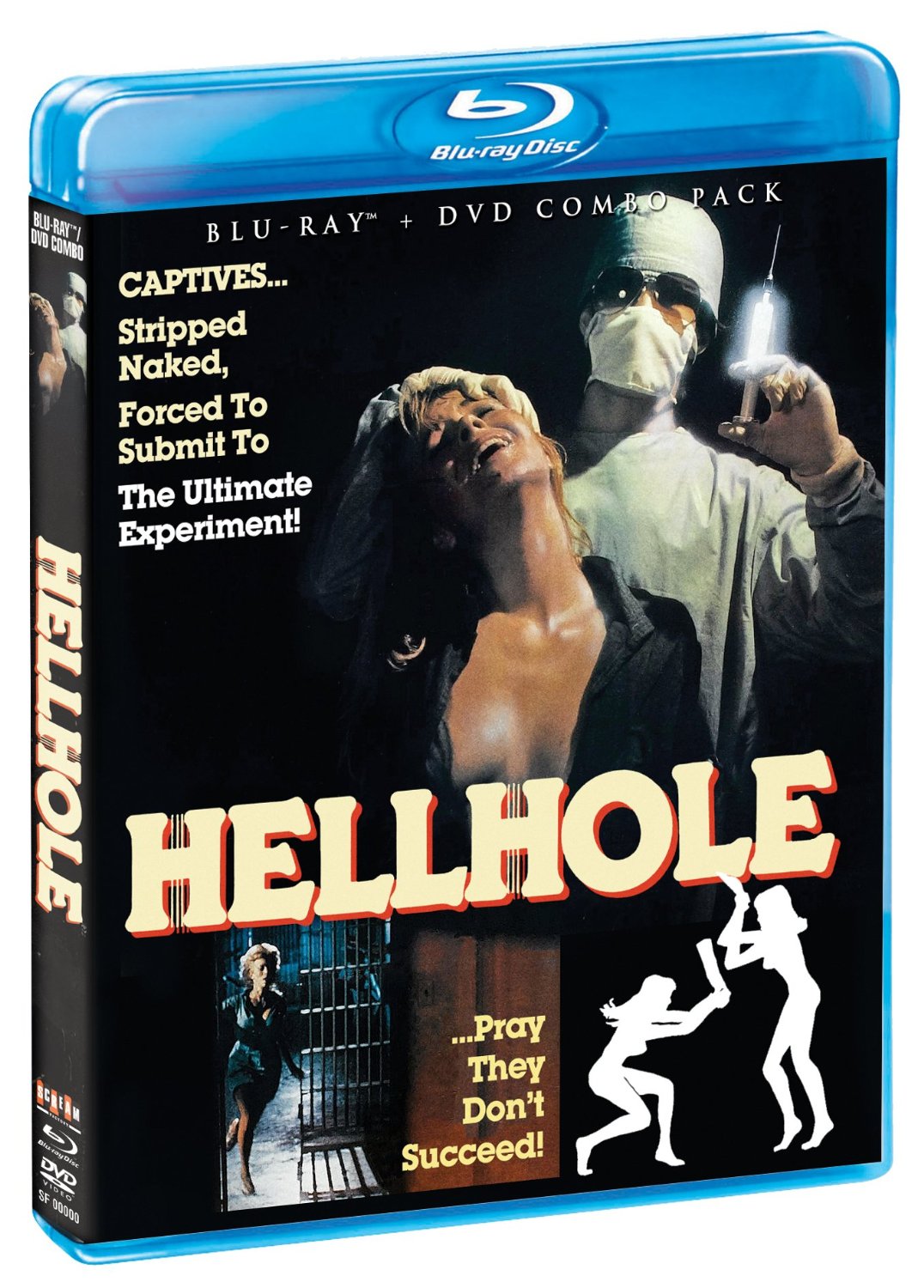
They really don’t make horror films like they used to. I understand that each decade graces us with new, unique genre mechanics, but there is just something to be said about the horror elements found in 1980’s cinema. While Hellhole does not have any supernatural or modern science fiction qualities, it does carry the classic “mad scientist” narrative quite well. The film also boasts one of the silliest, yet terrifying, villains I have seen to date. Hellhole is a film that gracefully slips below the radar, but for the cult cinema connoisseur, the strong writing is really what makes this film a great find.

The film opens with Susan (Judy Landers) escaping from a home invasion: Her mother has stolen implicating bank statements from the doctor she works for, and a goon is attempting to get them back. The goon is none other than “Silk” (Ray Sharkey), a rather flamboyant hitman, clad in a studded leather suit, a long red scarf, and a silly hairdo. Susan knocks herself out and finds herself in an all-woman insane asylum, suffering from amnesia. Silk attains an orderly position at the hospital to wait for her memory to return. To my pleasant surprise, the plot did not end here. In fact, the film includes a parallel storyline to Silk: the board of medicine has hired a private investigator (Richard Cox) to take a position as an orderly in an effort to find incriminating evidence against the mad psychiatrist, Dr. Fletcher (Mary Woronov).
Posted in: No Huddle Reviews by Dan Holland on June 26th, 2016
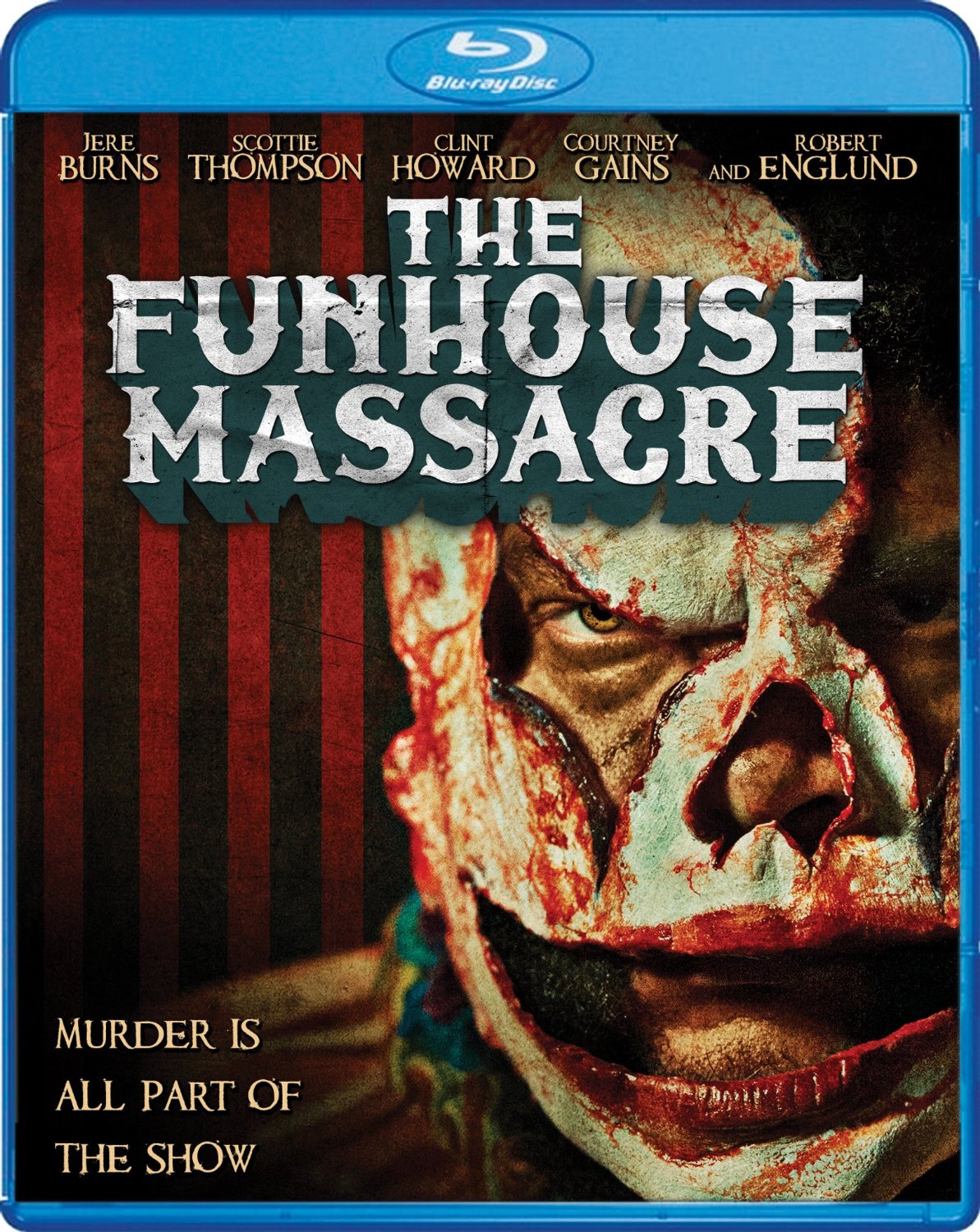
It is with a rather heavy heart that I give this film a low rating, because it really has so much going for it. The concept of having several psychopaths escape from an asylum, only to slaughter the patrons of a horror-themed amusement park has a lot of potential when you think about it. During the times when horror attractions such as Halloween Horror Nights have become so popular, it’s hard to believe that a film like this hasn’t already been made. (Perhaps one has, but I have not heard of one yet.) Regardless, the film is pitched as a horror comedy, which is a genre that can easily lose control of itself. Predictably, I would have been much more satisfied without the comedic elements put into the film.
The plot of the film is introduced by Robert Englund, who plays a warden of an asylum that harbors five dangerous psychopaths, including Mental Manny (Jere Burns) and the Taxidermist (Clint Howard). The criminals escape and find their way to a horror-themed carnival on opening night, and they begin killing people. A group of teenagers/young adults leave work to attend this attraction, but realize that things are not as they seem. As always, it is up to the virgin to save the bullies (her friends) and herself from the impending slaughter.