DTS HD 5.1 MA (English)

Sometimes a movie comes along that rises above simple entertainment and actually has something to say.  The Big Picture is the kind of movie that has profound ideas about love, family, and the pursuit of your dreams.  Is it possible to really have it all?  The perfect spouse, the perfect family and live out your lifelong passion and dream?  Many who have families, especially when starting young, can understand the idea of sacrifice for their families; it doesn’t mean they just cast their hopes and dreams aside, but once marriage and children are involved the direction your life may take was never the direction you had planned at all.  And it’s this life and compromise director Eric Lartigau thrusts us into.

When we first meet Paul (Romain Duris) he is a happy family man with a beautiful wife, Sarah (Marina Fois), and two children.  Though he is a successful lawyer, his passion is photography.  He continues to snap photos and develop them in his personal lab, but he understands the risk of setting out to be a freelance photographer and simply can’t give up the security of his job with the law firm.  Unfortunately, though, Sarah is not so content with her idyllic life and has dreams of her own as well as other desires she wishes to fulfill outside of the marriage.  As Paul discovers his wife’s infidelity and that it was with a close friend, he begins to crack, and with good reason.  Things only get worse when Paul confronts Greg (the man Sarah is having the affair with); their minor altercation leads to Paul accidently killing him.

 Looking back, it’s amazing how far visual effects have come since 1988.  I can remember sitting in the theater watching Willow for the first time and believing everything I saw up on the screen wasn’t the work of movie magic, but I believed it to be reality.  Perhaps some far off land where there are swordsmen fighting evil sorcerers and trolls lurk in the shadows of abandoned castles.  This is a thought I’d like to believe I’m not the only one that hoped this was a reality, but if I am I’m fine with that.  Willow came out at a time when Hollywood was trying to bring large-scale fantasy to the screen with other releases like Excalibur, Legend and Conan.  Though these films are their own kind of awesome, the digital effects still hadn’t quite reached the level they needed to be to make these worlds as immersive as the Lord of the Rings films, for instance.  Where the film may not have held up over the years with the special effects, it’s the story that manages to captivate this viewer 25 years later.

Willow Ufgood (Warwick Davis) is not your ordinary hero, and for 1988 seeing a little person as the star of a film is even further for ordinary.  But Willow isn’t about ordinary; it’s about a journey of fantastic proportions where even the tiniest of men can be the biggest of heroes.  When Willow is tasked to return a baby to her people, he must venture away from his village to a land that seems to be on the verge of war, something Willow and his fellow dwarves want nothing to do with.  During Willow’s journey to find a proper protector for the baby, he encounters Madmartigan (Val Kilmer), who claims to be the greatest swordsmen that ever lived; unfortunately when he’s found he’s been left for dead in a cage.  This is one of the roles that has me wondering what happened to Kilmer; in this role he is simply fun to watch and dripping with charisma; the guy was meant to be a star.  And when we do get to see Madmartigan in action, I couldn’t help but wonder what it would be like if Madmartigan and Aragorn were to ever cross paths.

This is a review that I’ve been dreading.  It’s been a while since a movie has gotten me so worked up over its thoughtless execution that I struggle to find something redeeming out of it.  For those unfamiliar with non-linear storytelling, a simple definition would be a story told out of order, for instance Memento or Pulp Fiction.  Those two examples are of films that execute non-linear storytelling and use the structural device as a means to further their story.  As for the filmmakers involved with The Devil’s in the Details, they took a decent story and then tore it up into shreds, tossed it in the air, and pieced it together however they saw fit.

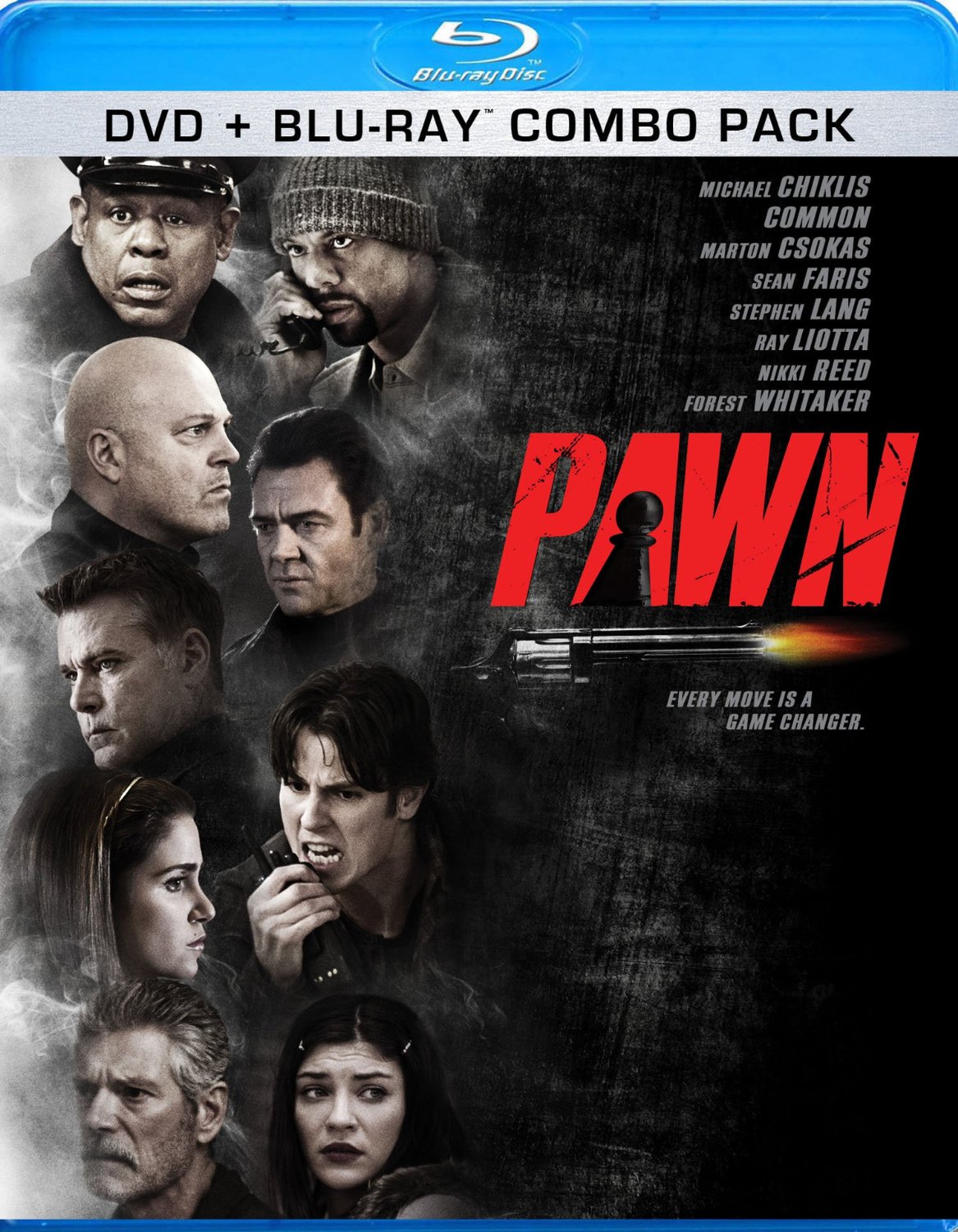
I feel sympathy for the performers here; even though what the actors had to work with was flimsy at best, they still deliver.  Ray Liotta plays Dr. Bruce Michaels, a former Navy Seal who now is a shrink to soldiers coming home from the war.  The performance is subtle and a far cry from the intensity he brought to Narc or his most notable role of Henry Hill in Goodfellas.  For those who are fans of Liotta, at least his performance is worth watching here.

“The important thing for a writer is to tell a good story.”

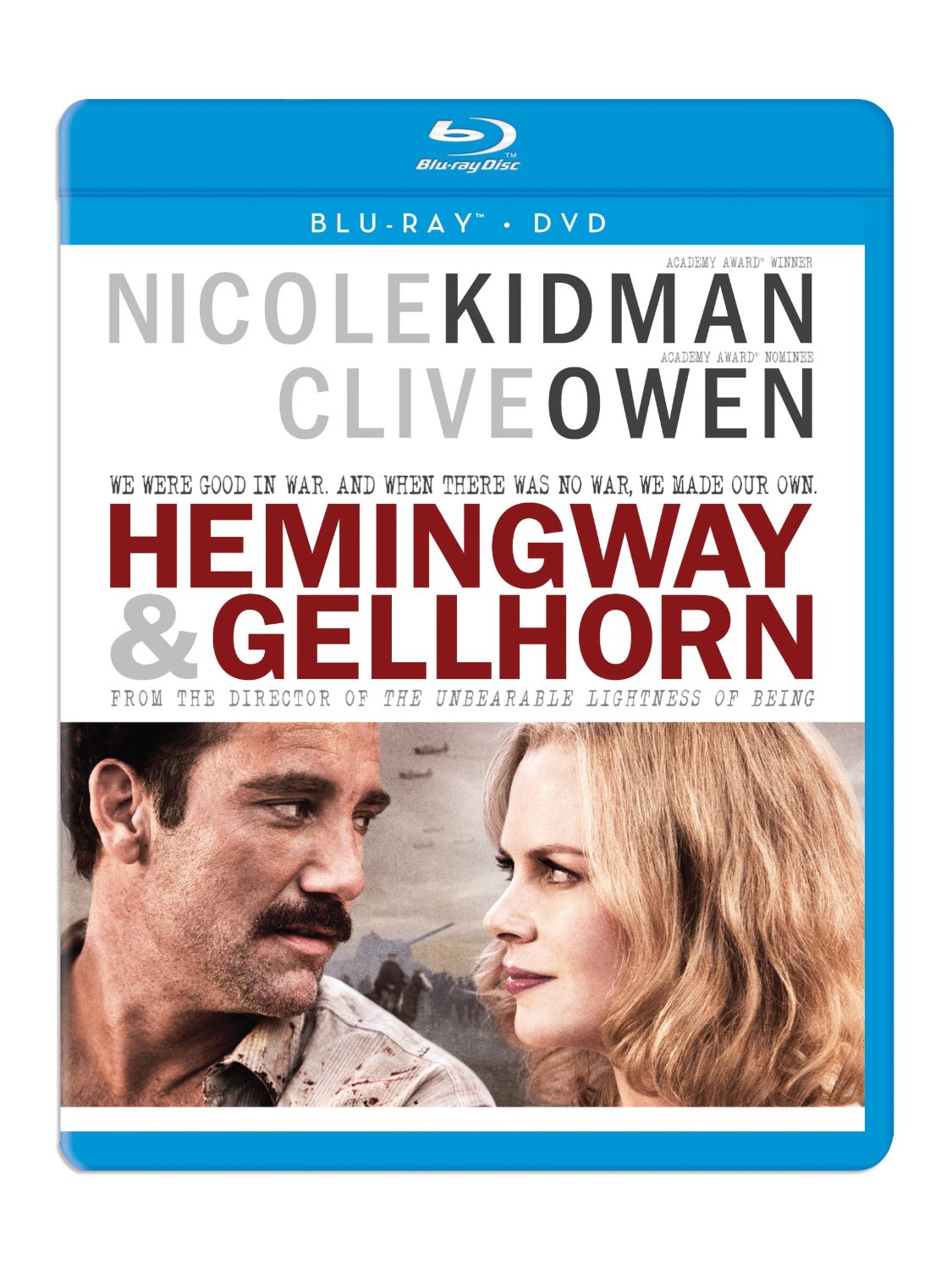
Martha Gellhorn, considered by some to be the greatest war correspondent of the 20th century, was extremely adamant about not wanting to be a footnote in someone else’s life. So I’m thinking the writer — who died in 1998 — may have had mixed feelings about Hemingway & Gellhorn. On one hand, her life story gets the prestigious (and mostly sympathetic) HBO Films treatment, and Gellhorn is played by Oscar winner Nicole Kidman in a sensational, searing turn. On the other hand, the film had Gellhorn’s 60-year career covering every major world conflict to draw from, yet largely focuses on her combustible nine-year relationship — and five-year marriage — to Ernest Hemingway. I mean Gellhorn couldn’t even wrangle top billing in the film’s title, for crying out loud!

When The Sandlot first came out 20 years ago, I connected to the coming-of-age baseball story as strongly as Babe Ruth connected with one of his titanic, 400-foot homers. I grew up in baseball-obsessed Puerto Rico and I happened to be the exact same age as dorky protagonist Scotty Smalls. Though I’ve kept in touch with the film over the years, Fox’s new 20th Anniversary Blu-ray re-release of The Sandlot marked my first time watching it from start to finish in a long while. It surely won’t be the last.

An adult version of Scotty Smalls recounts the story of his most memorable summer. As a fifth grader, Scotty (Tom Guiry) moved to a new town with his mom (Karen Allen) and stepdad (Denis Leary) just before the end of the school year. Scotty’s mom wants her sweet, nerdy son to actually get into a little bit of trouble during the summer, so he falls in with a group of kids who play baseball in a raggedy patch of grass called The Sandlot. The only problem is Scotty doesn’t even know how to throw a baseball. Fortunately, Scotty is taken in by Benny (Mike Vitar), the group’s leader and the best baseball player by far. During that one remarkable summer, the kids encounter a dream girl, arrogant Little Leaguers and a legendary canine menace known as The Beast, which swallows up any baseball that finds its way into his yard.

“It’s been a long time getting from there to here.”

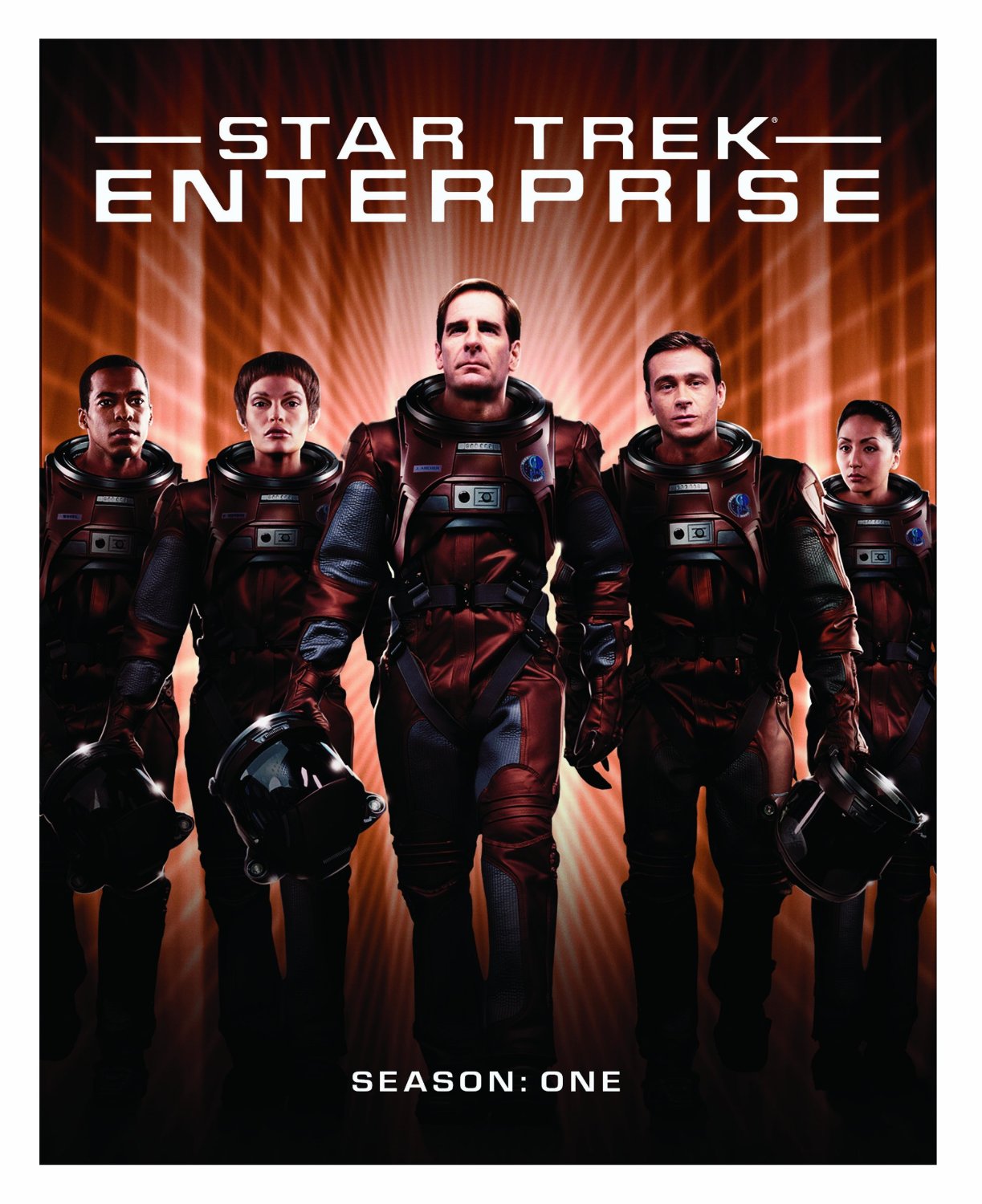
35 years to be exact. Enterprise is the fourth spinoff from the original 1960’s hopeful series. The Earth is finally ready to send its first starship to explore the vast galaxy. This first starship Enterprise is smaller than the ships we’ve become used to. There are no shields or photon torpedoes. The transporter has only been cleared for inanimate objects. Not that this stands in the way of its occasional “emergency” use. The ship is very much like the cramped spaces of today's submarines. It adds an even greater sense of reality to the show. The crew is composed of Captain Jonathan Archer (Bakula), First Officer and Vulcan High Command liaison, T’Pol (Blalock), Chief Engineer Charles (Trip) Tucker (Trinneer), Tactical Officer Malcolm Reed (Keating), Denobulan Dr. Phlox (Billingsly), Pilot Travis Mayweather (Montgomery) and Linguist/Communications Officer Hoshi Sato (Park).

The great, central joke of Veep — HBO’s sharp, profane political comedy — is that no self-respecting politician aspires to become the Vice President of the United States. (Just like no self-respecting kid dresses up as Robin for Halloween.) It’s no accident the POTUS is completely MIA from the show, leaving his second-in-command and her beleaguered staff to deal with the countless indignities of a job described on “The Making of Veep” featurette as “so close to being important.”

A 15-second graphic at the opening of each episode tidily summarizes the failed presidential bid by Senate rising star Selina Meyer (Julia Louis-Dreyfus) and her subsequent acceptance of the show’s titular position. Veep follows Meyer as she carries out her day-to-day duties with the help of a team that includes devoted chief of staff Amy Brookheimer (Anna Chlumsky), sloppy director of communications Mike McLintock (Matt Walsh), clingy personal aide Gary Walsh (Tony Hale) — who may not be willing to take a bullet for Meyer, but he’ll definitely take a sneeze — and no-nonsense personal assistant Sue Wilson (Sufe Bradshaw). The staff often has to deal with smug White House aide/VP liaison Jonah Ryan (Tim Simons), who mentions that he works in the White House every chance he gets. By the end of the first episode, the team has also acquired ruthless deputy director of communications Dan Egan (Reid Scott), who will suck up to (or date) whoever he needs to get ahead.

It’s tradition. The night before a wedding, the groomsmen throw a party for the groom and the bridesmaids do the same for the bride. Usually, the bachelorette parties are tamer than their male counterparts. Unless, of course, the bride has the absolute worst bridesmaids in the history of weddings; like the ones Becky (Rebel Wilson, Pitch Perfect, Bridesmaids) chooses for her bridal party in Bachelorette.

When Becky asks Regan (Kirsten Dunst, the Spider-man trilogy) to be her maid of honor, Regan immediately calls her other two friends from high school: airhead Katie (Isla Fisher, Wedding Crashers, Rise of the Guardians) and sarcastic Gena (Lizzy Caplan, Cloverfield, TV’s The Class). Completely enraged that “Pig-Face” — Regan’s cruel high school nickname for Becky — is getting married before her, Regan flips out. Fast-forward to the day before the wedding. Katie and Gena have flown in for the rehearsal dinner determined to liven up the “boring” bachelorette party, with Katie hiring a male stripper and Gena toting a purse full of cocaine. When the drugs and the stripper ruin the party, Becky storms off. Left alone in the bridal suite with champagne and cocaine, the three friends decide to get drunk, high, and generally feel sorry for themselves.

Day of the Falcon is a photogenic, lavish reminder that violence and strife in the Middle East existed well before it could be broadcast on CNN. The film — set in the early part of the 20th century — also works as a throwback to the sort of rollicking, epic-scale adventure films David Lean was making at the height of his powers and that no one seems terribly interested in making anymore. Don’t get me wrong: Day of the Falcon is no Lawrence of Arabia or Bridge on the River Kwai, but it’s an accetable 21st century substitute.

Directed by Jean-Jacques Annaud — who made the great, underrated WWII sniper drama Enemy at the Gates — the movie features a multi-cultural cast and a relatively hefty budget. (Reports put it anywhere between $40 million and $55 million; either way, it’s one of the most expensive films produced by an Arab — Tarak Ben Ammar — which also deals with that part of the world.)

“The border between the United States and Mexico spans 2,000 miles. It’s also the most frequently crossed land border in the entire world. And that just refers to legal crossings…”

Hundreds of thousands of people — we’re told at the start of Border Run — try to cross that boundary every year, and each of them has a unique story. Unfortunately, the filmmakers botched a great opportunity to explore the thorny issue of illegal immigration in a thoughtful and stimulating way by choosing to tell the most ridiculous and off-putting story they could possibly think of.