Genre

“Few screenwriters could’ve invented the story of Grace Kelly.”

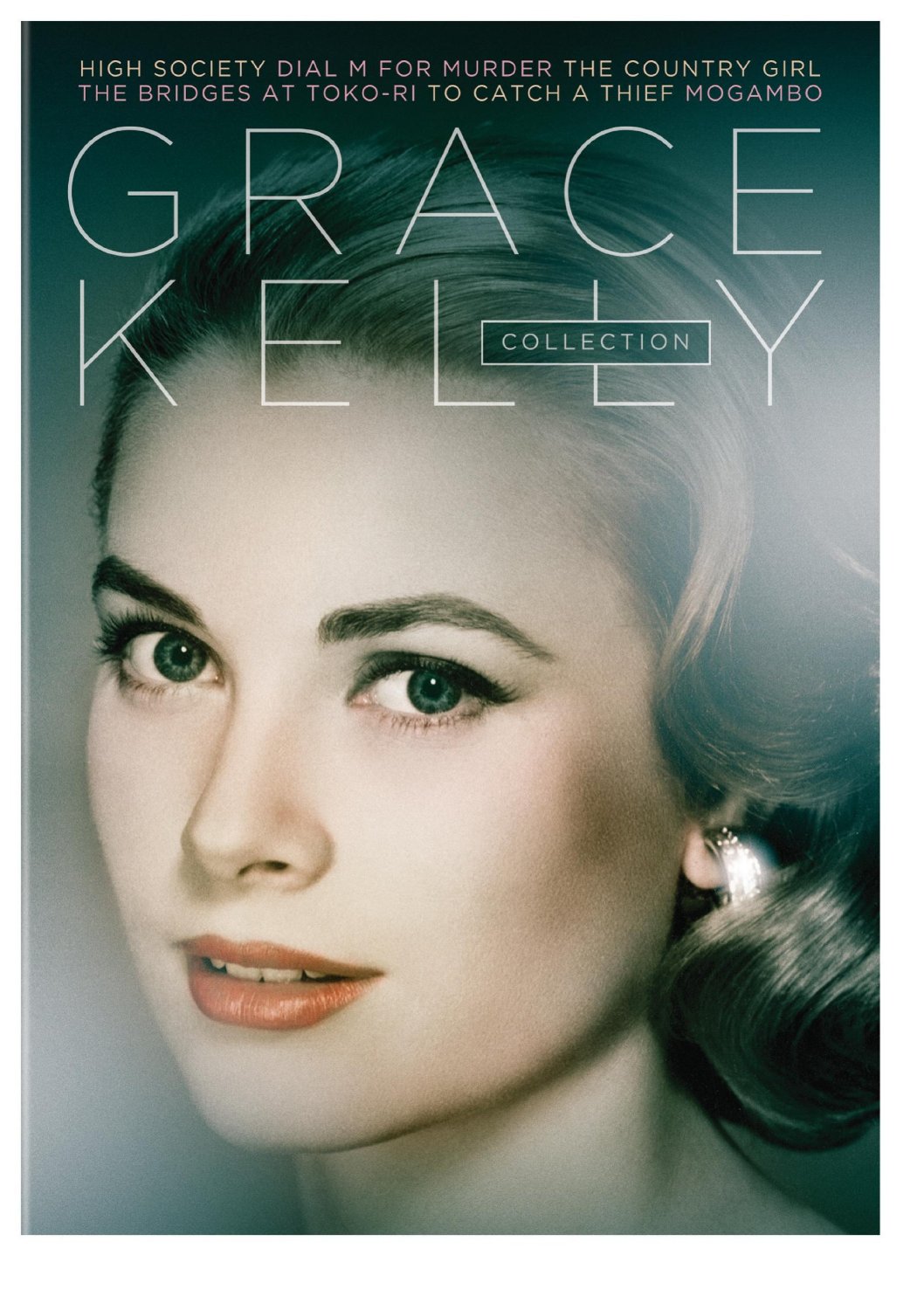
I don’t think it’s a stretch to say there’s never been a movie star quite like Grace Kelly. Within the space of just 11 films, the actress won an Oscar and starred in a handful of bona fide classics on her way to becoming Hollywood royalty. Of course, the reason Kelly made less than a dozen films and retired from acting at the ripe old age of 26 is because she became *actual* royalty after marrying Prince Rainier III of Monaco.

"You're different. You don't fit into a category. They can't control you. They call it Divergent."

In the wake of Hunger Games and Twilight studios have been snatching up the rights to young adult fiction and gearing up for franchises, all in the name of capturing the hearts and wallets of the legions of fans of these book series.  Though there have been a few hits, the failures have been plentiful i.e.: City of Bones, The Host, and The Vampire Academy.  As a guy approaching his mid-thirties, it’s safe to say I’m nowhere near being the target audience for this film, but call me crazy, I actually dug it.


"Make no mistake. Blood will be spilled. Lives will be lost. Fortunes will be made. Men will be ruined. There will be betrayal and scandal and perfidy of epic proportions."

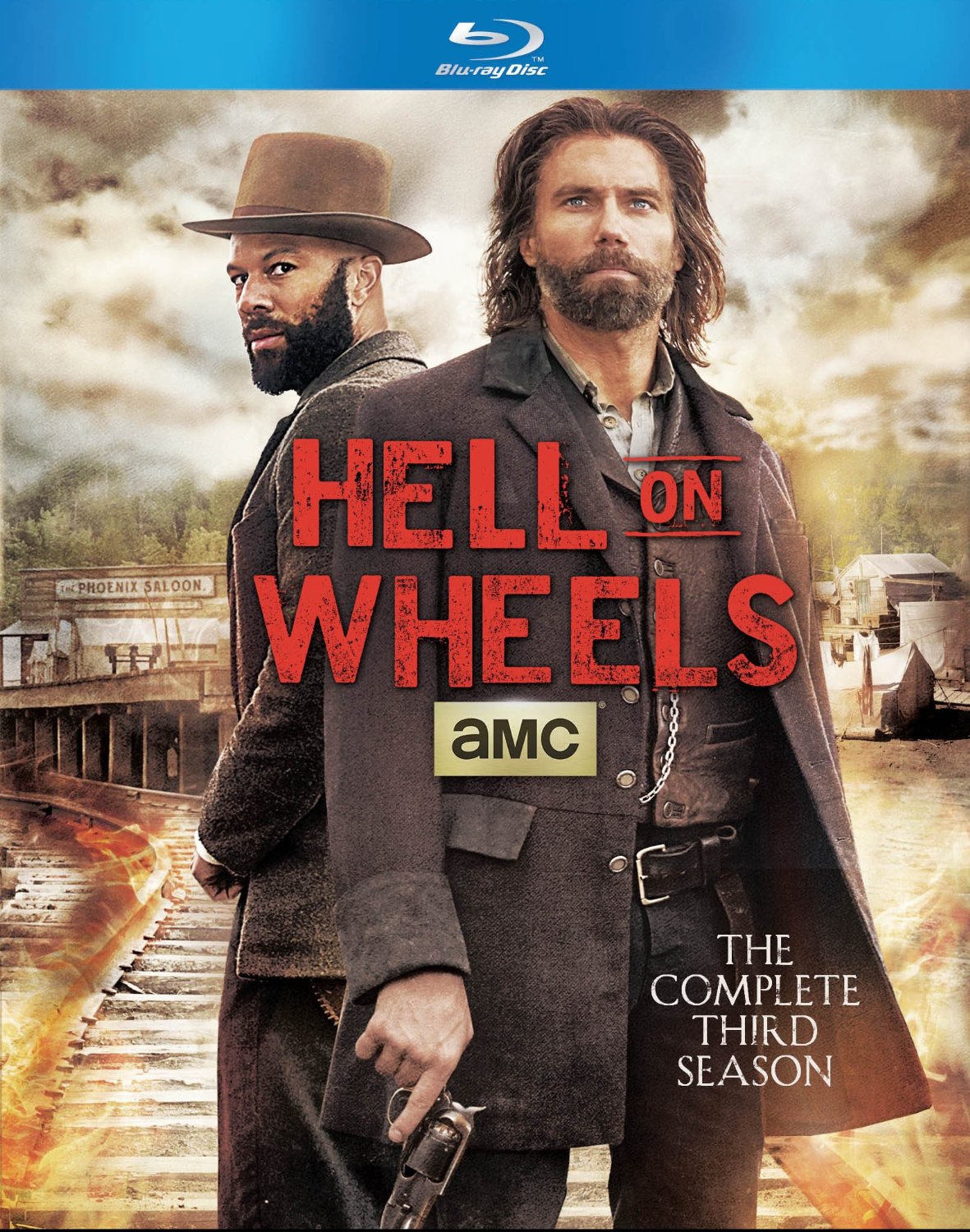
With a statement like that, how can you not want to check out AMC's newest drama series Hell On Wheels? I've been told the title sounds like it's about motorcycle gangs, and I couldn't agree more. The term refers to the mobile tent city that housed the workers on the Union Pacific Railroad and the support entourage the camp attracted. It was a virtual tent city that had all of the essentials: a church, bar, and whorehouse. It was just after the Civil War, and the American government believed that a railroad connecting the east and west coasts was just the kind of project the country needed to pull back together and heal still-festering wounds. As one of the filmmakers accurately points out, this was the Apollo moon project of the day. Long believed impossible by the brightest engineers of the day, the railroad would cut the time it took to go from coast to coast from six months to just under seven days. It was a truly remarkable feat, and it carried with it more than a fair dosage of corruption and blood. Now AMC has brought those days from 1865 back to our television screen with an ambitious and smartly produced series. It's a must see.

The impending death of a loved one tends to dredge up a complex mix of emotions. (Unfortunately, I speak from relatively recent personal experience.) In addition to the obvious sadness, there can be guilt, resentment, anger, relief, and other sentiments that combine to create a messy stew of feelings. Putting those feelings on the page or on a screen is an emotional minefield, since you risk veering jarringly from one tone to the next. The task becomes even trickier when you attempt to introduce humor into the equation. Lullaby stumbles over a few of those mines, but is otherwise a well-acted, modestly-affecting dramedy.

The movie opens with a close up of Lowenstein family black sheep Jonathan (Garrett Hedlund) taking a long, luxurious drag off a cigarette. Soon enough, we learn the gesture functions as a middle finger on a couple of different levels. On one hand, Jonathan is smoking on an airplane lavatory, which almost gets him arrested by a strict flight attendant. On top of that, it turns out Jonathan is on his way to visit his well-to-do New York City family because his father Robert (Richard Jenkins) is dying of lung cancer.

No matter how far removed you may be from Sunday school — or even if you never attended in the first place — chances are you know that God spoke to Noah. You also know He told him to build an ark in anticipation of a catastrophic flood meant to wipe out mankind. What you may not have realized (or remembered) is that, in the Bible, Noah himself doesn't speak at all until well after that rain starts. So in adapting the famous Book of Genesis story to the screen, any filmmaker is going to have to take a certain amount of liberties. And when that filmmaker is Darren Aronofsky, the result is a strange, uncommonly thoughtful blockbuster that is as flawed as the hero it presents.

In the beginning, there was nothing...”

Don't you ever get tired of vanilla?”

There's a special breed of '80s movie that appears hopelessly dated on the surface yet remains impulsively watchable. (Insert your own, “So you mean *every* '80s movie?!” joke.) The Legend of Billie Jean — with its hilarious-in-hindsight fashion and Pat Benatar theme song — certainly fits the “trapped in the '80s” bill. However, the 1985 film — now making its Blu-ray debut courtesy of Mill Creek Entertainment — still manages to entertain by tapping into the timeless spirit of teenage rebellion.

Robin Williams is one of those actors that I just wonder what happened to them.  Through the 80’s and 90’s Williams was simply box office gold with his comedic timing and great impressions, but I’ve always been more drawn to the more serious roles Williams delivered.  Awakenings, The Fisher King, Dead Poets Society, One Hour Photo, these are just a few of his roles that have stuck with me over the years that made it easy to look past his cinematic missteps.

When a movie like The Angriest Man in Brooklyn comes along, as a longtime fan I can’t help but get a little excited and hope for that spark Williams once brought to each of his characters.  Factor in you have writer/ director Phil Alden Robinson who wrote and also directed Field of Dreams, it would seem this film should have “instant success” written all over it.

One of the miracles of modern technology is its ability to shrink the world down so you can practically (well, proverbially) hold it in the palm of your hand. The cheerily square Smithsonian Channel series Aerial America goes the other way. In fact, the best thing about the show is how it uses technology to fill every inch of your screen with some of the most famous — along with some of the more underappreciated — U.S. landmarks, employing a larger-than-life/bird’s-eye point of view most of us wouldn’t otherwise be able to enjoy.

A quick primer if you’ve never seen the show (as I hadn’t prior to popping in this Blu-ray): the series debuted in 2010, and each hour-long episode is devoted to a different U.S. state or region. Every one of those episodes is solely comprised of stunning, leisurely aerial shots of that respective state’s natural and man-made landmarks, along with a brisk history lesson courtesy of narrator Jim Conrad.

The fact that we haven’t gotten a movie about Cesar Chavez until now is both surprising and not all that shocking. It’s surprising because the Mexican American labor leader was arguably as big of a civil rights icon to Latino workers as Martin Luther King, Jr. was to the country’s black community in the 1960s. On the other hand, the extended wait for a Chavez movie isn’t all that shocking when you consider his efforts took place in the largely un-cinematic realm of grape boycotts. The bland, well-meaning Cesar Chavez makes the case for his impactful deeds, even if it doesn’t totally present him as a vibrant, complex man worthy of the biopic treatment.

The film opens with Chavez (Michael Pena) explaining his life story to an unseen interviewer; so he’s really addressing us in the audience. He talks about being born in Yuma, Ariz., and his family losing its farm during the Great Depression. They subsequently migrated to California, where Cesar began working the fields at age 11. (Farmworkers had been excluded from the National Labor Relations Act, which had been enacted in 1936.) This sort of “tell-don’t-show” sequence is not what you’d typically want to see out of a movie. But here it’s a brisk way of running through the early part of Chavez’s life and sharpening the film’s focus.

It happens all the time. It's just as common on large-budget films as it is on the small films. Someone comes up with a great hook. It's a clever idea with all of the potential to be very good. It might even start off that way. Too many times the road traveled is a road to nowhere, and potential was lost somewhere along the path. That's exactly the issue with Open Grave. The opening sequence is one of those scenes that really sticks with you. A guy wakes up in a huge pit filled with dead and rotting human beings. He has no memory of who he is or how he got into this mess. It's a terrifying thought. It's a visceral nightmare that can touch those hidden fears in even the most stoic among us. What a promising start. Soon our character is given a rope and helped out of the pit. It's all downhill from here. It's bad... really bad... when your film peaks at two minutes in.

We eventually find out the guy who woke up in the mass grave is Jonah, and he's played quite well by Sharlto Copley. With not much dialog to work from (he is among dead people, after all) he manages to do a perfect job of portraying the emotions we would expect from this terrifying situation. When he's rescued from the pit, he's led to a house where there are several characters suffering from the same limited amnesia. They maintain knowledge and skills from their lives. ID cards even provide them with their names. The rest is the proverbial blank slate. There are some clues, however. A date circled on a calendar portends some ominous event. There is also an Asian girl, played by Josie Ho, who knows what's going on. Unfortunately, she can't speak and doesn't understand English.