RLJ Entertainment

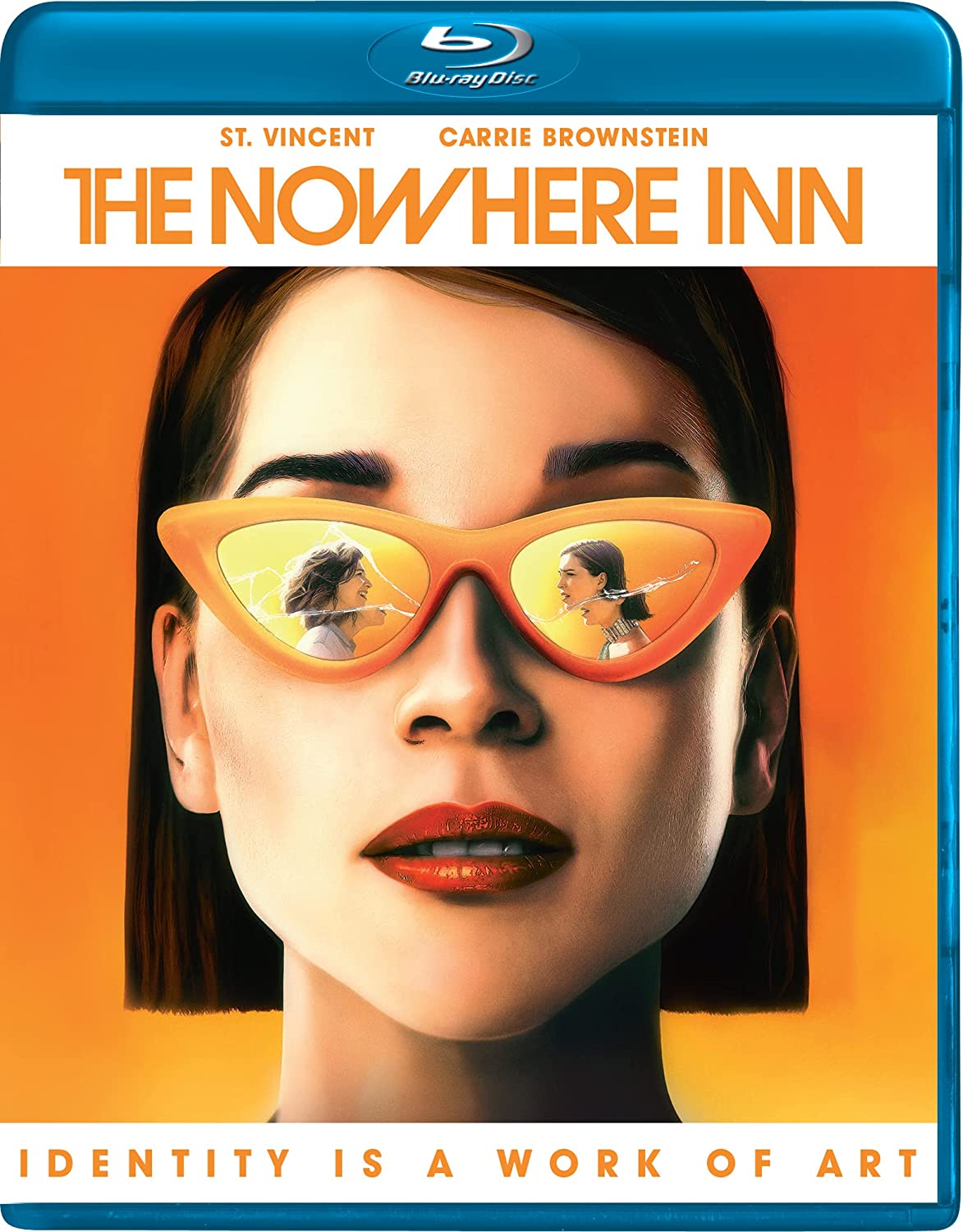
Easter 2021.  I'm sitting in a hotel room.  My wife and son are asleep in the adjoining room.  Meanwhile, I'm sitting in a chair flipping through channels on the television.  I come upon PBS where music is typically opera or symphony-based.  However, on this particular occasion, I am witnessing something far different.  A lady dressed in a red vinyl dress is playing guitar at the Austin City Limits.  It's clearly rock with a bit of indie and pop thrown in for good measure.  But it's unique all its own and familiar at the same time.  At first, I'm drawn in by her beauty, but I stay far longer once I hear her music and captivating sound.  Within days, I'm buying Masseduction  (and have bought several of her other CDs since then).  Her name is St. Vincent.  As it turns out, even before I was in that hotel room late at night, she was working on a mockumentary called The Nowhere Inn.  After the film falling victim in part to COVID for its release, it finally made it's way to Blu-ray.  Let's take a look.

A long, desolate highway.  A limo passes by with Annie Clark, also known as musician St. Vincent.  She is as it turns out doing just that: listening to music.  The driver up front rolls down the windowed partition and asks who she is, because he's never heard of her.  Annie tries to explain, but the limo driver just goes on and on about how neither he nor his friend have ever heard of her.  Eventually he rolls up the partition and Annie goes back to listening to her music.

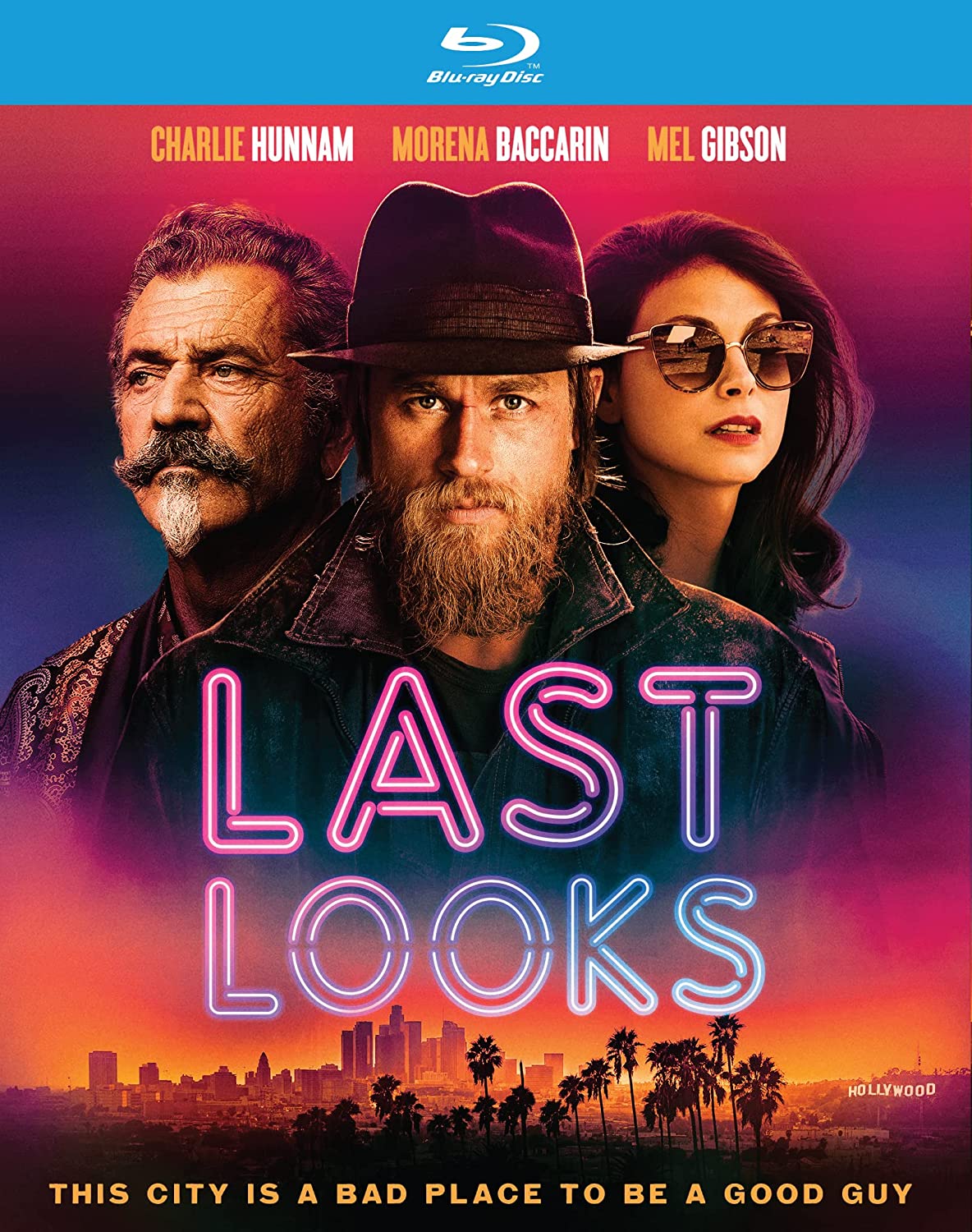
Most people want to do the right thing.  It's usually far easier in your private life to do the right thing than it is, say, in a job environment where you have people constantly breathing down your neck.  They are far more interested in the company's pocketbook or their image to society than what is right and wrong.  Therefore, it often leads to a lot of decisions (especially those in places of power) that from a surface appear questionable.  It's even worse when that company or organization is in the public eye every moment of the day.  Today, we look at a film where an ex-cop has retreated to the mountains in search of a simpler life away from the grey choices of the police force.  All based on trying to do the right thing.  Let's take a look.

Charlie Waldo (played by Charlie Hunnam) stretches in the woods and sits in silence meditating on his life.  Meanwhile we get some ecological narration about the future state of the planet and how awful the United States is at preserving it.  (Trust me, kids, China is much, much worse.)  After a brief morning, Charlie goes right back to meditating.  He also washes his clothes the old fashioned way.  All of the sudden he is greeted by a beeping horn of a car.

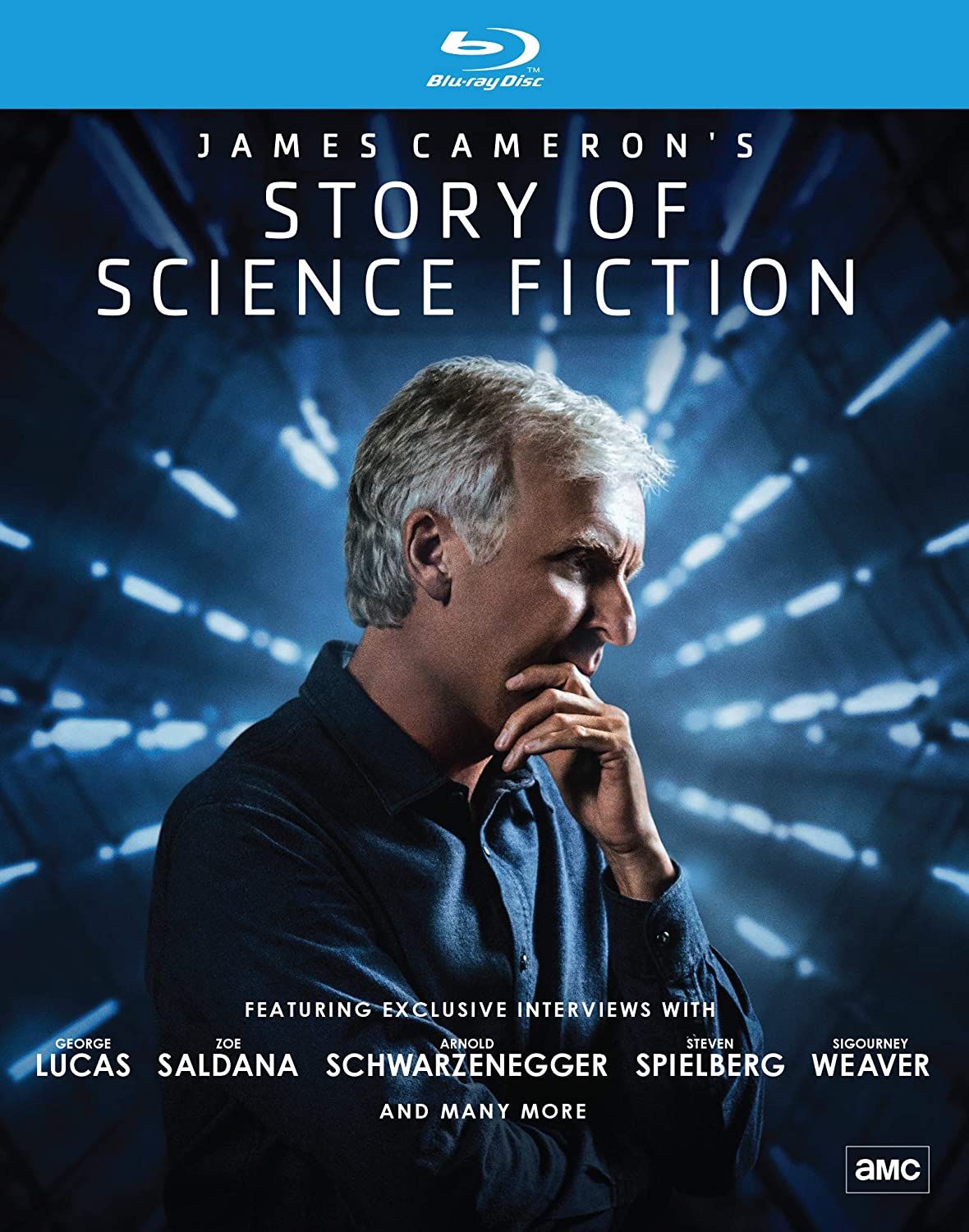
James Cameron is easily one of the most recognizable names in the Hollywood industry. Every time he makes a movie, it manages to break box office records.  As many of us have been waiting patiently for his sequel to Avatar, it seems he was busy working on a small project that takes an intimate look into science fiction.  This isn’t a boring history lesson, though; instead he’s gathered some of the biggest actors and directors of the genre and has a discussion about the various ideas that science fiction presents its viewers and readers. Whether you’re a science fiction novice or a self-proclaimed expert in the field, there’s at least something for everyone in this six-part, four-hour-plus series. The series is broken up into six episodes. Each episode covers a specific theme in the science fiction genre, so it allows you to watch it in any order you’d like. For me, I have to be honest; it’s hard to be impartial and not let my inner geek get excited over this series.  When you have James Cameron and Steven Spielberg discussing how Close Encounters of the Third Kind came to be or see Cameron and Christopher Nolan discuss time travel, this is some engaging material.  The closest thing I’ve seen recently where we get to see talented filmmakers sit down and talk is The Director’s Chair that Robert Rodriguez hosts, but what makes Story of Science Fiction stand out is seeing these filmmakers express their appreciation of the genre and what inspired them.

The series as I mentioned is broken up into six episodes on two discs:

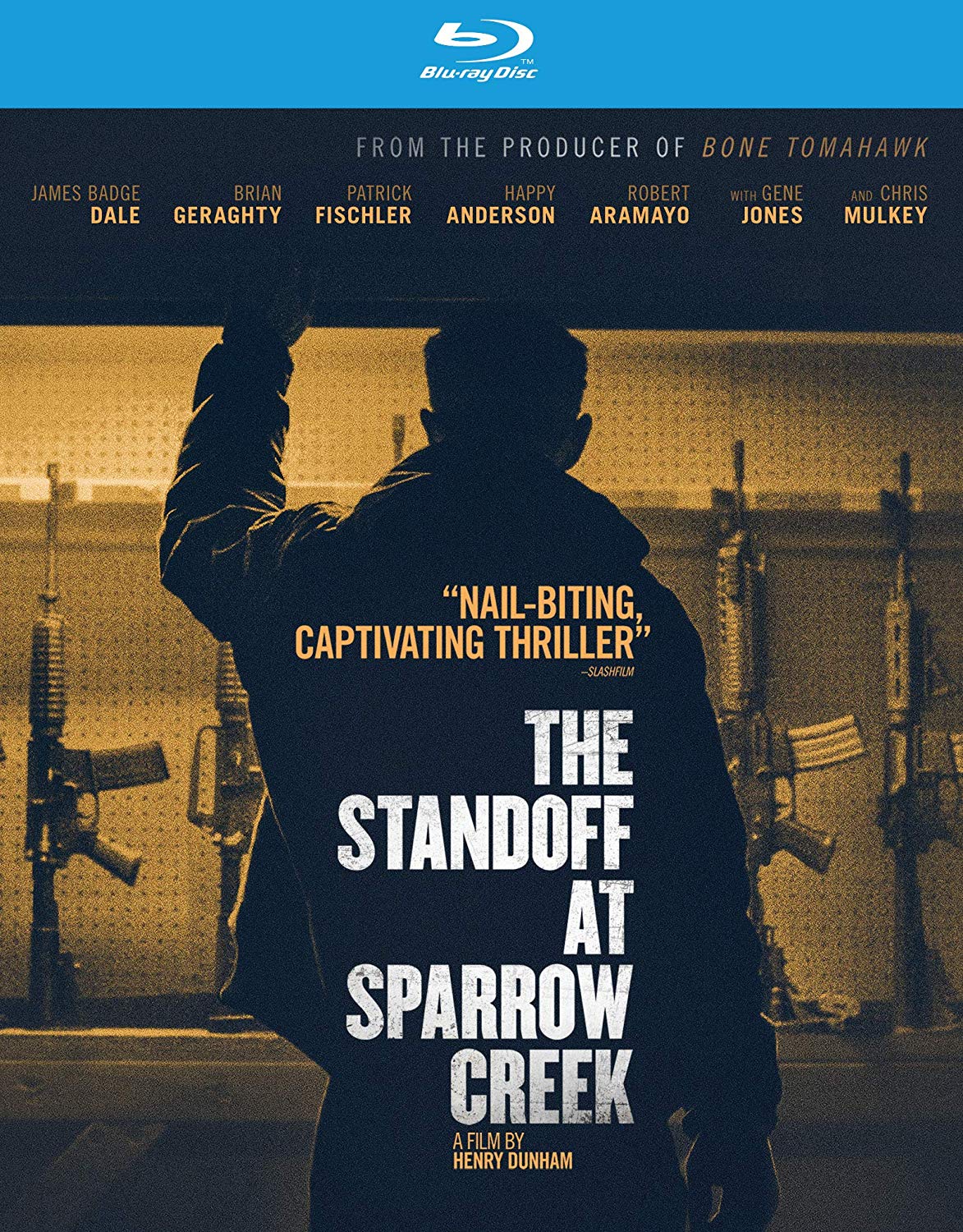
It may only be March, but I’m willing to bet The Standoff At Sparrow Creek will make the list of my top films of 2019.  I’m going to go out on a limb and say that this is the next breakout film people will be talking about, because it’s just that damn good.  Think about what Reservoir Dogs mashed up with Glengarry Glen Ross would be like if they were mashed together and the characters were all members of a militia; then you’ll somewhat have an idea of what The Standoff at Sparrow Creek has in store for you. We’ve all heard rumblings about militia groups, the kind that have their hidden bunkers that have stockpiles of weapons and ammunition that are ready to go into battle at a moment’s notice. At the same time we live in a world where it’s heavily frowned upon to want to own an automatic assault rifle, and those involved with these groups are often depicted as country bumpkins who are military washouts or just “gun nuts”. Well, writer/director Henry Dunham has decided to offer up a new look into this group and even dares to get into their heads and what motivates them.  But Dunham isn’t trying to make any political statements, but instead he’s crafted a well drawn out thriller that explores each of these characters and gives them each motivation for their actions, keeping them human despite their actions at times.

What kicks off the film is a shooting at a police funeral, In a panic to find out who may be responsible, Gannon (James Badge Dale) has all the members of his group meet up at a lumber mill to sort things out.  It’s at the mill where Gannon discovers that a gun and other materials are missing and that the person responsible for the shooting is one of the members of his group.  Knowing the police are going to be out for blood, Gannon decides to interrogate the members of his group in hopes of finding the rogue killer and offering them up in order to preserve the safety of the militia.

“Sometimes when you trust your impulses, incredible things can happen.” 

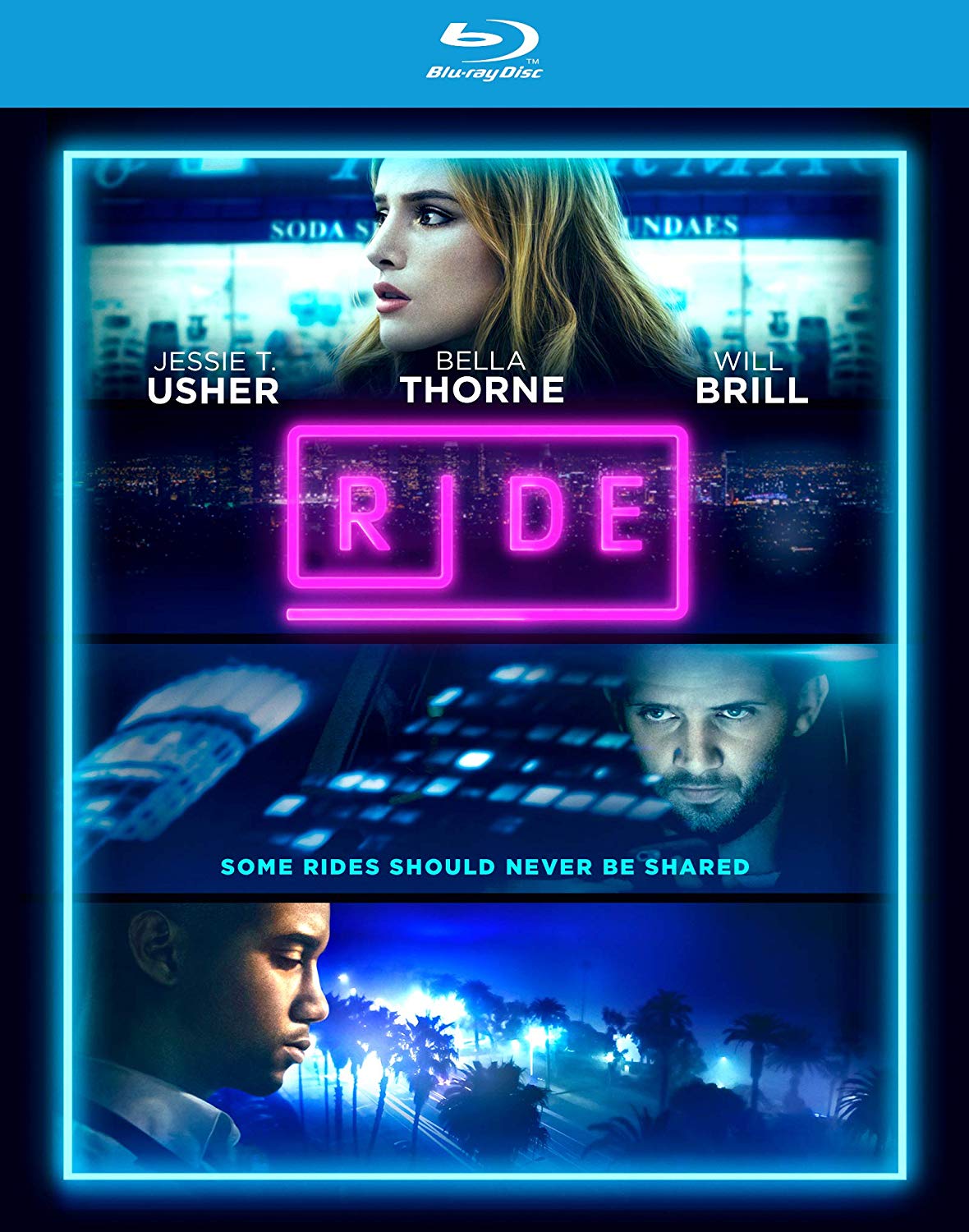
I doubt this is what Jesse Usher’s character had in mind when he used it as a pickup line for Bella Thorne’s character. However, Ride does feature what turns out to be an extraordinary night for these two characters as they find themselves at the mercy of a demented individual with a .44 Magnum. This movie has been on my radar for a while, and it was a movie that I jumped at the chance to review. I’m fortunate to say that I was not disappointed, although I did find the ending to be a bit anticlimactic. When I saw the runtime for this film, a mere 77 minutes, I anticipated that the thrills would be over fairly quickly, but the story managed to pack quite a bit into this brief period.

Ever since I was a kid, I’ve been fascinated by UFO stories. It’s a big part of what got me into watching The X-Files.  Whether you are a believer or not, there are groups all over the world where people get together and share their experiences about their abductions and how they attempt to cope with the trauma of the event.  Beyond the Sky is a film that is sort of a mockumentry about Chris Norton (Ryan Carnes) who has been attempting to find out what happened to his mother after she went missing on his seventh birthday.  Now years later, he takes his “documentary” to a UFO convention to meet with abductees and in the process comes across Emily (Jordan Hinson), who may help him on his journey to find the truth.

The trouble I had with the film is its inability to stick with a style as it juggles between being a documentary and simply being a film.  It being inconsistent with its style is kind of annoying and only gives the impression that the director really didn’t know what they wanted to do with the film, and that’s a shame, because there is a good story to be found here.

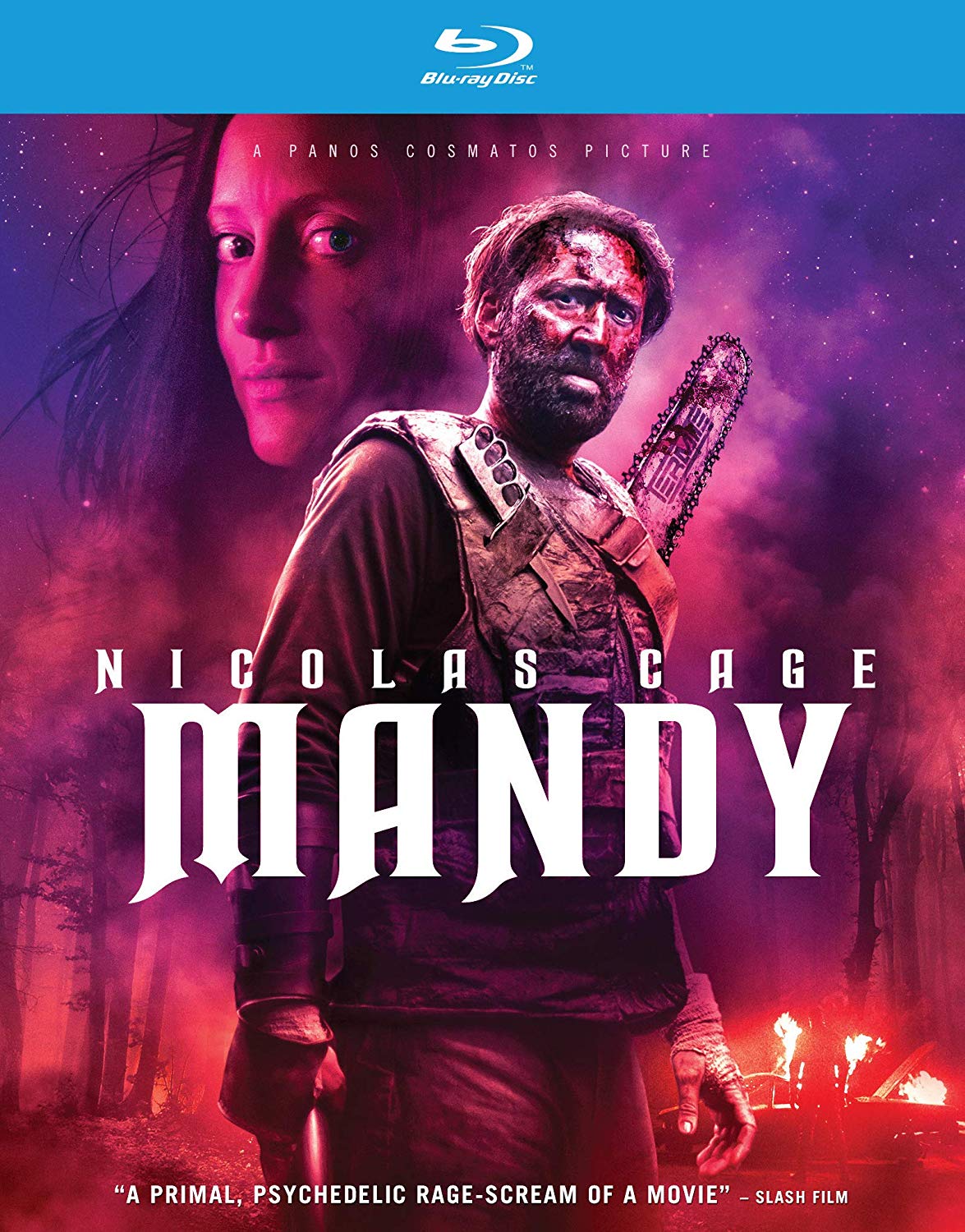
My first attempt at watching Mandy wasn’t a successful one. After fifteen minutes I was nodding off, so I stopped it and held off viewing it for another night.  This isn’t a movie you want to throw on too late at night. The first half is definitely a slow burn, but once this film picks up steam, you are in for one crazy, psychedelic, violent experience that will leave an impression on you.  It’s no surprise that Mandy has already developed a buzz through the internet and is well on its way to becoming a cult classic.  Is the hype for this film real?  Can Nicolas Cage still deliver a memorable performance as his career has seemed to have dissolved into constant direct-to-DVD content?  Well, the short answer to both these questions is yes, but this film is not for everyone, and to a degree I may be on the fence on the first half of this film.

Red (Nicolas Cage) is living the simple life in the woods as a logger and living with his girlfriend, Mandy (Andrea Riseborough).  Mandy is a bit of an artist and enjoys reading fantasy novels. One could assume her and Red’s fate could easily be the storyline of one of the books that she’s read; their story is the fodder of hellish nightmares.  Our time with Red and Mandy is spent showing us how well they work together as a couple, but it’s done so in a way that is filled with flat and monotone performances, with a drone-filled score that gently lulls the audience to the brink of sleep or boredom.  This all changes when we meet Jeremiah (Linus Roache) and his loyal cult.  It’s a strange obsession at first sight for Jeremiah when he sees Mandy for the first time and demands that she be brought to him, and everything that follows is simply another step further down this insane rabbit-hole that director Panos Cosmatos has orchestrated for us.

“I’m sorry…I’m a really good person.”

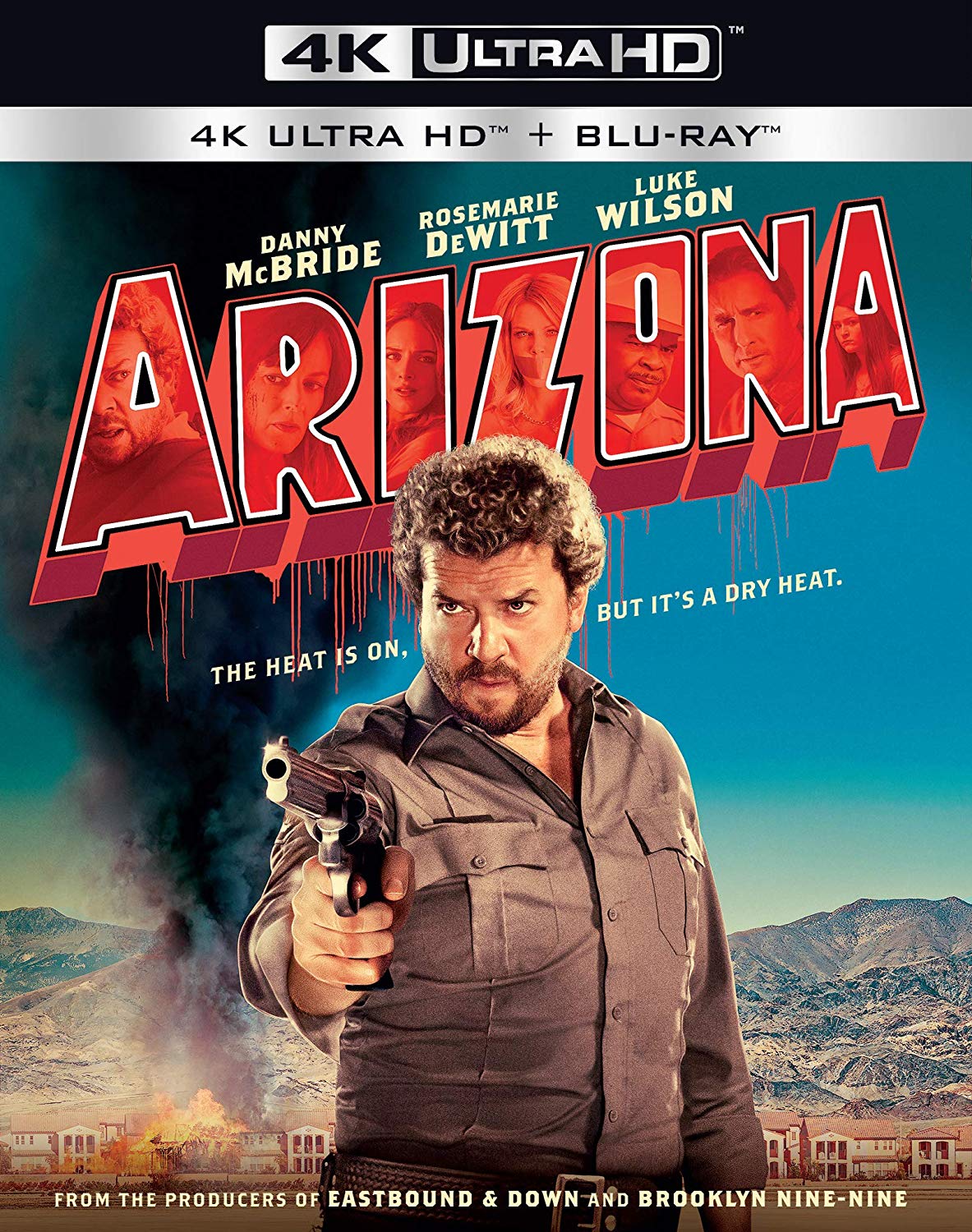
I absolutely loved The Big Short, which managed to extract smart, insightful comedy from one of the gloomiest chapters in recent American history. But if there’s one minor critique I had, it’s that the 2015 Adam McKay film sort of glossed over the human cost of the nationwide financial collapse. On the other hand, Arizona — a violent, over-the-top black comedy that’s billed as being “from the producers of Eastbound & Down and Brooklyn Nine-Nine” — is set in 2009 and focuses almost exclusively on a handful of hard-luck losers trying to survive the housing crisis.

“Why would anybody create a Nazi puppet?!”

There are two types of people in this world: A) the sort of person who reads the question above and says, “That’s offensive! I have absolutely no idea” and B) the joyful weirdo who replies, “Why would anybody stop at creating just *one* Nazi puppet?” If you’re in Group B, you’re in luck…the people behind Puppet Master: The Littlest Reich didn’t stop at one Nazi puppet. (Not even close!) More importantly, this bloody reboot of the 1989 cult horror classic features some of the craziest and most disgusting kills I’ve seen in a while. (I promise that’s a compliment.)

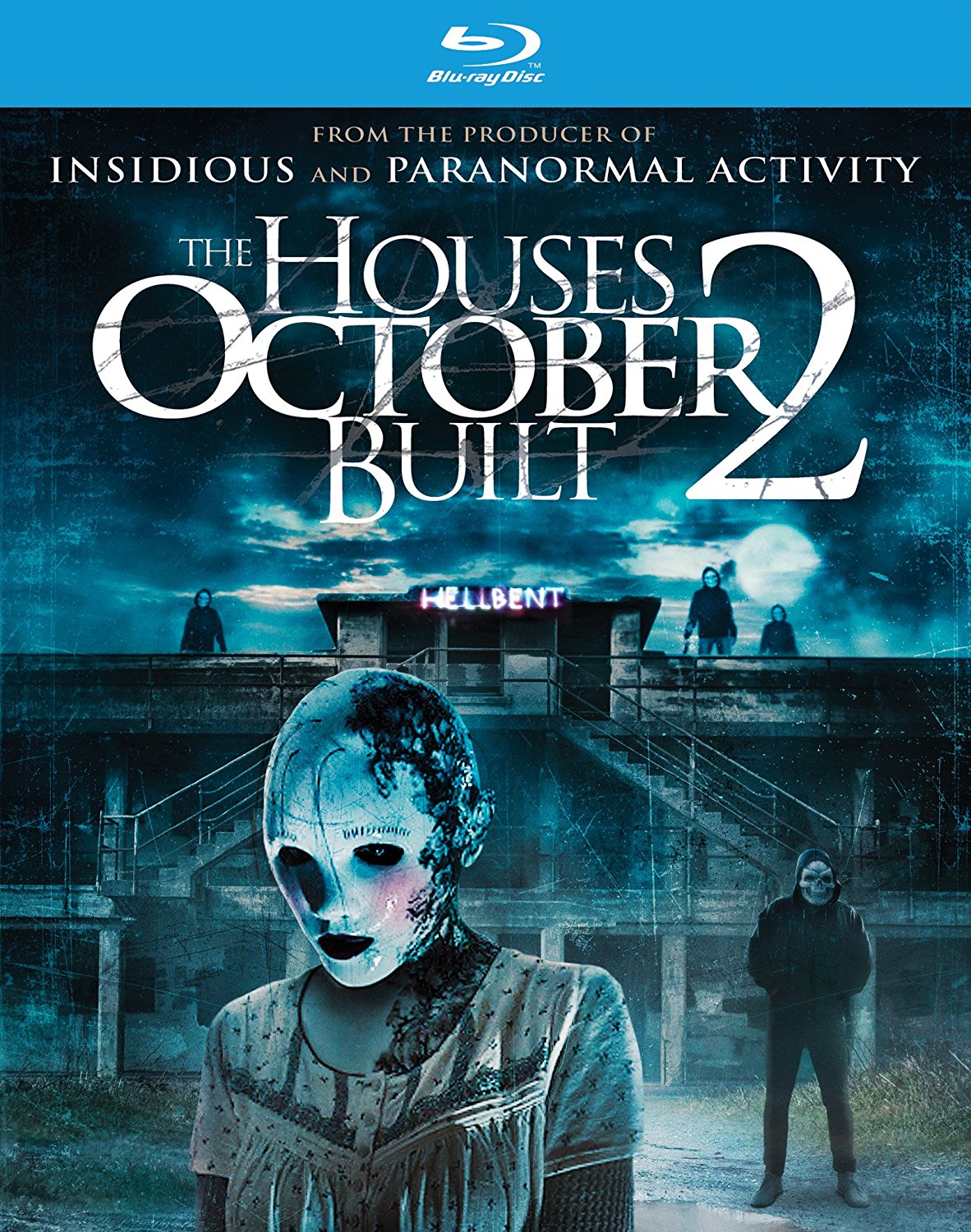
Most people that survive a near traumatic experience don’t go back for seconds. Most people that is. For the group in The House October Built 2, I guess they were adhering to the logic that lightning doesn’t strike the same way twice. Or does it? Embarking on what I can only describe as a horror tour, five friends attempt to capitalize on potential fame and fortune by documenting their experience traveling city to city to explore various haunted houses or hay rides. They even managed to convince the most traumatized member of their group to join them, reopening old wounds and provoking things that best left in the past. I wish that was the worst they had to contend with, as evidence that what they faced a year earlier begins to resurface to finish what it started.

So the concept of the film is top-shelf, execution is another matter in entirely. For one, the set-up is entirely too long. The basic idea was apparent early on, this group looking to capitalize on their famed abduction a year earlier resumes the same activities that nearly cost them their lives. I even enjoyed the addition of a holdout, the girl that refused to take part in this after being buried alive in a coffin. I mean, who would want to relieve that trauma. However, once you have the girl on board, I would say that you only need to visit a handful of places to establish tempo before moving to the center stage for the plot. I think a part of it was the fact that the group went to around three venues before they realized that they need the girl. In my opinion, they should have found themselves turned away at the first venue in order to necessitate the need for their holdout and those other two venues could have been focused more on convincing her to jump back into the mix, possibly a flashback to the year prior.